Tomato Grow in Indoor: Best Tips for Healthy Tomato Plants
Tomato Grow in Indoor: Complete Indoor Gardening Guide
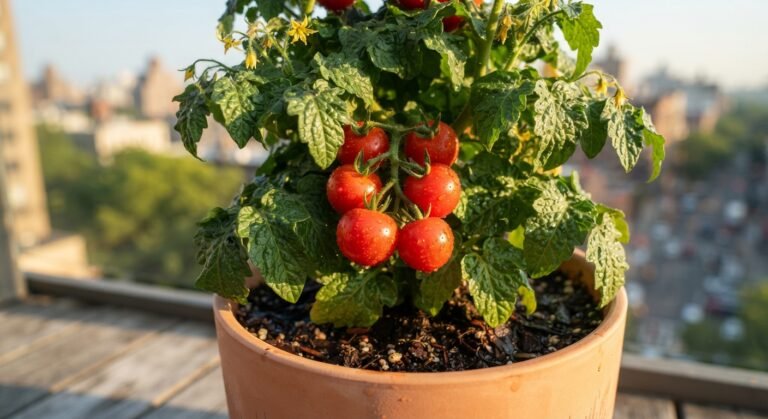
Growing tomatoes indoors is one of the most rewarding projects for anyone who loves fresh produce but lacks outdoor garden space. Whether you live in an apartment, face harsh winters, or simply want a year-round supply of ripe tomatoes, learning how to grow tomato indoor can open up a whole new world of home gardening. Many people assume tomatoes only thrive outside under full sun, but with the right setup, you can harvest juicy, flavorful tomatoes right from your living room or kitchen windowsill.
This guide walks you through the ten most effective tips for growing tomatoes indoors successfully. From choosing the right variety to harvesting at peak ripeness, each step plays a role in helping your plants stay healthy and productive. If you follow these practices closely, you will be surprised at how well tomatoes can adapt to an indoor environment.
Choose Compact Tomato Varieties
Not all tomato plants are suited for indoor growing. Standard tomato varieties can grow several feet tall and require a lot of space, making them impractical for indoor containers. Instead, look for compact or dwarf varieties bred specifically for small spaces.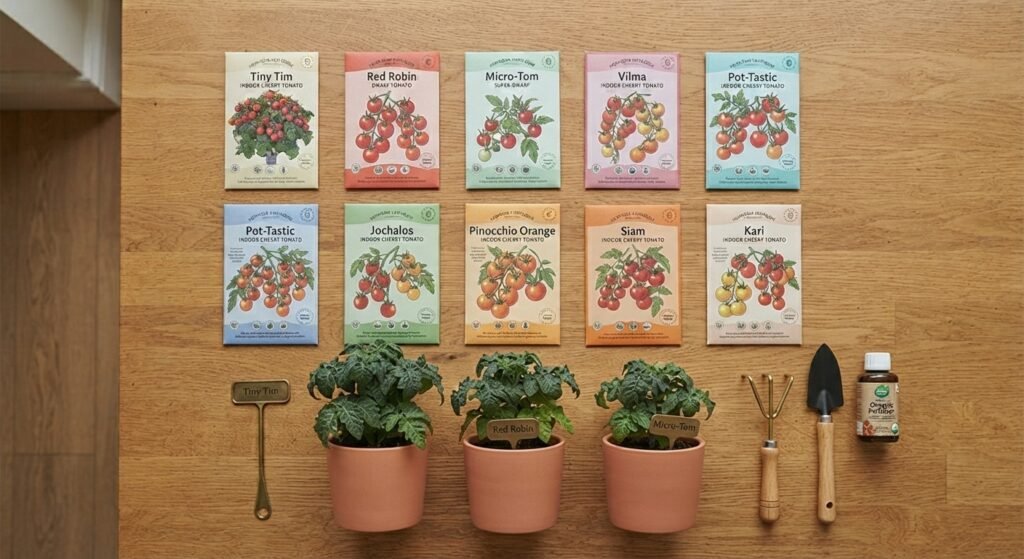
Best Tomato Varieties for Indoor Gardens
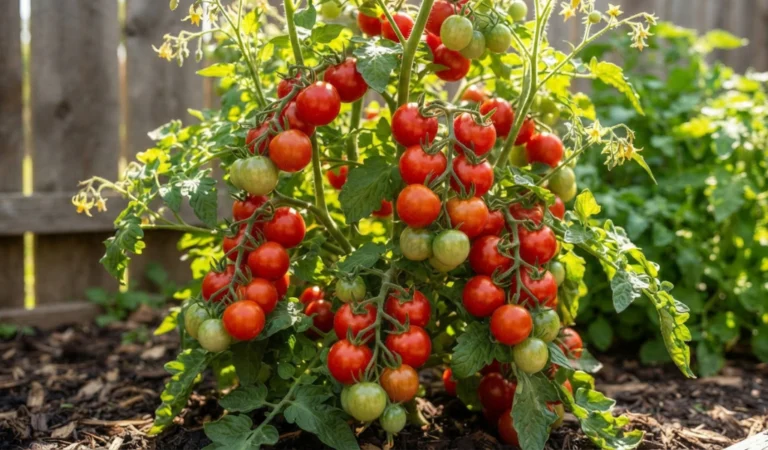
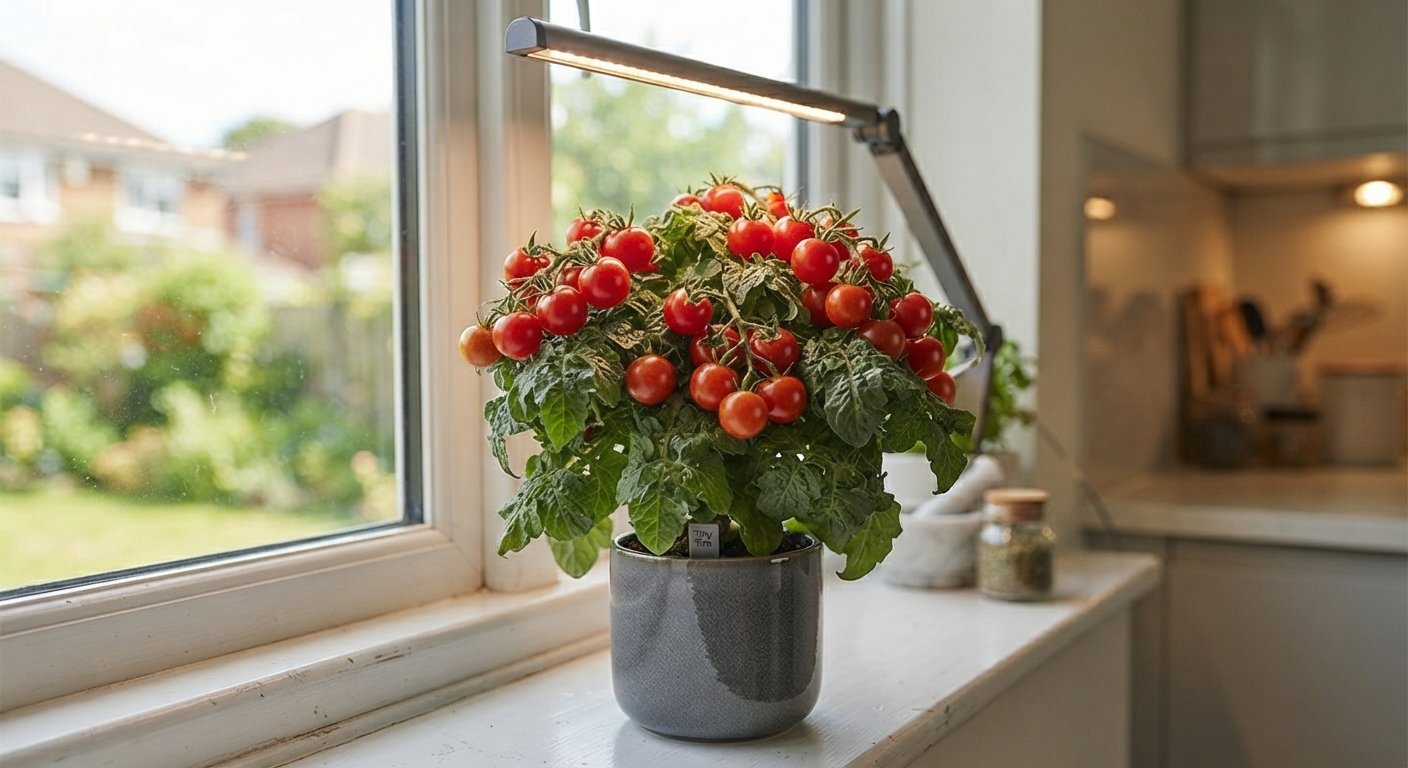
Some of the best options include Tiny Tim, Patio Princess, Micro Tom, and Red Robin. These varieties stay small, usually under two feet tall, and still produce a good yield of cherry-sized tomatoes. Determinate varieties are generally better for indoor growing since they stop growing at a certain height, unlike indeterminate types that keep climbing throughout the season.
Why Plant Size Matters Indoors
Smaller plants are easier to manage in limited spaces like windowsills or grow tents. They also require less light and nutrients compared to larger varieties, which makes them more forgiving for beginner gardeners who are still learning how to balance watering and feeding schedules.
Use a Large Container With Good Drainage
Even compact tomato plants need enough room for their roots to spread. A container that is too small will restrict growth and lead to stunted plants or poor fruit production.
Choosing the Right Pot Size
A container with at least a 5-gallon capacity is ideal for most dwarf tomato varieties. If you are growing a larger variety indoors, consider a 10 to 15-gallon pot to give the roots plenty of space to expand.
The Importance of Drainage Holes
Tomatoes are sensitive to overwatering, and standing water in the pot can quickly lead to root rot. Make sure your container has several drainage holes at the bottom. Placing a saucer underneath can help catch excess water without letting the roots sit in it for too long.
Select the Best Indoor Potting Mix
The soil you use plays a major role in how well your tomato plants grow indoors. Garden soil is often too dense and can carry pests or diseases that thrive outdoors but wreak havoc in a contained environment.
What Makes a Good Potting Mix
Look for a well-draining, lightweight potting mix specifically designed for container gardening. A mix containing perlite, peat moss, and compost provides the right balance of moisture retention and airflow that tomato roots need to thrive.
Adding Nutrients to the Soil
Since indoor potting mixes lack the natural nutrients found in outdoor garden soil, it helps to mix in a slow-release fertilizer or organic compost before planting. This gives your tomato plants a nutritional head start as they establish their root systems.
Provide Sufficient Light
Light is often the biggest challenge when growing tomatoes indoors. These plants are sun lovers, and without enough light, they can become leggy, weak, and unproductive.
How Much Light Do Indoor Tomatoes Need
Tomato plants need at least 6 to 8 hours of direct sunlight each day. A south-facing window usually provides the best natural light, but even that may not be enough during winter months or in homes with limited sun exposure.
Using Grow Lights for Indoor Tomatoes
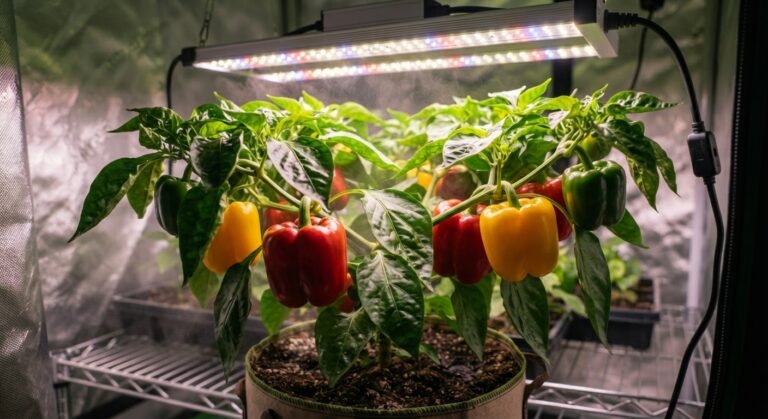
If natural light is not sufficient, investing in a good LED grow light can make a significant difference. Position the light 6 to 12 inches above the plants and keep it on for 12 to 16 hours a day. Full-spectrum LED grow lights mimic natural sunlight and support healthy photosynthesis, which is essential for strong stems and fruit development.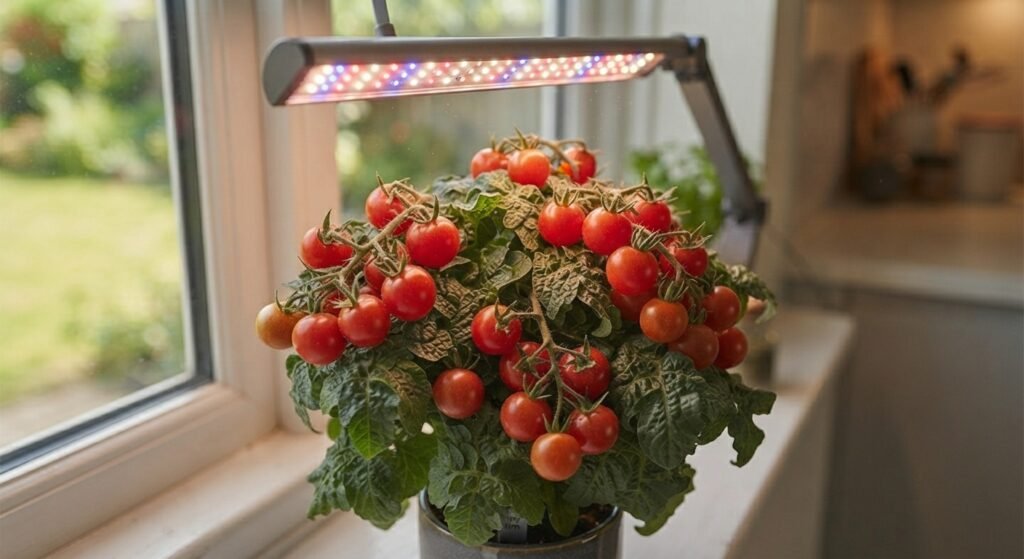
Maintain Consistent Moisture
Watering is one of the trickiest parts of indoor tomato care. Too much water leads to root rot, while too little causes wilting and poor fruit set.
How Often to Water Indoor Tomato Plants
Check the top inch of soil regularly. If it feels dry to the touch, it is time to water. Depending on your home’s humidity and temperature, this could mean watering every two to three days.
Signs of Overwatering and Underwatering
Yellowing leaves and a musty smell from the soil often indicate overwatering, while drooping and curling leaves suggest the plant needs more water. Keeping a consistent watering schedule, rather than watering sporadically, helps tomato plants maintain steady growth.
Fertilize Tomatoes at the Right Time
Tomatoes are heavy feeders, meaning they require regular nutrients to produce healthy fruit. Without proper fertilization, indoor tomato plants can look healthy but fail to produce many tomatoes.
Choosing the Right Fertilizer
A balanced fertilizer with equal parts nitrogen, phosphorus, and potassium works well during the early growth stage. Once flowering begins, switch to a fertilizer higher in phosphorus and potassium to support fruit development rather than leafy growth.
Fertilizing Schedule for Indoor Tomatoes
Feed your plants every two weeks during active growth. Avoid over-fertilizing, as too much nitrogen can lead to lush green leaves with little to no fruit production.
Keep Plants Supported and Pruned
As tomato plants grow, they need proper support to avoid bending or breaking under the weight of developing fruit.
Staking and Caging Indoor Tomatoes
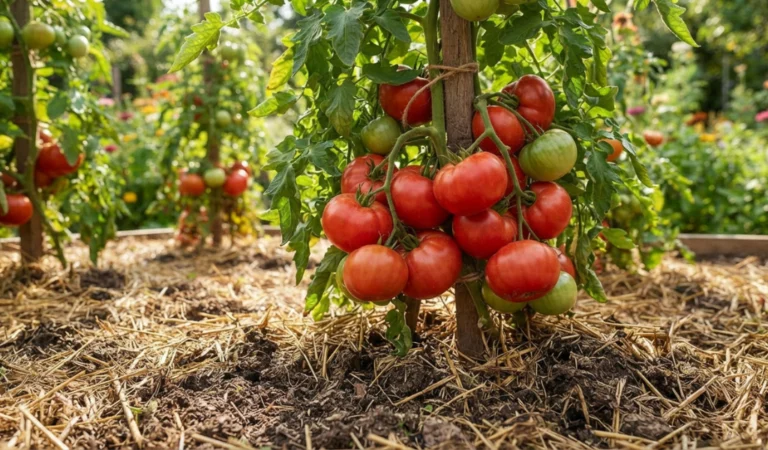
Even compact varieties benefit from a small stake or tomato cage. This keeps the stems upright and prevents them from sprawling over pots or nearby furniture.
Why Pruning Improves Yield
Regularly pruning suckers, which are the small shoots that grow between the main stem and branches, helps direct the plant’s energy toward fruit production rather than excessive foliage. Removing yellow or damaged leaves also improves air circulation and reduces the risk of disease.
Improve Pollination Indoors
Outdoors, wind and insects naturally pollinate tomato flowers. Indoors, without these natural helpers, pollination has to be done manually.
How to Hand-Pollinate Tomato Flowers
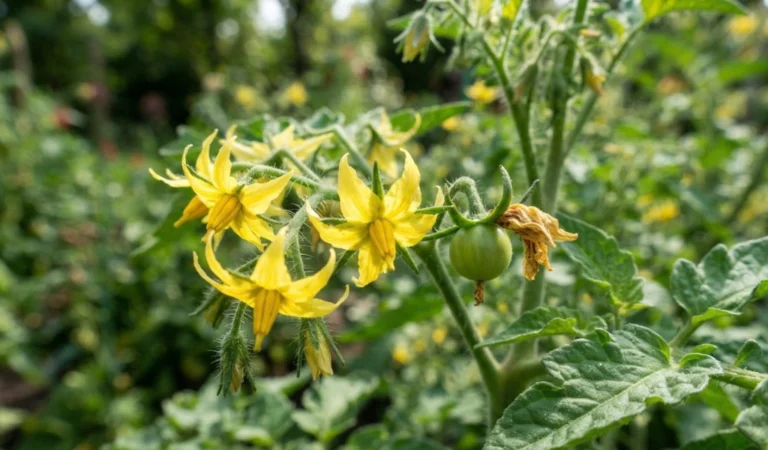
Gently shake the plant or use a small paintbrush to transfer pollen between flowers every couple of days. This mimics the natural movement caused by wind and encourages better fruit set.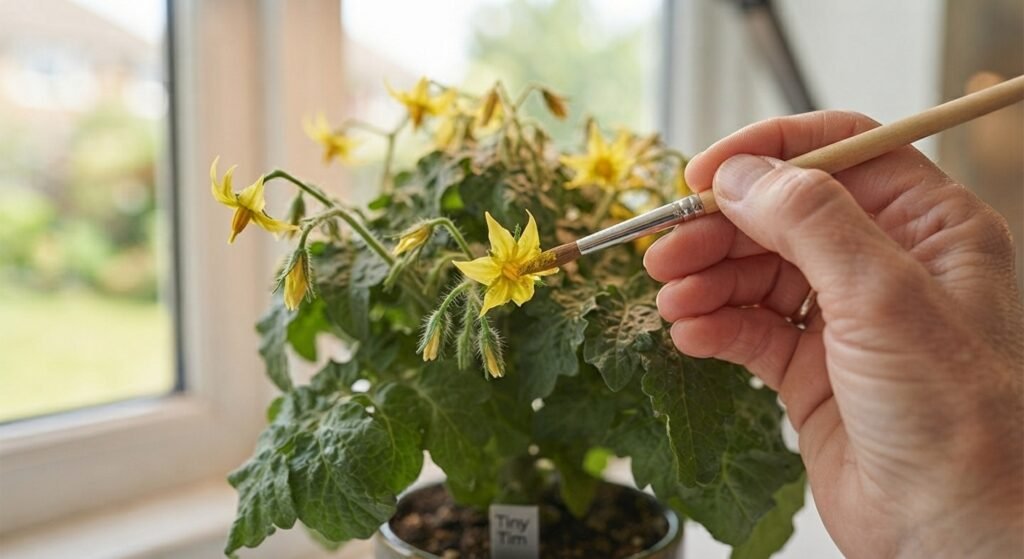
Using Fans to Simulate Airflow
Placing a small fan near your tomato plants for 10 to 15 minutes daily can help spread pollen and strengthen the stems, similar to how a gentle breeze would affect outdoor plants.
Control Pests and Diseases
Indoor tomato plants may seem protected from pests, but issues like aphids, spider mites, and whiteflies can still appear, especially if you bring outdoor plants indoors.
Common Indoor Tomato Pests
Aphids and spider mites are among the most frequent invaders. Signs of infestation include tiny holes in leaves, sticky residue, or discoloration on the foliage.
Natural Ways to Prevent and Treat Pests
Neem oil spray is an effective, natural solution for most common pests. Regularly inspecting your plants and wiping down leaves can also help catch problems early before they spread to other plants in your home.
Harvest Tomatoes at Peak Ripeness
After weeks of care, harvesting your tomatoes at the right time ensures the best flavor and texture.
Signs Your Indoor Tomatoes Are Ready to Pick
Look for tomatoes that have reached their full color, whether red, yellow, or orange, depending on the variety. The fruit should feel slightly firm but yield gently to light pressure.
Tips for Harvesting Without Damaging the Plant
Use scissors or garden shears to snip the tomato from the stem instead of pulling it off by hand. This reduces stress on the plant and allows it to continue producing more fruit throughout the season.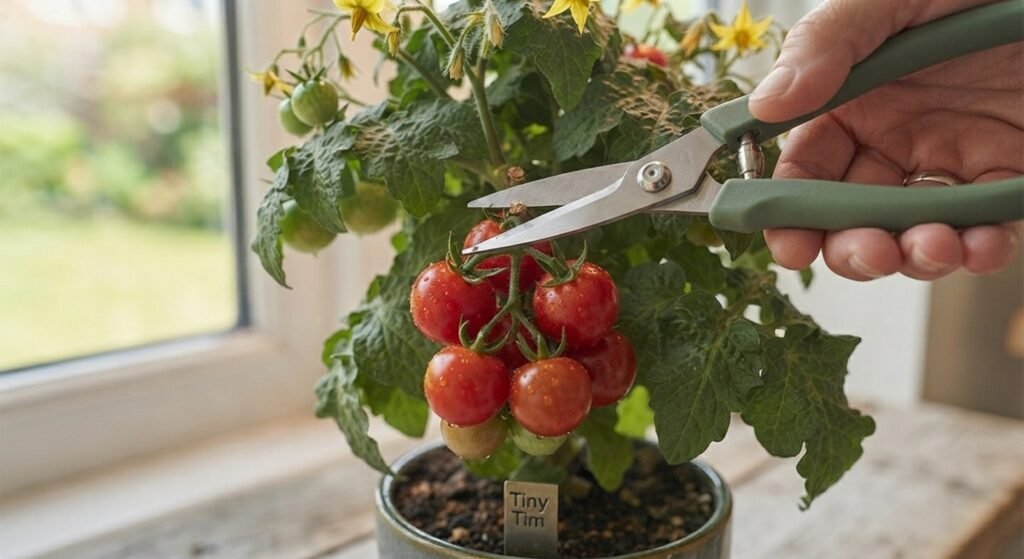
Final Thoughts on Growing Tomatoes Indoors
Growing tomatoes indoors takes a bit of patience and attention to detail, but the results are well worth the effort. From selecting compact varieties to hand-pollinating flowers and controlling pests, each step plays an important role in the health and productivity of your plants. With consistent care, proper lighting, and the right potting mix, you can enjoy fresh, homegrown tomatoes no matter the season or the size of your living space.
If you are just starting out, begin with one or two plants to get a feel for how they respond to your indoor environment. Once you become comfortable with the process, you can expand your indoor garden and experiment with different tomato varieties throughout the year.
Frequently Asked Questions
Can you really grow tomatoes indoors successfully?
Yes, tomatoes can grow successfully indoors as long as they receive enough light, proper watering, and regular fertilization. Compact or dwarf varieties tend to perform best in indoor settings.
How long does it take for indoor tomatoes to produce fruit?
Most indoor tomato varieties take between 60 to 80 days from planting to harvest, depending on the variety and growing conditions.
Do indoor tomato plants need direct sunlight?
Indoor tomatoes need at least 6 to 8 hours of direct sunlight daily. If natural light is limited, a full-spectrum LED grow light can provide the necessary light for healthy growth.
Why are my indoor tomato plants not producing fruit?
Poor pollination is often the main reason indoor tomato plants fail to produce fruit. Hand-pollinating flowers regularly can help solve this issue.
What is the best temperature for growing tomatoes indoors?
Tomatoes grow best indoors at temperatures between 65 and 75 degrees Fahrenheit. Avoid placing plants near cold drafts or heating vents, as sudden temperature changes can stress the plants.
Can I use regular garden soil for indoor tomato plants?
It is best to avoid regular garden soil since it can be too dense and may carry pests or diseases. Use a lightweight, well-draining potting mix designed for container gardening instead.
How often should I fertilize my indoor tomato plants?
Fertilize indoor tomato plants every two weeks during their active growing period, adjusting the nutrient balance based on whether the plant is in its leafy growth stage or fruiting stage.