Broad Mites on Pepper Plants: Best Treatment and Prevention Tips
Broad Mites on Pepper Plants: Identification, Damage, and Control
Broad mites on pepper plants are one of the hardest pest problems a grower can face. These tiny pests are almost impossible to see, yet they can ruin a healthy crop in a few weeks. A single broad mite infestation can twist the new growth, stop flowering and leave plants stuck at the seedling stage. Many growers see the damage and think it is a feeding problem. They reach for homemade fertilizer for pepper plants or add extra nutrients, but the real cause is an invisible pest feeding on the plant sap. Without the right diagnosis, the problem only gets worse.
 This guide explains how to spot broad mite damage early and how the pest lives and spreads. It also covers the best options for broad mite control, from natural methods to approved miticides. Whether you grow a few pepper plants in a pot or manage a full greenhouse, the steps here will help you protect your crop. Learning the signs is the most important part. A grower who knows what to look for can stop an infestation before it becomes severe, and effective control is much easier in the early stage.
What Are Broad Mites and How Do They Affect Pepper Plants?
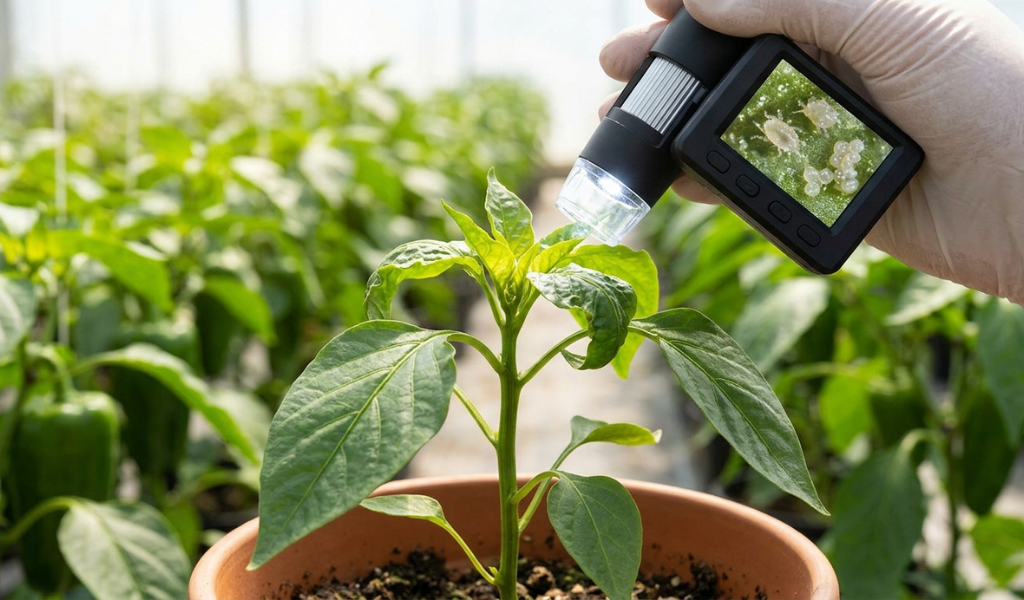
The broad mite, known in entomology as Polyphagotarsonemus latus, is a very small pest that feeds on many plant species. Adult females measure only about 0.2 millimeters. That is far too small to see with the naked eye, so most growers need a microscope or a strong magnifying glass to find them. Under magnification the mites look pale yellow or light green and slightly shiny.
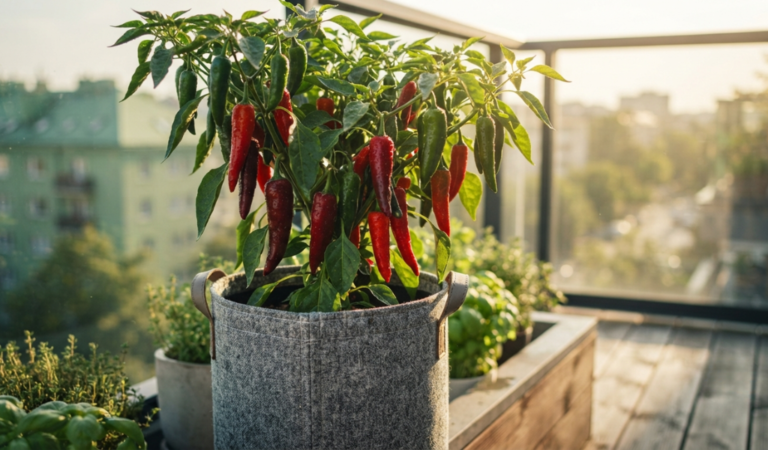
Pepper is one of their favorite food sources. Capsicum varieties of every kind can be attacked, including sweet bell types and hot chili plants. The mites also live on ornamental plants such as begonias, azalea and African violets, which is one reason they move so easily between gardens.
The damage comes from how the mite feeds. It pierces the plant tissue and sucks out the plant sap. Its saliva also seems to inject a substance that disturbs normal growth. This is why Broad Mites on Pepper Plants cause damage far out of proportion to their size. The tips of the plant take the worst hit because the mites prefer soft young tissue. Heavy broad mite pressure can stop a pepper plant from producing any useful fruit.
Early Signs and Symptoms of Broad Mite Damage on Pepper Plants
Early detection makes all the difference with broad mite damage. The symptoms often appear before anyone sees a single mite, and they are easy to confuse with other problems. Looking at the top of the plant first is the best habit. The youngest leaves always show trouble before the older ones do.
Leaf Curling, Twisting, and Distorted New Growth
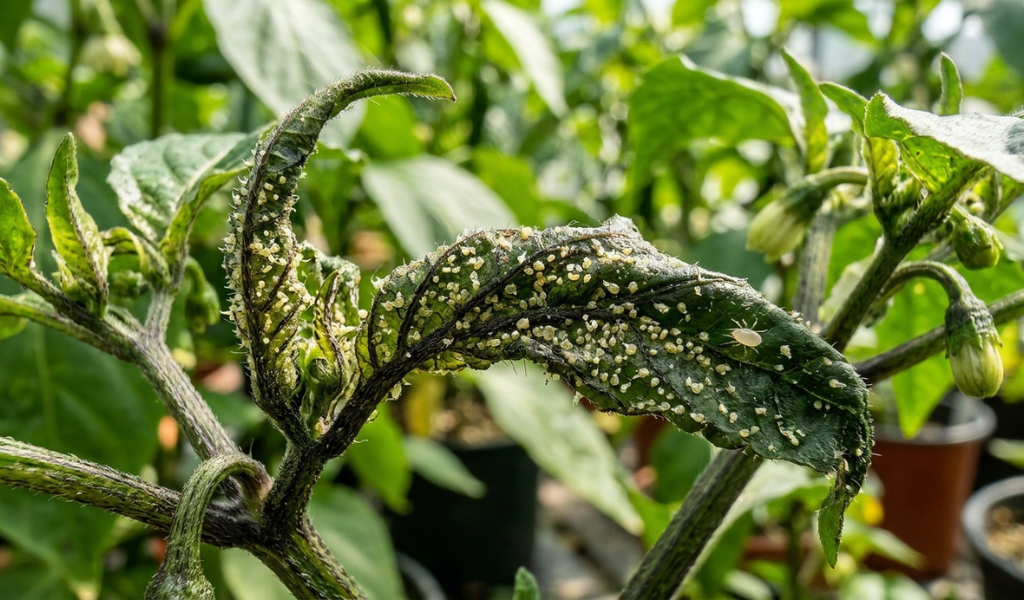
The first clear sign is new growth that looks wrong. Fresh pepper leaf tissue becomes narrow and twisted. The edges curl downward and the leaf often looks smaller than normal. Some leaves turn thick and leathery while others deform into odd shapes that look almost like a herbicide burn.
The growing tip may stop developing completely. Flowers drop before they open and any small fruit that forms can show russeting, which is a rough brown scarring on the skin. Growers sometimes mistake this pattern for a nutrient deficiency. The difference is that a nutrient problem usually shows on the old leaves first. Broad mite damage starts at the top and moves outward. If the youngest leaves look strange while the lower leaves stay green and normal, a mite problem is very likely.
Bronzing, Brittle Leaves, and Stunted Plant Development
As the infestation grows the symptoms become harder to miss. The underside of the leaves turns a dull bronze or purple shade. The surface becomes dry and brittle and the leaves may crack when touched. This happens because the mites destroy the cuticle, which is the thin protective layer on the leaf.
The whole plant begins to stunt. Stunted growth is common in young pepper plants because the mites attack the growing point again and again. A seedling can sit for weeks without making any new leaves. Some growers notice tiny white dots on the leaf surface, which can be mite eggs or damaged cells. A plant in a pot is often hit just as hard as one in the ground, so size of the container makes no difference. Once the growth tip is damaged the plant may never return to a normal shape without careful long term care.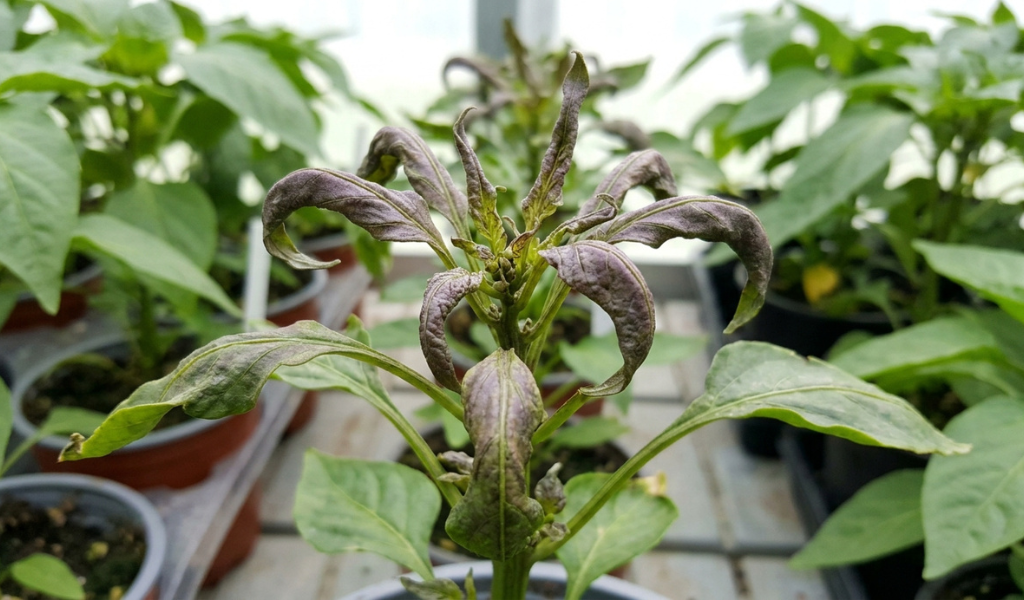
Broad Mite Life Cycle and How Quickly Infestations Spread
Understanding the life history of the pest explains why a broad mite infestation grows so fast. The life cycle moves through four stages: egg, larva, a quiescent resting stage and adult. Females lay tiny oval eggs on the underside of young leaves. These eggs have small white bumps on the surface, which makes them easy to miss.
In warm conditions the whole cycle can finish in as little as four to seven days. A single female can lay dozens of eggs during her short life. This is why one mite on a transplant can turn into thousands within a month. The pest also gets help from other insects. Broad mites often attach themselves to whiteflies and move to new plants, so thrips and whiteflies in the same area can speed up the spread.
The larva looks like a smaller, pale version of the adult. It has only three pairs of legs, while the adult has four pairs. The resting stage is the most protected part of the cycle because the mite is hidden inside the old larval skin. This is also why a single treatment rarely solves the problem. New mites keep appearing from the eggs and resting stages that the first spray missed. Repeating the control steps several days apart is the key to success.
Broad Mites vs. Spider Mites: Key Differences in Pepper Plants
Many growers think a spider mite is the cause when they see mite damage. The two pests are different though and the treatment choices are not always the same. Getting the identification right saves time and money.
A spider mite is large enough to see on a leaf with a simple hand lens. It often leaves fine webbing across the leaf and the damage appears as small yellow speckles on the older leaves. The mites feed on the underside and spread across the whole plant. Spider mite colonies also move to the top of the plant when the population grows.
Broad mites behave in the opposite way. They stay hidden in the growing tips and never make webbing. The damage appears on the newest leaves first. The leaf twists and hardens instead of becoming speckled. Spider mite damage usually looks like dryness. Broad mite damage looks like a growth disorder or chemical injury.
Some other pests can look similar at first glance. An aphid colony causes curled leaves too, but aphids are visible and leave sticky honeydew. A fungus problem can cause leaf spots, but it does not cause twisted new growth. If a plant has distorted tips and no visible insects, the broad mite should be the first suspect. A good magnifying glass of at least 20x power helps confirm the diagnosis.
Causes of Broad Mite Infestations in Pepper Gardens
An infestation rarely starts without a reason. Knowing how these pests arrive helps a grower stop them from coming back. Most problems begin with the environment or with something that was brought into the garden.
Warm Weather, Humidity, and Favorable Growing Conditions
Broad mites love warmth and moisture. They grow best between 70 and 85 degrees Fahrenheit with high humidity. A greenhouse often provides these right conditions all year round, which is why growers there face the pest more often than outdoor gardeners. Crowded plants with poor air flow also create a damp microclimate where mites thrive.
Outdoor gardens are not safe either. A hot and humid summer can lead to a sudden outbreak in a few weeks. Pepper plants that grow under stress from heat or irregular watering are weaker and often suffer more damage. Heavy nitrogen feeding can also create lots of soft new growth, which is exactly what the mites prefer. This is a good reason to feed carefully instead of adding extra nutrients at the first sign of trouble.
Infested Transplants, Garden Tools, and Nearby Plants
The most common way broad mites enter a garden is on a new plant. A transplant that looks fine at the store may already carry a few mites. Because the pest is so small, nobody notices until the damage shows weeks later.
Garden tools and clothing can carry mites from one plant to another. Wind can also move them over short distances. Nearby ornamental plants are another source, since the same pest feeds on many hosts. A single infested begonia on a porch can send mites into a pepper patch close by. Insects such as whiteflies can carry them as well. Checking every plant that enters the garden is the best way to block these entry points.
How to Get Rid of Broad Mites on Pepper Plants Naturally
Many gardeners prefer to start with gentle methods. Natural options work best on light infestations and on plants that are caught early. They fit well with organic gardening. The main idea is to remove as many mites as possible and then keep checking the plants.
Pruning and Removing Heavily Infested Plant Parts
Pruning is the simplest and often the most effective first step. Cut off the twisted tips and any badly damaged branches. Place the cuttings in a sealed bag and throw them away. Do not compost the cuttings because the mites can survive and spread again.
If a plant has heavy broad mite damage and has stopped growing, it may be better to remove it completely. Home gardeners can remove and destroy infested plants to protect the healthy ones nearby. This is a hard choice but a single badly infested plant can act as a mite factory for the whole garden. Always disinfect pruning shears between plants. A simple rubbing alcohol wipe is enough to avoid carrying mites from one leaf to the next.
Washing Pepper Leaves and Using Insecticidal Soap
A strong spray of water can knock many mites off the plant. Focus on the growing tips and the underside of the leaves. This works best in the morning so the leaves can dry before night. Water alone will not fully solve the problem but it lowers the population quickly.
Insecticidal soap is the next step. It works by breaking down the outer layer of the mite so it dries out. The spray must touch the pest directly so cover all parts of the plant well. Repeat the treatment every five to seven days for at least three rounds. Always test the soap on a few leaves first because some pepper plants can burn in hot sun. Spraying in the early morning or evening reduces this risk.
Neem Oil and Other Organic Treatment Options
Neem oil and horticultural oil are popular choices for organic pest management. They smother the mites and also disrupt their feeding. Mix the product exactly as the label states and spray the whole plant until it is lightly wet. Use a fine sprayer so the oil reaches the hidden growing tips.
Sulfur products can also help in some regions but they should never be used close to an oil treatment. The two can burn the leaves. Check the label carefully before mixing any products. Natural options usually need repeated use because they do not kill the eggs well. Plan on treating all the plants in the area and not only the ones that look sick, since hidden mites may already be present nearby.
Best Treatments and Miticides for Controlling Broad Mites on Peppers
When natural methods are not enough a grower may need a stronger approach. Miticides are products made to kill mites, and they are often used in commercial greenhouse production. Some of the common active ingredients include abamectin, spiromesifen and chlorfenapyr. Availability and legal use of these products differ by country and by crop, so always read the label and follow local rules. Some are not allowed on edible plants at all.
Rotation is very important. Broad mites can become resistant if the same product is used again and again. A smart grower switches between different modes of action and treats at proper intervals, usually a few days apart. Because the pest hides in the tips, good coverage matters more than strong chemicals. The spray must reach the new growth and the underside of every leaf.
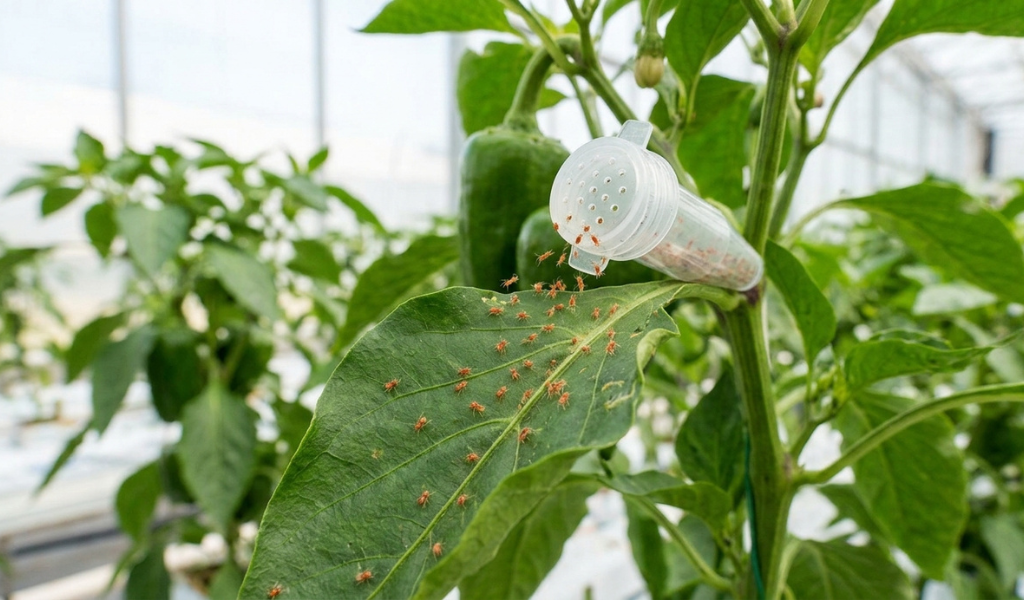 Biological control of broad mites is another strong option, especially in a greenhouse. A predatory mite such as Amblyseius swirskii feeds on broad mite eggs and larvae. These biocontrol agents work best when released early and before the population gets large. Other helpful predators include the lacewing and ladybugs, although these mostly target larger pests like aphid colonies. Predatory mites are the most reliable of the group for this pest. A good plan often mixes biological methods with careful spraying for effective control. Avoid harsh sprays that kill the helpful insects, and do not use products that attract insects you do not want.
How to Prevent Broad Mites on Pepper Plants and Protect New Growth
Prevention is far easier than treatment. A few simple habits can keep the pest out of the garden for good. Every grower should build these steps into a regular routine.
Regular Plant Inspection and Garden Sanitation
Check the growing tips at least once a week. Use a magnifying glass and look closely at the youngest leaves. Early signs such as slight curling or shiny dark leaves are warnings. Catching the problem in the first week can save the entire crop.
Sanitation is the second big habit. Remove weeds and old plant debris because they can shelter mites. Clean pots and trays before reuse. Disinfecting tools after every session takes only a minute and prevents the spread from one plant to another. Wash hands and change gloves after handling a plant that looks suspicious. In a greenhouse keep the floor and benches clean and free of dead leaves.
Quarantine New Plants and Manage Growing Conditions
Always keep new plants apart for at least two weeks before they join the others. This gives time for any hidden symptoms to appear. Check each transplant carefully and reject any plant with twisted or hardened tips. When buying seedlings choose healthy ones from a trusted source.
Growing conditions matter as well. Give plants enough space for air to move. Avoid overhead watering late in the day and keep humidity under control in the greenhouse. Feed plants evenly and do not push soft growth with too much nitrogen. Strong and balanced plants handle pest pressure much better. Keeping ornamental plants away from the pepper area also lowers the risk of a mite jump.
Can Pepper Plants Recover from Broad Mite Damage? Recovery and Long-Term Care
The answer depends on how early the problem was found. The damage already done on twisted leaves will not reverse. Those leaves stay deformed until they drop. The good news is that new growth can come out healthy once the mites are gone. A plant caught early may look normal again within three to four weeks.
After treatment watch the growing tips closely. Healthy new leaves should open flat with a normal green color. If the tips still twist after several treatments the mites are probably still present. Continue the control plan and do not stop too early. Remember that the mites can hide in places that the spray missed.
Give the plant good care during recovery. Water evenly and provide balanced feeding. Keep the plant in good light and out of extreme heat. Remove any flowers that look damaged so the plant can focus on new growth. Seedlings and young pepper plants often bounce back faster than older ones. Plants that have been stunted for months may never produce a worthwhile harvest, and replacing them can be the wiser choice.
Final Thoughts
Broad Mites on Pepper Plants are small but they cause serious harm. Twisted new growth, bronzed leaves and stunted plants are the main warning signs. Because the mite is nearly invisible, growers must rely on symptoms and a good magnifying glass. Fast action matters because the life cycle is short and the population grows quickly.
Natural methods such as pruning, water washing, insecticidal soap and neem oil work well when the problem is caught early. Miticides and predatory mites help in larger or tougher cases. The strongest plan combines all of these with careful prevention. Inspect often, quarantine new plants and keep tools clean. Check your own pepper plants this week. Look at the newest leaves and act at the first sign of trouble. A small effort today can protect your whole harvest later.
Frequently Asked Questions
How to identify broad mites vs. spider mites?
Spider mites are larger and leave fine webbing and yellow speckles, mostly on older leaves. Broad mites are much smaller and make no webbing. They hide in the growing tips and cause twisted, hardened new growth. A magnifying glass of 20x power helps confirm which pest is present.
How do you know if you have broad mites?
Look for narrow and curled new leaves, shiny dark undersides and stunted growth. Flowers may drop and fruit may show russeting. If the top of the plant looks damaged while the lower leaves stay normal, broad mites are likely. A microscope or magnifier can show the pale mites on the youngest leaves.
Can plants recover from broad mites?
Yes, if the infestation is treated early. Damaged leaves will not return to normal but new growth can come in healthy. Recovery usually takes a few weeks. Severely stunted plants may recover very slowly or not at all.
Is broad mites on pepper plants good?
No. Broad mites on pepper plants never help the plant. They feed on plant sap and damage the growing tips. They reduce yield and can kill young plants. Any sign of them calls for quick control.
What are the tiny bugs on my pepper plants?
Several small pests can attack peppers. Aphids are soft and often green or black. Thrips are thin and move quickly. Whiteflies fly up when the plant is shaken. If you cannot see any insects but the new growth is twisted, the cause is often broad mites.
Do broad mites on pepper plants work?
This question sometimes appears when people search for plant benefits, but the answer is simple. Broad mites do not work in any helpful way for pepper plants. They are a harmful pest. Growers should focus on broad mite control and not leave them alone.
How can I prevent broad mite infestations on pepper plants?
Inspect plants weekly and quarantine new plants for two weeks. Clean tools and pots often and remove plant debris. Keep good air flow and avoid heavy nitrogen feeding. Keep ornamental plants that can host mites away from your peppers.