Mycorrhizae for Tomato Plants: A Complete Guide to Mycorrhizal Fungi and Soil Health
Mycorrhizae for Tomato Plants: A Natural Way to Boost Soil Health
Mycorrhizae for tomato plants offer a simple way to build a stronger root system and a healthier garden bed. Mycorrhizal fungi live in the soil and connect with tomato roots to share water and nutrients in exchange for sugars. This partnership has existed in nature for hundreds of millions of years, yet many gardeners still overlook it when planning a feeding routine. People often search for the best fertilizer for tomatoes plants and stop at a bag of nitrogen, phosphorus and potassium. A good fertilizer matters, but it only works well when the roots can reach and absorb what is in the soil. That is where beneficial fungi step in.
A tomato plant treated with mycorrhizal inoculant can build more root surface, absorb phosphorus more easily and handle dry spells with less stress. Research on arbuscular mycorrhizal fungi shows gains in nutrient uptake, plant growth and sometimes tomato yield, although results depend on the soil and the product used. Mycorrhizae for tomato plants also improve soil structure over time, which supports overall soil health. This guide explains what mycorrhiza is, how mycorrhizal colonization works, when and how to apply an inoculant and which mistakes to avoid.
What Mycorrhizae Actually Are and How They Work
The word mycorrhiza comes from Greek and means fungus root. It describes a symbiotic relationship between a soil fungus and the roots of a host plant. About eighty percent of land plants form this kind of partnership, and the tomato is one of them. The fungi most useful to a tomato plant are arbuscular mycorrhizal fungi, often shortened to AMF.
After a spore lands near a tomato root and starts to grow, the fungus enters the root cells and forms tiny tree shaped structures called arbuscules. These structures are the trading posts where nutrients move from the fungus to the plant and sugars move the other way. Outside the root, thin threads called hyphae spread through the surrounding soil. A single root can reach a far larger volume of soil this way because hyphae are much thinner than any root hair.
This exchange turns the tomato root into a carbon sink for the fungus since the plant sends a share of its photosynthesis products underground. In return the plant receives phosphorus, nitrogen, zinc and water that it could not easily reach alone. Scientists often study a tomato mutant that cannot form this partnership to measure how much the fungus contributes. Those studies keep showing that the fungus does real work. Colonization is microscopic, so a lab confirms it by staining root samples, while home gardeners see the results above ground instead.
Top Benefits of Using Mycorrhizae for Tomato Plants
The benefits of mycorrhizae for tomato plants show up in three main areas. Each one connects to the others, and together they explain why many growers add an inoculant at planting time.
Improved Phosphorus and Nutrient Absorption
Phosphorus moves very slowly through soil. A root quickly uses up the phosphorus right beside it and then sits in a zone with very little left. Fungal hyphae reach beyond that zone and carry phosphorus back to the plant. This is why nutrient uptake improves most in soils that test low in phosphorus. Mycorrhizal fungi also help with nitrogen, zinc and copper, which lowers the risk of nutrient deficiencies. Better uptake can improve fertilizer use efficiency too, so the same feed goes further and less washes away. Gardeners with tired beds often notice greener tomato leaves within a few weeks.
Stronger Root Development and Plant Growth
A mycorrhizal tomato plant usually builds a larger and more branched root system. More roots mean more places to take in water and nutrients. Seedlings that receive an inoculant tend to recover faster from transplant shock and grow steadily afterward. Strong early growth leads to more flowers and a better fruit set later in the season. Over a full growing season this adds up to better growth and productivity. Some studies also link the fungus to lower damage from soil pathogens such as Fusarium wilt because the fungal network takes up space on the root and prompts the plant’s own defenses. It is not a cure but it adds a layer of protection.
Better Drought Resistance and Water Absorption
Hyphae hold on to soil water and reach tiny pores that roots cannot enter. When the soil dries a tomato plant with a fungal partner keeps drinking longer between irrigation sessions. This reduces drought stress and the damage that follows uneven watering. Hyphae also help bind particles into soil aggregates that hold both moisture and air. For gardeners in hot regions this is a practical gain. It does not replace watering but it gives the plant a bigger buffer when a heat wave arrives.
How to Apply Mycorrhizae for Tomato Plants in Gardens and Containers
The method matters less than direct contact between spores and roots. Pick the approach that fits your setup and follow the product label for the rate.
Applying Mycorrhizal Inoculant Directly to Tomato Roots
Direct root contact gives the best result. For powder or granular products sprinkle the recommended amount into the planting hole and set the root ball on top of it. For bare root plants dust the roots lightly or dip them in a slurry made with water and the powder. Liquid products can be used as a soil drench near the base of a plant that is already in the ground. Soil drenching works best when a gentle watering follows to carry mycorrhizal spores down to the roots. Always check the label since rates differ between brands.
Using Mycorrhizae in Potting Mix and Garden Soil
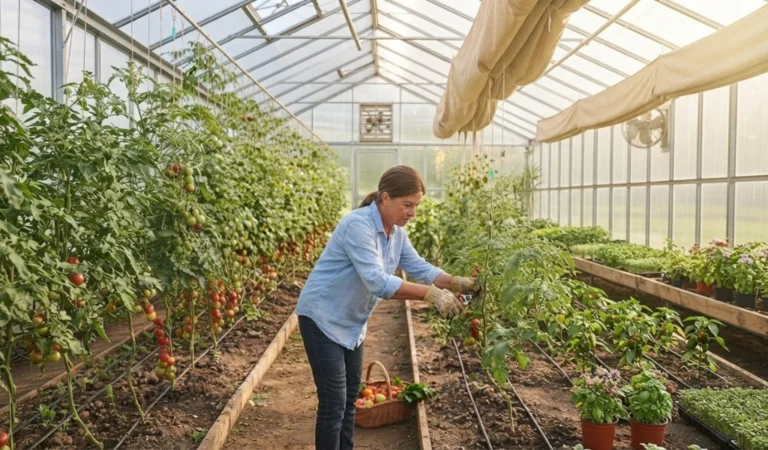
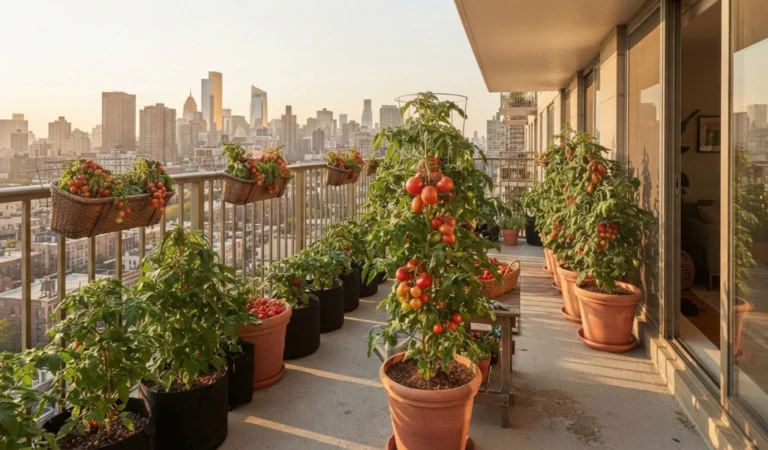
In containers blend the inoculant into the top part of the potting mix where roots will grow. Choose a mix with some organic matter but no heavy synthetic fertilizer. A pot sized for tomato plants gives the roots room to build colonization. In garden soil loosen the planting area and add the product to each planting hole instead of spreading it across the whole bed. Compost supports the soil microorganisms that work alongside the fungus. Avoid tilling after planting because digging cuts the hyphae and breaks the network. Greenhouse growers follow the same steps and often mix the product into trays for transplant production.
When to Apply Mycorrhizae to Tomato Plants for Best Results
Timing decides whether the fungus can colonize the root at all. Spores need living roots to touch so the best moment is early while the plant is young and still growing new roots.
Applying Mycorrhizae During Seed Starting
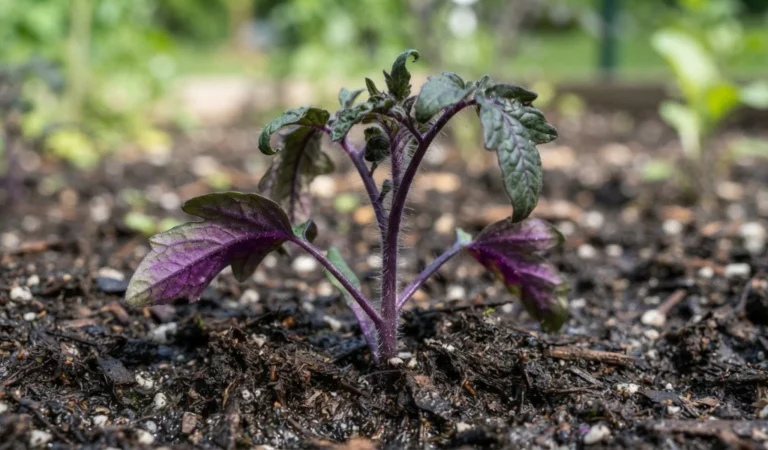
Seed starting is the ideal stage for inoculation. Mix a small amount of mycorrhizal inoculant into the seed starting mix or sprinkle it into the hole before dropping in the seed. As the first roots form they meet the spores right away and root colonization begins within the first few weeks. Tomato seedlings that start with this partnership arrive in the garden with a head start. Use a light mix with low fertility because rich mixes and high phosphorus can discourage the fungus. Keep the mix moist but not soggy so the spores can germinate.
Adding Mycorrhizal Fungi When Transplanting Tomatoes
Transplanting is the second best time and it suits store bought seedlings that never met the fungus. Place the inoculant in the planting hole so it touches the root ball. Tomatoes can be planted deep so apply some product at each level where roots will form along the buried stem. Water the plant in right away to move spores down toward the roots.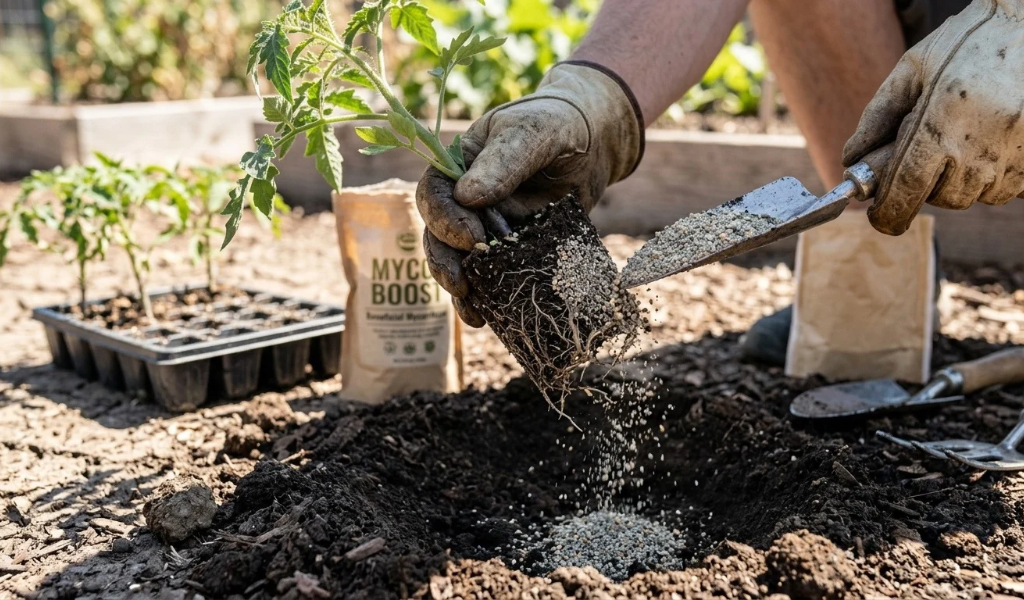 Spreading the product on top of the soil after planting does little since spores cannot travel far on their own. Expect colonization rates to build over two to four weeks.
Best Types of Mycorrhizal Fungi for Growing Tomatoes
Tomatoes work with arbuscular mycorrhizal fungi so look for that group on the label. Common species in commercial mycorrhizal products include Rhizophagus irregularis, Funneliformis mosseae, Funneliformis geosporum and Claroideoglomus etunicatum. Many older labels list Glomus intraradices, which is the earlier name for Rhizophagus irregularis. Multi species blends are a safe choice because different fungi suit different soils and conditions.
Check that the label lists the species, a spore count and an expiration date. Spores are alive so old product loses strength. Skip tree focused blends that rely on ectomycorrhizal fungi since tomatoes do not form that type of partnership. Avoid products packed with fertilizer because extra nutrients suppress mycorrhizal colonization. Organic tomato growers should confirm the product is approved for organic use.
Pay attention to storage as well. Spores last longest in a cool dry place and should never sit in a hot shed or car. A quality commercial mycorrhizal product costs little compared with the value of one healthy tomato plant.
Common Mistakes to Avoid When Using Mycorrhizae for Tomato Plants
The first mistake is skipping root contact. Powder sprinkled on the soil surface rarely reaches the roots so the fungus never gets a chance to colonize. The second is using too much phosphorus. When soil phosphorus is already high the tomato plant has little reason to feed the fungus so colonization drops. Excessive use of quick release fertilizer causes the same problem and cancels the work of the inoculant.
Fungicides cause trouble as well. Many broad spectrum products harm beneficial fungi along with the disease fungi. If spraying is needed choose a targeted product and keep it off the root zone. Heavy tillage, compacted soil and long periods of bare ground also hurt the network because hyphae need air and living roots. Another common error is buying an old or poorly stored product. Keep inoculant cool and dry and use it before the expiry date.
Finally do not expect results from crops that do not host the fungus. Brassicas such as cabbage and broccoli do not form this partnership so they do not build fungal populations in a rotation. Expecting overnight change is also a mistake since colonization takes weeks.
Mycorrhizae vs. Regular Fertilizer: Understanding the Difference for Tomatoes
Fertilizer and mycorrhizae do different jobs. Fertilizer adds nutrients to the soil. Mycorrhizal fungi help the root system find and absorb those nutrients and the soil water around them. Think of fertilizer as groceries and the fungus as the delivery service that brings them to the door.
A tomato plant needs both. Without enough nutrients in the soil the fungus has little to carry. Without a working root network a plant may leave much of the fertilizer unused. The best fertilizer for tomato plants is usually a balanced organic feed with moderate phosphorus combined with compost. This keeps nutrient levels steady and avoids the high phosphorus that suppresses mycorrhizal fungi. Slow release organic fertilizer works especially well because it feeds soil microorganisms along with the plant.
Fertilizer gives fast results but fades after a few weeks. Mycorrhizal colonization starts slowly but lasts through the growing season. Consider a gardener who adds a high phosphorus bloom booster every week. That bed may show lush tops but weak colonization. Another gardener who feeds lightly with compost and a slow release organic feed often sees steadier plants. Used together mycorrhizae for tomato plants and a sensible feeding plan improve tomato production while cutting waste.
Tips for Getting the Best Results From Mycorrhizae for Tomato Plants
Start with healthy soil. Add compost or other organic matter before planting because it feeds soil life and improves soil health. Keep mulch around the plants to hold moisture and keep the root zone cool.
Water deeply and steadily instead of in short bursts. Good irrigation habits keep soil moisture even and let the fungus stay active. Choose a fertilizer low in phosphorus once the plants are growing and avoid extra phosphorus unless a soil test shows a need. A simple soil test every year tells you where you stand.
Grow cover crops such as clover or rye in the off season. Living roots keep the fungus alive between tomato crops. Rotate tomatoes with other host crops and avoid long fallow periods. Watch for signs such as sturdy stems, deep green leaves and steady flowering since these often appear within the first month.
Test small first. If you grow in several beds inoculate one bed and leave a similar bed untreated for a season. A side by side comparison shows whether your field conditions respond well and whether the extra cost makes sense for your garden.
Final Thoughts
Mycorrhizae for tomato plants are an affordable and natural way to improve nutrient uptake, root growth and drought tolerance. The fungus works best when it touches the roots early, when soil phosphorus stays moderate and when the soil is rich in organic matter. It is not a miracle product and results vary by soil but the gains in plant growth and soil health are well supported. Apply a quality inoculant at seed starting or transplanting this season, keep your feeding balanced and compare the plants with your last crop. Your soil will thank you for it.
Frequently Asked Questions
Can you put mycorrhizae on top of soil?
It is possible but not effective. Spores need to touch living roots to colonize them. Sprinkling the product on the surface leaves most spores far from the root zone. Place it in the planting hole or drench the soil so the spores reach the roots.
Can you overdo mycorrhizae?
Yes, you can apply more mycorrhizae than necessary, but using extra product generally will not harm your plants. Mycorrhizal fungi naturally colonize only as much of the root system as the plant can support. Applying too much simply wastes money without providing additional benefits. Always follow the recommended label rate, and use the extra money for compost or other soil improvements.
What are the disadvantages of mycorrhizae?
The main drawbacks are cost, slow results and sensitivity to poor conditions. Results can be small in rich soil that already has plenty of native fungi. High phosphorus, fungicides and tillage reduce the benefit. Low quality products with dead spores also disappoint.
When should you apply mycorrhizae to tomato plants?
Apply it at seed starting or at transplanting when new roots are forming. Early use gives the fungus time to build colonization during the first weeks of growth.
Do tomato plants benefit from mycorrhizal fungi?
Yes. Tomato is a strong host plant for arbuscular mycorrhizal fungi. Studies report better nutrient uptake and growth and in many cases higher tomato yield, especially in soils low in phosphorus or under drought stress.
When not to use mycorrhizal fungi?
Skip it when the soil is already rich in native fungi, when you plan to use heavy fungicides or when the fertilizer program is high in phosphorus. It also does not help crops such as cabbage or broccoli. A soil test and a look at your current practices can guide the decision.
Is mycorrhizae good for tomato plants, and why?
Yes. Mycorrhizae for tomato plants extend the root reach, improve phosphorus and water absorption and support soil structure. That leads to stronger seedlings and better resilience during stress. The effect works best when the product is applied correctly and the soil is managed well.