How to Grow Tomatoes From Seed for a Healthy Garden
How to Grow Tomatoes from Seed: A Complete Guide for Every Gardener
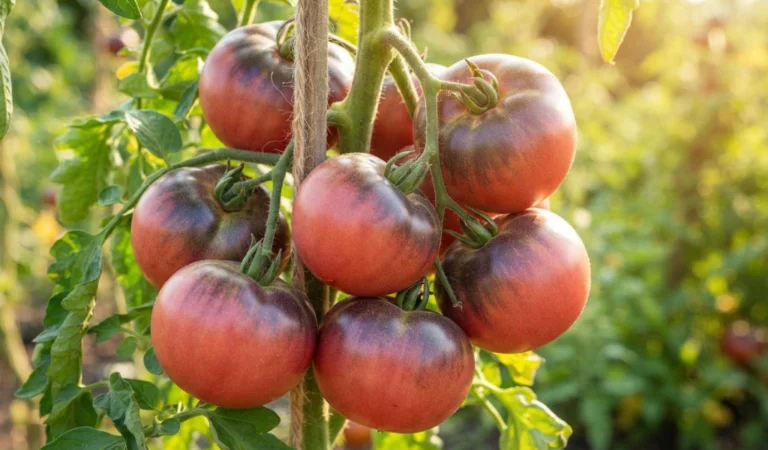
If you have ever bitten into a sun-warmed tomato straight off the vine, you already know why so many people want to grow tomatoes at home. Learning how to grow tomatoes from seed is one of the most rewarding things you can do in your garden this year. It costs less than buying tomato plants from seed at the garden center, and it gives you access to hundreds of tomato varieties you will never find in stores. Whether you are a first time gardener or someone who has grown vegetables for years, starting tomato seeds indoors puts you in full control of your harvest from day one.
In this guide, we will walk through everything you need to know about how to grow tomatoes from seed, from picking the right seeds indoors to transplanting tomato seedlings outside once the weather warms up. These tomato growing tips will help you understand each stage of the process, from starting seeds to caring for healthy, productive plants. We will also cover what many gardeners consider the best organic fertilizer for tomato plants, so your seedlings grow strong from the very start. By the end, you will have a clear, simple plan you can follow whether you have a small balcony or a full vegetable garden.
Why Grow Tomatoes from Seed
Every gardener eventually asks the same question: why bother with seeds when you can just buy tomato starts? The answer is simple. When you grow tomatoes from seed, you get far more choice, better plant health, and a lot more satisfaction watching the whole process unfold in your own home. Garden centers usually carry only a handful of common tomato varieties. But when you start tomato seeds indoors yourself, you open the door to heirloom tomatoes, beefsteak tomatoes, cherry tomatoes, and dozens of unusual types that never make it to store shelves. If this is your first year growing tomatoes, starting from seed also teaches you patience and gives you a much deeper understanding of how a tomato plant actually grows, from germination all the way to harvest.
There is also a cost benefit. A packet of seeds often gives you far more plants than buying the same number of tomato plants from seed trays at a nursery. For anyone building a home garden on a budget, this matters a lot over a full growing season.
Choosing the Right Tomato Varieties
Before you plant seeds, take a moment to think about what kind of tomato plant fits your space and your goals. There are two broad types of tomato varieties worth knowing about. Determinate tomatoes grow to a set height, produce their fruit within a shorter window, and work well in containers or small gardens. Indeterminate tomatoes keep growing and producing fruit all season long, which means they need more support, usually in the form of tomato cages or stakes.
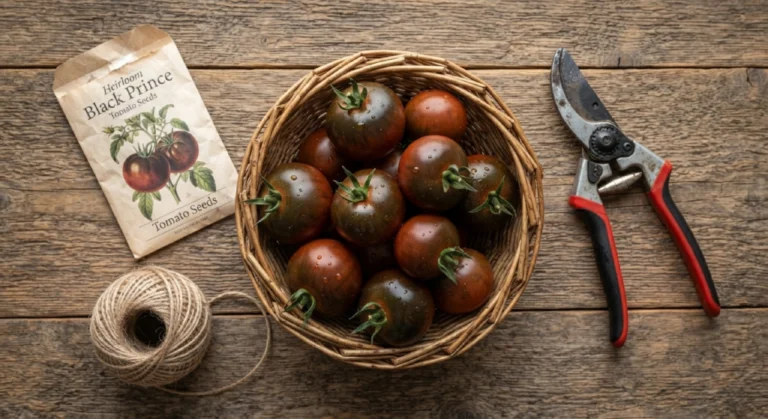
Within those two categories, you will find countless types of tomato to choose from. Cherry tomatoes are a favorite for beginners because they germinate easily and produce quickly. Beefsteak tomatoes are prized for their size and are perfect for sandwiches. Heirloom tomatoes bring unique colors, shapes, and flavors that you simply cannot find in a grocery store. If you are unsure where to start, your local garden center or a seed catalog is a great place to get seeds and read descriptions of each variety before you commit.
Think about your climate, your growing season length, and how much space you actually have. A small balcony garden might do better with a compact determinate variety, while a large vegetable garden can handle a few sprawling indeterminate plants.
Supplies You Need for Starting Tomato Seeds Indoors
Growing tomato seeds indoors does not require fancy equipment, but a few basic supplies will make the process much easier and increase your success rate.
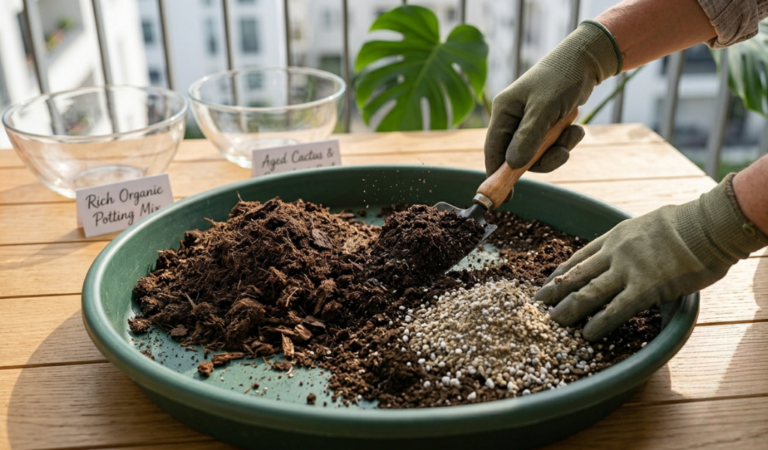
Start with a good seed starting mix rather than regular garden soil. Garden soil is too heavy and often carries pathogens that can harm young seedlings. A light, well draining seed starting mix gives tender roots room to grow and reduces the risk of disease during the early germination stage.
You will also need containers. Seed trays with individual cells work well because they let you separate each seedling without disturbing the roots of its neighbors. Some gardeners prefer peat pots since these can go straight into the ground later, roots and all, which reduces transplant shock. Either option works fine for growing tomato seedlings, so pick whichever fits your budget.
A heat mat is optional but genuinely useful. Tomato seeds germinate fastest in warm soil, ideally between 70 and 80 degrees Fahrenheit. A seed starter heat mat placed under your trays can speed up seed germination significantly, especially if your house tends to run cool.
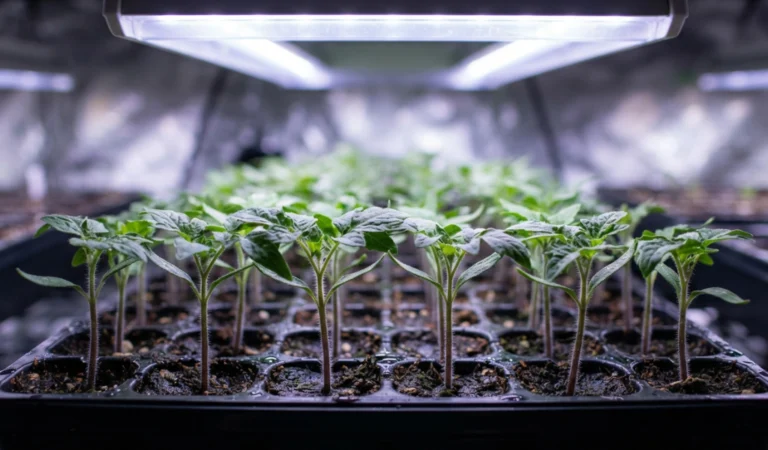
Lighting is one of the most important pieces of the puzzle. Natural window light is rarely enough on its own, especially in late winter when days are short. LED grow lights or basic fluorescent grow lights give seedlings the steady, strong light they need to avoid getting tall and leggy. Position the lights just a few inches above the plants and raise them as the seedlings grow taller.
Finally, keep a note of your average last frost date. This single piece of information tells you exactly when to start seeds indoors, since most gardeners begin the process about six to eight weeks before that date.
Step by Step Guide to Growing Tomato Seeds Indoors
Now let us get into the actual process of how to grow tomatoes from seed indoors, step by step.
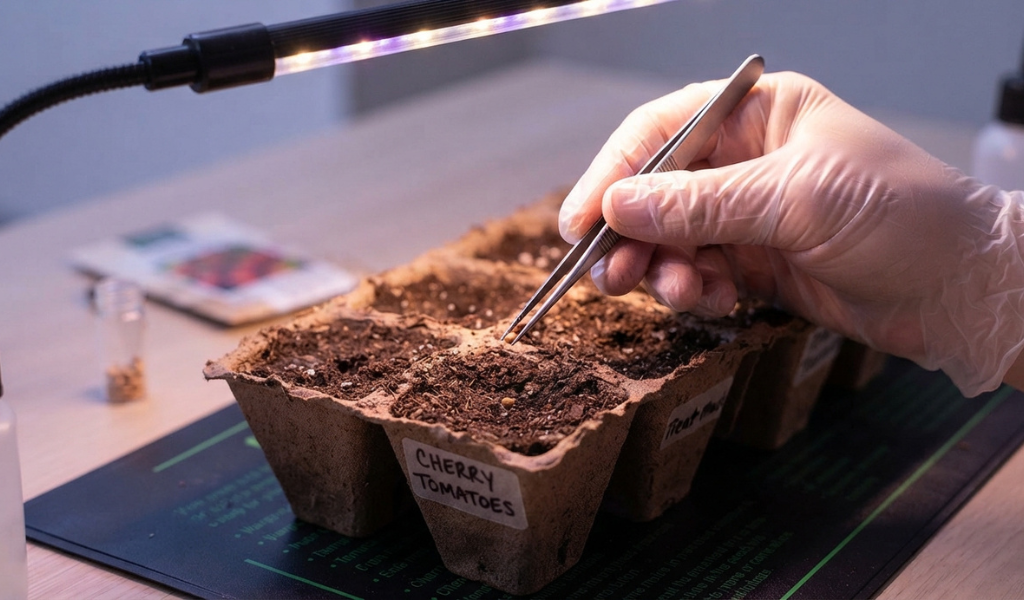
Fill your seed trays with moistened seed starting mix, pressing it down gently so there are no large air pockets. Plant seeds about a quarter inch deep. Many gardeners like to place 2-3 seeds per cell as a safeguard, since not every seed will germinate. Once the seedlings sprout, you can thin them down to the strongest one per cell.
Cover the seeds lightly with more mix or simply press them into the soil, since tomato seeds do not need much covering to germinate. Water gently with a spray bottle so you do not disturb the seeds or wash them to one side of the container.
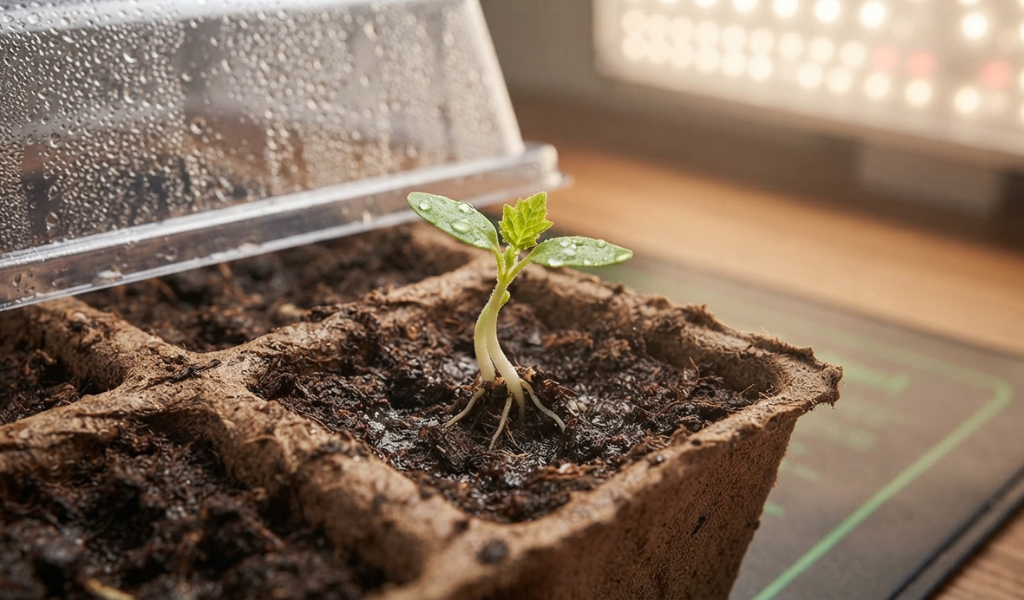
Place your trays somewhere warm, ideally with a heat mat underneath if you have one. Cover the trays loosely with plastic wrap or a humidity dome to keep moisture in while the seeds germinate. Germination usually happens within five to ten days, though some tomato varieties take a little longer.
Once you see the first sprouts, remove the plastic cover immediately and move the trays under your grow lights. This step matters more than people realize. Seedlings left without enough light will stretch upward, becoming thin and weak as they search for a light source. Keeping the lights close and running them for around 14 to 16 hours a day keeps your seedlings compact and sturdy.
Caring for Tomato Seedlings Indoors
Once your tomato seedlings are up and growing, the daily care becomes fairly simple, but consistency really pays off here.
Water your seedlings from the bottom whenever possible by setting the trays in a shallow pan of water and letting the soil soak it up. This keeps the top of the soil drier, which helps prevent a common fungal problem called damping off that can wipe out young seedlings almost overnight.
Watch for the appearance of true leaves. The first set of leaves your seedling produces are actually seed leaves, which look different from the more jagged, tomato shaped leaves that follow. Once you see two sets of true leaves, your seedling is developing a real root system and is ready for the next stage of growth, which might include moving into a slightly larger pot if you started in small cells.
A small fan set on low, running for a couple of hours a day, is a trick many experienced gardeners use. The gentle breeze mimics outdoor wind, which strengthens the stems and prepares your tomato plants for the real world once they head outside.
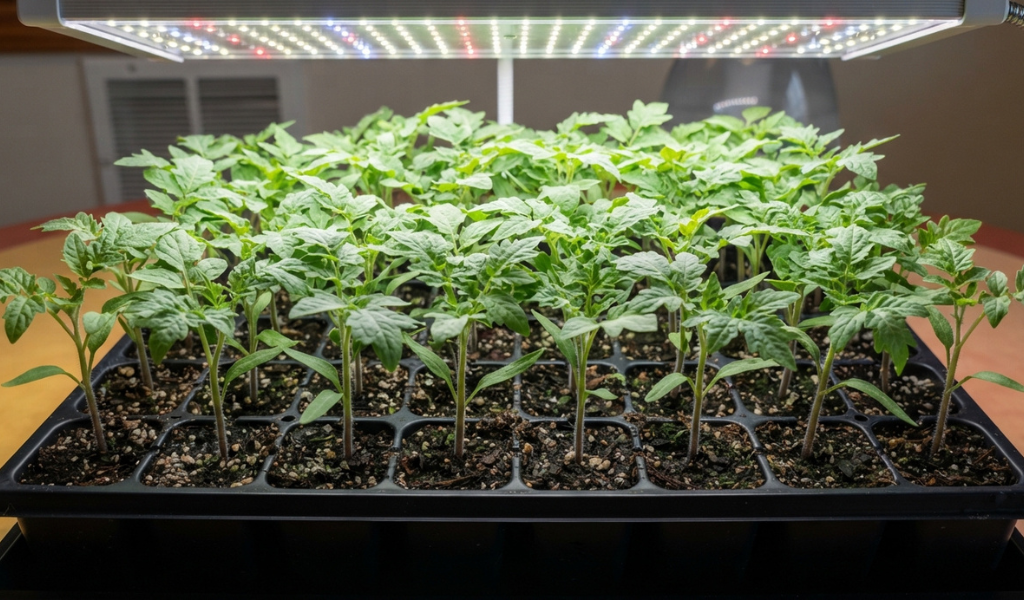 Room temperature matters too. Tomato seedlings prefer daytime temperatures around 65 to 75 degrees Fahrenheit, with slightly cooler nights. Avoid placing trays near cold drafty windows or right next to heating vents, since both extremes can stress young plants.
Feeding Your Tomato Plants the Right Way
Seedlings do not need much fertilizer in their first couple of weeks since the seed itself provides early nutrients. Once true leaves appear, though, a light feeding schedule helps your tomato plant grow strong roots and sturdy stems.
Many home gardeners look specifically for the best organic fertilizer for tomato plants because organic options tend to release nutrients slowly and are gentler on young roots compared to harsh synthetic blends. A balanced organic liquid fertilizer, diluted to about half strength, works well for seedlings. As your plants mature and move into the garden, you can switch to a fertilizer with a bit more phosphorus and potassium, which supports strong fruit development rather than just leafy growth.
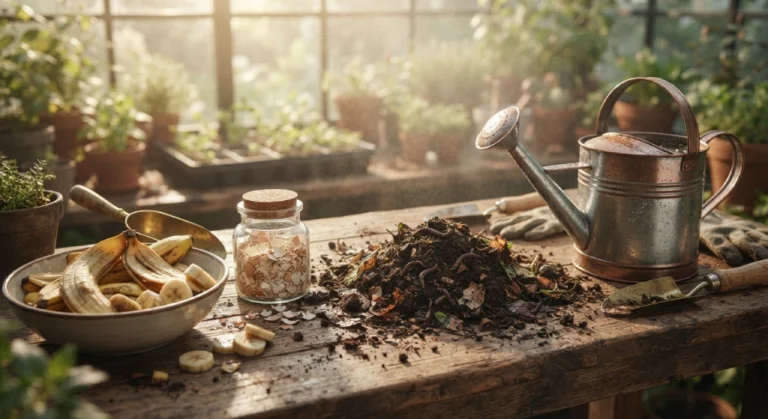
Compost tea, fish emulsion, and worm castings are all popular choices among gardeners who prefer to keep things organic from seed to harvest. These options feed the soil itself, encouraging the kind of healthy microbial activity that helps a tomato plant absorb nutrients more efficiently over the full growing season.
Whatever fertilizer you choose, avoid overfeeding. Too much nitrogen in particular leads to lush green leaves but disappointing fruit production, which is the opposite of what most gardeners are hoping for.
Hardening Off and Transplanting Tomato Seedlings
Before your tomato seedlings can go outside permanently, they need a transition period called hardening off. Skipping this step is one of the most common mistakes new gardeners make, and it can shock or even kill seedlings that were doing perfectly well indoors.
About a week or two before your average last frost date, start setting your tomato plants outdoors for short periods each day, beginning with an hour or two in a shaded, sheltered spot. Gradually increase the time outside and slowly introduce more direct sunlight over the course of seven to ten days. This process toughens the leaves and stems, preparing them for wind, sun, and temperature swings they never experienced indoors.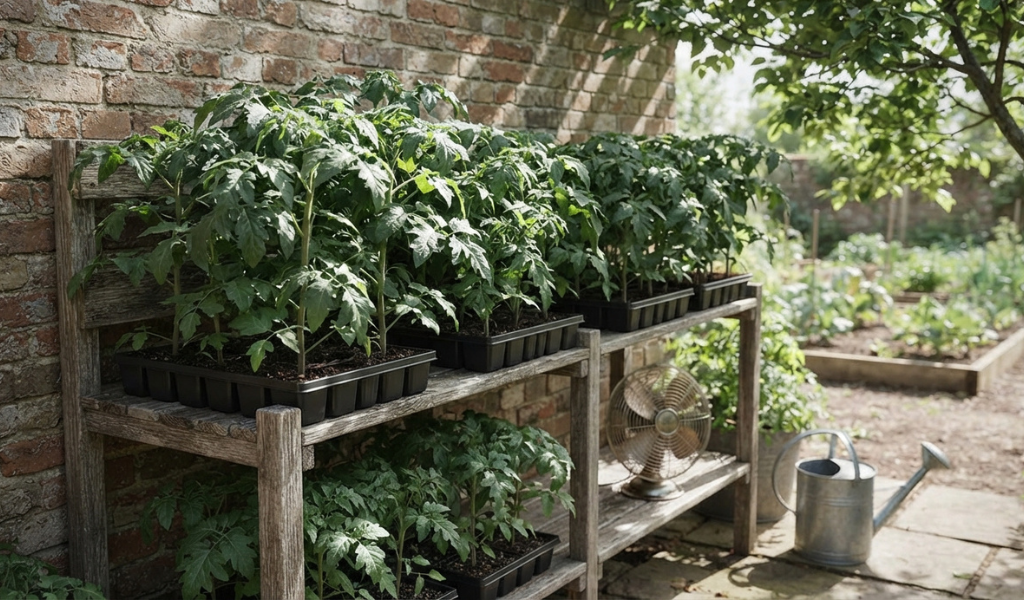
Once your seedlings have been fully hardened off and the danger of frost has passed, it is time to transplant tomato seedlings into their permanent home, whether that is a raised bed, a large pot, or open ground.
Planting Tomatoes in the Garden
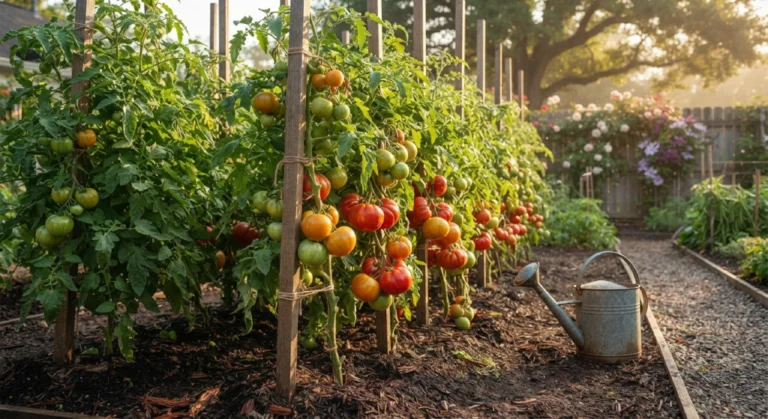
When you are ready to plant tomatoes in the garden, choose a spot that gets at least six to eight hours of direct sun each day. Tomatoes are sun hungry plants, and skimping on light will noticeably reduce your harvest.
Dig a hole deeper than you might expect, since tomato plants can grow roots along any part of the buried stem. Planting deep, up to the first set of true leaves, actually creates a stronger root system and a sturdier plant overall. Mix in some compost or your chosen organic fertilizer before placing the seedling in the hole, then backfill gently and water thoroughly.
Space your plants according to the variety you chose. Determinate tomatoes can often be planted a bit closer together, while sprawling indeterminate types need more room to spread. Set up tomato cages or stakes at planting time rather than waiting, since driving stakes in later can damage the root system once it has established itself.
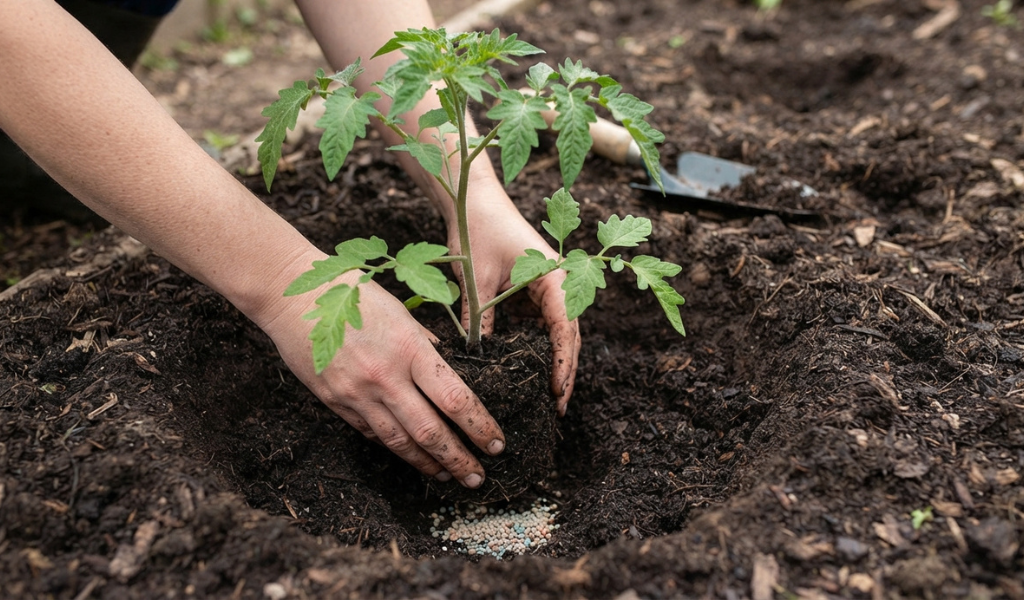 Water deeply and consistently throughout the growing season rather than giving light daily sprinkles. Deep watering encourages roots to grow downward in search of moisture, which makes for a more resilient plant during hot, dry stretches.
Common Problems When You Grow Tomatoes from Seed
Even experienced gardeners run into the occasional hiccup, so do not be discouraged if things do not go perfectly the first time.
Leggy seedlings usually point to insufficient light. Move your grow lights closer and increase the number of hours they run each day. Yellowing leaves on young seedlings often signal overwatering rather than a nutrient problem, so check soil moisture before reaching for fertilizer.
Tomatoes are susceptible to a handful of common issues once they are outdoors, including blossom end rot, which is usually caused by inconsistent watering rather than a lack of calcium in the soil. Keeping your watering schedule steady solves this problem far more often than adding supplements.
Pests like aphids and hornworms can show up during the growing season as well. Regularly checking the undersides of leaves lets you catch these problems early, before they spread across your entire vegetable garden.
Saving Seeds for Next Season
Once you have successfully learned how to grow tomatoes from seed, you might want to save seeds from your best plants for next year. This works especially well with heirloom tomatoes, since their seeds grow true to the parent plant, unlike hybrid varieties.
To save seeds, scoop them out of a fully ripe tomato along with the surrounding gel, then let the mixture ferment in a small jar of water for a couple of days. This process removes the natural germination inhibitors coating each seed. Rinse the seeds well, spread them out to dry completely on a paper towel or plate, and store them in a cool, dry place until you are ready to start the cycle again next season.
Final Thoughts
Learning how to grow tomatoes from seed takes a bit of patience, but the payoff is well worth it. From selecting tomato varieties and starting tomato seeds indoors, to hardening off and finally planting tomatoes in the garden, every step teaches you something new about how a tomato plant actually grows. With the right seed starting mix, decent grow lights, and a good organic fertilizer, your tomato seedlings have everything they need to turn into productive, healthy plants.
If you have been thinking about starting your own vegetable garden this year, there is no better time to get seeds and give it a try. Even a small home garden with just a few pots can produce more tomatoes than you expect. Start small, pay attention to your plants, and you will likely find yourself planning an even bigger garden next season.
Frequently Asked Questions
When should I start tomato seeds indoors? Most gardeners start seeds indoors about six to eight weeks before their average last frost date. Check your local frost date and count backward to find the right window for your area.
How many seeds should I plant per pot? A common approach is to plant 2-3 seeds per cell or pot, then thin down to the strongest single seedling once they sprout. This gives you a backup in case not every seed germinates.
Do tomato seeds need light to germinate? No, tomato seeds germinate in darkness and do not need light until after they sprout. Once seedlings appear, move them under grow lights right away to prevent them from stretching.
What is the best organic fertilizer for tomato plants? Many gardeners rely on fish emulsion, compost tea, or worm castings as organic fertilizer options. These release nutrients gradually and support steady growth without the risk of burning young roots.
How long does it take to grow tomatoes from seed to harvest? Depending on the variety, it typically takes 60 to 100 days from transplanting to harvest, plus the six to eight weeks needed for starting tomato seeds indoors beforehand.
Why are my tomato seedlings tall and thin? Leggy seedlings almost always mean they are not getting enough light. Lower your grow lights so they sit just a few inches above the plants and increase how many hours a day they run.
Can I plant tomato seeds directly in the garden instead of starting indoors? You can direct sow in areas with a long growing season, but starting tomato seeds indoors gives plants a head start and usually leads to an earlier, larger harvest in most climates.