Tomato Grow in Pot: How to Grow Tomatoes in Containers Successfully
Tomato Grow in Pot: Complete Guide to Growing Tomatoes in Containers
If you’ve ever wanted to grow tomatoes but only have a balcony, patio, or small backyard, container gardening is your answer. Learning how to grow tomatoes in a pot doesn’t require a huge yard or years of gardening experience. With the right container, soil, and a bit of daily attention, you can enjoy juicy, homegrown tomatoes all season long.
This guide walks you through every step of growing tomatoes in containers, from choosing the best tomato varieties for containers to harvesting your first ripe fruit. Whether you’re working with a small patio or a sunny corner of your yard, these tips will help your container tomatoes grow strong and produce a generous harvest.
Why Grow Tomatoes in Pots?
Growing tomatoes in pots has become popular among home gardeners, and for good reason. Container gardening removes many of the barriers that come with traditional in-ground planting, making it possible for almost anyone to grow a tomato plant, regardless of yard size or soil quality.
Benefits of Container Gardening
One of the biggest advantages of growing tomatoes in containers is control. You decide the growing medium, the amount of water, and where your containers sit throughout the day. This means you can avoid poor garden soil, reduce weed competition, and move your plants to catch more sunlight when needed.
Container gardening also helps limit certain tomato diseases that live in garden soil. Since you’re using fresh potting mix instead of in-ground soil, your tomato plant has a cleaner start, which can lead to healthier growth and fewer problems with soil-borne pests.
Growing Tomatoes in Small Spaces
You don’t need a large backyard to grow tomatoes in pots. A sunny patio, balcony, deck, or even a windowsill with strong light can work well for compact varieties. This makes container tomatoes an excellent option for apartment dwellers, renters, or anyone with limited garden space. As long as your containers receive enough sunlight and you choose the right tomato varieties, small-space gardening can produce surprisingly large harvests.
Select High-Yielding Tomato Varieties
Not every tomato plant is suited for pots. Choosing the right tomato varieties makes a significant difference in how well your plants grow and how many tomatoes you’ll harvest. When planning to grow tomatoes in containers, look for determinate or dwarf varieties bred specifically for compact growth.
Best Compact Varieties
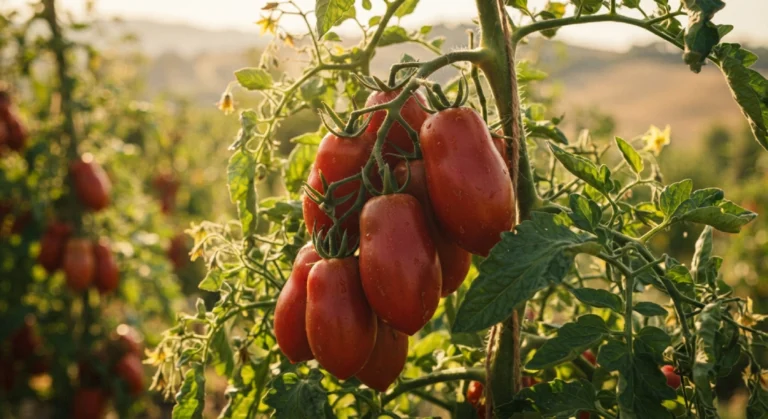
Determinate tomatoes tend to grow best in containers because they stay smaller and stop growing once they reach a certain height. Varieties like Roma, Celebrity, and Patio Princess are known for their compact size and reliable tomato harvests. These plants typically need less staking than indeterminate varieties, making them easier to manage on a patio or balcony.
If you have limited space, dwarf varieties such as Tiny Tim or Better Bush are worth considering. These plants grow and produce well even in smaller pots, without sacrificing flavor.
Best Cherry Tomatoes for Pots
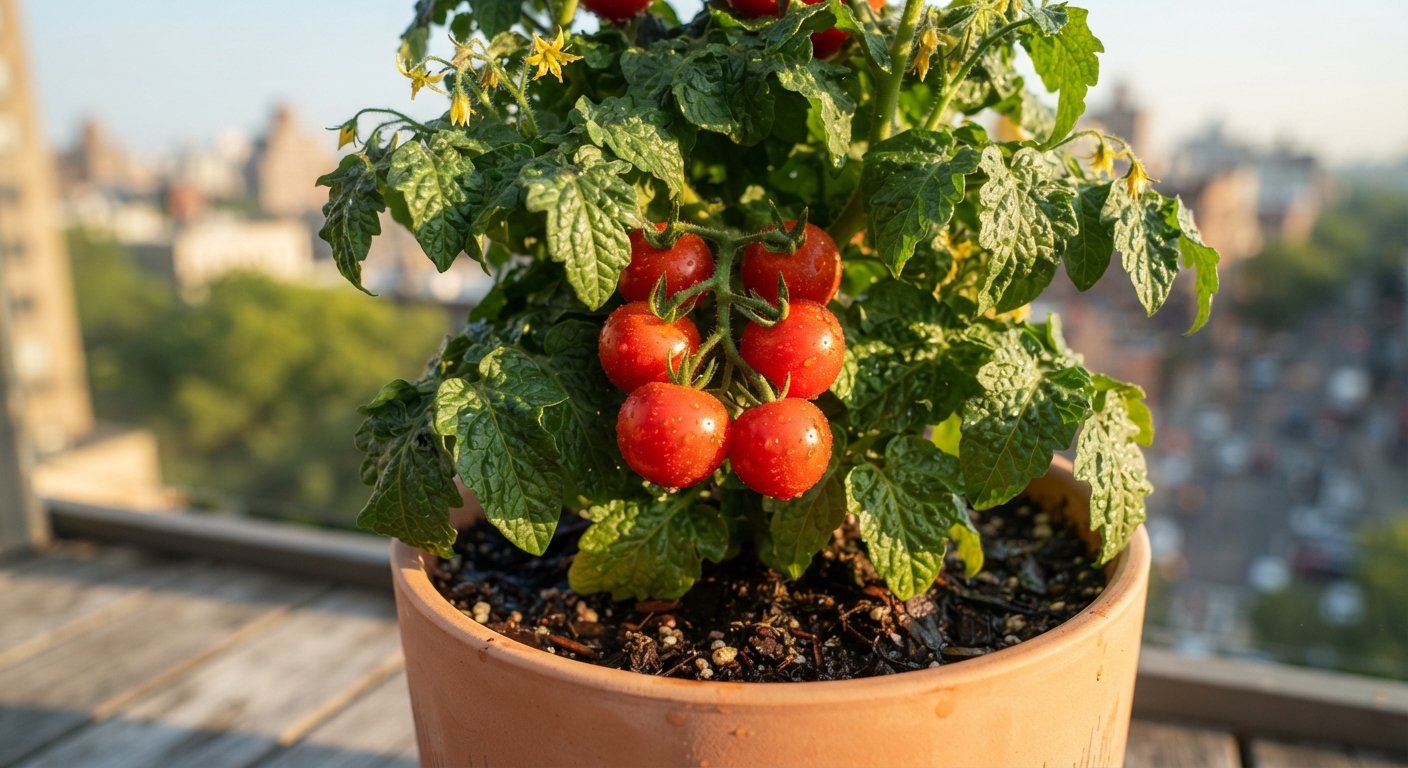
Cherry tomatoes are some of the most rewarding tomatoes that grow in containers. Varieties like Sweet 100, Tumbling Tom, and Sun Gold produce clusters of small, sweet fruit throughout the growing season. Many cherry tomato varieties are indeterminate, meaning they’ll keep producing until frost, so be prepared to provide a sturdy tomato cage or stake for support.
For gardeners chasing the best flavor, cherry tomatoes often outperform larger varieties when grown in containers, since they mature faster and are more forgiving of inconsistent growing conditions.
Use the Correct Container Size
Container size plays a bigger role in tomato success than most beginners realize. A pot that’s too small restricts root growth, leading to stressed plants, blossom end rot, and poor fruit production. Choose the right container based on the type of tomato you’re growing.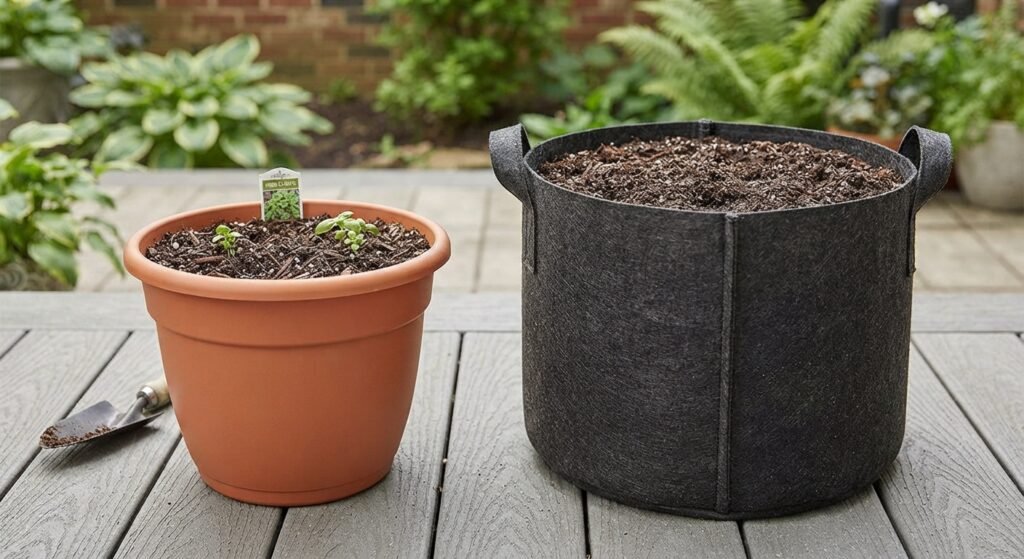
For determinate and dwarf varieties, a container holding at least 5 to 10 gallons of potting mix is usually sufficient. Indeterminate tomatoes, which grow larger and produce fruit all season, need at least 15 to 20 gallons of growing medium to support their extensive root system.
Whatever container you choose, whether it’s a plastic pot, fabric grow bag, or raised bed, make sure it has drainage holes in the bottom. Without proper drainage, water pools at the bottom of the container, causing root rot and other problems. Dark-colored plastic pots can also heat up quickly in direct sun, so consider lighter colors or larger containers if you live in a hot climate.
Create Nutrient-Rich Potting Soil
Garden soil is too dense for container gardening and often compacts over time, suffocating roots and limiting drainage. Instead, use a high-quality potting mix designed for containers. A good potting soil should be light, well-draining, and rich in organic matter.
Look for a potting mix that contains compost, perlite, and peat moss or coconut coir. This combination retains moisture while still allowing excess water to drain away, giving your tomato plant the balance it needs. Adding a few handfuls of compost at planting time boosts nutrients and encourages a strong root system from the start.
Avoid reusing old potting mix from previous seasons without refreshing it, since nutrients deplete over time and disease organisms can build up. Starting with fresh potting mix each season gives your container tomatoes the healthiest foundation possible.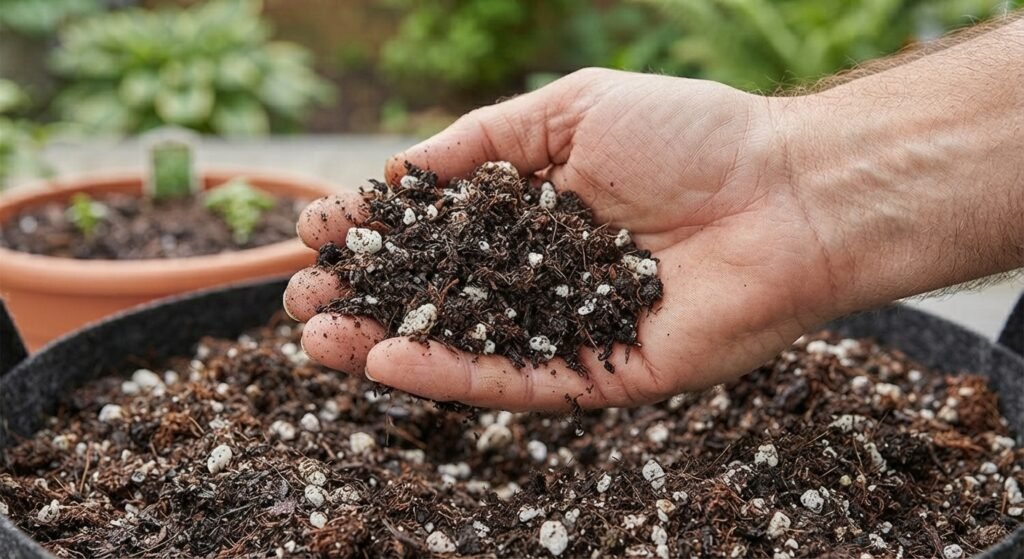
Give Tomatoes Plenty of Sunlight
Tomatoes are sun-loving plants, and container-grown tomatoes are no exception. For the best growth and tomato harvests, place your containers where they’ll receive at least six hours of full sun each day. Morning sun is especially valuable, as it helps dry dew off the leaves and reduces the risk of fungal disease.
If you’re growing tomatoes on a balcony or patio with partial shade, choose a spot that gets the most direct sunlight during the day, even if it’s not a full six hours. Container gardening offers one advantage here: you can move your pots throughout the day or season to chase better light, something that’s impossible with in-ground plants.
In extremely hot climates, afternoon shade can actually help prevent heat stress and blossom drop during the hottest part of summer.
Maintain Consistent Soil Moisture
Proper watering is one of the most important parts of growing tomatoes in pots. Because containers dry out faster than garden soil, tomato plants in pots often need daily watering during hot weather, especially once they’re established and producing fruit.
Consistently moist soil, without being waterlogged, encourages strong root systems and prevents common problems like blossom end rot and cracking, both of which are often caused by irregular watering. Check the top inch of soil regularly. If the top inch of soil feels dry, it’s time to water. If the inch of soil is dry all the way down, water thoroughly until it drains from the bottom of the container.
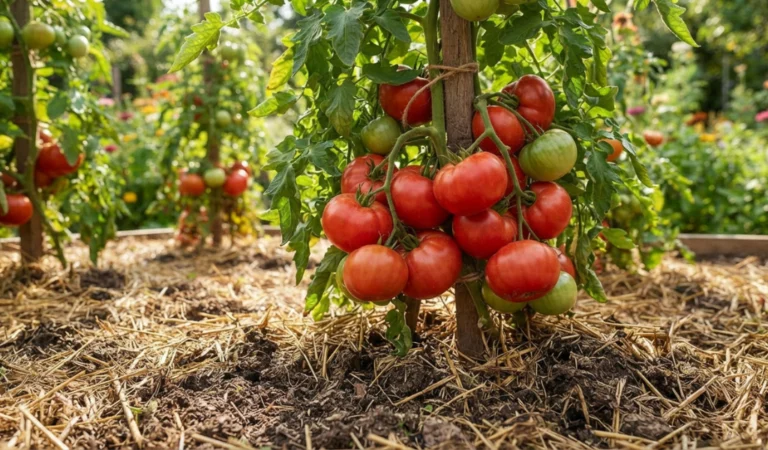
Drip irrigation systems can take the guesswork out of watering, delivering a steady supply of moisture directly to the root zone. This is especially helpful for gardeners who can’t check on their plants every day. Mulching the top of the soil with straw or shredded bark also helps retain moisture and reduces how often you need to water.
Fertilize Tomatoes at the Right Time
Container tomatoes rely entirely on you for their nutrients, since there’s no surrounding garden soil to draw from. Because frequent watering can wash nutrients out of the potting mix, regular fertilizing throughout the growing season is essential.
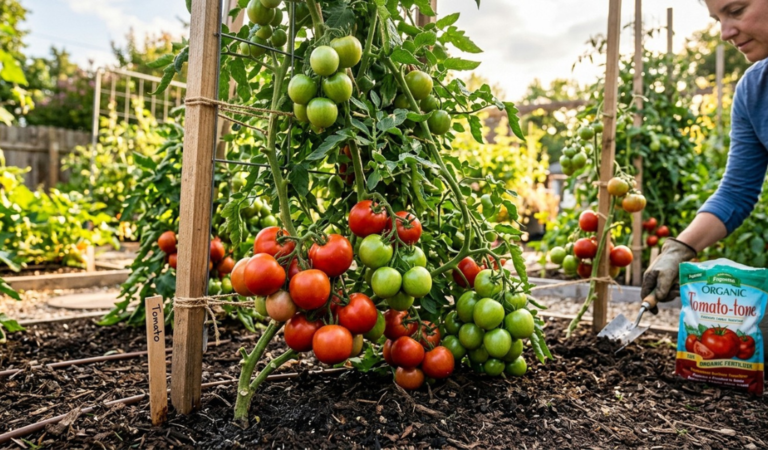
Start with a balanced fertilizer at planting time to support early root and leaf development. Once your tomato plant begins flowering, switch to a fertilizer higher in phosphorus and potassium, which encourages fruit production rather than excessive leaf growth. Many gardeners fertilize every two to three weeks throughout the growing season, but always follow the specific product’s instructions to avoid overfeeding.
Signs of nutrient deficiency include yellowing leaves, weak stems, and poor fruit set. If you notice these symptoms, adjust your fertilizing schedule and check that your potting mix hasn’t become depleted.
Stake and Prune the Plants
Even compact and determinate varieties benefit from support as they grow and produce fruit. A traditional tomato cage works well for smaller plants, while taller indeterminate varieties may need a sturdy stake or trellis system to prevent stems from breaking under the weight of ripening tomatoes.
Install your stake or cage early, ideally at planting time, to avoid disturbing the root system later. As the plant grows, gently tie the main stem to the support using soft garden twine or plant clips.
Pruning also plays a role in container tomato success. Removing suckers, the small shoots that grow between the main stem and branches, helps direct the plant’s energy toward fruit production rather than excess foliage. This is particularly useful for indeterminate varieties, which can quickly become sprawling if left unpruned. Determinate varieties generally need less pruning, since they naturally stop growing at a certain size.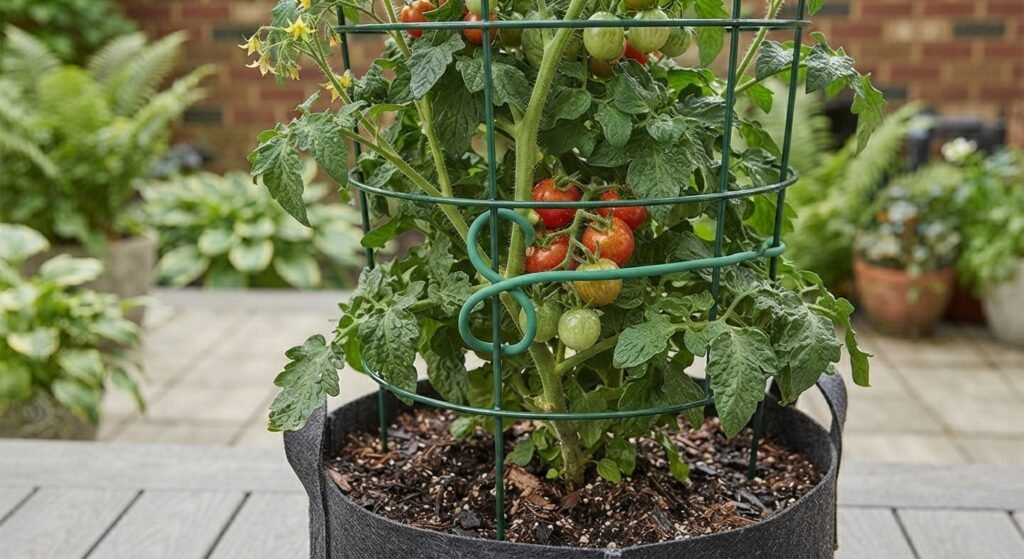
Encourage Flowering and Fruit Production
Once your tomato plant is established, encouraging flowers to form and turn into fruit becomes the next priority. Tomatoes are self-pollinating, but they still benefit from a little help, especially in container gardens where wind and insect activity may be limited.
Gently shaking the plant or brushing your hand across the flowers helps release pollen and improve fruit set. Consistent watering and proper fertilizing also play a role, since stressed plants often drop their flowers before they can develop into tomatoes.
Extreme heat can interfere with flowering, causing blossoms to drop without setting fruit. If you’re growing tomatoes in a hot climate, providing afternoon shade during the peak of summer can help maintain steady flower and fruit production throughout the growing season.
Protect Plants From Common Problems
Even with the best care, container tomatoes can face challenges. Blossom end rot, caused by inconsistent watering and calcium uptake issues, appears as a dark, sunken spot on the bottom of the fruit. Maintaining consistently moist soil is the best prevention method.
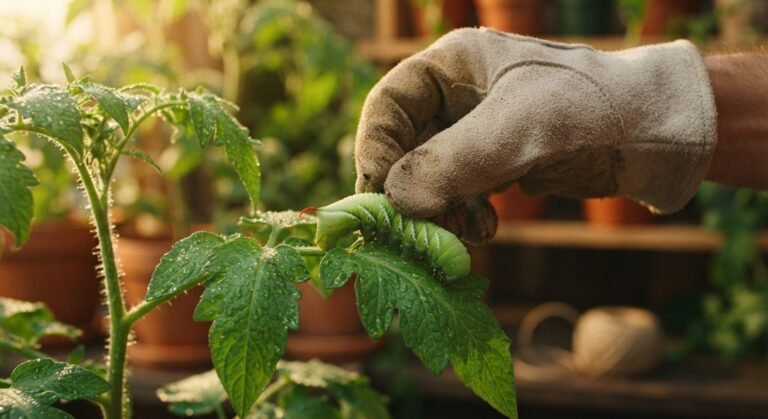
Pests like aphids, whiteflies, and tomato hornworms can also target container plants. Regularly inspect the undersides of leaves and remove pests by hand or use an organic insecticidal soap if needed. Good air circulation around your containers helps prevent fungal diseases, so avoid overcrowding your plants or placing pots too close together.
Cracking is another common issue, often caused by uneven watering after a dry spell. Keeping your watering schedule consistent, rather than letting the soil dry out completely between waterings, helps prevent this problem and keeps your tomatoes looking and tasting their best.
Harvest Tomatoes at Peak Ripeness
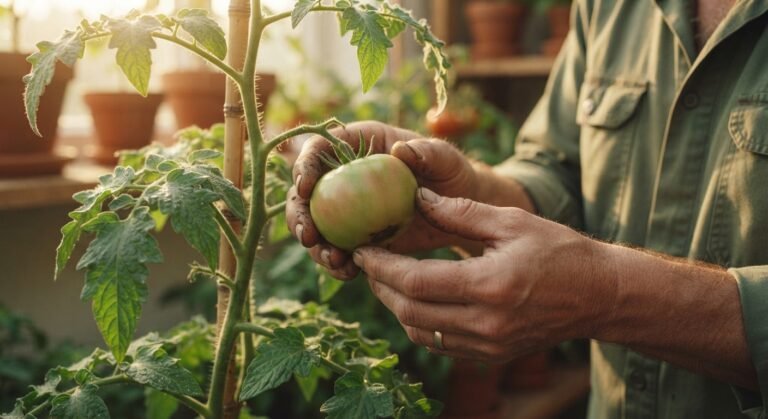
After weeks of care, harvesting is the most rewarding part of growing tomatoes in pots. Tomatoes are ready to pick when they’ve reached full color for their variety, whether that’s deep red, orange, or yellow, and feel slightly firm but yield gently to pressure.
Picking tomatoes at peak ripeness ensures the best flavor, since fruit left too long on the vine can become overripe, crack, or attract pests. If frost is approaching and some tomatoes are still green, you can pick them and let them ripen indoors on a sunny windowsill.
Regular harvesting also encourages the plant to continue producing new flowers and fruit throughout the rest of the growing season, so don’t let ripe tomatoes linger on the vine.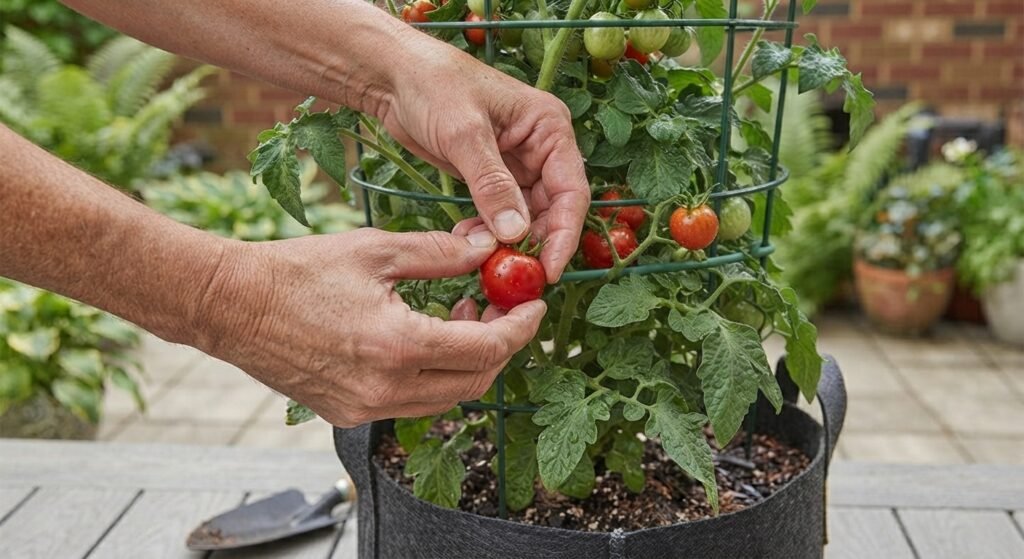
Final Thoughts
Growing tomatoes in containers is one of the most accessible ways to enjoy homegrown tomatoes, even without a traditional garden bed. By choosing the right tomato varieties, using proper container size, and staying consistent with watering and fertilizing, you can grow a tomato plant that produces a generous harvest all season long.
Start small if you’re new to container gardening. Pick one or two compact or cherry tomato varieties, set up your containers in a sunny spot, and adjust your care routine as you learn what works best for your space. With a little patience and attention, your patio or balcony can become a productive source of fresh, flavorful tomatoes.
Frequently Asked Questions
What is the best container size to grow tomatoes in pots?
Determinate and dwarf varieties do well in containers holding 5 to 10 gallons of potting mix, while indeterminate varieties need at least 15 to 20 gallons to support their larger root systems and season-long fruit production.
How often should I water tomatoes growing in containers?
Container tomatoes often need daily watering during hot weather, especially once established. Check the top inch of soil regularly and water thoroughly whenever it feels dry.
Can I use garden soil to grow tomatoes in pots?
Garden soil is too dense for containers and often leads to poor drainage. Use a lightweight, well-draining potting mix designed for container gardening instead.
What are the best tomato varieties for containers?
Determinate varieties like Roma and Celebrity, dwarf varieties like Tiny Tim, and cherry tomatoes like Sweet 100 and Tumbling Tom are among the best tomato varieties for containers due to their compact growth and reliable production.
How much sunlight do container tomatoes need?
Tomato plants need at least six hours of full sun each day. Place your containers in the sunniest spot available, and move them throughout the day if needed to maximize light exposure.
Why are my container tomatoes getting blossom end rot?
Blossom end rot is usually caused by inconsistent watering, which affects calcium uptake in the plant. Keeping the soil consistently moist helps prevent this common problem.
Do I need to stake tomatoes grown in pots?
Most tomato plants, even compact varieties, benefit from a stake or tomato cage for support. This prevents stems from breaking under the weight of fruit and keeps the plant upright as it grows.