Epsom Salt for Growing Peppers: Benefits, Uses, and Application Tips for Growing Healthy Pepper Plants
Epsom Salt for Growing Peppers: When and How to Use It
If your pepper plants look tired, pale, or slow to fruit, you have probably come across the advice to try Epsom salt for growing peppers. Gardeners have used this simple mineral compound for decades to green up leaves, boost flowering, and support stronger fruit development. But does it actually work, and if so, how do you use it the right way without hurting your plants?
This guide breaks down everything you need to know about using Epsom salt on pepper plants, from the science behind it to step by step application methods. Whether you are growing habaneros in raised beds or a container of bell peppers on your patio, you will find practical answers here.
Before we get into the details, it is worth mentioning that pepper variety matters just as much as fertilizer choice. If you are still deciding what to plant this season, you might want to read our comparison on Jalapeno vs. Serrano: Which One Should You Grow? since heat tolerance, growth habit, and nutrient needs can shift slightly depending on the pepper type you choose.
Now let us dig into the real question: can a humble bag of Epsom salt actually make a difference in your pepper garden?
What Is Epsom Salt?
Epsom salt is not actually table salt at all. It is a naturally occurring mineral compound made of magnesium sulfate, formed from magnesium, sulfur, and oxygen. The name comes from a spring in Epsom, England, where the mineral was first discovered dissolved in the local water.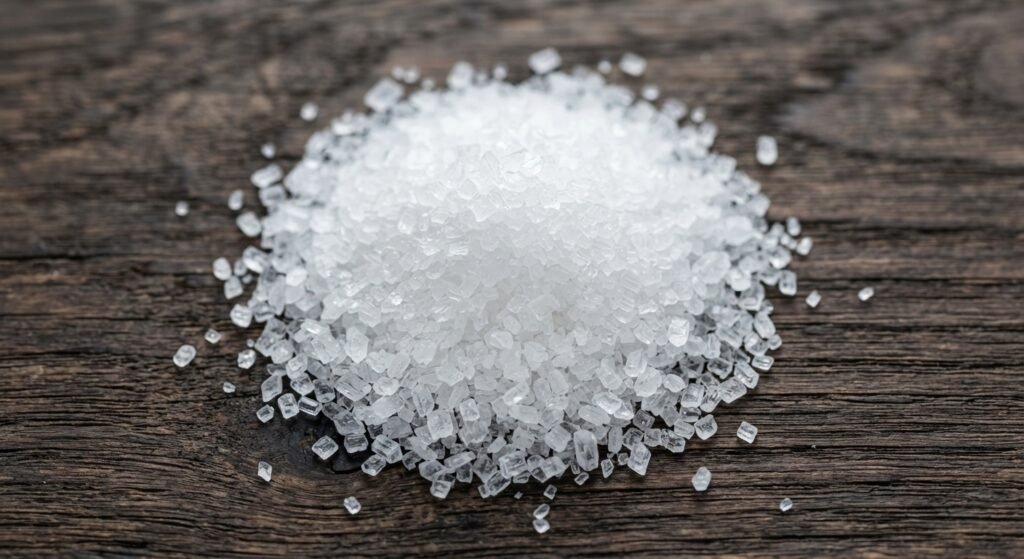
In its dry form, Epsom salt looks like small white crystals that dissolve quickly in water. Because it breaks down easily, plants can absorb the magnesium and sulfur through their roots almost as fast as you water them in. This is one reason gardeners reach for it so often instead of slower-acting soil amendments.
Unlike synthetic fertilizers packed with nitrogen, phosphorus, and potassium, Epsom salt supplies only two nutrients. That narrow focus is exactly why it works so well for correcting specific deficiencies rather than replacing a full feeding routine.
Why Do Gardeners Use Epsom Salt for Peppers?
Pepper plants are heavy feeders. They put a lot of energy into producing flowers, setting fruit, and building thick foliage, and that process draws heavily on soil nutrients. When magnesium runs low, which happens often in sandy or heavily leached soil, pepper plants start to show it through pale, yellowing leaves and weaker fruit set.
Home gardeners started using Epsom salt on peppers because it is affordable, easy to find, and simple to apply. Many also like that it is a mineral salt rather than a synthetic chemical blend, which fits well with organic or low-input gardening practices.
There is also a long tradition among vegetable growers of passing this tip down through generations. Grandparents who grew tomatoes and peppers in backyard plots often swore by a spoonful of Epsom salt at planting time, and that habit has carried into modern gardening forums and blogs.
Understanding Magnesium and Sulfur
To understand why Epsom salt matters, it helps to know what magnesium and sulfur actually do inside a pepper plant.
Magnesium sits at the center of the chlorophyll molecule, the pigment that makes leaves green and allows plants to convert sunlight into energy through photosynthesis. Without enough magnesium, chlorophyll production slows down, and leaves start losing their color, usually beginning with the older, lower leaves first.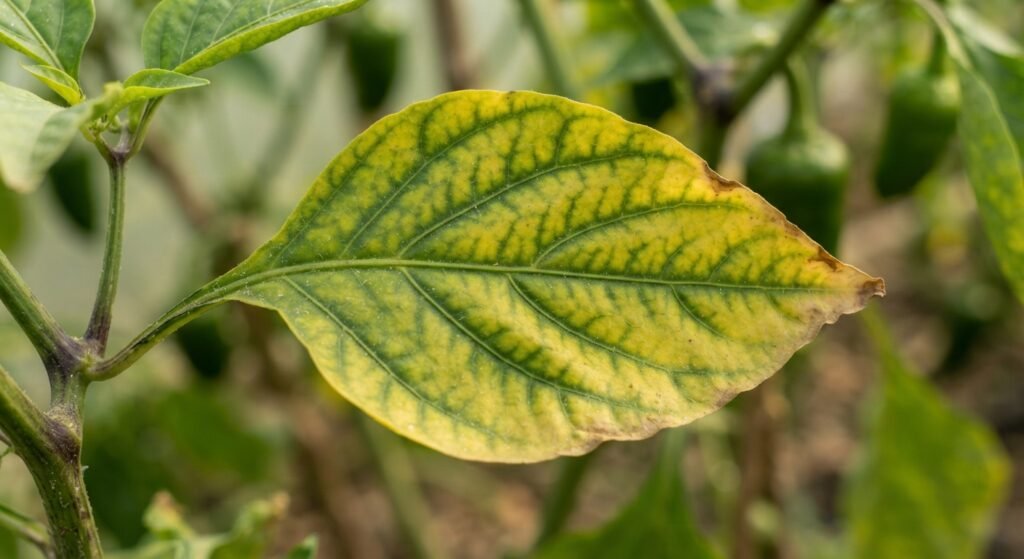
Sulfur plays a different but equally important role. It is a building block for amino acids, which plants use to construct proteins and enzymes. Sulfur also supports the plant’s ability to produce certain flavor and aroma compounds, which can matter for pepper plants since capsaicin production and overall fruit quality depend on healthy metabolic processes.
Together, these two minerals support steady, even growth. When either one is missing, the plant cannot function at full capacity, even if nitrogen and potassium levels look fine.
Does Epsom Salt Really Help Pepper Plants?
This is the question every gardener eventually asks, and the honest answer is that it depends on your soil. Epsom salt helps pepper plants when there is an actual magnesium or sulfur shortage. If your soil already has enough of these minerals, adding more will not give you bigger peppers or faster growth.
Soil tests consistently show that many garden soils, especially those that have been farmed or gardened for years without adding organic matter, run low in magnesium. In those cases, adding Epsom salt often produces a visible improvement within one to two weeks, with leaves turning a deeper green and new growth looking sturdier.
However, some university extension studies have found that healthy soil with balanced nutrients shows no measurable benefit from extra magnesium sulfate. This means Epsom salt is not a magic fertilizer that guarantees results. It is a targeted fix for a specific problem, and it works best when that problem actually exists.
How to Use Epsom Salt for Pepper Plants
There are three common ways gardeners apply Epsom salt to peppers, and each has its own best use case.
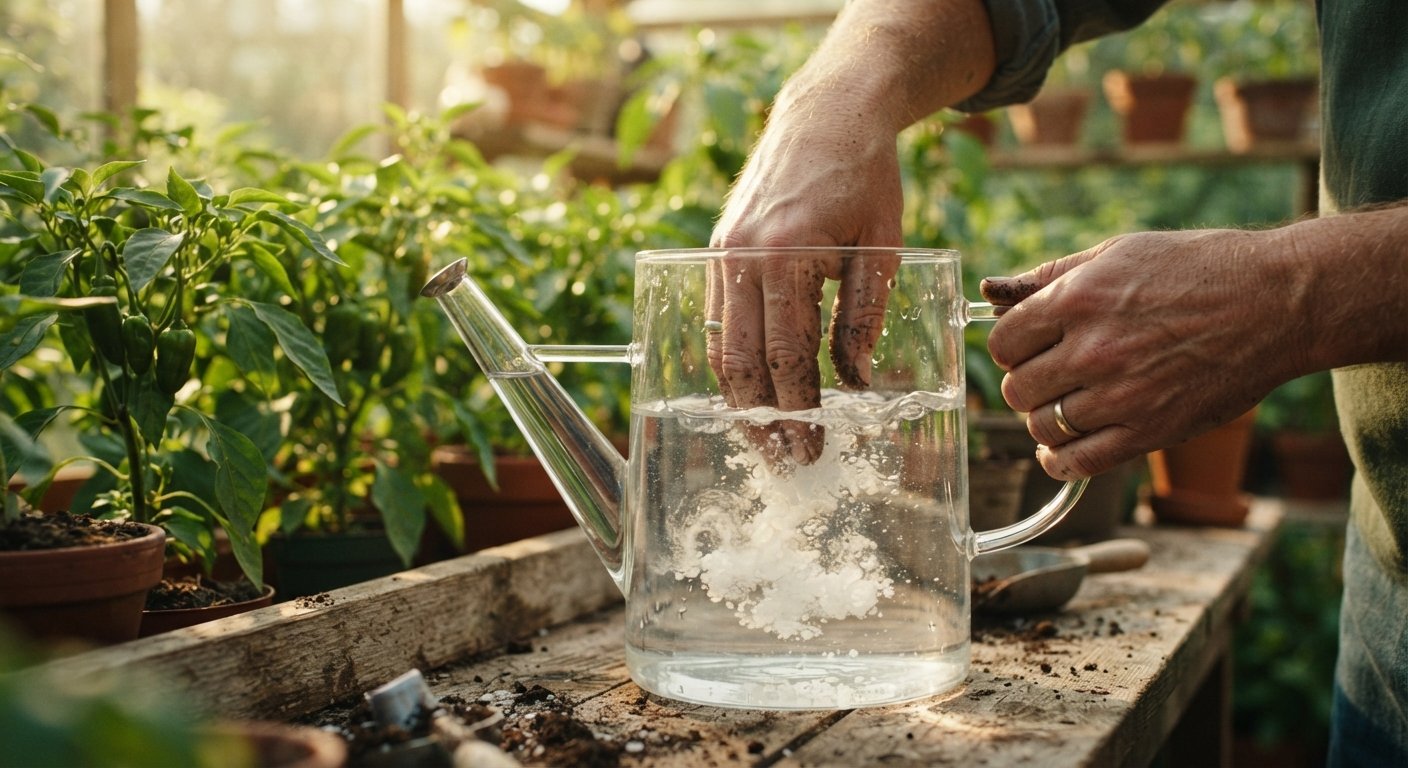
The first method is a soil drench, where the salt is dissolved in water and poured around the base of the plant. This is the most common approach because it delivers nutrients directly to the root zone where they can be absorbed quickly.
The second method is a foliar spray, where a diluted solution is misted directly onto the leaves. Plants can absorb magnesium through their leaf surface, and this method tends to show results faster than a soil drench, though the effect does not last as long.
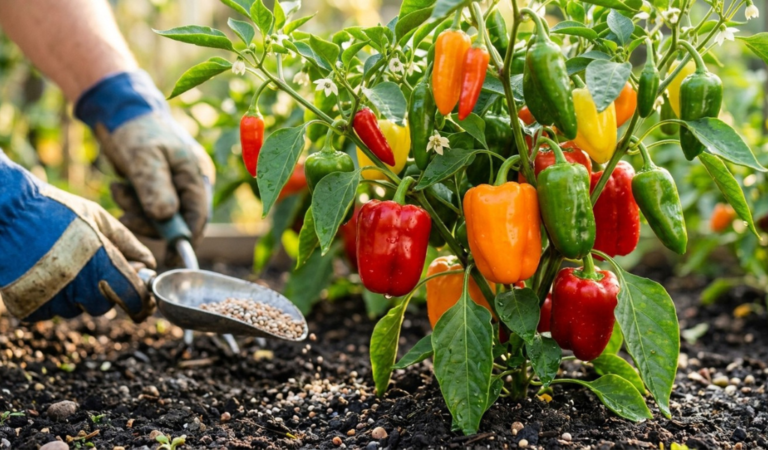
The third method is mixing a small amount of dry Epsom salt into the soil at planting time. This slow-release approach works well for gardeners who want to build magnesium levels into the soil from the start rather than treating a deficiency after it appears.
How Much Epsom Salt Should You Use?
Getting the dosage right matters because too little will not fix a deficiency, and too much can stress the plant or throw off other nutrient levels.
For a soil drench, the standard ratio is one tablespoon of Epsom salt dissolved in one gallon of water. This solution can be applied once every four to six weeks during the growing season.
For a foliar spray, use a lighter mix of one tablespoon per gallon of water, applied to the leaves every two to three weeks. Because leaves absorb nutrients faster, a stronger mix can scorch the foliage.
For soil mixing at planting time, one tablespoon per plant worked into the top few inches of soil is typically enough. Avoid adding more than this unless a soil test specifically shows a severe magnesium shortage.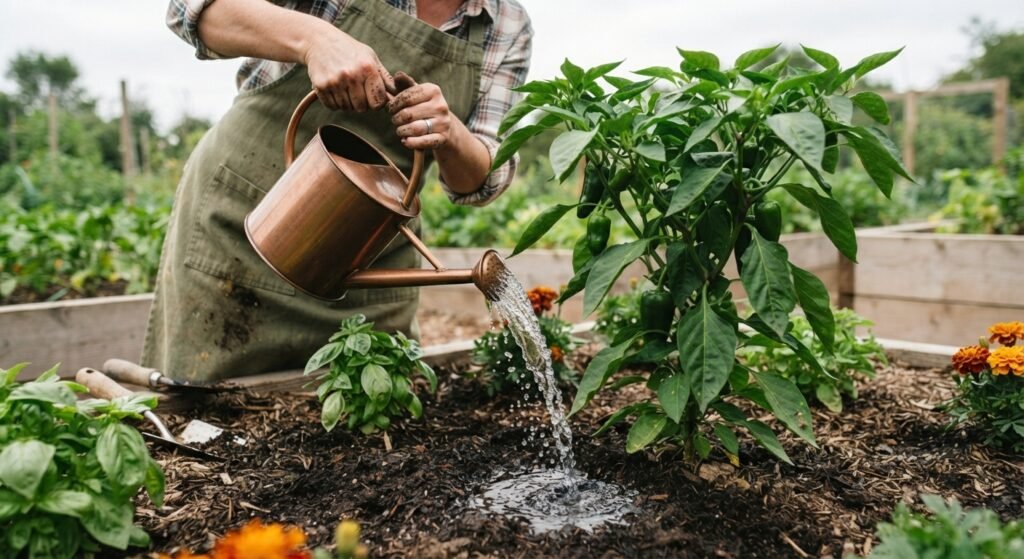
Epsom Salt for Growing Peppers: Benefits and Risks
When used correctly, Epsom salt offers real advantages for pepper plants, but it also carries some risks if overused. Understanding both sides helps you use it wisely instead of guessing.
How Magnesium Supports Pepper Plant Growth
Magnesium keeps the photosynthesis engine running smoothly. Pepper plants with adequate magnesium tend to have thicker stems, fuller leaf canopies, and a deeper green color that signals strong chlorophyll production. This translates into better energy production, which the plant can then direct toward flowering and fruiting.
Gardeners who correct a magnesium deficiency often notice new leaves coming in noticeably greener than older ones, which is a good visual sign that the treatment is working.
How Sulfur Benefits Pepper Plants
Sulfur supports the plant’s internal chemistry at a deeper level. It helps form proteins and enzymes that regulate everything from root development to stress tolerance. Peppers grown in sulfur-deficient soil often show stunted growth and weak stems, even if nitrogen levels look adequate.
Adding sulfur through Epsom salt can help peppers recover from this kind of stunting, particularly in soils that have been heavily amended with high-nitrogen fertilizers that do not include sulfur.
Possible Benefits for Leaves and Fruit
Some gardeners report that correcting a magnesium or sulfur deficiency leads to more uniform fruit shape and slightly improved fruit set. While this is not guaranteed for every plant, the logic holds up. A plant that is not struggling to produce chlorophyll or proteins has more energy available to put into flowers and fruit rather than survival.
Risks of Using Too Much Epsom Salt
Overuse is the most common problem gardeners run into with Epsom salt. Because it is cheap and easy to apply, it is tempting to use more than necessary, but this can backfire.
Excess magnesium in the soil can interfere with the plant’s ability to absorb calcium, leading to a condition similar to blossom end rot even when calcium levels are otherwise adequate. Too much magnesium can also throw off the overall salt balance in the soil, making it harder for roots to take up water efficiently.
Applying Epsom salt to soil that already has sufficient magnesium will not speed up growth. Instead, it just adds unnecessary salts that can build up over time, especially in container gardens where there is less soil volume to dilute the excess.
When to Use Epsom Salt for Pepper Plants
Timing plays a big role in how effective Epsom salt will be. The best window for using it is during two key growth stages: early vegetative growth and the flowering to fruiting stage.
During early growth, a light application can help support strong leaf development, especially in soil known to be magnesium poor. During flowering and fruit set, magnesium and sulfur become even more important because the plant is working hard to produce blossoms and fill out developing peppers.
It is best to avoid applying Epsom salt right after transplanting, since the plant is already dealing with transplant stress and does not need an additional nutrient load until it has settled in, usually after one to two weeks.
Epsom Salt vs. Regular Fertilizer for Peppers
A common point of confusion is whether Epsom salt can replace regular fertilizer. It cannot, and understanding why helps set realistic expectations.
Regular fertilizers, whether granular or liquid, typically supply nitrogen, phosphorus, and potassium, often called the NPK ratio, along with a range of micronutrients. These are the primary building blocks peppers need for overall growth, root development, and fruit production.
Epsom salt only supplies magnesium and sulfur. It works as a supplement, not a substitute. Think of it like a multivitamin versus a full meal. Your pepper plants still need the full nutritional package that a balanced fertilizer provides, and Epsom salt simply fills in a gap when magnesium or sulfur happens to be missing from that package.
Gardeners who skip fertilizer entirely and rely only on Epsom salt often end up with plants that show good leaf color but struggle to produce a strong harvest, since the other essential nutrients are still missing.
How to Apply Epsom Salt to Peppers Safely
Applying Epsom salt safely comes down to a few simple habits. Always dissolve it fully in water before applying, since dry granules left on the soil surface can take a long time to break down and may sit unevenly around the root zone.
Water your pepper plants normally before applying a soil drench, since applying it to dry soil can concentrate the solution near the roots and cause stress. Apply foliar sprays in the early morning or evening rather than in the heat of midday, since spraying leaves in direct sun can lead to leaf burn.
Space out applications rather than applying frequently. A once-a-month schedule is usually enough to correct or prevent a deficiency without overloading the soil.
Epsom Salt for Peppers in Pots and Containers
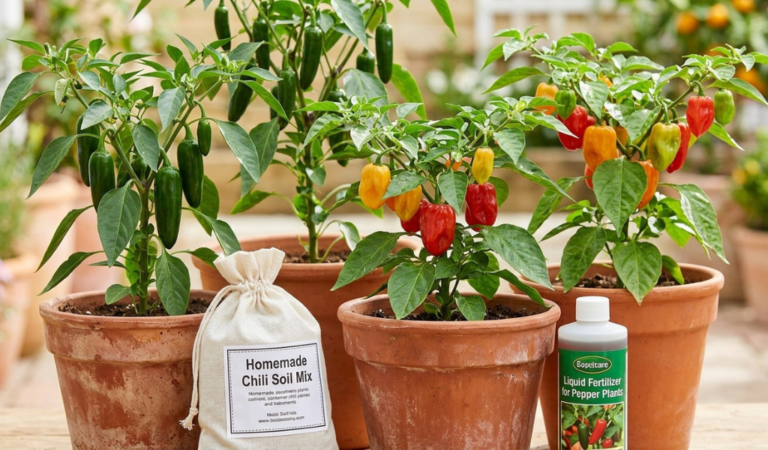
Container-grown peppers are more prone to magnesium deficiency than plants grown directly in garden soil. This happens because potting mix drains faster, which means nutrients wash out more quickly with each watering.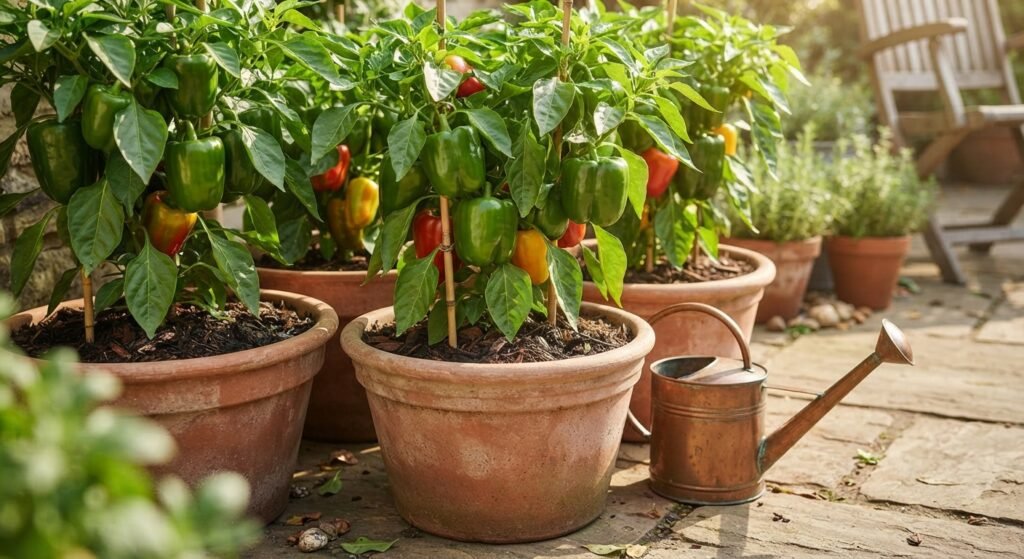
For container peppers, a diluted soil drench of one tablespoon of Epsom salt per gallon of water, applied once a month, usually works well. Because there is less soil volume to buffer excess minerals, it is especially important not to overdo it with container plants.
Foliar sprays also work well for container peppers since they act quickly and do not add to the salt buildup that can happen in a limited amount of potting mix over time. Flushing container soil with plain water every few weeks helps prevent mineral buildup from any type of fertilizer, including Epsom salt.
Common Epsom Salt Mistakes When Growing Peppers
Even well-meaning gardeners make mistakes with Epsom salt, often because the advice they hear online skips important details. Here are the most common errors to avoid.
Using Epsom Salt Without a Nutrient Deficiency
The biggest mistake is applying Epsom salt as a routine practice without checking whether the plant actually needs it. If your peppers already look healthy with rich green leaves and strong growth, adding more magnesium will not improve results and may create an imbalance.
Applying Too Much Epsom Salt
More is not better when it comes to magnesium sulfate. Doubling up on the recommended dose does not speed up recovery from a deficiency. Instead, it increases the risk of nutrient imbalances and root stress.
Replacing Fertilizer With Epsom Salt
As mentioned earlier, Epsom salt cannot cover the full range of nutrients peppers need. Gardeners who treat it as a complete fertilizer often end up with disappointing yields despite having good looking foliage.
Spraying Leaves Too Frequently
Foliar sprays work fast, but frequent spraying can lead to leaf burn, especially in hot or sunny conditions. Sticking to a schedule of every two to three weeks is enough to see benefits without stressing the plant.
Final Thoughts
Epsom salt can be a useful tool in your pepper growing routine, but it works best as a targeted solution rather than a routine habit. If your plants show the classic signs of magnesium deficiency, such as yellowing between the veins on older leaves, a proper dose of Epsom salt dissolved in water can make a real difference within a couple of weeks.
That said, it is not a replacement for balanced fertilizer, and using too much can cause more harm than good. The smartest approach is to watch your plants closely, consider a soil test if you are unsure, and apply Epsom salt only when there is a real need for it.
If you are just getting started with your pepper garden and still weighing which varieties to plant, take a look at our guide comparing heat levels and growth habits so you can pick peppers suited to your space and taste. With the right variety, healthy soil, and a little attention to nutrients like magnesium and sulfur, your pepper plants have everything they need to thrive through the season.
Epsom Salt for Pepper Plants: Common Questions Answered
Does Epsom Salt Make Peppers Grow Bigger?
Not directly. Epsom salt does not act as a growth hormone or a size booster. What it can do is correct a magnesium deficiency that was holding the plant back, which may indirectly lead to healthier growth and, in some cases, larger fruit as a result of improved plant health overall.
Does Epsom Salt Increase Pepper Production?
It can, but only if a magnesium or sulfur shortage was limiting flower and fruit development in the first place. If your soil already has balanced nutrients, you likely will not see a noticeable increase in the number of peppers your plant produces.
Can Epsom Salt Fix Yellow Pepper Leaves?
Yes, if the yellowing is caused by a magnesium deficiency. This type of yellowing usually appears as a pattern between the leaf veins, starting on older, lower leaves first. If the yellowing is caused by overwatering, poor drainage, or a pest issue, Epsom salt will not solve the problem.
How Often Can You Use Epsom Salt?
For most home gardens, once every four to six weeks as a soil drench is enough. Foliar sprays can be used slightly more often, roughly every two to three weeks, but should still be applied in moderation rather than as a weekly routine.
Is Epsom Salt Safe for All Pepper Varieties?
Yes, Epsom salt is generally safe across pepper varieties, from mild bell peppers to hot varieties like habaneros and ghost peppers. The application rates stay the same regardless of variety since the need for magnesium and sulfur does not change much between different types of peppers.
Can You Use Epsom Salt on Seedlings?
It is best to wait until seedlings have developed their first true leaves and are established before applying Epsom salt. Young seedlings have delicate root systems that can be sensitive to added salts, even in small amounts.
What Is the Best Time of Day to Apply Epsom Salt?
Early morning or late afternoon works best, especially for foliar sprays. This avoids leaf burn from direct sunlight and gives the plant time to absorb the nutrients before temperatures rise or drop significantly.