How to Control Thrips on Pepper Plants Naturally and Effectively
How to Control Thrips on Pepper Plants: Easy Ways to Protect Your Peppers
Thrips on pepper plants are one of the most frustrating problems a grower can face. These tiny insects are easy to miss at first, but the damage they leave behind tells a clear story — silvery streaks, curled leaves, and stunted new growth. If you’ve spotted these signs and want to know how to control thrips on pepper plants before things get worse, you’re in the right place.
This guide covers everything from identifying thrips and understanding their damage, to step-by-step management strategies and prevention tips that actually work. Peppers are particularly susceptible to thrips not just because of the feeding damage, but because thrips are vectors of the tomato spotted wilt virus, a disease that can devastate an entire crop. Getting on top of the problem early makes a real difference.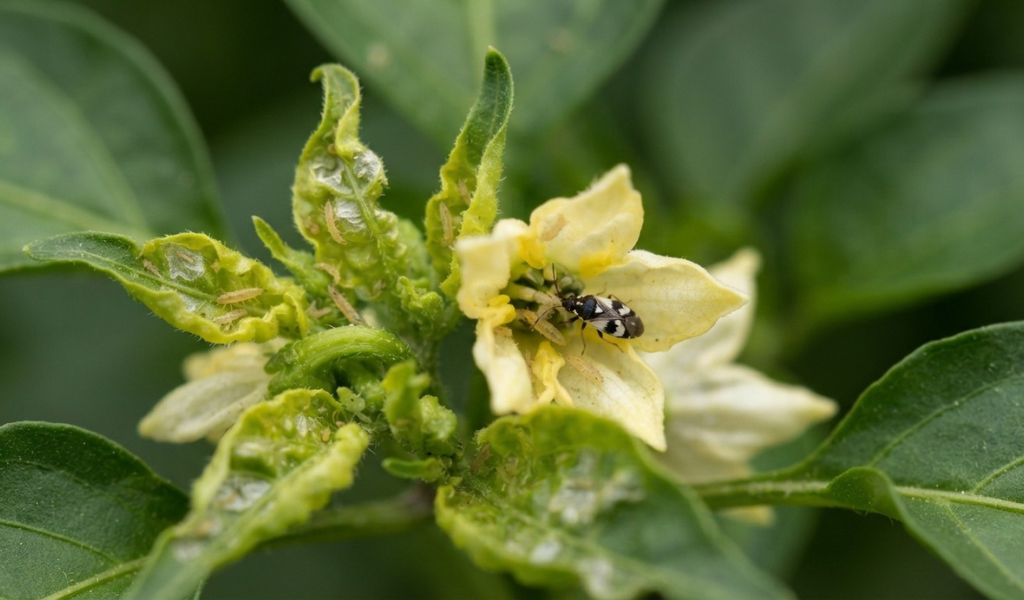
Along with thrips, growers dealing with common pests affecting pepper plants often encounter aphids, spider mites, and whiteflies – but thrips tend to be the trickiest to manage because they hide in flowers and new growth where sprays rarely reach. Understanding common pests affecting pepper plants can help growers identify infestations early and choose the right control methods before pest damage affects plant growth, flowers, and pepper production.
Whether you’re growing peppers indoors, in a backyard garden, or across larger pepper fields, this guide will walk you through exactly what to do.
What Are Thrips?
Thrips are tiny insects, usually less than 2 millimeters long, with long narrow bodies and fringed wings. They feed on plants by puncturing the outer surface of leaves, petals, and new growth, then sucking out the cell contents. The damage shows up as silvery or bronze discoloration on foliage, distorted new leaves, and scarred fruit.
What makes thrips particularly dangerous in pepper production is their ability to transmit the virus known as tomato spotted wilt virus (TSWV). Western flower thrips are the primary species responsible for spreading tospoviruses, and once a plant is infected with spotted wilt, there is no cure. This is why thrips management goes beyond just protecting the foliage — it’s about protecting the entire crop.
Thrips can be a persistent problem throughout the growing season. They reproduce quickly in warm conditions, with larval stages completing in as little as two weeks. Adult and larval thrips both feed on plant tissue, which means thrips populations can spike fast if left unchecked.
What Are the Different Types of Thrips?
Not all species of thrips behave the same way or cause the same level of damage. The most important ones for pepper growers to know are:
Western Flower Thrips
The western flower thrips (Frankliniella occidentalis) is the most damaging invasive species of thrips in North America. Adult western flower thrips feed inside flowers, where they also lay their eggs directly in plant tissue. They are the main vector of tomato spotted wilt virus in peppers and are notoriously difficult to control because of their sheltered feeding location.
Onion Thrips
Onion thrips (Thrips tabaci) are widespread and feed on a broad range of host plants. They tend to feed on foliage rather than flowers, causing streaky silver damage on leaves. While less of a spotted wilt risk than western flower thrips, they can still cause significant feeding damage in pepper fields.
Chilli Thrips
Chilli thrips (Scirtothrips dorsalis) are considered an invasive species of thrips in parts of the United States. They prefer new growth and are known to cause curled leaves and distorted growing tips. Chilli thrips infestations can be severe on both outdoor and indoor plants.
Understanding Thrips Damage on Peppers
Thrips feed on peppers at every stage of the plant — from early seedlings through to mature plants. The damage appears differently depending on where the thrips are feeding.
On leaves, feeding damage looks like silver or bronze streaking, tiny black specks of thrips waste, and a rough, papery texture.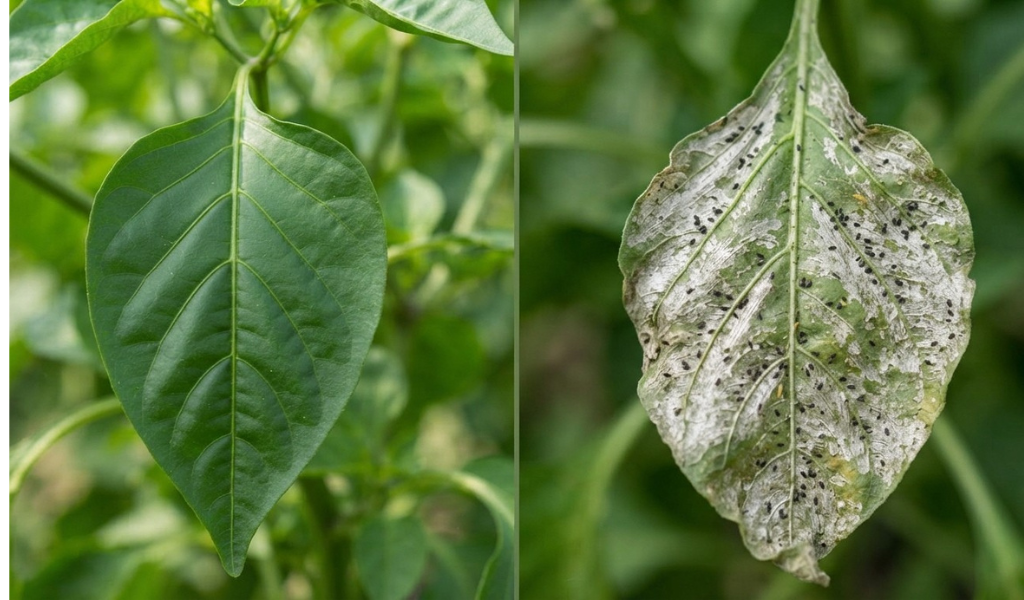 On flowers, petals may develop brown spots or drop early, reducing fruit set. On new growth, leaves often come out deformed, twisted, or narrower than normal, a sign that thrips were feeding while the tissue was still developing.
Peppers are particularly susceptible to thrips because of their open flowers, which act as a feeding and breeding site for adult western flower thrips. The more flowers your pepper plant is producing, the more attractive it is to thrips populations in the area.
Beyond the direct feeding damage, thrips in peppers can transmit the tomato spotted wilt virus. Plants infected with spotted wilt may show bronze or purple discoloration, ring spots on fruit, wilting, and stunted growth. Thrips acquire the virus as larvae and transmit it as adults, so younger thrips feeding on infected plants near your pepper crop can spread the virus to healthy plants later.
How to Recognize the Presence of Thrips
Catching thrips early makes control much easier. Here are the most reliable ways to identify thrips before the infestation takes hold.
Look for Insect Movement
Hold a leaf up to the light and look closely along the surface. Thrips are fast-moving and will try to escape to the underside. Adult thrips are pale yellow, brown, or black depending on the species.
Look for Thrips Waste
Tiny black dots on leaves are a sure sign of thrips activity. These are fecal specks left behind after feeding, and they often appear alongside the silver or bronze feeding damage.
Dislodge and Inspect Insects
Tap a flower or leaf gently over a piece of white paper. Thrips and thrips larvae will fall onto the paper and show up as tiny, moving specks. This is one of the best methods to identify thrips quickly without any equipment.
Use Sticky Traps for Monitoring
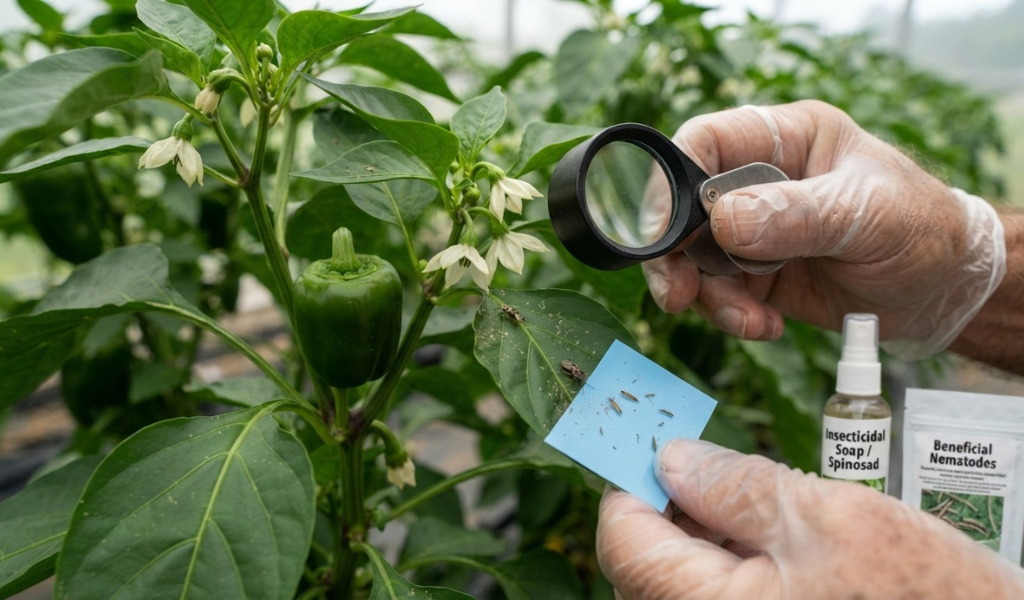
Blue sticky traps are particularly effective at catching thrips and are widely recommended for monitoring thrips populations.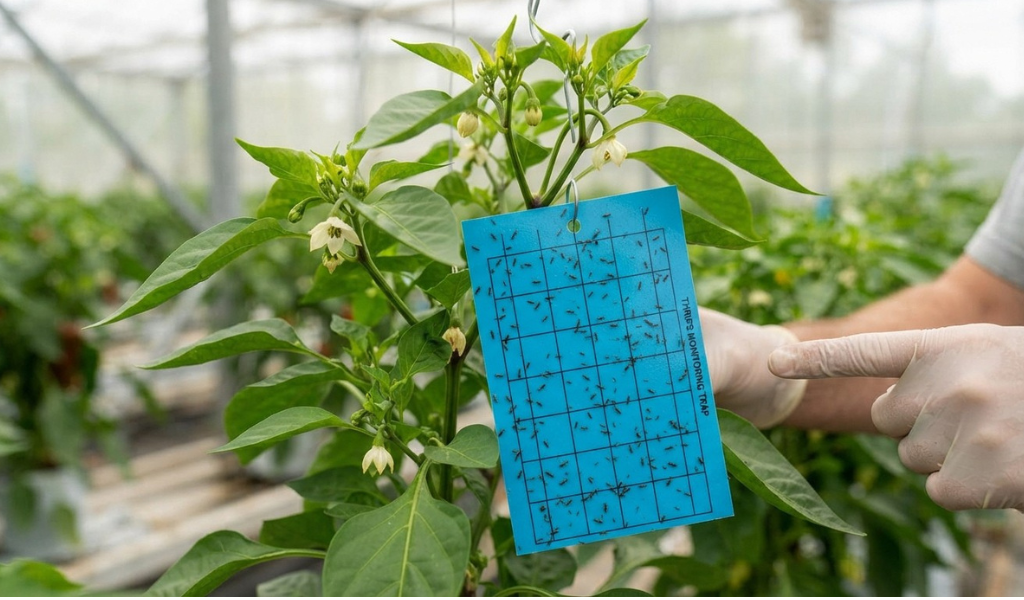 Blue or yellow sticky traps placed near your pepper plants will attract adult thrips and give you a clear picture of how many are present in the growing area.
Check New Growth
Thrips prefer to feed on new leaves and inside flowers. Check growing tips regularly for curled leaves, narrow or twisted new growth, and any early signs of feeding damage.
Shake the Plant Over White Paper
Give the plant a gentle shake with a sheet of white paper underneath. Any dislodged thrips, adults and larvae- will land on the paper and be easy to spot.
How to Get Rid of Thrips on Plants
Spray Them Off Manually
A strong stream of water directed at the foliage can knock thrips off the plant and disrupt feeding. This works best on outdoor peppers and should be done in the morning so the foliage has time to dry. It won’t eliminate the infestation, but it helps reduce thrips pressure.
Attract or Buy Predatory Insects
Introducing natural enemies is one of the most effective long-term strategies. Minute pirate bugs (Orius spp.) are among the best predators of thrips —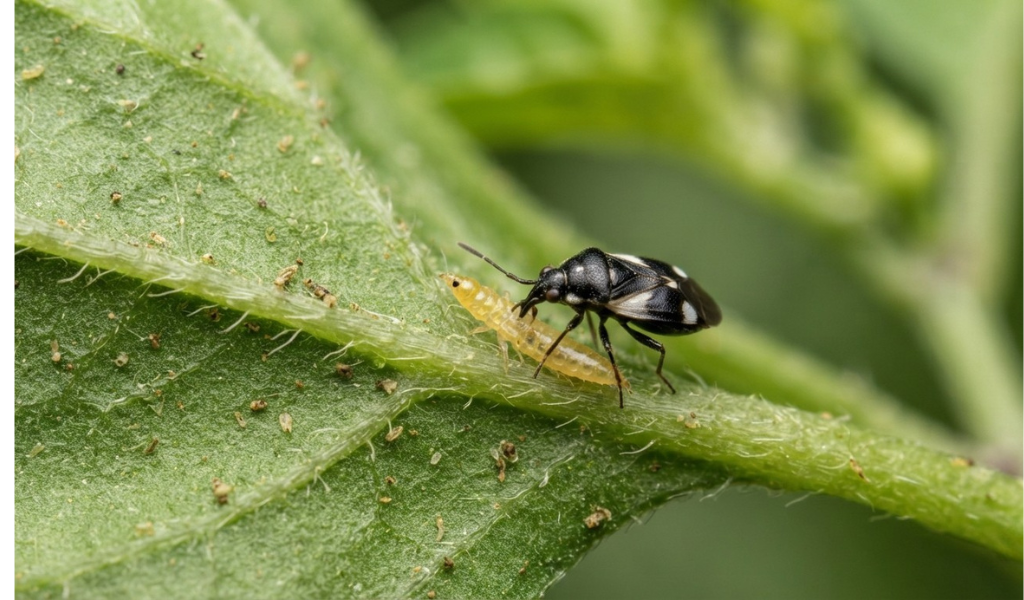 they actively hunt adult thrips and larvae inside flowers. Lacewings and predatory mites also feed on thrips larvae and eggs. You can purchase these beneficial insects from garden suppliers and release them into your growing area.
Use Insecticidal Soap
Insecticidal soap kills thrips on contact by breaking down their outer layer. It works best on exposed adults and larvae – spray directly onto the insects, covering both the top and underside of leaves. Repeat every 5 to 7 days during an active infestation.
Apply Diatomaceous Earth
Diatomaceous earth is a natural powder that damages the outer coating of insects, causing them to dehydrate. Apply it around the base of the plant and lightly dust the foliage. It works well as part of an integrated pest management approach but is less effective inside flowers where thrips tend to hide.
Reflect Light
Silver or reflective mulch under pepper plants has been shown to confuse and deter thrips. The reflected light disrupts thrips behavior and reduces the number that land on the plants. This is a useful preventive measure, especially in outdoor pepper fields.
Dispose of Affected Plants
If a plant shows signs of tomato spotted wilt virus, remove it from the growing area immediately. Infected plants cannot recover and continue to act as a source for thrips to acquire and transmit the virus.
Avoid Chemical Insecticides
Broad-spectrum chemical insecticides often do more harm than good in thrips management. Many classes of insecticides kill the natural enemies of thrips, including the minute pirate bug and lacewings, which can actually cause thrips populations to rebound faster. If a chemical treatment is needed, use targeted options like spinosad or azadirachtin (neem-based), which have lower impact on beneficial insects.
How to Control Thrips on Pepper Plants Step by Step
Step 1: Isolate Seriously Infested Pepper Plants
Move heavily infested plants away from healthy ones. This is especially important for indoor plants where thrips can spread easily between containers.
Step 2: Remove Heavily Damaged Growth
Cut off leaves and flowers showing the worst damage. Dispose of them in a sealed bag rather than composting, as thrips larvae may still be developing inside plant tissue.
Step 3: Control Weeds Around Pepper Plants
Weeds act as alternative host plants for thrips. Keeping the growing area free of weeds removes breeding sites and reduces thrips pressure around your peppers.
Step 4: Avoid Excess Nitrogen
High nitrogen levels promote soft, lush new growth that thrips find highly attractive. Stick to a balanced fertilizer and avoid over-fertilizing, particularly with nitrogen-heavy products.
Step 5: Improve Plant Hygiene
Remove fallen leaves, old flowers, and plant debris from around your peppers regularly. Thrips larvae drop to the soil to pupate, and a clean growing area disrupts this cycle.
Managing Thrips in Pepper Crops
Good thrips management in peppers relies on combining several approaches rather than relying on a single treatment. Integrated pest management programs used by commercial growers and home gardeners alike focus on reducing thrips pressure through physical controls, biological controls, and targeted sprays.
The goal is to keep thrips populations low enough that feeding damage stays minimal and the risk of virus transmission is reduced. No single method eliminates thrips completely — especially western flower thrips, which shelter deep inside flowers where most sprays can’t reach.
Preventing or Reducing Thrips
Sterilize Indoor Soil
For indoor plants, always use fresh, sterilized potting mix. Thrips larvae pupate in soil, so reusing old growing medium can introduce pests before the season even begins.
Check Nursery Plants for Thrips Damage
Before bringing any new plant into your garden or greenhouse, inspect it carefully. Look for signs of thrips — silver streaking, black specks, or curled leaves. A single infested nursery plant can introduce thrips to an entire growing area.
Use Row Cover Fabric for Young Plants
Floating row covers act as a physical barrier, keeping adult thrips from landing on young pepper plants during the most vulnerable early stages of growth. Remove covers when plants begin to flower to allow pollination.
Avoid Over-Fertilizing
As mentioned earlier, excess nitrogen promotes soft new growth that thrips prefer. A balanced feeding approach makes your pepper plants less attractive to thrips without affecting yield.
Use a Light-Colored Mulch
Reflective or light-colored mulch around pepper plants deters thrips by reflecting light upward. Studies have shown that silver-colored mulch can reduce thrips populations and slow the spread of spotted wilt virus in pepper fields.
Use Beneficial Insects as Part of Thrips Control
Biological control is one of the most sustainable ways to manage thrips in peppers. The minute pirate bug is the most effective predator of thrips and attacks both adult thrips and larvae, including those hiding inside flowers. Lacewings feed on thrips larvae, while predatory mites such as Neoseiulus cucumeris target immature thrips.
The key to making beneficial insects work is avoiding broad-spectrum insecticide sprays that would kill them. Integrated pest management programs that include natural enemies as part of the strategy consistently outperform chemical-only approaches over the course of a growing season.
Avoid Unnecessary Broad-Spectrum Sprays
Spinosad and azadirachtin (the active ingredient in neem-based products) are among the more selective insecticide options available. They can suppress thrips without wiping out the beneficial insects doing important work in the background. If you must spray, choose these over broad-spectrum products and follow label directions carefully.
A Simple 7-Day Thrips Control Plan
Day 1: Inspect
Do a full inspection of all your pepper plants. Check new growth, flowers, and the underside of leaves. Shake plants over white paper to confirm thrips are present.
Day 2: Clean Up
Remove and dispose of damaged leaves and flowers. Pull weeds from the growing area. Place blue sticky traps near your plants to monitor thrips populations.
Day 3: Physically Remove Pests
Spray the foliage with a strong stream of water to knock off thrips. Apply insecticidal soap to both sides of the leaves, getting into flower clusters as much as possible.
Day 4: Monitor
Check your sticky traps to see how many thrips you’re catching. Look for any signs of new feeding damage on the growth that was untouched yesterday.
Day 5: Reinspect Flowers
Open a few flowers and look closely for thrips adults and larvae. This is the hardest place to reach with sprays, so pay attention to whether activity is increasing or declining.
Day 6: Consider Treatment
If thrips populations remain high, apply spinosad or a neem-based spray according to the product label. Avoid spraying during peak pollinator activity (midday) to protect bees.
Day 7: Evaluate the Results
Compare your sticky trap counts from Day 3 to Day 7. If numbers are dropping and you’re seeing less new damage, your approach is working. If not, reassess and consider introducing beneficial insects.
Common Mistakes When Controlling Thrips on Pepper Plants
Spraying Without Confirming Thrips
Silvery leaf damage can be caused by other pests or environmental factors. Always confirm thrips are present before spraying. Unnecessary pesticide use disrupts natural enemies and can make future infestations worse.
Treating Only the Top of the Leaves
Thrips feed on the underside of leaves and deep inside flowers. Spraying only the visible top surface leaves most of the population untouched. Always cover both sides of every leaf, and work sprays into flower clusters where possible.
Spraying Every Few Days Without a Plan
More frequent spraying doesn’t necessarily mean better control. Overuse of insecticides — especially broad-spectrum ones — kills beneficial insects and can lead to resistance in thrips populations. Follow a planned schedule and give each treatment time to work.
Expecting Damaged Leaves to Recover
Leaves that have been fed on by thrips won’t look better once the insects are gone. The silver streaking and scarring are permanent. Focus on protecting new growth rather than trying to restore damaged foliage.
Ignoring Nearby Plants
Thrips move between host plants easily. Treating only your peppers while leaving nearby infested ornamental plants or weeds untreated means thrips will keep returning. Control efforts need to cover the whole growing area.
Final Thoughts
Thrips on pepper plants are manageable, but they require consistent attention. The most effective approach combines early identification, physical removal, biological control with natural enemies like the minute pirate bug and lacewings, and selective use of insecticides like spinosad or neem-based products when necessary.
The biggest risk isn’t just the feeding damage itself — it’s the threat of tomato spotted wilt virus, which thrips can transmit from plant to plant throughout the growing season. Keeping thrips populations low through integrated pest management programs is the most reliable way to protect your pepper production.
Start with good plant hygiene, monitor regularly with blue sticky traps, bring in beneficial insects if pressure is high, and avoid broad-spectrum sprays that undo your progress. A consistent plan over 7 to 14 days will show real results.
Frequently Asked Questions
What kills thrips instantly?
No product kills thrips completely on contact, but insecticidal soap and spinosad are among the fastest-acting options for reducing active infestations. Spraying directly onto adult thrips and larvae gives the best results.
Does Dawn dish soap kill thrips?
A diluted dish soap solution can disrupt thrips on contact and is sometimes used as a low-cost alternative to commercial insecticidal soap. However, it’s not specifically formulated for pest control and can damage plant tissue if applied too frequently or at too high a concentration. Dedicated insecticidal soap products are safer and more consistent.
Will thrips eventually go away on their own?
Thrips rarely disappear without intervention. They reproduce quickly in warm conditions, and without natural enemies or treatment, thrips populations tend to grow rather than decline. Early action produces much better outcomes than waiting.
Does neem oil actually kill thrips?
Neem oil, which contains the active ingredient azadirachtin, disrupts the life cycle of thrips and has some contact activity against larvae. It works best as part of an ongoing management strategy rather than as a one-time fix. Consistency matters more than the dose.
Does insecticidal soap control thrips on peppers?
Yes, insecticidal soap is effective against exposed adult thrips and larvae. Its main limitation is that it offers no residual protection — it only kills what it directly touches. Reapplication every 5 to 7 days is usually needed during an active infestation.
What should I do first after finding thrips?
Start by confirming the identification — shake a flower or leaf over white paper and look for tiny, fast-moving insects. Then remove heavily damaged growth, clean up debris around the plant, and set up blue sticky traps to track population levels before deciding on a treatment.
When can I stop treating thrips?
You can scale back treatment when sticky trap counts drop consistently and you see no new feeding damage on fresh growth over 7 to 10 days. Continue monitoring through the growing season, as thrips populations can rebuild if conditions change.