Can You Use 10-10-10 Fertilizer on Peppers? Learn When and How to Fertilize Pepper Plants
Can You Use 10-10-10 Fertilize on Peppers : The Best Way to Feed Pepper Plants
Growing peppers is one of the most rewarding things you can do in a home garden. But even the best seeds and sunniest spots won’t save a pepper plant that’s running low on nutrients. Fertilizing is the piece of the puzzle most gardeners overlook – and when they do, the results show up fast: pale leaves, slow growth, and a disappointing harvest.
So, can you use 10-10-10 fertilizer on peppers ? Yes, you can – but timing and technique matter a lot. A balanced 10-10-10 fertilizer works well for pepper plants during certain stages of growth, especially early in the season when your plants need a steady push to get established. Use it at the wrong time, though, and you may end up with lush green foliage and very few peppers.
This guide covers everything you need to know about using 10-10-10 fertilizer on pepper plants, including when to use it, when to stop, and how to build a fertilizer schedule that actually leads to a good harvest. Whether you’re growing peppers like bell peppers, hot peppers, or chili peppers, the principles are the same.
What’s in the 10-10-10 Fertilizer?
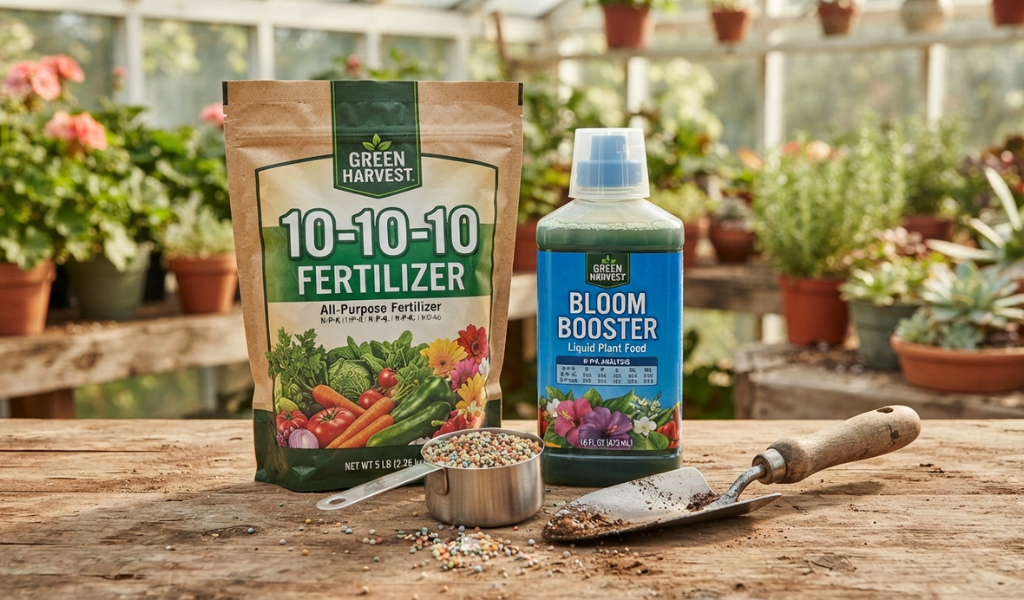
The name tells you exactly what’s inside. A 10-10-10 fertilizer contains 10% nitrogen, 10% phosphorus, and 10% potassium by weight. These three nutrients, often called N-P-K, are the building blocks of plant health. Every plant fertilizer you see on a store shelf lists these three numbers in the same order.
Nitrogen drives leafy growth. Phosphorus supports root development and flower production. Potassium strengthens the plant overall, helping it manage water and resist disease. A balanced fertilizer like 10-10-10 gives pepper plants equal amounts of each, which is why it works so well at the start of the growing season when pepper plants need all three.
Is 10-10-10 Fertilizer Good for Pepper Plants?
Yes, 10-10-10 is a solid choice for pepper plants with a few caveats. It works best during the early growth phase, from transplanting through the vegetative stage. At this point, your pepper plant is building roots, leaves, and stems, and it benefits from a balanced supply of nutrients.
The challenge comes once flowering begins. At that stage, too much nitrogen can push the plant to keep producing foliage instead of setting fruit. Bell peppers and hot peppers both respond this way. Once you see flower buds forming, it’s usually time to switch to a fertilizer with a lower nitrogen ratio, something like 5-10-10 – which puts more weight on phosphorus and potassium to support flower and fruit development.
That said, 10-10-10 is one of the best general-purpose fertilizers for pepper plants when used at the right time. It’s widely available, affordable, and easy to apply.
Liquid vs. Granular 10-10-10 Fertilizer
10-10-10 fertilizer comes in two main forms: liquid and granular. Both work well for fertilizing pepper plants, but they behave differently in the soil.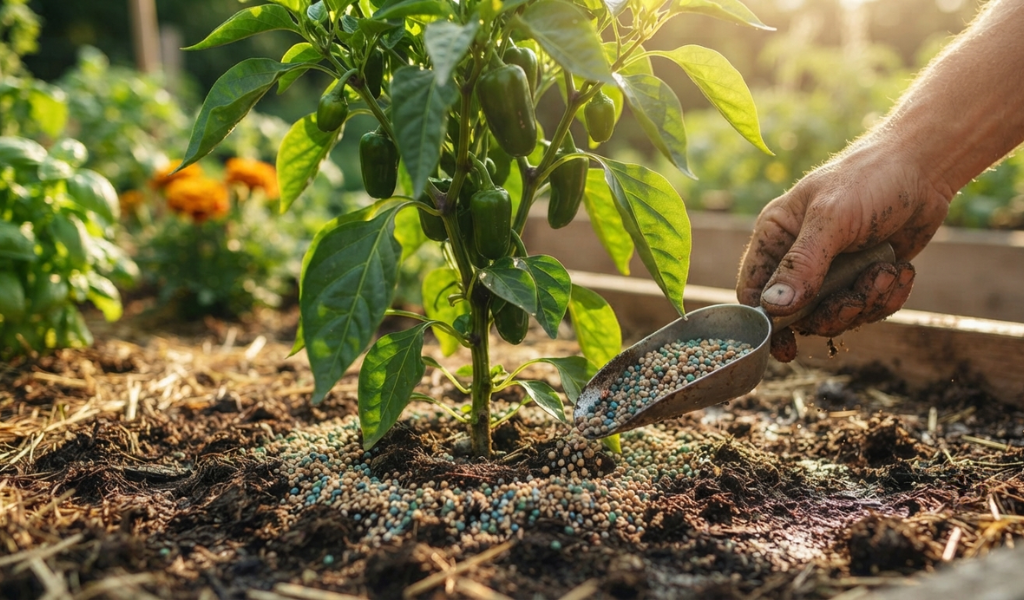
Liquid 10-10-10 Fertilizer
Liquid fertilizer absorbs quickly. The nutrients go into the soil fast and become available to the roots within a day or two. This makes liquid fertilizer a good choice when your pepper plants show signs of nutrient deficiency and you want to act quickly. A diluted liquid fertilizer every two weeks during the growing season keeps plants on a consistent feeding schedule. Be careful not to apply it to dry soil, as this can stress the roots.
Granular 10-10-10 Fertilizer
Granular fertilizer releases nutrients slowly over time. You work it into the top layer of garden soil before planting or side-dress it around established plants. Because it breaks down gradually, it’s harder to over-apply in a single dose and offers a more steady supply of nutrients over weeks. Granular fertilizer is a popular choice for gardeners who prefer a low-maintenance approach. Apply it at planting time, then again mid-season if needed.
How Do You Know If Your Plant Needs Fertilizer?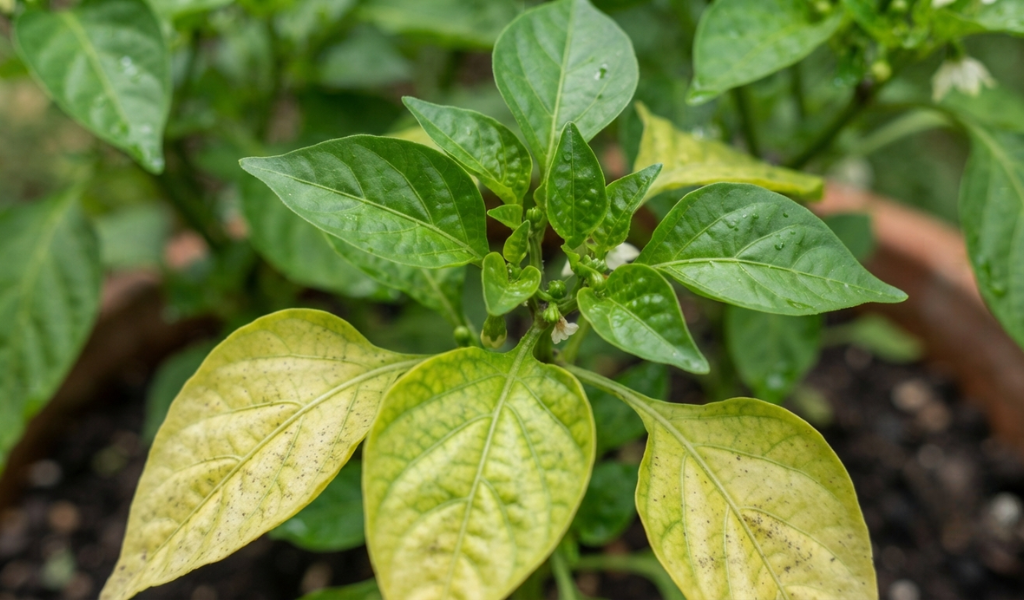
Pepper plants are pretty good at showing you when something is off. Yellow leaves are one of the most common signs of a nutrient deficiency, particularly a lack of nitrogen. If your pepper plant’s older, lower leaves are turning yellow while new growth looks normal, nitrogen is the likely cause.
Slow growth is another sign. If your pepper seedlings or established plants grow slowly and look smaller than expected for the time of year, they may not be getting enough nutrients from the soil. Plants that are pale overall, rather than a deep healthy green, often need a nitrogen boost.
Purple leaves on pepper seedlings are a different issue – they usually point to phosphorus deficiency, especially in cold soils where plants struggle to absorb phosphorus efficiently. Blossom end rot on peppers, where the bottom of the fruit turns dark and sunken, is tied to calcium deficiency.
A soil test is the most reliable way to understand what your garden soil is missing before you start adding fertilizer.
How to Use 10-10-10 Fertilizer on Pepper Plants
Applying 10-10-10 fertilizer correctly makes a real difference in how well your pepper plants respond.
For granular fertilizer, work about one tablespoon per plant into the top two to three inches of soil around the base of the plant. Keep it a few inches away from the stem to avoid burning the roots. Water well after applying.
For liquid fertilizer, dilute it according to the product label and apply it directly to the soil, not the leaves. Applying fertilizer to the foliage can cause leaf burn. Water the plant before applying liquid fertilizer to ensure the soil is moist.
For potted pepper plants, liquid fertilizer every two weeks is often more practical than granular, since nutrients leach out of containers faster than they do from open garden beds.
When to Use 10-10-10 Fertilizer on Pepper Plants
The best time to start fertilizing pepper plants with 10-10-10 is at transplanting. When you move your seedlings into the garden or into larger pots, mixing a light dose of granular 10-10-10 into the soil gives the plants a head start.
Continue fertilizing every two to three weeks during the vegetative stage. This is when your pepper plants are growing their leaves and stems, and they need a consistent supply of all three nutrients to grow strong.
Once your peppers start flowering, consider switching to a fertilizer higher in phosphorus and potassium. This shift tells the plant to focus its energy on fruit production rather than leafy growth.
When to Stop Using 10-10-10 Fertilizer on Pepper Plants
Hold off on fertilizing altogether once your pepper plants are in the final stage of fruit ripening. At this point, adding more fertilizer, especially nitrogen can delay ripening and reduce the intensity of flavor in hot peppers. Most gardeners stop their fertilizer regimen about four to six weeks before the expected end of the growing season.
Also, be cautious about adding fertilizer during a drought or heat wave. Stressed plants can’t absorb nutrients efficiently, and excess fertilizer sitting in dry soil can build up to toxic levels.
Soil pH: The Starting Point for Fertilizing Peppers
Before you add any fertilizer to the soil, check your soil pH. Pepper plants thrive in slightly acidic soil with a pH between 6.0 and 6.8. Outside this range, even the best fertilizer won’t do much good. Certain nutrients become locked in the soil and unavailable to the roots no matter how much you apply.
If your soil pH is off, you can adjust it. Lime raises pH in acidic soil. Sulfur lowers pH in alkaline soil. A simple soil test kit from your local garden center can give you the numbers you need to make smart adjustments.
The Three Primary Nutrients Pepper Plants Need
Understanding what each nutrient does helps you make better decisions about fertilizing your pepper plants.
Nitrogen (N)
Nitrogen fuels leafy growth. Pepper plants need enough nitrogen to build a strong canopy of leaves and stems that can support fruit. Too little nitrogen leads to pale, slow-growing plants. Too much nitrogen, especially once flowering starts, can prevent fruit from forming. Balance is key.
Phosphorus (P)
Phosphorus plays a direct role in root development, flowering, and fruit production. When pepper plants need to flower and set fruit, they rely heavily on phosphorus. Cold soil slows phosphorus absorption, which is why pepper seedlings can look purple or stunted early in spring even with adequate fertilization. Warming the soil before transplanting helps.
Potassium (K)
Potassium keeps pepper plants resilient. It supports water regulation within the plant, improves disease resistance, and enhances fruit quality. Potassium works alongside phosphorus and potassium to support fruit production. Without enough potassium, plants may produce fruit that’s smaller or less flavorful than expected.
Secondary Nutrients Peppers Still Depend On
Beyond the main N-P-K trio, pepper plants also rely on secondary nutrients that support overall plant health.
Calcium
Calcium strengthens cell walls and keeps fruit firm. A lack of calcium is the primary cause of blossom end rot in peppers, a frustrating problem where the bottom of the fruit turns brown and collapses. Garden soil with low calcium or inconsistent watering can both lead to this issue. Adding lime or gypsum can help, as can keeping soil moisture levels consistent.
Magnesium
Magnesium sits at the center of every chlorophyll molecule, which means it’s directly linked to how well your pepper plant can photosynthesize. Epsom salt, which is magnesium sulfate, is a popular remedy for magnesium deficiency in pepper plants. Dissolve one tablespoon in a gallon of water and apply it as a foliar spray or soil drench every few weeks.
Sulfur
Sulfur supports protein production and enzyme activity within the plant. It’s rarely deficient in healthy garden soil but can become an issue in sandy or heavily leached soils. Most complete fertilizers include small amounts of sulfur, so deficiency is uncommon when you’re following a regular fertilizer schedule.
Trace Nutrients That Support Healthy Growth
Iron, zinc, manganese, and boron are all needed in small amounts, but they still matter. Most well-balanced pepper fertilizers and compost-amended garden soils provide adequate trace nutrients. If you’re growing peppers in poor soil or have been gardening in the same bed for many years without adding organic matter, trace nutrient deficiencies can start to show up as patchy leaf discoloration or poor fruit set.
Applying compost into the top layer of soil each season is one of the best ways to maintain a diverse supply of trace nutrients without overthinking individual applications.
How to Choose the Right Fertilizer for Peppers
Choosing the best fertilizer for pepper plants depends on where your plants are in their growth cycle.
For early-season growth, a balanced fertilizer like 10-10-10 is a good starting point. For the fruiting stage, shift to something lower in nitrogen and higher in phosphorus and potassium, like a 5-10-10 formula. Organic options like fish emulsion, compost tea, and worm castings are excellent supplements that improve soil structure while providing nutrients.
If you’re fertilizing bell pepper plants in containers, use a liquid fertilizer every two weeks for the most consistent results. Potted pepper plants lose nutrients through drainage much faster than plants in the ground, so they need more frequent feeding.
For gardeners who prefer organic gardening, homemade compost, compost tea, and diluted liquid fertilizer from organic sources can all support healthy and productive pepper plants throughout the season.
Practical Tips for Using Fertilizer for Pepper Plants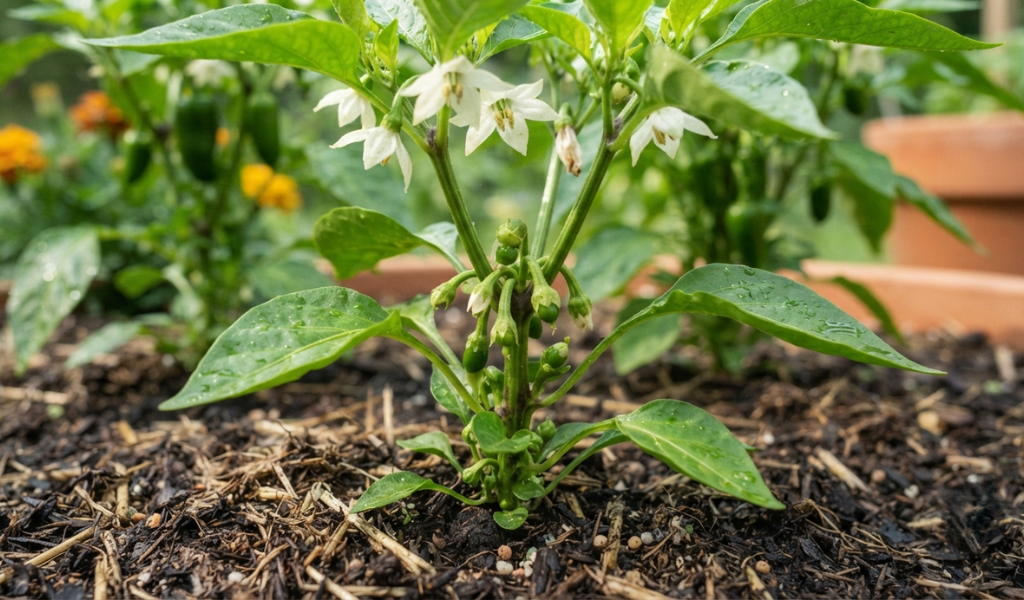
A few habits can make your fertilizer regimen much more effective.
Water before you fertilize. Dry roots don’t absorb nutrients well and are more vulnerable to fertilizer burn. Always apply fertilizer to moist soil.
Keep records. Write down when you fertilized, what product you used, and how much you applied. This helps you avoid over-fertilizing and lets you adjust your fertilizer schedule from one season to the next.
Don’t fertilize stressed plants. If your peppers are wilting from heat or dealing with a pest problem, hold off on fertilizing until the stress is resolved. Plants in distress can’t process nutrients effectively.
Use compost as a base. Mixing homemade compost or store-bought compost into the garden soil before planting reduces your dependence on synthetic fertilizers and gives your plants a head start.
Fertilizing Tips to Avoid Common Problems
Over-fertilizing is just as damaging as under-fertilizing. Too much nitrogen produces a bushy plant with dark, waxy leaves and very few flowers. Excess fertilizer can also build up as salts in the soil, making it harder for plants to absorb water.
Yellow leaves don’t always mean nitrogen deficiency. Before you reach for the fertilizer, check for watering issues, pests, or soil pH problems. Adding nitrogen to a plant that’s already waterlogged or battling root rot will make things worse.
Avoid applying granular fertilizer directly on leaves and stems. Always work it into the soil and water it thoroughly.
If you’re not sure whether your pepper plants need fertilizing, do a soil test first. It takes the guesswork out of the process and helps you choose the right fertilizer for your specific situation.
Final Thoughts: Feed the Plant, Not the Problem
Fertilizing pepper plants doesn’t have to be complicated. Start with 10-10-10 to give your plants a balanced foundation during early growth, then adjust your approach as the season progresses. Watch how your plants respond, keep an eye out for signs of deficiency, and don’t be afraid to change course when something isn’t working.
The goal isn’t to throw nutrients at the soil and hope for the best. It’s to understand what your peppers need at each stage and provide it consistently. Do that, and you’ll get strong plants, plenty of flowers, and a harvest worth showing off.
Start by testing your soil this season. It costs very little and tells you exactly where you stand before you spend a dime on fertilizer.
Frequently Asked Questions
What is the best fertilizer for peppers?
The best fertilizer for pepper plants depends on the growth stage. A balanced 10-10-10 fertilizer works well during early growth and the vegetative stage. Once pepper plants begin flowering, a formula lower in nitrogen and higher in phosphorus and potassium, like 5-10-10, better supports flower and fruit development. Organic options like compost and fish emulsion are also excellent choices.
What should you not use 10-10-10 fertilizer on?
Avoid using 10-10-10 on plants that are already in full bloom or heavy fruit production, as the high nitrogen content can encourage leafy growth at the expense of fruiting. Plants that prefer low-nitrogen conditions, like legumes, typically don’t benefit from a balanced fertilizer like 10-10-10 either.
What vegetables is 10-10-10 fertilizer good for?
10-10-10 fertilizer works well for many common vegetables, including tomatoes, cucumbers, squash, corn, and peppers during early-season growth. It’s a good general-purpose fertilizer for establishing seedlings and supporting vegetative development across a wide range of garden plants.
What can you put on pepper plants to make them grow faster?
To help pepper plants grow faster, ensure they get full sun, consistent moisture, and regular fertilizing with a balanced fertilizer like 10-10-10 early in the season. Adding Epsom salt (magnesium sulfate) as a diluted foliar spray can boost chlorophyll production. Warm soil temperatures and good drainage also make a significant difference in how quickly peppers grow.
Are Marconi peppers fertilized the same as bell peppers?
Yes, Marconi peppers and bell peppers have similar nutrient requirements. Both benefit from a balanced fertilizer during vegetative growth and a phosphorus-and-potassium-rich formula once flowering begins. The fertilizer schedule that works for bell pepper plants applies just as well to Marconi varieties.
Does it matter what kind of Epsom salt I use?
Standard Epsom salt, which is magnesium sulfate, works fine for pepper plants. Any food-grade or garden-grade Epsom salt from a pharmacy or garden center will do the job. Scented bath Epsom salt products are not recommended, as they may contain additives that are not suitable for garden use.
My seedlings are turning purple. Why?
Purple leaves on pepper seedlings usually indicate a phosphorus deficiency. This often happens when soil temperatures are too cold for the plant to absorb phosphorus efficiently. It can also occur in soils with low phosphorus levels or when soil pH is outside the ideal range. Warming the soil before transplanting and ensuring your soil pH is between 6.0 and 6.8 usually resolves the issue. A light application of fertilizer higher in phosphorus can help as well.
Should I fertilize pepper plants when they are fruiting?
Yes, but adjust what you use. Once pepper plants are actively setting fruit, reduce nitrogen and focus on phosphorus and potassium. A diluted liquid fertilizer every two weeks during the fruiting stage supports continued fruit development without triggering excess foliage. Stop fertilizing altogether as the fruits approach full ripeness.
What is the best time to spray foliar fertilizer on pepper plants?
The best time to apply foliar fertilizer is early morning or late afternoon, when temperatures are cooler and the sun is less intense. This prevents the fertilizer from evaporating too quickly and reduces the risk of leaf burn. Avoid spraying during the heat of the day or when rain is expected within the next few hours.