Pepper Plant Care in Pots: Tips to Grow Peppers in Containers Successfully
Growing Peppers in Pots: Essential Pepper Plant Care for Every Container Garden
Pepper plant care in pots is one of the most rewarding things a home gardener can do. You don’t need a backyard. You don’t need a raised bed. A sunny balcony, a patio, or even a bright windowsill is enough to grow peppers that are just as productive as anything planted in the ground.
This guide covers everything from choosing the right container and soil mix, to watering, feeding, pruning, and knowing when to harvest peppers. Whether you’re growing hot peppers for heat or sweet peppers for crunch, the same basic principles apply. Follow them closely, and you’ll be picking ripe peppers within a single growing season.
Which Types of Peppers Grow Best in Containers?
Not all pepper varieties are equal when it comes to container gardening. Some pepper plants grow compact and bushy, making them naturally suited to pots. Others sprawl outward or grow tall, demanding more space and support.
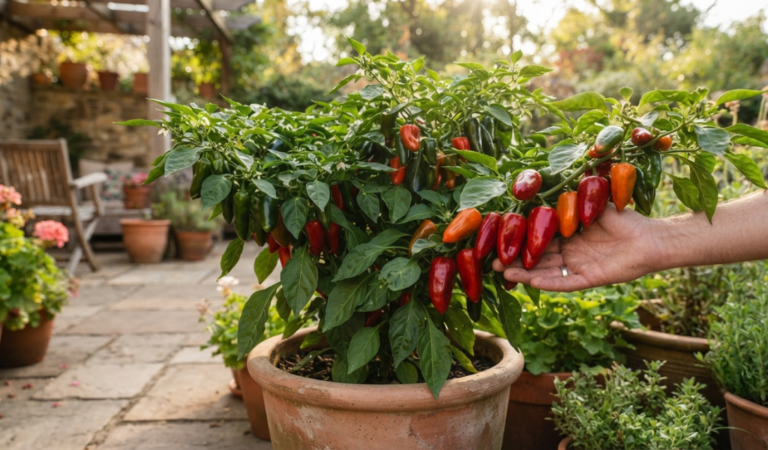
Hot peppers tend to be the easiest to grow in containers. Jalapeños, cayennes, serranos, banana peppers, and Thai chilis all perform exceptionally well in pots. They stay relatively compact, produce fruit generously, and handle the heat stress that comes with container growing better than most.
Sweet peppers like cubanelle and pimento also grow well in containers, though they benefit from a slightly larger pot than hot pepper varieties.
Bell peppers are a different story. They grow bigger, take longer to mature, and need more consistent feeding. They can be grown in pots, but they require more attention. More on that later.
For beginners, starting with hot peppers or banana peppers is a smart move. They are easy to grow, fast to produce, and highly rewarding.
Choosing the Right Container for Maximum Pepper Production
Getting the container right is one of the most important decisions you’ll make. The wrong pot limits root development, causes overwatering issues, and stunts your plant before it even gets started.
How Deep Should a Pot Be for Pepper Plants?
Pepper plant roots grow downward more than outward. A pot that is at least 12 inches deep is the minimum. For larger varieties like bell peppers, 14 to 16 inches of depth gives the roots the room they need to spread and anchor.
Minimum vs Ideal Container Sizes
For small hot pepper varieties, a 3 to 5-gallon pot works. For most standard pepper plants, 5 gallons is the minimum you should use. Ideally, go with 7 to 10 gallons per plant. This gives the roots space to grow, reduces how often you need to water, and supports better fruit production throughout the growing season.
Best Container Materials
Each material has trade-offs.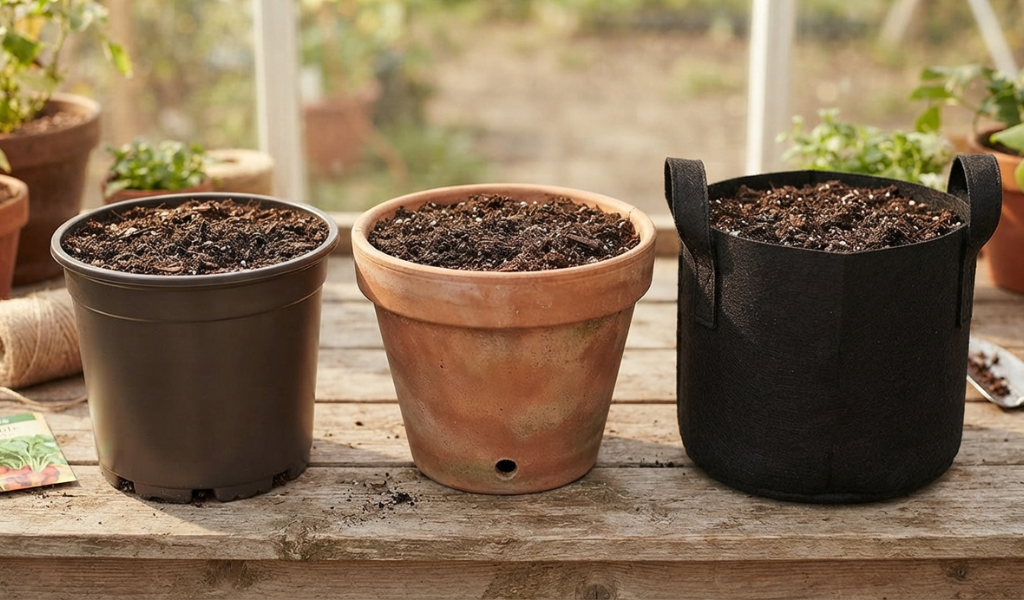
Plastic pots are lightweight, affordable, and retain moisture well. They are a practical choice for most growers and work well in hot weather since they don’t heat up as fast as terracotta.
Terracotta pots are breathable and traditional, but they dry out quickly. If you live somewhere warm and dry, you’ll be watering more often.
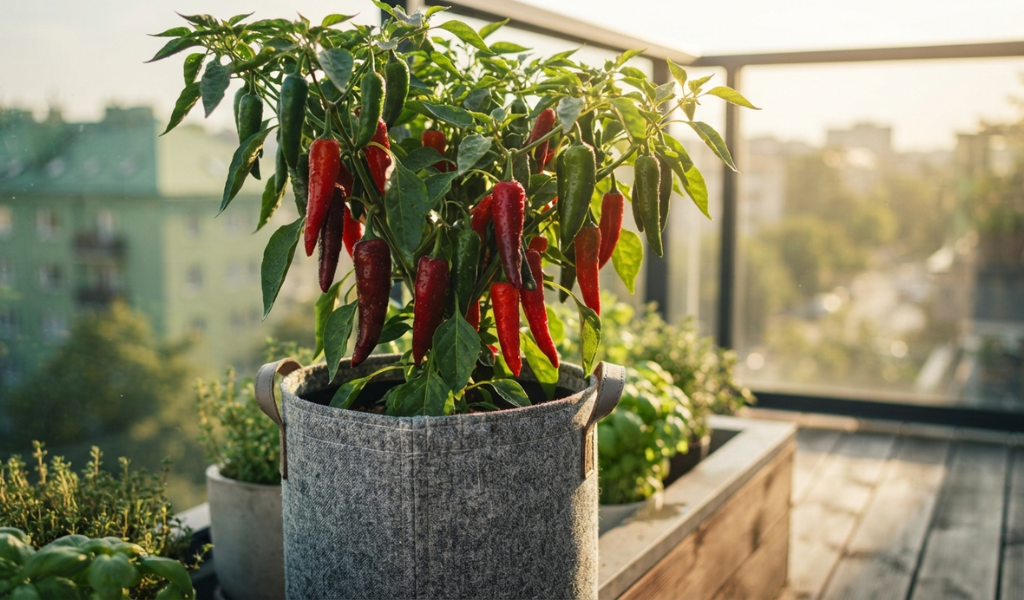
Fabric grow bags have become one of the most popular options for container peppers. They allow air pruning of roots, which prevents root circling and encourages a denser, healthier root system. A 5 to 7-gallon grow bag is plenty for a single pepper plant.
Wooden planter boxes work well for growing multiple plants together. They hold moisture better than terracotta and can be customized to any size.
Planter Boxes Are an Ideal Solution for Growing Multiple Peppers
If you want to grow four or more pepper plants at once, a long planter box is a space-efficient option. Space each plant at least 12 to 14 inches apart inside the box. This allows airflow between plants and reduces the risk of fungal diseases. A planter box also makes it easier to manage watering and feeding as a group.
EarthBox: Your Smart Choice for Container Gardening
The EarthBox is a self-watering container system designed specifically for growing vegetables in small spaces. It includes a sub-irrigation reservoir at the bottom, a potting mix cover to reduce evaporation, and a built-in fertilizer strip. For pepper plants in containers, this setup is highly effective. It takes the guesswork out of watering and delivers consistent moisture at the root level, which peppers love.
Best Soil Mix for Growing Peppers in Pots
Soil is where many growers go wrong. Garden soil is too heavy, drains poorly, and can introduce pests and pathogens into your container. Peppers grown in heavy soil become waterlogged, which leads to root rot and poor growth.
Avoid Using Garden Soil in Containers
Garden soil compacts quickly inside a pot. Once compacted, water runs off the surface instead of soaking into the root zone. Roots struggle to push through dense soil, which stunts growth considerably.
Use a Light Potting Mix Designed for Containers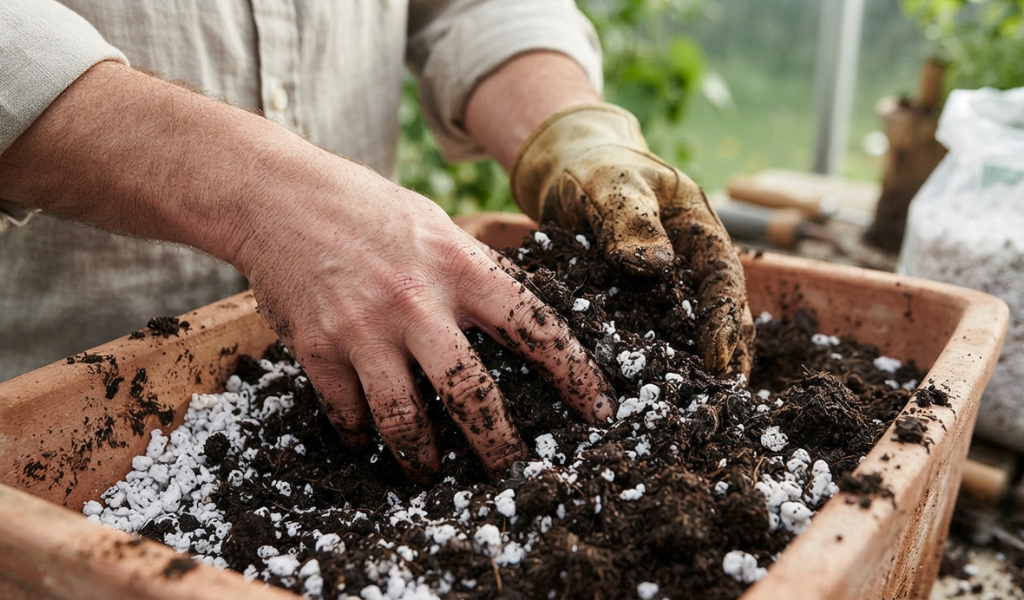
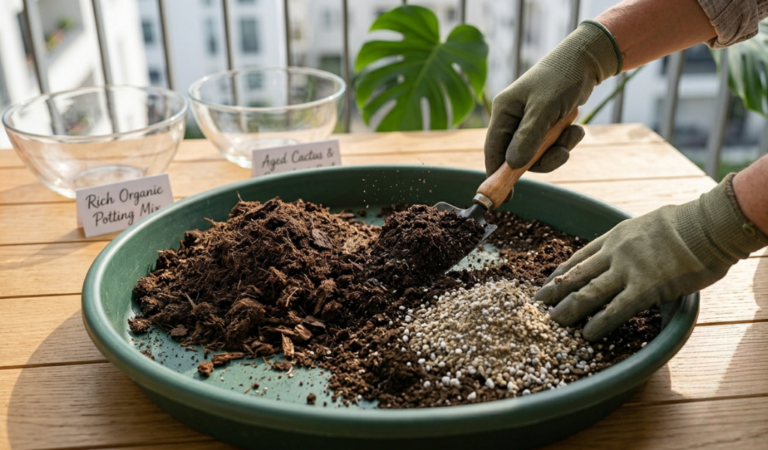
A quality commercial potting mix designed for vegetables is the foundation of good container gardening. Look for a mix that contains perlite or vermiculite for drainage, and coco coir or peat moss for moisture retention. This balance is what pepper plants need.
Add Organic Matter for Nutrient Stability
Mix in aged compost at about 20 to 30 percent of your total volume. Compost adds slow-release nutrients, improves microbial activity in the soil, and buffers against over or underwatering. Worm castings are another excellent addition and can be mixed in at the start of the season.
Make Sure the Soil Drains but Does Not Dry Too Fast
Peppers need consistent moisture, but they cannot sit in wet soil. Your mix should drain freely but still hold enough moisture between waterings. Adding a handful of perlite to a standard potting mix improves drainage without sacrificing too much moisture retention.
Refresh or Amend Soil During the Season
Container soil breaks down over time. After 6 to 8 weeks, topdress with a layer of compost or worm castings to replenish nutrients. At the end of the season, replace or significantly amend the soil before replanting.
Planting Peppers in Containers the Right Way
When to Plant Peppers
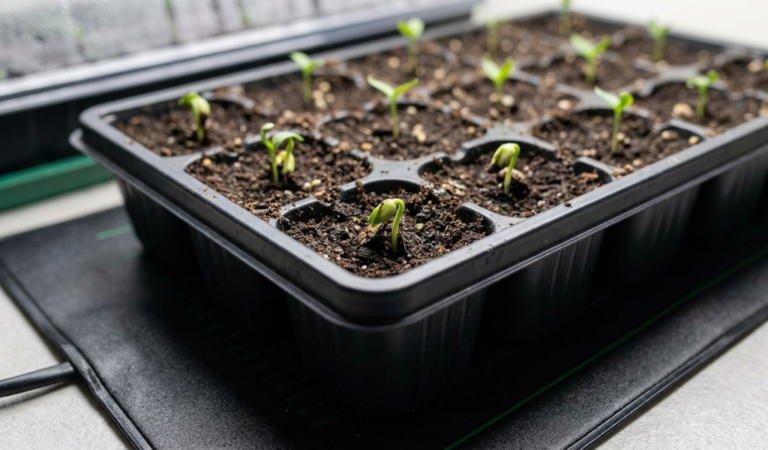
Peppers need warm soil and warm air to thrive. Do not transplant seedlings outdoors until nighttime temperatures consistently stay above 55°F (13°C). In most climates, this means late spring planting, usually between April and June depending on your location. Starting seeds indoors 8 to 10 weeks before the last frost date gives your plants a strong head start on the growing season.
Where to Plant Peppers
Peppers love direct sun. Place your containers where they will receive at least 6 to 8 hours of direct sunlight each day. South or west-facing spots are usually ideal. Indoors, grow lights can supplement natural light, but they need to be positioned close to the plant, typically 6 to 12 inches above the foliage.
How to Plant Peppers
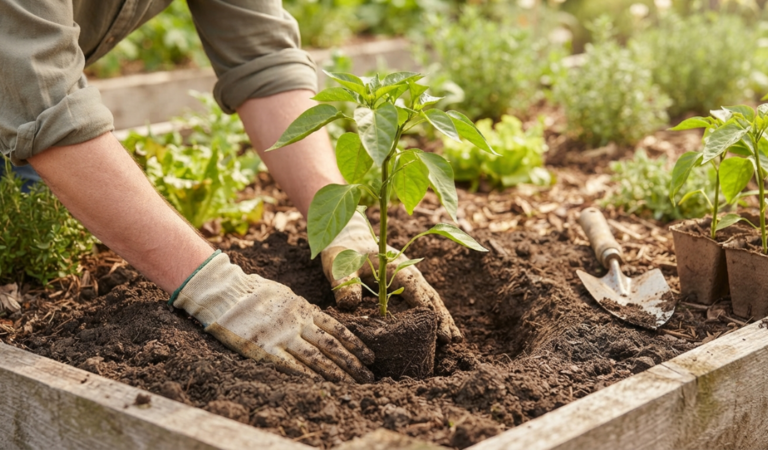
Fill your container with the prepared potting mix, leaving about 2 inches of space at the top. Dig a hole slightly larger than the root ball of your pepper seedling. Place the plant so the base of the stem sits at or just below the soil surface. Firm the soil gently around the roots and water thoroughly. If transplanting peppers from a nursery, allow a day or two for the plant to adjust before moving it to full sun.
How to Care for Peppers in Pots
Watering Wisely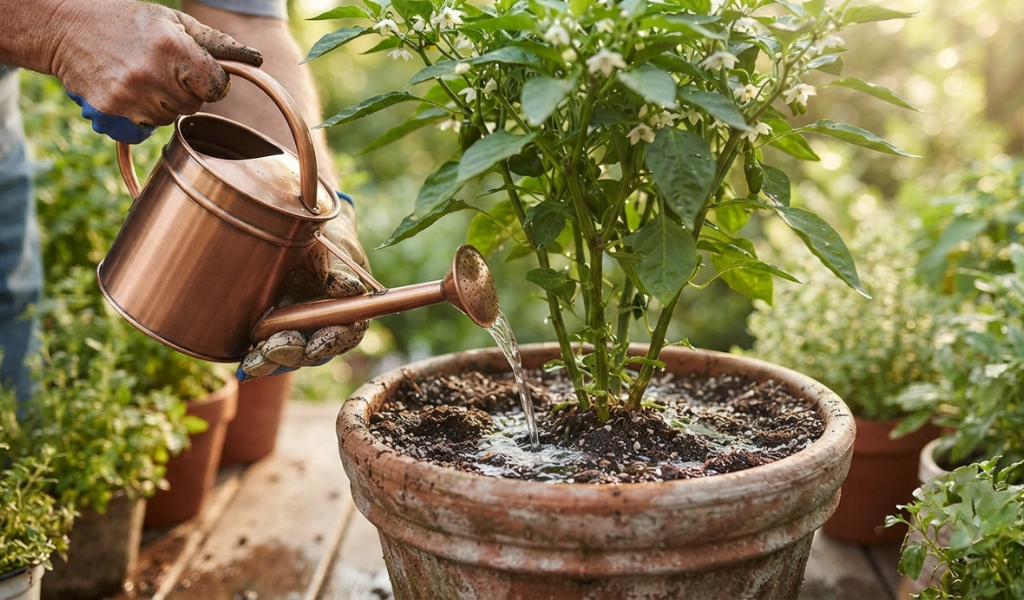
Watering pepper plants in containers correctly is one of the most important skills to develop. Pots dry out faster than garden beds, especially in hot weather. Check the soil daily by pushing your finger about an inch into the mix. If it feels dry, water deeply until you see water draining from the bottom.
Avoid shallow, frequent watering. Deep, thorough watering encourages roots to grow downward. Inconsistent watering leads to blossom drop and poor fruit development. In peak summer heat, you may need to water container peppers once or even twice a day.
Feeding and Fertilizing
Peppers are heavy feeders. Once the plant begins to flower, it needs a steady supply of nutrients. Start with a balanced fertilizer (such as a 10-10-10 formula) early in the season to support leafy growth. Once flowers appear, switch to a low-nitrogen fertilizer higher in phosphorus and potassium to encourage fruit production.
Liquid fertilizers work particularly well for container peppers because they deliver nutrients directly to the root zone. Feed every 1 to 2 weeks during the active growing season.
Pruning and Pinching
Pinching out the first set of flower buds encourages the plant to put energy into building a stronger structure before fruiting begins. This results in a bushier plant that produces more fruit later. During the season, remove any dead or yellowing leaves and thin out crowded branches to improve airflow.
Sun and Support
As pepper plants grow taller and begin to bear fruit, they can become top-heavy. Insert a bamboo stake or small tomato cage early in the season, before the plant needs it. Tying loosely with soft plant ties prevents branches from snapping under the weight of developing fruit.
Peppers Are Heavy-Feeders
This point deserves repeating. Once you see flowers forming, fertilizing pepper plants becomes critical. A plant that runs out of nutrients mid-season will stop producing, even if everything else looks healthy. Container growing means nutrients leach out faster, so consistent feeding is non-negotiable.
Seasonal Care
In cooler climates, peppers can be brought indoors before the first frost and overwintered. Cut the plant back to the main stem, reduce watering, and keep it in a frost-free spot with some light. In spring, it will push new growth and often produce more heavily in its second season than its first.
Storage
Once harvested, fresh peppers keep in the refrigerator for 1 to 2 weeks. Hot peppers can be dried, pickled, or frozen for long-term storage. Sweet peppers freeze well and retain their flavor for several months.
Success Factors for Growing Peppers in Containers
The difference between a pepper plant that barely survives and one that thrives usually comes down to five things: the right container size, quality potting mix, consistent watering, regular feeding, and enough sun. If you get all five right, the rest tends to take care of itself.
Start with healthy transplants or vigorous seedlings. Give them a big enough pot. Feed them consistently. Keep them in full sun. Those four steps alone will take you most of the way toward a successful harvest.
Companion Planting for Peppers
Growing companion plants around the base of your pepper container can help repel pests and improve growing conditions. Basil is one of the best companions for peppers. Its strong scent deters aphids and spider mites. Marigolds planted nearby repel whiteflies and nematodes.
Avoid planting fennel near peppers, as it inhibits growth in most vegetable plants. Also avoid planting peppers near brassicas like cabbage or kale.
Why Bell Peppers Act Differently Than Other Peppers in Containers
Bell Peppers vs. Hot Peppers in Pots
Bell peppers are technically feasible in containers, but they are more demanding than hot peppers. They take 70 to 85 days to reach maturity, sometimes longer. They need larger pots, at least 5 gallons and ideally more. They are also more sensitive to inconsistent watering, which causes blossom end rot and misshapen fruit.
Hot peppers, on the other hand, tend to be more forgiving. A jalapeño in a 5-gallon pot with regular feeding and watering will produce dozens of peppers throughout the season without much fuss. For container gardeners just getting started, hot peppers offer a better experience and more consistent results.
Pruning, Staking, and Support: What Actually Helps
When Staking Becomes Necessary
Staking becomes necessary once a pepper plant reaches about 12 to 18 inches tall and starts bearing fruit. The weight of the fruit, combined with any wind, puts stress on the main stem. A simple bamboo stake tied loosely with garden twine is usually enough for a single-stemmed plant.
For bushier varieties with multiple branching stems, a small wire tomato cage inserted early in the season provides support as the plant grows into it naturally.
What Most Gardeners Actually Harvest
Most gardeners harvest peppers before they are fully ripe. Green jalapeños and green bell peppers are harvested early and are perfectly edible. However, allowing peppers to fully ripen on the plant, turning red, yellow, or orange depending on the variety, increases their sugar content and flavor complexity. The trade-off is that leaving fruit on the plant longer slows the production of new flowers and fruit.
Preventing Pests and Diseases with Your Potted Peppers
Common Pests
Aphids are the most common pest for container peppers. They cluster on new growth and under leaves, sucking sap and weakening the plant. A strong spray of water knocks most of them off. Neem oil spray applied every 7 to 10 days controls persistent infestations.
Spider mites thrive in hot and dry conditions. They leave fine webbing on leaves and cause yellowing and leaf drop. Increase humidity around the plant and use insecticidal soap or neem oil.
Whiteflies are another common nuisance. Yellow sticky traps help catch adults, while neem oil disrupts the life cycle of eggs and larvae.
Plant Diseases
Powdery mildew appears as a white coating on leaves, usually during humid periods with poor airflow. Spacing plants apart and pruning for airflow reduces risk. A diluted baking soda spray can help control mild outbreaks.
Root rot is caused by overwatering and poor drainage. If leaves are yellowing and the soil smells sour, root rot may be the cause. Remove the plant, trim damaged roots, and repot in fresh, well-draining potting mix.
Common Problems When Growing Peppers in Pots
Blossom drop is when flowers fall off before setting fruit. Causes include temperature extremes, inconsistent watering, and over-fertilizing with nitrogen. Keep plants in stable conditions and maintain even moisture.
Yellowing leaves often indicate a nutrient deficiency, overwatering, or root stress. Check drainage first, then consider applying a balanced fertilizer.
Small or misshapen fruit is usually related to inconsistent watering or insufficient pollination. Hand-pollinate flowers by gently shaking the plant or using a small paintbrush to transfer pollen between flowers.
Slow growth in container peppers is most often caused by cold soil, a pot that is too small, or inadequate sunlight. Address all three and growth typically rebounds quickly.
Final Thought
Pepper plant care in pots does not have to be complicated. Give your plant a good start with the right container, quality soil, and a warm sunny spot, and most of the hard work is already done. Keep up with watering and feeding throughout the growing season, watch for early signs of pests or disease, and you’ll be rewarded with a steady supply of peppers from midsummer right through to the first frost.
If you are new to growing peppers in containers, start with one or two hot pepper varieties this season. Get comfortable with the basics, then expand to more demanding varieties like bell peppers. The skills you build in your first season will carry over to every year after.
Frequently Asked Questions
Do peppers grow better in pots or in the ground?
Peppers grow well in both settings, but container growing gives you more control over soil quality, drainage, and placement. In pots, you can move plants to optimize sun exposure and protect them from cold snaps. Ground-planted peppers benefit from more stable moisture levels and larger root space. For gardeners with limited outdoor space, containers are an excellent alternative.
What do coffee grounds do for pepper plants?
Coffee grounds add a small amount of nitrogen to the soil and can slightly acidify pH levels, which peppers appreciate. Used in moderation as a topdressing or mixed into compost, coffee grounds support healthy growth. However, applying too many coffee grounds creates a dense layer that repels water and can harm rather than help the plant.
How do you get pepper plants to produce more fruit in pots?
Consistent feeding with a phosphorus-rich fertilizer once flowering begins is the single most effective strategy. Pinch off the first flush of flowers to encourage a stronger plant structure. Ensure the plant receives at least 6 to 8 hours of direct sun daily. Watering deeply and evenly also reduces stress, which directly supports fruit production.
Do pepper plants grow back every year in pots?
Pepper plants are perennials in tropical climates. In frost-prone regions, they die back at the end of the season unless you bring them indoors. Overwintered pepper plants that survive the cold season typically produce more heavily in their second year, having already developed a strong root system.
What is the ideal container size for growing pepper plants?
A 5-gallon pot is the minimum for most pepper plants, but a 7 to 10-gallon container is ideal. Larger containers hold more soil, retain moisture more evenly, and support a bigger root system, all of which contribute to a more productive plant.
How often should you water pepper plants in containers?
During warm weather, check the soil daily. Water deeply when the top inch of soil feels dry. In peak summer heat, this may mean watering once or twice a day. In cooler weather or for plants in larger containers, watering every 2 to 3 days is usually sufficient.
Which types of peppers are best for growing in containers?
Jalapeños, cayenne, serrano, banana peppers, and Thai chilis are among the easiest pepper varieties to grow in containers. They stay compact, produce well, and adapt easily to pot conditions. Bell peppers can also be grown in pots but require more space and attention to thrive.
What is the best soil for growing peppers in containers?
A high-quality potting mix with added perlite for drainage and compost for nutrients is the best foundation. Avoid garden soil, which compacts inside containers and drains poorly. A mix that retains some moisture while draining freely gives pepper plants the balance they need for healthy root growth and consistent fruit production.