Best Organic Fertilizer for Peppers: A Complete Guide to Growing Strong Pepper Plants
Best Organic Fertilizer for Peppers: Complete Guide to Healthier Plants and Bigger Harvests
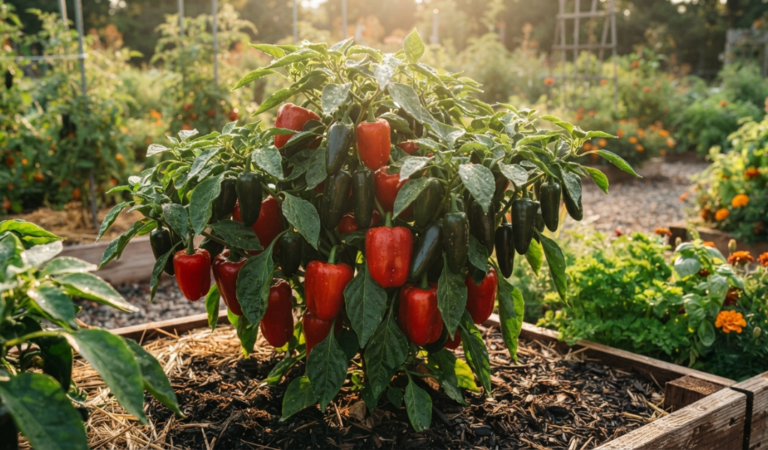
Growing peppers organically is one of the most rewarding experiences a gardener or urban farmer can have. But even with the right seeds, the right soil, and plenty of sunshine, your pepper plants will struggle to reach their full potential without the right nutrients. Choosing the best organic fertilizer for peppers makes a significant difference in how your plants grow, how many fruits they produce, and how flavorful that harvest turns out to be.
This guide covers everything you need to know about fertilizing peppers the organic way. From understanding NPK ratios and soil health to knowing when and how to feed your capsicum plants at each growth stage, you will find practical, easy-to-follow instruction that works for both backyard gardeners and small-scale farmers alike.
Whether you are growing sweet bell peppers, spicy chili varieties, or anything in between, the same core principles apply. Learning how to fertilize pepper plants correctly is the single most impactful thing you can do to improve your pepper production this season.
Why Fertilize Pepper Plants?
Peppers are heavy feeders. They consume large amounts of nutrients throughout their growing season, and the soil alone rarely provides everything they need in the right quantities. Without a consistent fertilization plan, your plants may grow slowly, produce fewer flowers, or drop their blossoms before fruit sets.
Boost Growth and Yield
A well-fed pepper plant puts out stronger stems, more leaves, and a greater number of flowers. More flowers mean more fruit. That direct relationship between nutrient availability and yield is why fertilizing peppers regularly is so important. Nitrogen supports lush vegetation early in the season, while phosphorus and potassium drive flowering and fruiting later on.
Improve Pepper Quality
Fertilization does not just affect how many peppers you get. It also affects their size, wall thickness, color, and flavor. Calcium deficiency, for example, leads to blossom end rot, a condition where the bottom of the fruit turns dark and mushy. Magnesium deficiency causes yellowing leaves and poor fruit set. 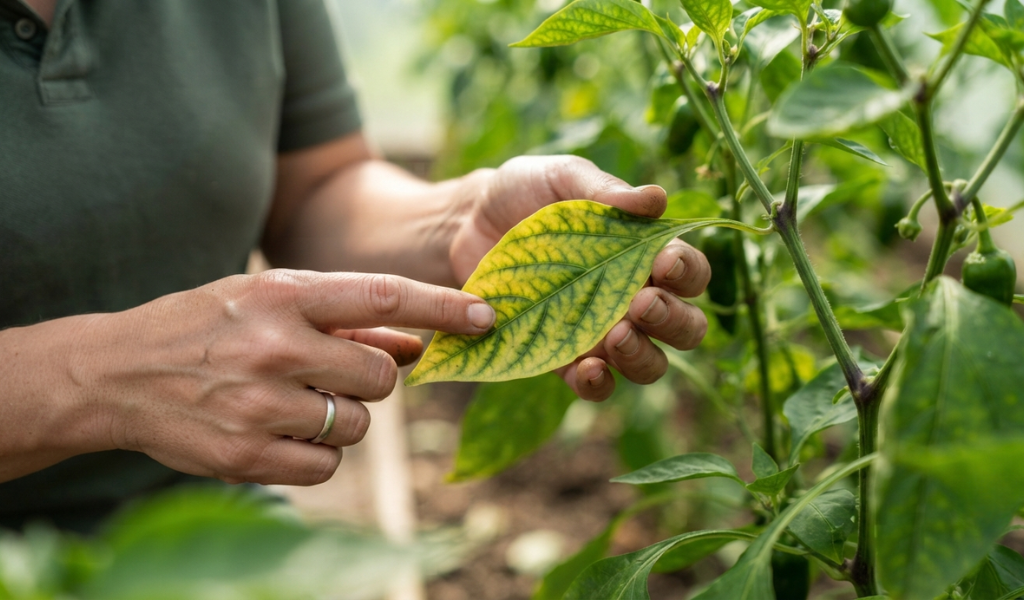 Getting the nutrient balance right means your peppers look better, taste better, and store longer.
What is the Best Fertilizer for Pepper Plants?
The best fertilizer for peppers depends on your soil, your growth stage, and your method of application. That said, organic options consistently outperform synthetic ones when it comes to long-term soil health and sustainable yield. Here is what you need to understand before choosing.
Understand Essential Nutrients (NPK)
Every fertilizer comes with a guaranteed analysis showing its NPK ratio. This stands for nitrogen (N), phosphorus (P), and potassium (K). For pepper plants, a balanced ratio like 5-5-5 works well early in the season. During flowering and fruiting, you want less nitrogen and more potassium, something like a 3-4-6 ratio.
Nitrogen’s Role in Pepper Growth
Nitrogen drives leafy, vegetative growth. During the seedling stage and early transplant phase, a nitrogen-rich organic fertilizer helps young plants establish themselves quickly. However, too much nitrogen during the fruiting stage pushes the plant to keep growing leaves instead of setting fruit. Dialing back nitrogen once flowers appear is a common and effective strategy.
Potassium for Fruit Development
Potassium is critical for fruit development, disease resistance, and water regulation within the plant. Low potassium levels result in small, misshapen peppers and poor overall pepper harvest quality. Kelp meal and wood ash are great organic sources of potassium that many gardeners use to boost fruit production.
Secondary Nutrients: Calcium, Magnesium, Sulfur
Beyond NPK, secondary nutrients play a huge role in pepper health. Calcium prevents blossom end rot, magnesium (found in epsom salt or magnesium sulfate) supports chlorophyll production, and sulfur aids in the uptake of other nutrients. Adding gypsum to your soil is a reliable way to supply both calcium and sulfur simultaneously.
Why Choose Organic Fertilizer for Peppers?
Organic pepper fertilizer feeds the soil ecosystem rather than just the plant itself. Synthetic fertilizers deliver nutrients directly to roots in soluble form, which can produce fast results but often leads to nutrient runoff, salt buildup in the soil, and declining microbial activity over time.
Organic fertilizers work differently. They release nutrients slowly as microbes break down organic matter, which means plants receive a steady supply rather than a sharp spike. This steady feeding reduces the risk of burning roots or disrupting the soil chemistry that healthy pepper plants depend on.
Benefits of Organic Fertilizers Over Synthetic Options
Organic fertilizers offer several practical advantages for the home gardener and commercial farmer alike.
First, they improve soil structure over time. Compost, worm castings, and aged manure all add organic matter that helps soil retain moisture, drain properly, and support healthy root growth. Second, organic options carry a much lower risk of over-fertilizing. Because nutrients release gradually, you have a wider margin for error. Third, organic fertilizing supports biodiversity, encouraging beneficial insects, worms, and microorganisms that contribute to a healthier garden ecosystem overall.
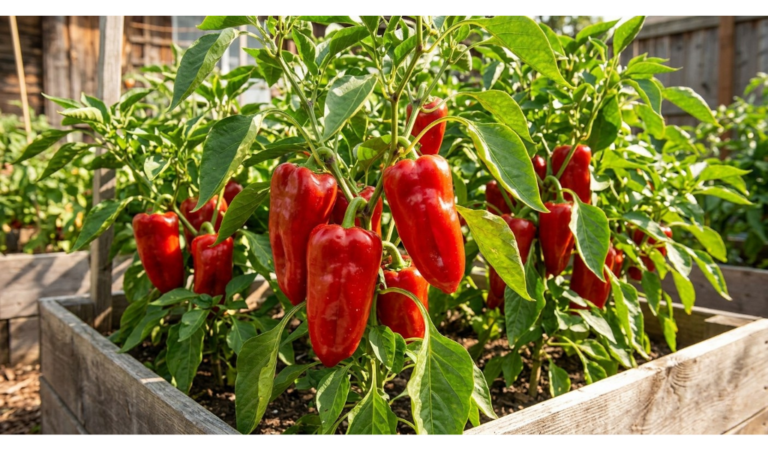
For the urban farmer growing peppers in raised beds or containers, organic fertilizers also reduce the risk of chemical buildup, which becomes a real problem in enclosed growing environments.
How Organic Nutrients Improve Soil Health
Healthy soil grows healthy pepper plants. It sounds simple, but most gardeners underestimate just how much soil biology matters. Organic amendments feed the bacteria, fungi, and other microorganisms that break down nutrients into forms plants can absorb. Over several seasons, regular use of organic fertilizer dramatically improves soil texture, water retention, and nutrient availability, creating conditions where peppers genuinely thrive without needing heavy inputs.
Best Organic Fertilizers for Pepper Plants
Here are the most effective organic fertilizers for peppers, each with distinct benefits depending on what your garden needs.
Compost and Well-Aged Manure
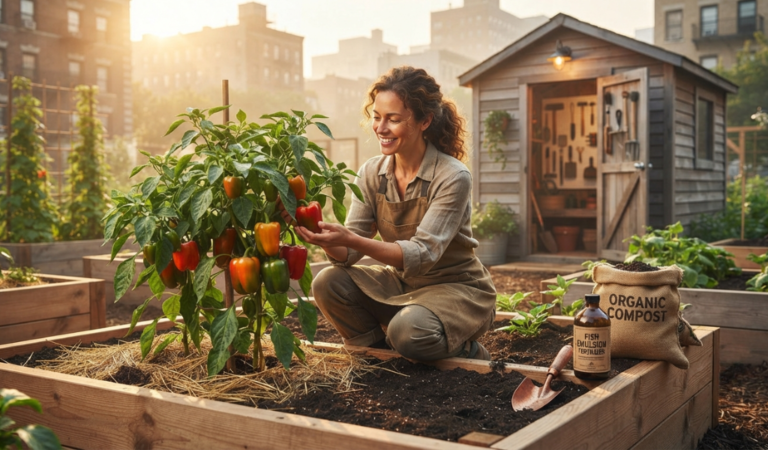
Compost is the backbone of any organic fertilizer program. A 2 to 3 inch layer of finished compost worked into your planting beds before transplanting provides a wide spectrum of nutrients, improves drainage, and introduces beneficial microbial life. Well-aged manure from chickens, cows, or horses works similarly, but must be fully composted before use. Fresh manure burns roots and may introduce harmful bacteria.
Fish Emulsion, Seaweed, and Kelp Fertilizer
Fish emulsion is a fast-acting, nitrogen-rich liquid fertilizer made from processed fish byproducts. It works especially well as a foliar spray or soil drench during the vegetative stage, delivering an immediate nutrient boost that young plants respond to quickly. Seaweed and kelp fertilizer add natural plant hormones, trace micronutrients, and potassium, making them excellent complements to fish emulsion throughout the growing season. Fish bone meal is another option, offering phosphorus and calcium alongside a modest nitrogen content.
Bone Meal, Blood Meal, and Worm Castings
Bone meal is a slow-release phosphorus source ideal for supporting root development and early flowering. Mix it into the soil at transplant time for best results. Blood meal is a high-nitrogen amendment useful for correcting nitrogen deficiency quickly, though it should be used sparingly. Worm castings are arguably the most complete organic fertilizer available. They are gentle enough to use generously, contain a broad range of nutrients and beneficial microbes, and can be applied as a soil amendment or brewed into worm casting tea for foliar application.
Choosing the Right Organic Fertilizer
With so many options available, picking the right product comes down to three key factors: your soil’s current nutrient profile, what growth stage your plants are in, and your preferred method of application.
Understanding NPK Ratios for Peppers
A general-purpose fertilizer with a balanced NPK ratio works for most gardeners starting out. As you gain experience and ideally conduct a soil test, you can fine-tune your approach. Soil testing is the most accurate way to identify specific deficiencies and avoid wasting money on nutrients your soil already has in abundance.
Matching Fertilizer to Each Growth Stage
Pepper plants have changing nutritional priorities at each stage of their life. Seedlings need gentle, balanced nutrition. Young transplants benefit from nitrogen to establish growth. Once flowers appear, phosphorus and potassium take priority to support fruit set and development. Calcium becomes especially important as fruits mature to prevent blossom end rot.
Granular vs. Liquid Organic Fertilizers
Granular fertilizers are slower to release and are typically worked into the soil before planting or used as a top dressing between waterings. They provide steady nutrition over weeks or months. Liquid fertilizers, including fish emulsion and soluble seaweed, act faster and are better suited for addressing immediate deficiencies or giving plants a boost during critical growth windows. Many experienced gardeners use both: granular for background nutrition and liquid for targeted feeding.
How to Apply Organic Fertilizer to Peppers
Application method matters as much as product choice. Even the best fertilizer for peppers will underperform if applied incorrectly.
Preparing the Soil Before Planting
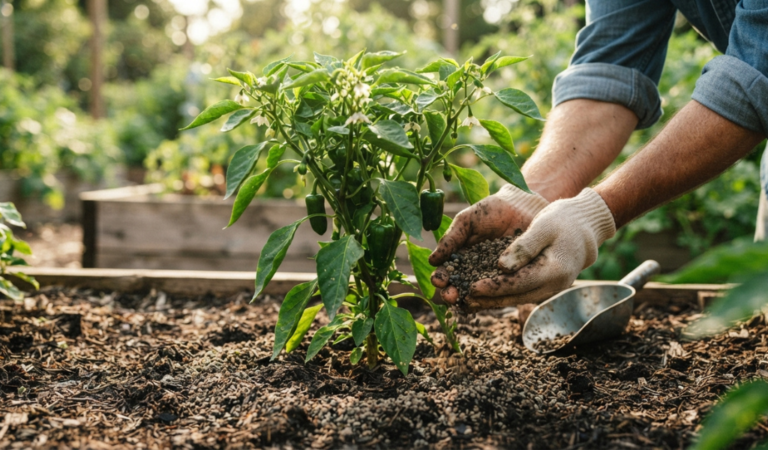
Before transplanting seedlings, work a generous amount of compost and a slow-release granular fertilizer into the top 6 to 8 inches of soil. This pre-planting amendment creates a nutrient-rich root zone that supports vigorous early growth. Adding gypsum at this stage also improves calcium availability and soil structure.
Side-Dressing and Top-Dressing Techniques
Side-dressing involves applying granular fertilizer in a shallow furrow about 4 to 6 inches from the base of the plant, then watering it in. Top-dressing means spreading compost or a granular amendment directly on the soil surface around the plant and allowing rain or irrigation to carry nutrients downward. Both techniques deliver nutrients gradually and minimize the risk of root burn.
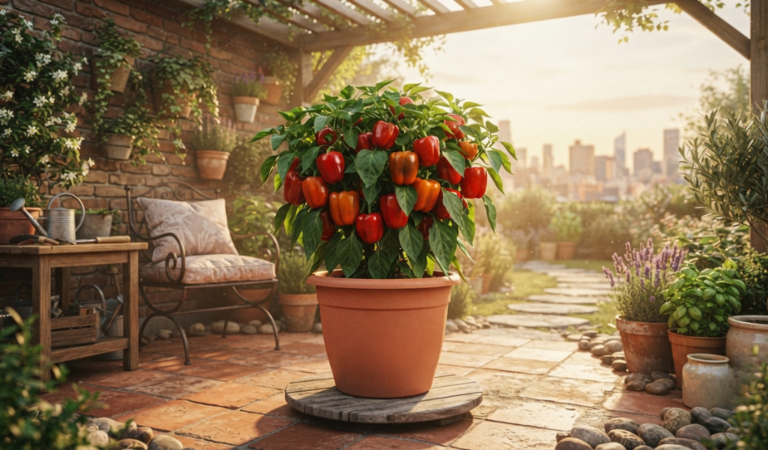
Feeding Container-Grown vs. Garden Peppers
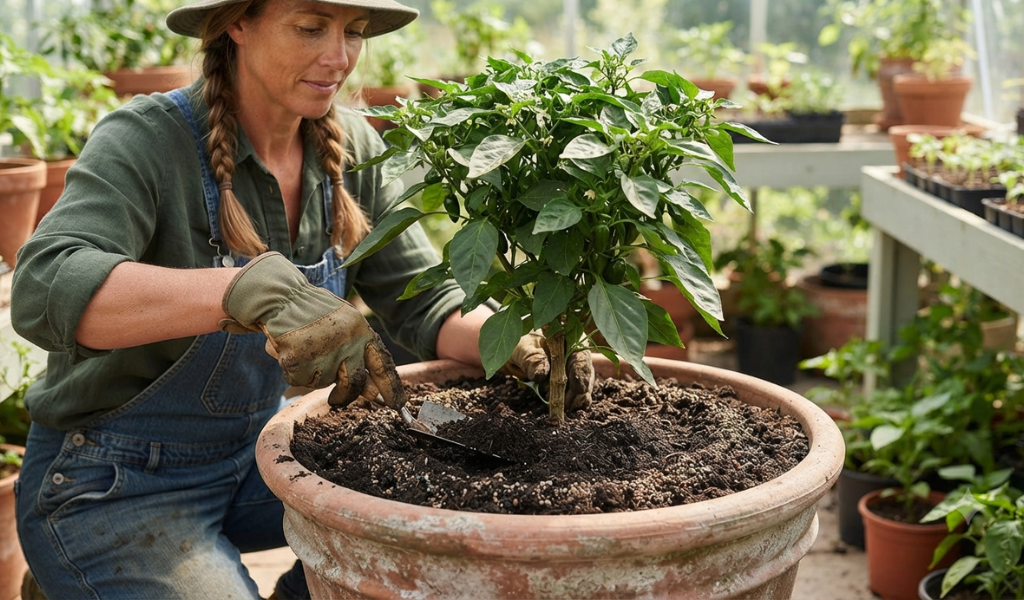
Container-grown peppers require more frequent fertilization than those grown in garden beds. Nutrients leach out of pots faster with each watering. For container peppers, a liquid organic fertilizer applied every one to two weeks during the growing season keeps plants consistently fed. Garden peppers generally do well with monthly granular applications supplemented with occasional liquid feeding during flowering and fruiting.
How Often to Fertilize Pepper Plants
Consider Plant Stage
The frequency of fertilization changes with the plant’s stage. Seedlings should receive diluted liquid fertilizer every 10 to 14 days. Once transplanted into the garden, switch to monthly granular feeding with supplemental liquid applications every two weeks during active growth.
Monitor Soil Moisture
Always water plants before applying fertilizer. Applying fertilizer to dry soil concentrates nutrients and can damage roots. Keeping the soil consistently moist, not waterlogged, helps nutrients distribute evenly and reach the root zone where they are needed most.
When to Fertilize Pepper Plants Organically
Feeding Seedlings and Young Plants
Start feeding seedlings about two weeks after germination with a diluted fish emulsion or worm casting tea. Young plants have delicate roots, so gentle, balanced nutrition is the goal at this stage. Avoid high-nitrogen products until the plant has developed several sets of true leaves.
Fertilizing During Flowering and Fruiting
Once flower buds appear, shift your fertilizer toward formulas higher in phosphorus and potassium. This is the time to pull back on nitrogen and focus on supporting fruit development. A foliar spray of seaweed extract or diluted epsom salt (magnesium sulfate) during this period can visibly improve fruit set and reduce blossom drop.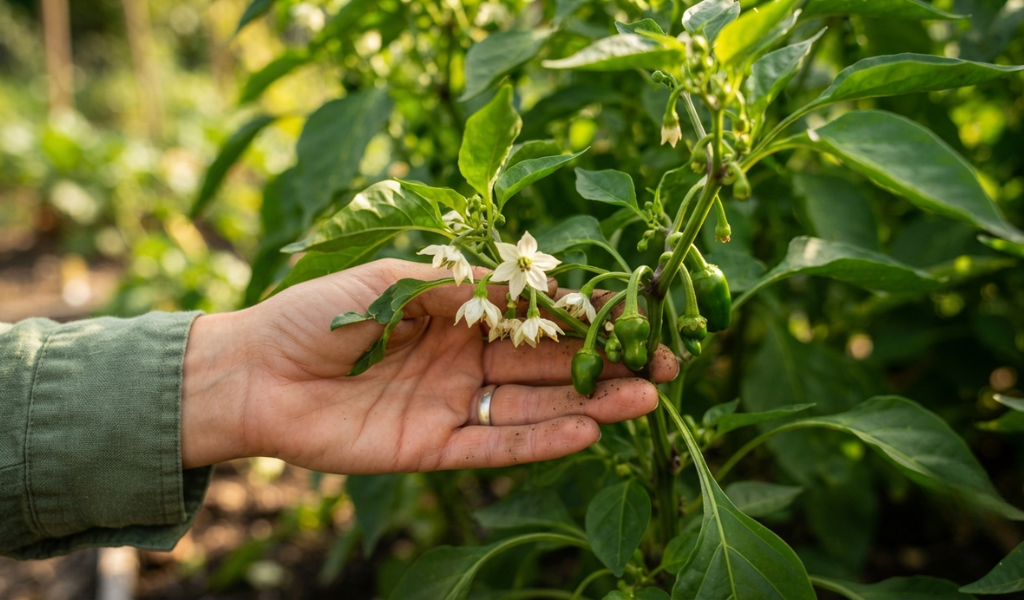
Seasonal Fertilization Schedule for Maximum Harvests
A simple seasonal schedule removes the guesswork from fertilizing peppers.
Early Spring (Pre-Planting): Incorporate compost and bone meal into the soil. Test and amend pH if needed.
Transplant Week: Apply a diluted liquid fertilizer to reduce transplant stress and encourage root establishment.
Weeks 2 to 6 (Vegetative Stage): Feed every 10 to 14 days with a balanced liquid fertilizer. Side-dress with compost halfway through this phase.
Weeks 7 to 12 (Flowering and Fruiting): Reduce nitrogen, increase potassium. Apply kelp meal or wood ash as a top dressing. Use a foliar spray of diluted epsom salt for magnesium.
Late Season: As plants slow down, reduce feeding frequency. A final compost top-dressing helps improve soil for the following year.
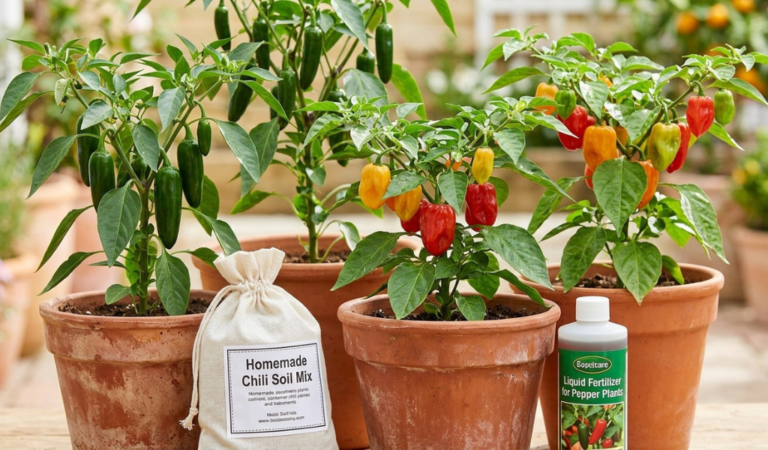
Homemade Organic Fertilizer for Peppers
Making your own organic fertilizer for peppers is easier than most people think, and the results are excellent.
Compost Tea and Worm Casting Tea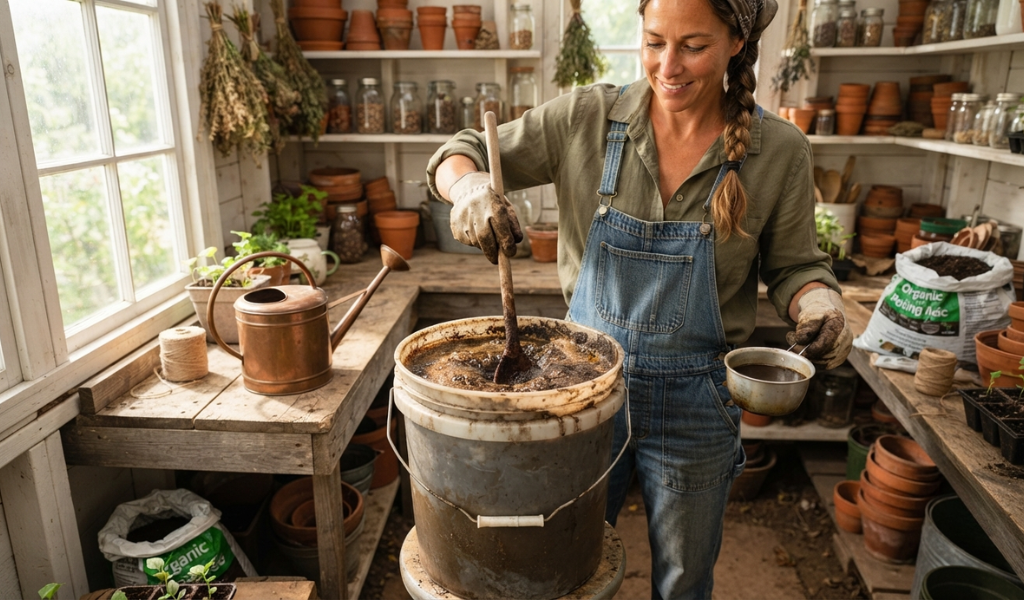
Compost tea is made by soaking finished compost in water for 24 to 48 hours, then straining and applying the liquid to your plants as a soil drench or foliar spray. Worm casting tea follows the same process using worm castings instead. Both deliver a concentrated dose of nutrients and beneficial microorganisms that directly improve soil health and plant vitality.
Banana Peel, Eggshell, and Coffee Ground Uses
Banana peels are a good source of potassium and can be buried near the base of plants or soaked in water to create a simple potassium-rich liquid feed. Eggshells provide calcium when crushed and worked into the soil. Coffee grounds add nitrogen and slightly acidify the soil, which suits peppers well given their preference for a pH between 6.0 and 6.8. Use coffee grounds sparingly, as too much can compact soil and create drainage problems.
DIY Organic Fertilizer Recipes That Work
A simple all-purpose recipe: combine 2 cups of compost, 1 cup of worm castings, half a cup of bone meal, and a quarter cup of kelp meal per square foot of garden bed. Work this mix into the top 4 inches of soil before planting. For a liquid version, soak the same ingredients in a 5-gallon bucket of water for 48 hours, then strain and apply to the base of your plants.
Common Organic Fertilizing Mistakes to Avoid
Even experienced gardeners make fertilizing mistakes. Here are the most common ones and how to avoid them.
Overfeeding Pepper Plants
More fertilizer is not always better. Overfeeding, particularly with nitrogen, leads to lush, dark-green foliage with very few flowers or fruits. If your pepper plants are producing lots of leaves but no blossoms, cut back on nitrogen immediately and switch to a potassium-rich organic fertilizer.
Using Fresh Manure or Unfinished Compost
Fresh manure contains high levels of ammonia and potentially harmful pathogens. Applied directly to garden beds or around plants, it can burn roots and introduce disease. Always use fully composted manure that has been aging for at least six months. Unfinished compost carries similar risks and may also tie up nitrogen in the soil as it continues to break down.
Monitoring Plant Health and Adjusting Fertilizer Applications
Your plants will tell you what they need if you pay attention. Yellowing lower leaves often point to nitrogen deficiency. Purple-tinged leaves suggest phosphorus deficiency. Pale green color across the whole plant can indicate a lack of magnesium. Adjust your organic fertilizer program based on what you observe, and consider a soil test at least once per season to guide your decisions accurately.
Final Thoughts: Grow Smarter, Harvest More
Choosing and using the best organic fertilizer for peppers is not about following one fixed formula. It is about understanding your plants, reading your soil, and adjusting your approach as the season progresses. Organic fertilizing rewards patience and observation with healthier plants, richer soil, and more abundant pepper harvests year after year.
Start with compost as your foundation. Add targeted amendments like bone meal, fish emulsion, or kelp fertilizer based on your plant’s growth stage. Watch for signs of deficiency, and correct them early. With a consistent, thoughtful approach, even a small garden plot or a collection of containers can produce an impressive and flavorful pepper harvest.
Frequently Asked Questions
What is the best organic fertilizer for peppers?
The best organic fertilizer for peppers combines compost for broad-spectrum nutrition with targeted amendments like fish emulsion for nitrogen, bone meal for phosphorus, and kelp meal for potassium. Worm castings are also highly effective and gentle enough to use throughout the entire growing season.
What do coffee grounds do for pepper plants?
Coffee grounds add a modest amount of nitrogen to the soil and can slightly lower soil pH, which suits peppers. They also improve soil texture when worked in as an amendment. However, they should be used in small amounts, as too much can compact soil and inhibit drainage.
How do you make peppers grow faster?
To speed up growth, ensure your plants receive at least 6 to 8 hours of direct sunlight, maintain consistent soil moisture, and apply a nitrogen-rich organic fertilizer during the vegetative stage. Keeping the soil warm with mulch and planting after all frost risk has passed also accelerates development significantly.
Do peppers like a lot of fertilizer?
Peppers are considered heavy feeders, meaning they benefit from regular fertilization throughout the growing season. However, more is not always better. Excess nitrogen in particular leads to excessive leaf growth at the expense of fruit production. Balanced, consistent feeding produces better results than large, infrequent applications.
What is the best organic fertilizer for both tomatoes and peppers?
Both tomatoes and peppers respond well to the same types of organic fertilizers: compost, fish emulsion, kelp meal, and worm castings. A general-purpose balanced fertilizer with an NPK ratio around 5-5-5 works well for both crops early in the season, transitioning to a lower-nitrogen, higher-potassium formula once flowering begins.
What nutrients do pepper plants need at different growth stages?
During the seedling stage, peppers need balanced nutrition with a focus on gentle nitrogen. During transplanting, phosphorus supports root establishment. In the vegetative phase, nitrogen drives leaf and stem growth. Once flowering begins, phosphorus and potassium take priority to support blossom development and fruit set. Calcium and magnesium remain important throughout the season to prevent blossom end rot and support chlorophyll production.
Is soil testing necessary for optimal pepper fertilization?
Soil testing is not strictly necessary for beginners, but it is highly recommended for anyone serious about maximizing their pepper harvest. A basic soil test reveals your current nutrient levels and pH, allowing you to fertilize only what your soil actually lacks. This saves money, prevents over-fertilizing, and results in a more balanced and productive growing environment.