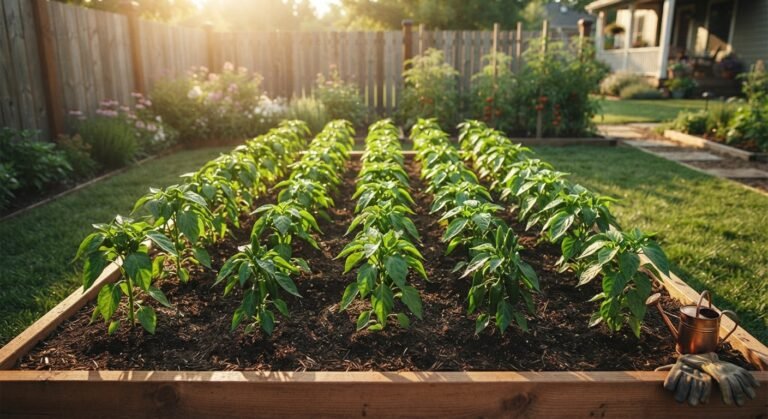
Fish Emulsion Fertilizer for Peppers: Complete Guide
Fish Emulsion Fertilizer for Peppers: Benefits and How It Works
Fish emulsion is a liquid fertilizer made from fish byproduct. After fish are processed for food, the leftover bones, skin, and scraps are collected. Instead of going to waste, these parts are ground, heated, or broken down with enzymes until they turn into a thick, dark liquid. Many labels call this product hydrolyzed fish, and it is the base of most liquid fish fertilizer sold today.
Fish emulsion fertilizer for peppers works because peppers are heavy feeders. They need a steady supply of nitrogen early in the season to build strong stems and healthy foliage. Fish emulsion delivers that nitrogen in a form the roots take up quickly. It is also an organic fertilizer, so it fits the needs of gardeners who avoid synthetic fertilizers.
The benefits go beyond nitrogen. Using fish emulsion adds trace minerals, amino acids, and natural oils to the soil. These feed the microbes that break down organic matter and release nutrients over time. For gardeners exploring homemade fertilizer for pepper plants, understanding how organic nutrients support soil health can help create better growing conditions. Over a growing season, this creates a living soil that holds moisture and nutrients better than bare, depleted ground.
Another benefit is speed. Because it is a soluble liquid fertilizer, fish emulsion fertilizer for peppers shows results in days, not weeks. Pale leaves often turn deep green after one or two applications. It is also gentle. The risk of burning roots is lower than with strong chemical blends, as long as you dilute the product properly. Along with Homemade Fertilizer for Pepper Plants, fish emulsion can be a useful option for gardeners looking for simple organic feeding methods.
Fish emulsion works well on many crops, including tomato, kale, lettuce, and even houseplant collections. That makes one bottle useful across the whole garden. It is also affordable, which matters when you are feeding a full row of pepper plants.
Nutrients in Fish Emulsion Fertilizer for Healthy Pepper Plants
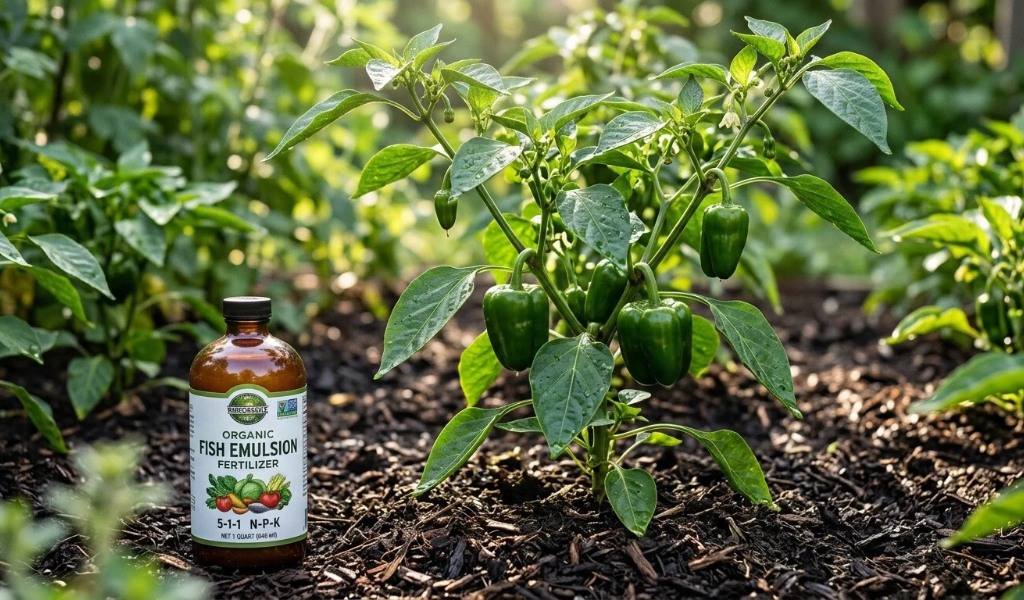
 Every bottle carries an NPK ratio on the label. NPK stands for nitrogen, phosphorus, and potassium, the three main nutrients plants need. Most fish emulsion products fall near 5-1-1, meaning five parts nitrogen to one part phosphorus and one part potassium. Alaska fish fertilizer 5-1-1 is a well-known example that many gardeners trust. Some brands use other numbers, such as 2-4-1, which leans toward phosphorus.
Nitrogen is the star of the show. It drives green, leafy growth, which young peppers need to build a strong frame before flowering. Phosphorus supports roots, flowers, and fruit development. Potassium helps the plant move water and sugars, and it improves fruit quality and disease resistance.
Fish emulsion also contains trace minerals such as calcium, magnesium, and iron. Peppers need these in small amounts, and a shortage can show up as weak growth or spotted leaves. The amino acids in the liquid act as building blocks, and the natural oils feed soil life.
Some brands blend fish emulsion with seaweed or kelp. This combination adds natural growth compounds and extra potassium. If you want broader nutrition, a fish and seaweed blend is a smart pick for bell peppers and sweet peppers alike.
It helps to remember what fish emulsion does not do. It is low in phosphorus and potassium compared with its nitrogen content. For that reason, fish emulsion fertilizer for peppers works best as part of a feeding plan, not the only source of nutrients. Compost, bone meal, and kelp can fill the gaps.
How Fish Emulsion Fertilizer Promotes Pepper Plant Growth
Healthy pepper growth starts below the soil. Fish emulsion feeds the microbe population around the roots. These tiny organisms turn organic matter into nutrients the plant can absorb. A strong microbe community also helps protect roots from stress and some soil problems.
Above the soil, the nitrogen supports vegetative growth. That means thicker stems, larger leaves, and a wider canopy. More leaf tissue means more sunlight captured, and more sunlight means more energy for flowers and fruit. A pepper plant with a strong canopy can carry heavy fruit without bending or breaking.
Fish emulsion fertilizer for peppers also helps plants recover from stress. After transplanting, cold snaps, or pest damage, a diluted dose gives the plant a quick boost. Because the nutrients are already soluble, roots take them in without waiting for soil to break anything down.
There is a balance to keep in mind. Too much nitrogen late in the season pushes leaves at the cost of flowers. Good growth means feeding at the right stage and shifting your plan as the plant matures. The next section covers timing in detail.
Best Time to Use Fish Emulsion Fertilizer on Pepper Plants
Timing decides whether fish emulsion helps or hurts. Peppers have different needs at different stages, so a single schedule from start to finish rarely works well.
Early Growth and Seedling Stage
Seedlings are delicate. Wait until they develop their first true leaves before you feed them. The first leaves that appear are seed leaves, and they live off the energy stored in the seed. True leaves look different and signal that the plant is ready for nutrients.
At this stage, use a very weak mix. A quarter-strength dose is plenty for a seedling in a small pot. Full strength can damage tiny roots. After transplant into larger containers or the garden, a half-strength dose helps the plant settle in. Many growers give a starter feeding about a week after transplanting, once the plant shows new growth.
The early stage is when fish emulsion fertilizer for peppers does its best work. Nitrogen builds the base that supports everything later. Strong early growth leads to more branches, and more branches mean more places for flowers to form.
Flowering and Fruit Development
Once flower buds appear, the plant needs a different mix. Too much nitrogen at this point can create tall, bushy plants with few peppers. Gardeners often call this all leaf and no fruit.
When flowering starts, cut back on fish emulsion or switch to a blend with more phosphorus and potassium. Kelp, bone meal, or compost tea can support flowers and help the fruit ripen. Some gardeners continue light applications of fish and seaweed blends because the extra minerals support fruit set.
Calcium also matters during fruiting. Bell peppers can develop blossom end rot when calcium is low or uneven watering blocks uptake. Fish emulsion does not supply much calcium, so crushed eggshell, gypsum, or compost can help. Steady watering matters just as much as the amendment itself.
How to Apply Fish Emulsion Fertilizer for Peppers
There are two main ways to apply fish emulsion fertilizer for peppers. Each method has its place, and many growers use both.
Soil Drench Application
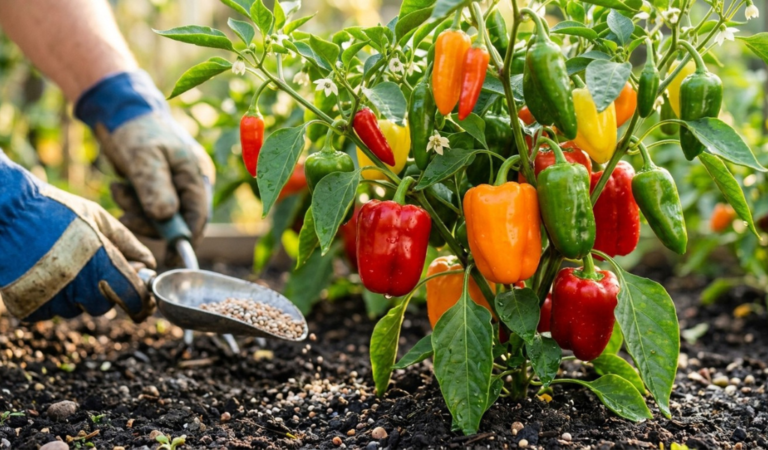
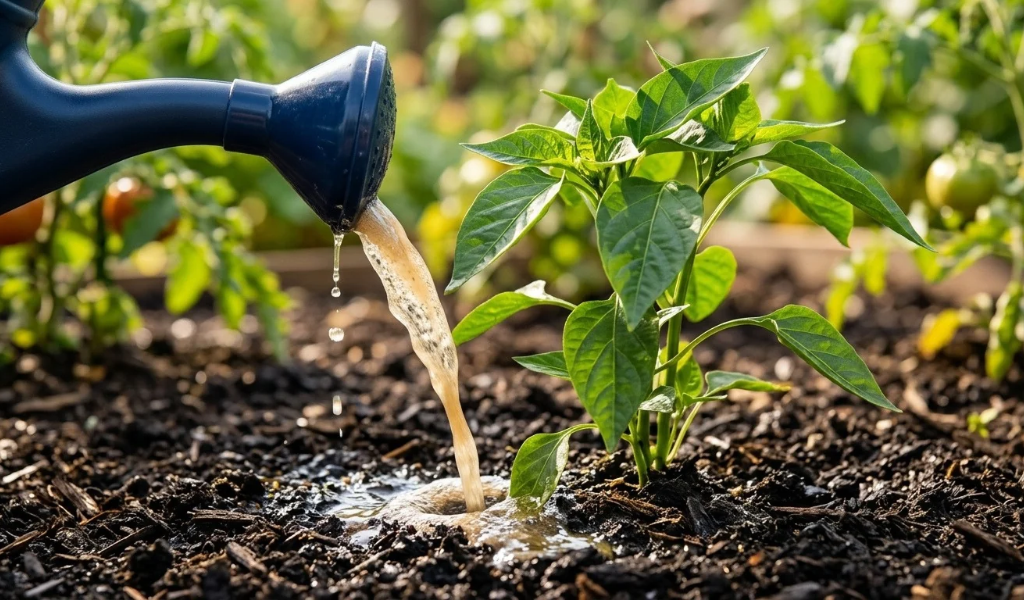
A soil drench means pouring the diluted mixture on the soil around the base of the plant. This is the most common method because it puts nutrients right where the roots are. It is also the safest for beginners. Using Fish Emulsion Fertilizer for Peppers as a soil drench helps deliver nutrients directly to the root zone.
Start by filling a watering can with clean water. Add the fish emulsion according to the label. Stir well, since the liquid can settle. Water the soil lightly before you apply the mixture. Dry soil absorbs unevenly and can stress roots.
Pour the mixture slowly around the plant, covering the root zone. For container peppers, apply until a little liquid drains from the bottom. For garden beds, aim for about a quart per plant, or follow your label. A soil drench gives fast results, and the effects last several weeks.
After watering it in, add a layer of mulch. Mulch holds moisture, reduces smell, and keeps the liquid from sitting on the soil surface where animals may be drawn to it. A raccoon or neighborhood dog can be quite curious about fish smell.
Foliar Feeding Method
Foliar feeding means spraying the leaves with a weak mixture. The leaves absorb a small amount of nutrients directly, which gives a quick boost. This method works well when plants look pale or stressed and need fast help.

Dilute the product to half strength or less for foliar applications. Leaf tissue is more sensitive than roots, and a strong mix can burn it. Spray early in the morning or in the evening, when the sun is low. Never spray in strong midday sun, because wet leaves can scorch.
Cover both sides of the leaves, since pores sit mostly on the underside. A foliar spray can also help with minor pest pressure. Some growers notice fewer aphid problems when plants stay healthy and well fed, though fish emulsion is not a pest control product on its own.
Foliar applications should supplement soil feeding, not replace it. The roots still provide most of the plant’s nutrition. For best results, combine foliar feeding with soil applications of Fish Emulsion Fertilizer for Peppers.
How Often to Fertilize Peppers With Fish Emulsion
For most gardens, feeding every two to three weeks works well. A schedule of about 3 weeks keeps nutrients steady without overloading the plant. Container peppers may need feeding every two weeks, since watering washes nutrients out of pots quickly.
Raised beds usually sit in the middle. They hold nutrients better than pots but drain faster than in-ground soil. A three-week schedule often fits. In-ground peppers with rich, compost-heavy soil may need less.
Your first application should come after seedlings have true leaves or a week after transplanting. From there, continue through the early growing season. When flowers appear, reduce the frequency or switch to a lower-nitrogen feed. Many growers stop fish emulsion about four to six weeks before the expected end of harvest.
Watch the plant rather than the calendar alone. Pale, yellowing lower leaves can mean hunger. Dark, crisp leaf edges can mean too much. A simple garden notebook with dates and doses helps you adjust over time.
Best Fish Emulsion Fertilizer Ratio for Pepper Plants
The right ratio depends on the product and the plant stage. Most labels recommend 1 to 2 tablespoons per gallon of water. For pepper plants, start on the lower end. One tablespoon per gallon works for young plants. Two tablespoons per gallon is a common rate for established plants. Always check your brand, since concentrations vary. Choosing the right concentration is essential when using Fish Emulsion Fertilizer for Peppers.
For seedlings, use a quarter to half of the label rate. For foliar sprays, use about half of the soil drench rate. Avoid double strength mixes. More product does not give faster growth, and it can damage roots or cause salt buildup.
Metric growers can use similar proportions. About 2 tablespoons per gallon equals roughly 30 ml for about 3.8 liters of water. A tbsp of fish emulsion in a gallon of water is a good starting point for sensitive plants.
If you prefer to compare numbers, remember the 5-1-1 label. A 5-1-1 product has high nitrogen, so it suits early growth. A lower nitrogen ratio, or an added kelp product, suits flowering. Matching the NPK to the plant stage is the simplest way to improve results.
Some gardeners also ask about homemade fertilizer for pepper plants. Homemade options such as compost tea, banana peel water, or diluted fish scrap tea can work, but they vary widely in strength. A bottled fish emulsion gives you a known NPK and consistent results, which makes it easier to avoid mistakes. If you do use homemade fertilizer for pepper plants, keep doses light and watch the leaves closely.
Fish Emulsion vs. Other Organic Fertilizers for Peppers
Fish emulsion is not the only organic choice. Comparing options helps you build a plan that suits your soil.
Fish Emulsion vs. Compost and Worm Castings
Compost and worm castings improve soil structure, hold moisture, and release nutrients slowly. They are low in nitrogen compared with fish emulsion, but they build long term soil health. They also add beneficial microbes.
Fish emulsion acts faster. If plants show signs of hunger, compost will not fix the problem quickly. A diluted dose of fish emulsion fertilizer for peppers will. The best approach is to use both. Mix compost into the bed before planting, then use fish emulsion for quick boosts through the season.
Worm castings can also be made into a tea. This gives you a gentle liquid feed, though it is milder than fish. Many growers alternate between the two.
Fish Emulsion vs. Liquid Kelp and Fish Hydrolysate
Liquid kelp is made from seaweed. It is low in nitrogen but rich in potassium, trace minerals, and natural growth compounds. It helps with stress tolerance and fruit set. Kelp pairs well with fish emulsion since it fills in what fish lacks.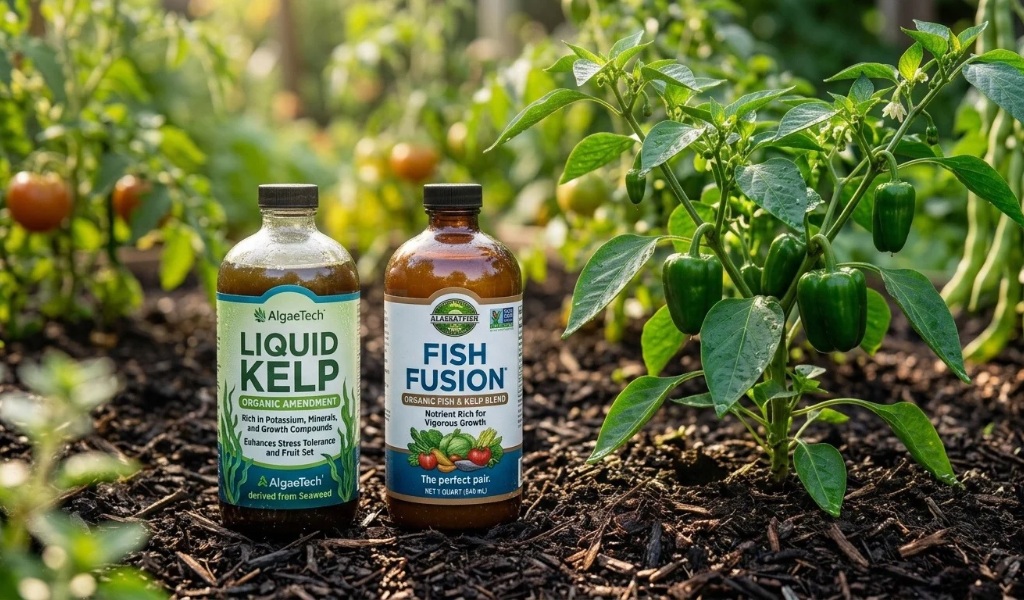
Fish hydrolysate is made from fish too, but it is processed differently. It is often cold processed, which keeps more proteins and nutrients intact. It can cost more, and it has a milder smell. Fish emulsion is usually cheaper and has been used by gardeners for a long time. For most home gardens, either one works well. The extra cost of hydrolysate may be worth it if smell is a concern.
If you want a simple plan, use fish emulsion fertilizer for peppers early, add kelp during flowering, and top up with compost throughout the season.
Common Mistakes to Avoid When Using Fish Emulsion on Peppers
The most common mistake is feeding too much. More fertilizer feels helpful, but peppers prefer steady, moderate feeding. Too much nitrogen creates leafy plants and weak fruit set.
Another mistake is using full strength product. Undiluted fish emulsion can burn roots and leaves. Always dilute and mix well. Skipping the dilution is a quick way to lose a seedling.
Poor timing is another problem. Feeding in hot midday sun can scorch leaves. Feeding dry soil can stress roots. Water the plant first, then apply the mixture in the cooler part of the day.
Many gardeners also ignore calcium. Fish emulsion fertilizer for peppers does not provide much, and low calcium can cause blossom end rot. Add eggshell, gypsum, or compost, and keep watering even.
Some growers forget about smell and animals. Fish emulsion smells strong at first, but the odor dissipates within a day or so. Water it into the soil and cover with mulch to reduce the scent. Keep pets away for a day, and do not leave open containers outside where a raccoon can find them.
Lastly, do not use fish emulsion as the only fertilizer. It is great for nitrogen, but peppers also need phosphorus, potassium, and calcium. A balanced plan always works better.
Signs of Overfertilizing Pepper Plants With Fish Emulsion and How to Fix Them
Overfertilizing is easy to do with a fast acting liquid. Learning the signs helps you fix problems early.
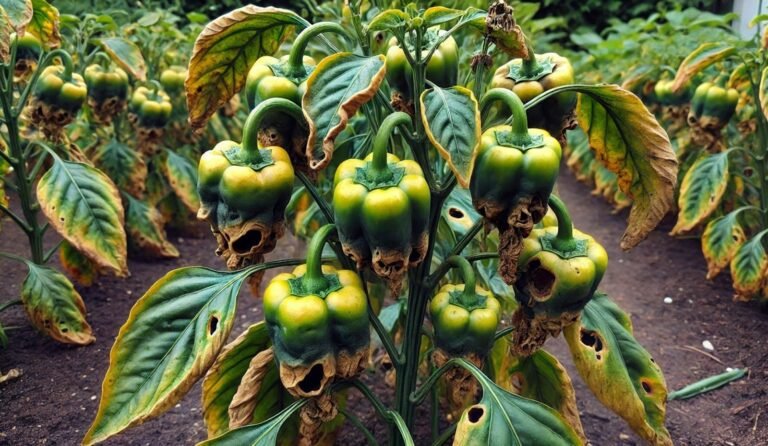
The first sign is dark green, oversized leaves with few flowers. This means the plant has too much nitrogen and is focusing on foliage. Another sign is brown, crispy leaf tips or edges. This points to fertilizer burn or salt buildup in the soil. Leaves may also curl downward, and growth may slow.
White crust on the soil surface or on the edge of a pot is another clue. It means salts from fertilizer have built up. Wilting even when the soil is wet can also point to root damage.
To fix the problem, stop feeding right away. For container peppers, flush the pot with plain water. Let water run through the drainage holes for several minutes to wash out extra salts. For garden beds, water deeply a few times over a week. Remove badly burned leaves, since they will not recover.
Wait at least three to four weeks before feeding again. When you do, use a lower dose, and think about switching to a bloom friendly feed with kelp or bone meal. Fish emulsion fertilizer for peppers works best when it is applied lightly and consistently, not heavily and rarely.
Final Thoughts
Fish emulsion fertilizer for peppers is affordable, organic, and effective when used correctly. It provides fast nitrogen, feeds soil microbes, and supports strong growth from seedling to harvest. The key is balance. Use a light dose early, switch to a lower nitrogen plan at flowering, and watch your plants for signs of too much or too little.
Combine fish emulsion with compost, kelp, and calcium sources for a complete feeding plan. Keep the dilution right, apply in the cooler part of the day, and mulch to control smell. These simple habits make a big difference in yield and fruit quality.
Ready to try it? Pick up a bottle of fish emulsion or Alaska fish fertilizer 5-1-1, mix a mild dose, and give your peppers their first feeding this season. Your plants will show you the results within a couple of weeks.
Frequently Asked Questions
Is fish emulsion good for tomato plants?
Yes. Fish emulsion works well for tomato plants, especially early in the season when they need nitrogen for leaf and stem growth. Once flowers appear, reduce the dose or add a kelp or bone meal feed to support fruit. Tomato plants and peppers have similar needs, so the same schedule often works for both.
What is the best fertilizer for peppers?
There is no single best option. A balanced plan works better. Use compost in the soil before planting, fish emulsion for early nitrogen, and kelp or a low nitrogen organic fertilizer during flowering. Fish emulsion fertilizer for peppers is a strong choice for the early stages.
How much fish emulsion to 1 gallon of water?
Most labels suggest 1 to 2 tablespoons per gallon of water. Use 1 tablespoon for seedlings and young plants, and up to 2 tablespoons for established plants. Always follow the instructions on your specific product.
How is fish fertilizer made?
Fish fertilizer is made from fish byproduct left over after processing fish for food. The scraps are ground and either heated or treated with enzymes to break them down into a liquid. Some products are cold processed to keep more natural proteins. The result is a nutrient rich liquid with a strong smell.
Can you use too much fish emulsion on pepper plants?
Yes. Too much can burn roots, cause salt buildup, and push leaf growth instead of fruit. Stick to the label rate, and avoid strong mixes. If you see brown leaf tips or a white crust on the soil, stop feeding and flush the soil with water.
What are the benefits of fish emulsion for peppers?
Fish emulsion gives peppers quick nitrogen, trace minerals, and amino acids. It improves soil life, supports strong stems and foliage, and helps plants recover from stress. It is also organic and affordable.
How should I apply fish emulsion to pepper plants?
Mix it with water according to the label, then apply as a soil drench around the base of the plant. You can also use a half strength foliar spray in the early morning or evening. Water the plant first, and mulch afterward to reduce smell.
What does the NPK ratio of fish emulsion mean?
NPK stands for nitrogen, phosphorus, and potassium. A 5-1-1 label means the product has five parts nitrogen for every one part phosphorus and one part potassium. High nitrogen supports leafy growth, so fish emulsion suits early stages. For flowering, add a source of phosphorus and potassium.