Do Peppers Need a Trellis or Should You Stake Pepper Plants in the Garden?
Do Peppers Need a Trellis? A Pro Gardener’s Guide to Stake Pepper Plants
Growing peppers is one of the most rewarding things you can do in a home garden. But there’s a question that trips up many first-time growers: do pepper plants need a trellis, or can they hold themselves up just fine? Whether you’re growing peppers in raised beds, containers on a patio, or straight in the ground, knowing when and how to add support can make a real difference in your harvest.
The short answer is that it depends on the variety. Compact pepper plants may grow just fine without any help, but larger varieties like bell peppers can grow 3 to 4 feet tall and struggle under the weight of their own fruit. Getting this right early in the season is one of those small decisions that separates a struggling crop from a thriving one.
This guide covers everything you need to know about staking pepper plants from which varieties need support to how to install a trellis without damaging the root system. You’ll also find tips on common mistakes to avoid and how to grow pepper and care for your plants once they’re properly supported.
Do Peppers Need a Trellis?
Not every pepper plant needs a trellis, but many will benefit from one. The main reason gardeners stake pepper plants is to prevent the stem from bending or snapping under the weight of heavy fruit. Peppers have relatively slender stems compared to the size of their fruit, which means they can become top-heavy once the growing season picks up.
Taller pepper varieties are especially prone to leaning sideways or collapsing after heavy rain or strong wind. If a branch snaps mid-season, you lose weeks of growth and whatever fruit was developing on that branch. A simple stake or cage placed at the right time can prevent that entirely.
The key question is not just whether your pepper plant needs support, but what kind of support will work best for the variety you’re growing and the space you’re working in.
Which Pepper Plants Benefit Most from Support?
Larger pepper varieties are the ones that need the most attention when it comes to staking. Bell peppers, in particular, grow tall and produce heavy fruit that puts strain on the main stem. If you’re growing bell peppers, plan to add support early.
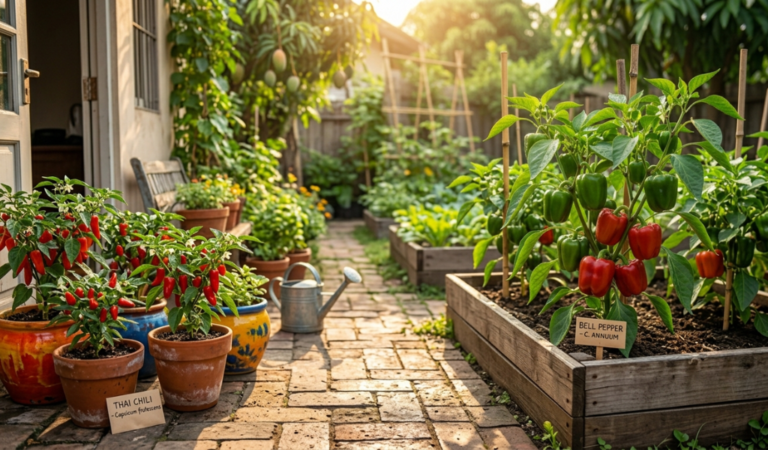
Hot pepper varieties like jalapeños, poblanos, and cayennes can also benefit from staking, especially when they’re loaded with fruit. Some hot pepper plants grow upright naturally, but they can still tip over in windy conditions or when the soil is soft.
On the smaller end, compact ornamental peppers or mini varieties often do fine without any stake or cage. These plants stay low to the ground and carry lighter fruit loads. Still, even compact plants can benefit from light support in a garden with unpredictable weather.
When a Trellis May Not Be Necessary
There are situations where skipping the trellis is a reasonable choice. If you’re growing a compact pepper variety in a sheltered garden spot, the plant may stay upright on its own through the entire season. Patio container plants also tend to stay smaller, so they sometimes manage without additional support.
That said, even when support seems unnecessary early in the season, conditions change. Fruit production picks up, storms roll in, and plants that looked sturdy in June can be leaning heavily by August. Many experienced gardeners stake pepper plants as a standard practice regardless of variety because the cost of adding a stake is low, and the cost of a snapped branch is not.
Benefits of Using a Trellis for Pepper Plants
Preventing Broken Branches
This is the most obvious benefit. A mature pepper plant loaded with fruit is under constant physical stress. The main stem has to carry the weight of every pepper on the plant, plus the leaves and branches. Adding a stake or trellis transfers some of that load and keeps the plant upright. It’s one of the simplest ways to protect your crop from a single bad storm.
Improving Airflow and Sunlight
When a pepper plant leans to one side or branches start drooping, leaves begin to overlap. That creates pockets of shade and reduces airflow through the plant. Poor airflow means moisture sits on the leaves longer, which raises the risk of fungal disease. A well-supported plant stays open and upright, allowing sunlight to reach more of the canopy and air to circulate freely around the stems and fruit.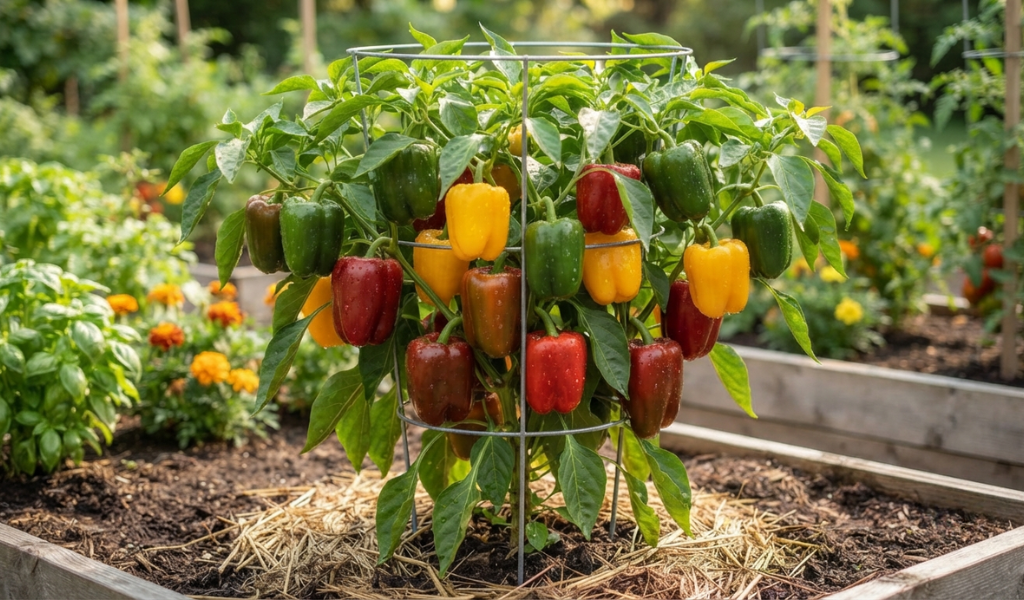
Increased Fruit Production
A plant that’s well-supported and growing vertically tends to direct more energy into fruit production. When branches aren’t weighed down or stressed from leaning, the plant can focus its resources on developing peppers rather than fighting to stay upright. Some gardeners report noticeably better yields from staked plants compared to unsupported ones grown under the same conditions.
Better Disease Prevention
Fruit that rests on the soil or on wet leaves is vulnerable to rot and disease. A trellis keeps peppers lifted off the ground, reducing direct contact with soil moisture. Combined with better airflow, this makes the entire plant less susceptible to common pepper diseases like bacterial leaf spot and botrytis. Good structure from early in the season is genuinely one of the best disease prevention tools available to a home gardener.
Types of Trellises for Peppers
Stake-and-Twine Method
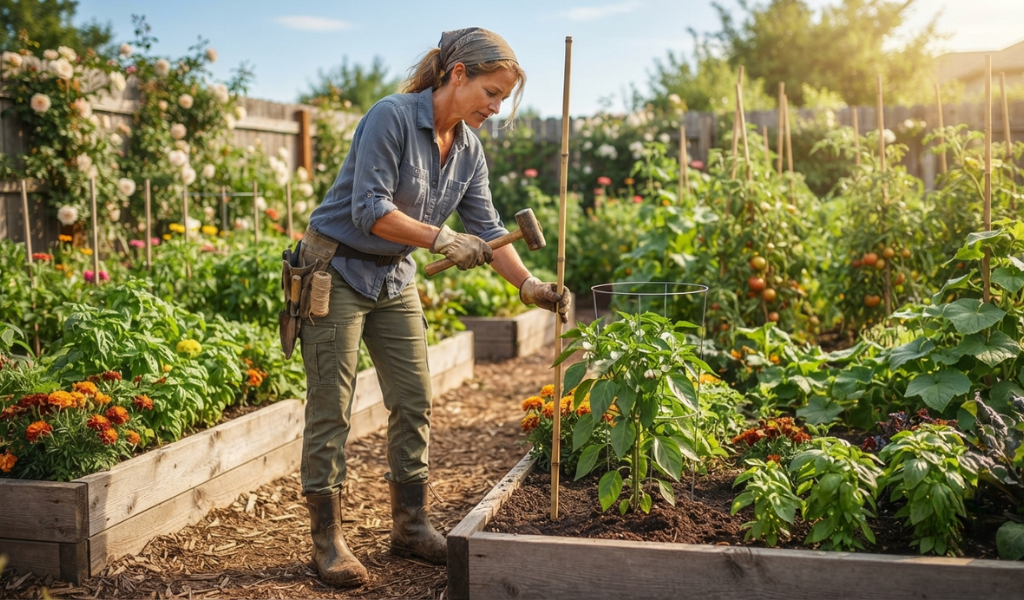
This is the most common approach for home gardeners, and for good reason. You simply drive a stake into the soil 6 inches away from the base of the plant, then use soft garden twine or plant ties to gently secure the main stem. As the plant grows, you add new ties at intervals to keep it growing vertically. Bamboo stakes work well for this because they’re lightweight, inexpensive, and strong enough for most pepper varieties.
The stake-and-twine method works especially well in row planting, where you can run a single line of string along a row of stakes to support multiple plants at once. It’s a flexible system that lets you adjust as the plant grows.
Tomato Cages vs. Garden Trellises
Tomato cages are a popular alternative to individual stakes, and they work reasonably well for peppers too. The cage surrounds the plant and provides support in all directions, which is helpful in gardens that get wind from multiple sides. The downside is that standard tomato cages are often too tall and wide for smaller pepper varieties, and they can be awkward to maneuver in tight garden beds.
A vertical garden trellis, the kind used for climbing vegetables, can also work well if you’re growing peppers in a row. You tie branches to the trellis as the plant grows, keeping everything upright and well-spaced. This approach is more common in greenhouse growing but works fine outdoors too.
How to Install a Trellis
Best Time to Add Support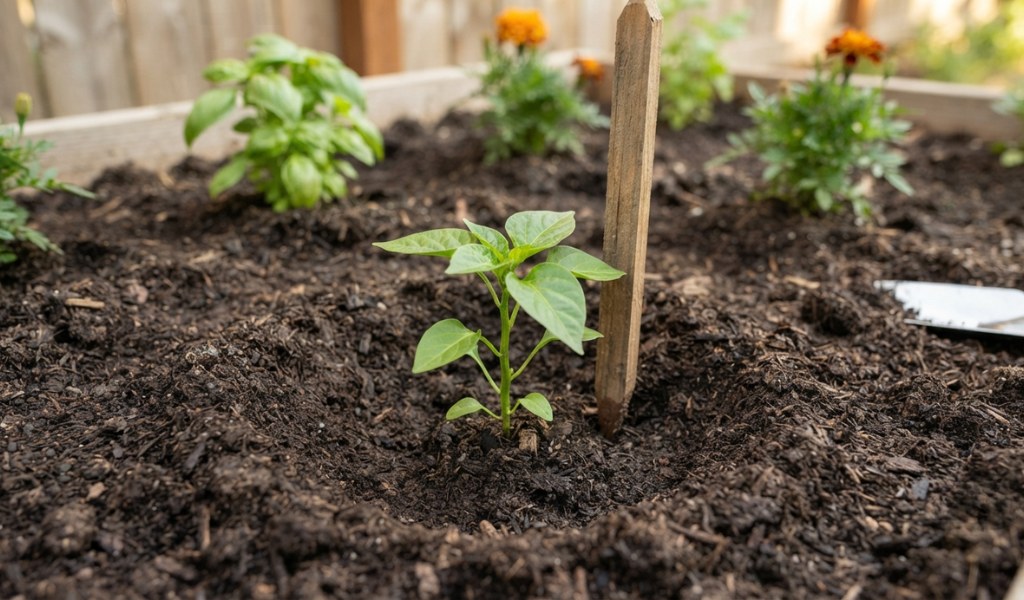
The best time to stake a pepper plant is right after transplanting the seedling into the garden. This might seem premature when the plant is still small, but installing the stake early avoids disturbing the root system later. Pushing a stake into the ground next to a mature plant risks cutting through roots, which stresses the plant and can set back growth.
If you missed the early window, aim to add support before the plant starts leaning or before fruit begins to develop in significant quantities. Once a plant is leaning badly, it’s much harder to correct without risking stem damage.
Securing Pepper Plants Properly
When tying a pepper plant to a stake, use soft material garden twine, foam ties, or strips of old fabric all work well. Avoid wire or anything rigid that could cut into the stem. Tie the plant in a loose figure-eight shape so the stake absorbs the pressure, not the stem.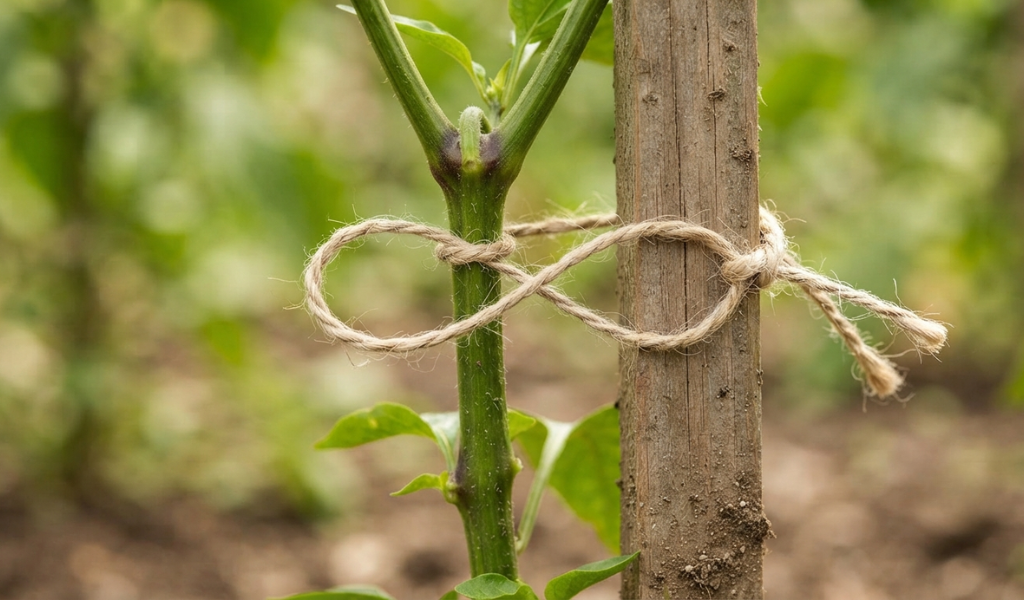
Check your ties every 2 to 3 weeks throughout the growing season. Plants grow quickly, and ties that fit fine in spring can become too tight by midsummer. Gently loosen and reposition them as needed to avoid restricting the stem.
Choosing the Best Support System
Wooden Stakes
Wooden stakes are a classic garden tool for a reason. They’re easy to find, inexpensive, and straightforward to use. A wooden stake about 4 feet tall is suitable for most pepper varieties. Drive it into the ground before or right after transplanting, and tie the plant to it as it grows. The main disadvantage of wood is that it can rot after a season or two, so check the condition of your stakes each spring before reusing them.
Wire Cages and Vertical Trellises
Wire cages offer more comprehensive support than a single stake, holding the plant from multiple angles. They’re particularly useful for large bell pepper plants that tend to sprawl. Look for cages with a diameter of at least 12 inches to give the plant room to grow without crowding.
Vertical trellises are the best option for gardeners growing peppers in a greenhouse or a sheltered outdoor row. They allow you to train the plant upward systematically and make the most of vertical space, which is especially valuable in smaller gardens. For patio growing, a compact cage or short stake is usually the more practical choice.
Common Trellising Mistakes
Tying Plants Too Tightly
One of the most common mistakes new gardeners make is tying the pepper plant too snugly to the stake. A tight tie can restrict water and nutrient flow through the stem, and it can dig into the plant’s tissue as the stem thickens with growth. Always leave a little slack in the tie so the plant can move naturally and the stem has room to expand.
Waiting Too Long to Add Support
The second most common mistake is waiting until the plant visibly needs help before adding a stake. By then, the root system is established and driving a stake near the plant risks root damage. The plant may also have already developed a lean that’s difficult to correct without stressing the stem. Early support ideally at transplant time is always the better approach.
Caring for Trellised Pepper Plants
Pruning and Training
Once your pepper plant is staked, a little regular pruning goes a long way. Removing the lowest leaves and any branches that are crossing or rubbing against each other keeps the plant tidy and improves airflow. Prune with clean, sharp scissors or pruning shears to avoid introducing disease through ragged cuts.
As the plant grows, gently train new branches toward the stake or trellis by adding soft ties. This keeps the plant growing in a structured, upright shape and makes it easier to spot developing fruit at harvest time.
Watering and Fertilizing
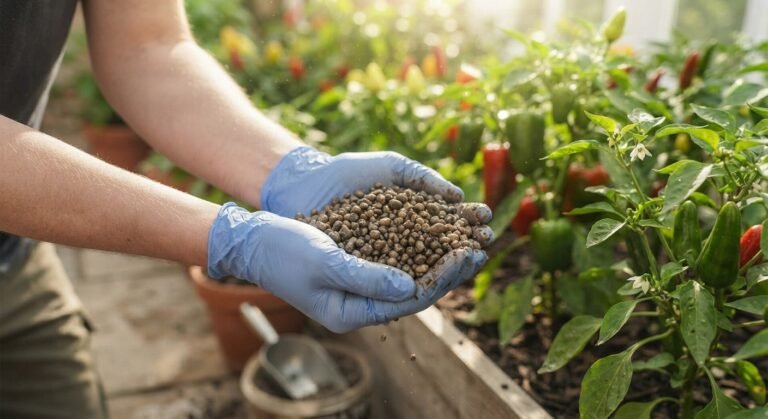
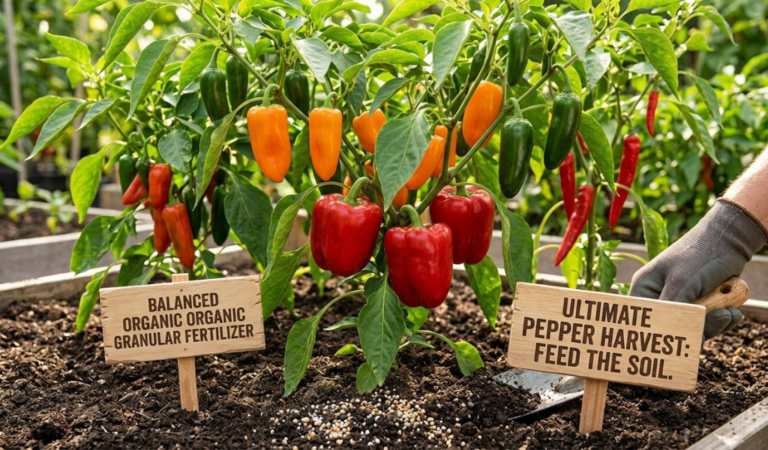
Trellised pepper plants have the same watering and fertilizing needs as unsupported ones but the improved structure of a staked plant makes it easier to water efficiently. Aim to keep the soil moist but not waterlogged, and water at the base of the plant rather than overhead to keep leaves dry. A slow-release granular fertilizer applied at planting and again at mid-season provides steady nutrition without the risk of over-feeding. High-quality soil with good drainage is foundational; no amount of staking compensates for poor soil health.
Final Tips for Healthy Pepper Plants
Monitoring Plant Growth
Check your pepper plants regularly throughout the growing season. Look for signs of leaning, overcrowded ties, branches that are under strain, or stems that are developing at odd angles. Early intervention is always easier than correcting a problem after it’s developed. A quick five-minute check every week or two is enough to stay on top of things.
Pay attention to how the plant responds after fruit starts setting. That’s usually when the weight starts to add up, and when you might need to add an extra tie or reposition existing ones.
Harvesting with Ease
One underrated benefit of staking pepper plants is how much easier it makes harvesting. When the plant is upright and well-organized, you can see every pepper clearly and reach them without digging through a tangle of branches and leaves. This speeds up the harvest process and reduces the risk of accidentally snapping a branch while reaching for a pepper that’s hidden deep in the canopy.
Harvest peppers regularly once they reach the right size for the variety. Removing mature fruit signals the plant to produce more, which keeps yields high through the rest of the season.
The Bottom Line on Staking Pepper Plants
Staking pepper plants is one of those small investments that pays off in a big way by the end of the season. It protects your crop from weather damage, encourages better fruit production, and makes the entire growing process easier to manage. Whether you use bamboo stakes and twine, tomato cages, or a vertical trellis depends on the variety you’re growing and the space you have available but the principle is the same across all of them.
Start support early, tie plants gently, and check in regularly throughout the season. Do that, and your pepper plants will have every advantage they need to thrive.
Frequently Asked Questions
What is the best support for pepper plants?
The best support depends on the variety. For most home gardeners, a bamboo stake with soft garden twine is the simplest and most effective option. For larger bell pepper plants, a wire cage provides more all-around support and handles wind from multiple directions.
What should not be planted near peppers?
Avoid planting peppers near fennel, which releases compounds that inhibit the growth of many garden vegetables. Brassicas like cabbage and broccoli are also poor companions for peppers, as they compete for similar nutrients. Good companion planting choices for peppers include basil, carrots, and marigolds.
Do peppers need cages or stakes?
Both work well. Stakes with twine give you more control over how the plant grows and are easier to adjust as the season progresses. Cages are more of a set-and-forget solution that works well for gardeners who prefer less hands-on management. The choice largely depends on the variety and your gardening style.
Do bell peppers do better in pots or in the ground?
Bell peppers grow well in both, but they tend to produce more fruit when grown in the ground, where they have more room for root development. If you’re growing bell peppers in pots, choose larger pots at least 5 gallons per plant to give the roots enough space, and be prepared to water more frequently since containers dry out faster.
How do you care for pepper plants?
Keep the soil moist but well-drained, fertilize regularly with a balanced fertilizer, and ensure the plant gets at least 6 to 8 hours of sunlight daily. Prune lower leaves to improve airflow, stake the plant early to prevent leaning, and harvest fruit regularly to encourage continued production throughout the season.
When should I add support to my pepper plants?
The best time to add support is right after transplanting the seedling. This avoids root disturbance and ensures the plant grows upright from the start. If you missed that window, add support before the plant starts leaning or before significant fruit sets on the branches.
Can I grow peppers without any support at all?
Yes, compact and smaller pepper varieties often grow fine without a stake or cage. However, even these plants can benefit from light support in windy gardens or during heavy fruiting periods. Adding a simple stake is low-effort and low-cost, making it a worthwhile precaution for most pepper varieties.