Tomato Seed Saving: How to Save Seeds from Hybrid Tomatoes
How to Save Seeds from Hybrid Tomatoes: A Complete Beginner’s Guide
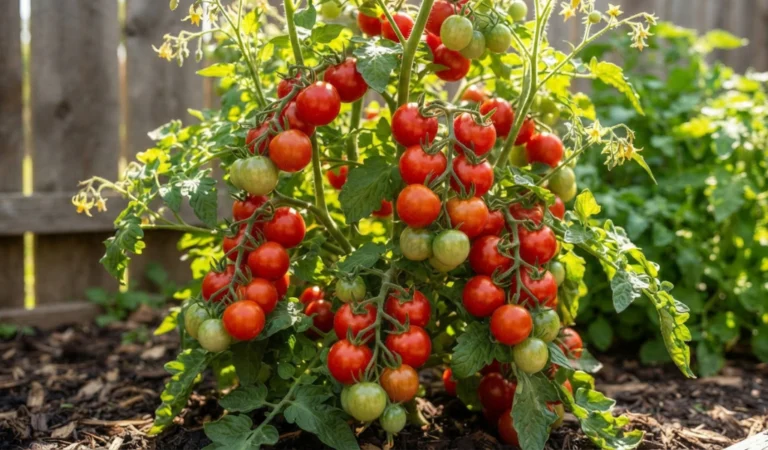
Learning how to save seeds from hybrid tomatoes is a useful skill for any home gardener who wants to cut costs and get more from the garden. Many people buy a packet of seeds each spring and never think about collecting their own. Hybrid varieties are the exception, because they come with a reputation for being “unsavable.” That reputation is only partly true. You can collect and plant seeds from a hybrid tomato, but the plants that grow will not always match the parent.
This guide explains how to save seeds from hybrid tomatoes step by step. It covers why hybrids behave differently, which fruit to pick, and how to ferment, dry and store the seeds. It also explains what to expect when you grow them. If you want to know how to save tomato seeds without wasting a season, start here. By the end, you will know how to handle tomato seed saving with confidence and how to avoid the mistakes that ruin most first attempts.
Understanding Hybrid Tomatoes and Why Their Seeds Behave Differently
A hybrid tomato is the result of a planned cross between two different parent plants. Breeders choose each parent for a specific trait, such as disease resistance, strong fruit set or good flavor. They then pollinate one parent with the other and collect the seeds that form. Those seeds produce the hybrid plants you buy in a packet.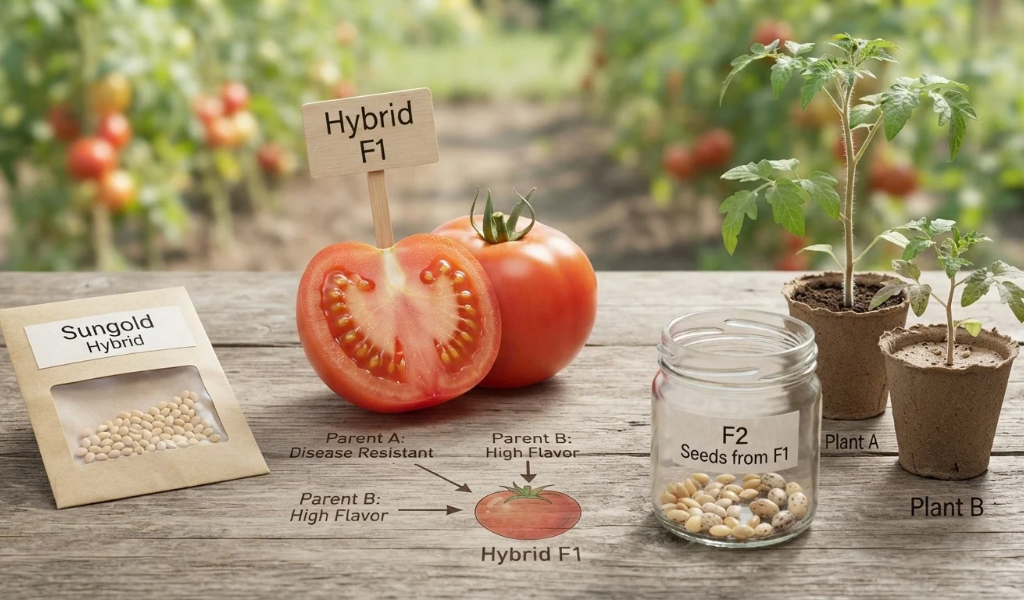
The process takes time and careful work, which is why hybrid seed costs more. It also explains why seeds from a hybrid tomato act differently from ordinary garden seed. Each seed carries a mix of genes from both parents. The plant you grow shows the best traits of that mix, but the seeds inside its fruit shuffle those genes again.
This is the core idea behind saving seeds from hybrid tomatoes. The seed is real and fully alive. It simply does not repeat the exact recipe of the parent plant. Knowing this helps you set the right goals before you start.
F1 Hybrids vs. Heirlooms: What Changes in the Seed
Heirloom tomatoes are open pollinated, which means they have been grown and saved for decades with stable results. When you plant heirloom seeds, you get plants that look and taste like their parents. Varieties such as Brandywine and Cherokee Purple are common examples.
F1 hybrids work in the opposite way. The “F1” label stands for the first filial generation, meaning the first plants from a cross between two distinct parents. Popular examples include Early Girl, Better Boy and Sungold. These plants often grow stronger and resist disease better than many heirloom plants.
The difference sits inside the seed. Heirloom seed carries a stable set of genes, so it repeats. F1 hybrid seed carries a blend that gets reshuffled in the next generation. That is why heirloom seeds are the easiest choice for beginners, while hybrid seeds need more patience and a few extra expectations.
What Happens When You Plant Saved Seeds from Hybrid Tomatoes
When you plant saved seeds from hybrid tomatoes, the seeds will usually sprout and grow into healthy plants. Germination is not the problem. The surprise comes later, when the plants flower and set fruit. Some plants may look close to the original hybrid, while others may produce fruit with different size, color, shape or taste.
Think of it like children from the same two parents. Siblings share some features but never look identical. Seeds saved from a hybrid behave in much the same way, so results can be unpredictable.
This is not a failure. Many gardeners find the variety exciting, and some discover a surprisingly good new tomato. Others want a reliable harvest, and for them the mixed results can feel like a letdown. Deciding which group you belong to will shape how you approach the whole project.
Understanding F1 and F2 Generations
The tomato you buy or grow from a packet is the F1 generation. The seeds inside that fruit grow into the F2 generation. This is the first year where the genes from the two original parents separate and recombine in new ways.
In the F2 generation, you may see a wide range of plants. A few may resemble the F1 parent, and a few may look very different. Some may be weaker or produce less fruit. Others may be tolerant of local pests or heat in ways the original plant was not.
Serious growers keep going. They plant the F2 seeds, choose the best plants and save seed again from the winners. After several seasons, the plants become more uniform and a stable line can appear. This slow approach is how many small breeders create new varieties, and it all begins with saving tomato seeds from a good hybrid.
Choosing the Best Fruit for Saving Hybrid Tomato Seeds
Good seed starts with good fruit. Pick tomatoes from your healthiest plants, the ones with strong growth, good fruit set and no sign of disease. Avoid saving seeds from a weak plant, since it may pass on those problems.
Let the fruit fully ripen on the vine before you harvest it. A fully ripe tomato has mature seeds inside, while green tomatoes that are picked early often hold seeds that are not ready. If frost is coming, you can ripen fruit indoors, but vine-ripened tomatoes are the best source of viable seeds.
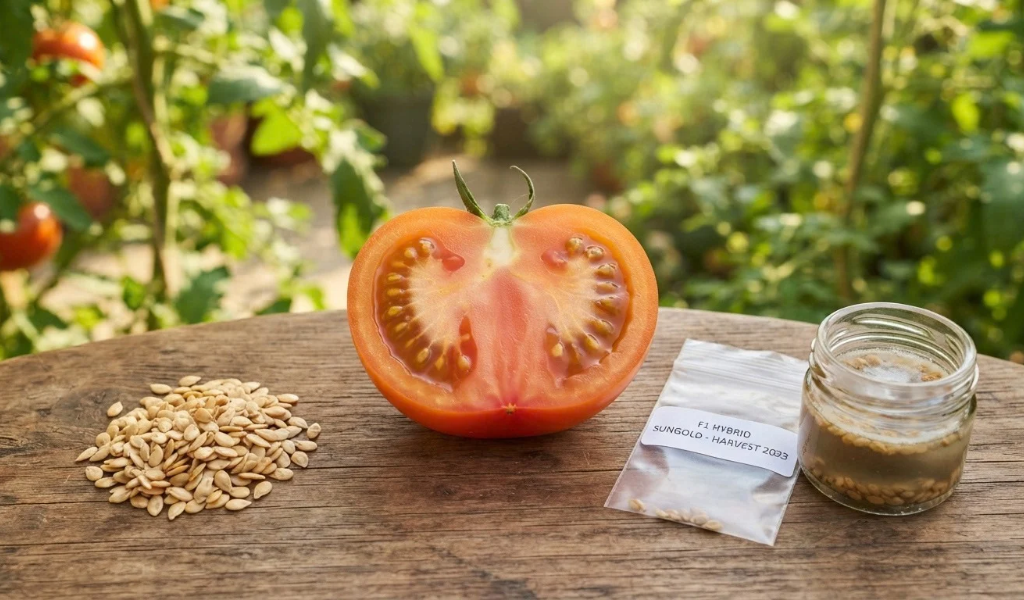
Choose fruit that matches what you want to grow again. Look for the best flavor, the right size and the earliest ripening. A cherry tomato such as Sungold gives you many small fruit and plenty of seeds, so it suits beginners well. Large slicers give fewer seeds per fruit but are still worth saving.
Store bought tomatoes are a special case. Many are hybrids picked before they fully ripen, so the seeds may be weak or slow to sprout. If you want to try, choose a fruit that looks and feels fully ripe and has strong color.
Tools and Supplies You Need to Save Seeds from Hybrid Tomatoes
You do not need special equipment for tomato seed saving. Most items are already in a kitchen. Here is what to gather before you begin:
A sharp knife and a cutting board for opening the fruit. A spoon for scooping out the seed pulp. Small glass jars or clear plastic cups for fermenting. A fine mesh strainer for rinsing the seeds. Paper plates, coffee filters or glass dishes for drying. A marker and masking tape for labeling. Small paper envelopes or glass jars for storage.
Label everything from the very first step. When you save seeds from several varieties, it is easy to mix them up, and unlabeled seeds are almost useless next season. Write the variety name and the year on every jar and envelope.
Skip regular paper towels for drying. Wet seeds stick to them tightly, and scraping them off can damage the seed coat. If you do use a paper towel, tear the dry piece into small sections and store the seeds attached to it. You can plant the whole section later.
Step-by-Step Guide to Saving Seeds from Hybrid Tomatoes
The full process has four stages. You collect the seeds from ripe fruit, clean off the gel coating, dry them completely, and store them in a cool and dry place. Each stage matters, and skipping one often leads to moldy or weak seed.
The gel around each tomato seed contains natural chemicals that stop it from sprouting inside the fruit. If you do not remove that coating, germination can be slow or poor. This is why the cleaning stage is so important when you save seeds from hybrid tomatoes. The steps below cover each stage in plain order so you can follow along while you work.
Scooping and Separating the Seeds
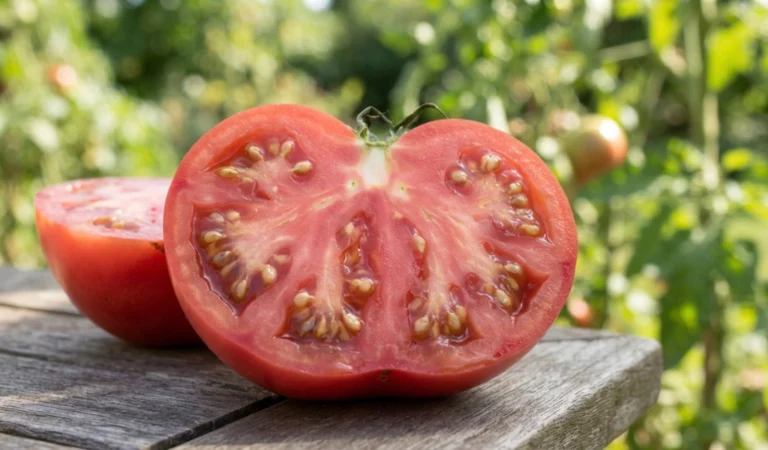
Start by cutting the ripe tomato in half across its middle, not through the stem. This opens the seed chambers and makes the pulp easy to reach. Hold each half over a jar or cup and squeeze gently,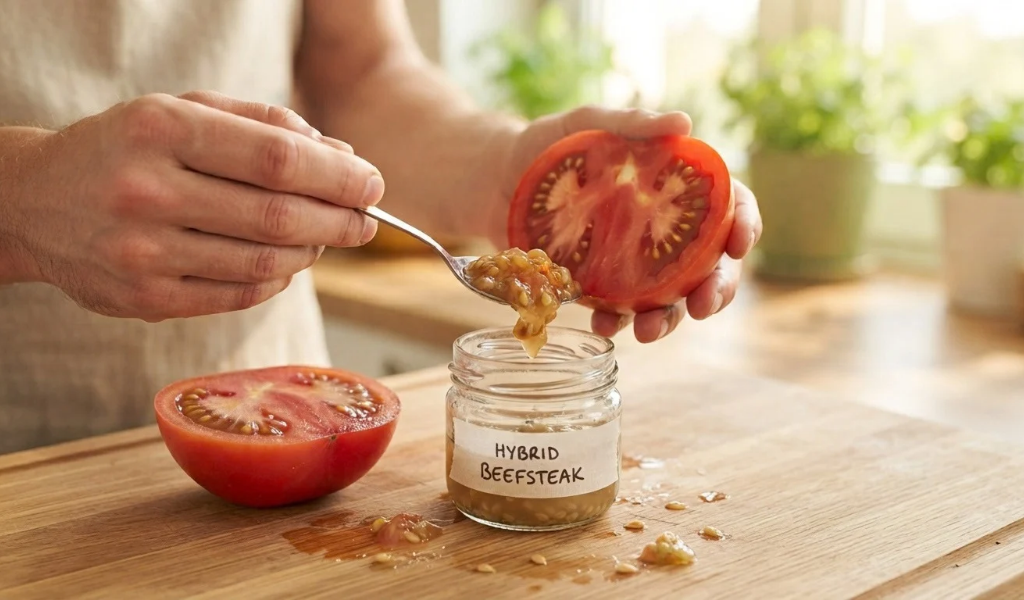 or use a spoon to scoop out the seeds along with the gel.
Collect the seeds from only one variety per container. Add a little water if the pulp looks thick, but do not fill the jar. Roughly a quarter cup of water is enough for the seeds from two or three tomatoes.
You can eat the rest of the fruit right away, so nothing goes to waste. Place the jar in a spot out of direct sun and label it with the variety name. At this stage, your seeds from your garden are ready for the next step, which is fermenting.
The Fermentation Method for Cleaner Seeds
Fermentation is the most reliable way to clean tomato seeds. Leave the jar of seeds, pulp and water at room temperature for two to four days. Stir it once a day. A layer of white or gray mold will form on top, and a sour smell is normal.
This process breaks down the gel coating and also helps reduce some seed-borne diseases. It copies what happens naturally when a tomato falls to the ground and rots.
After two to four days, add more water and stir well. The good seeds will sink to the bottom, while the pulp, mold and empty seeds float. Pour off the floating material slowly. Repeat this until the water looks fairly clear, then pour the seeds into a fine strainer and rinse the seeds under running water. Do not leave the jar for more than five days, since seeds can begin to sprout inside it.
Fermentation vs. Dry Method: Best Ways to Save Seeds from Hybrid Tomatoes
There are two common ways to clean seeds. The fermentation method uses water and time, while the dry method skips the water and relies on air. Both can work, but they give slightly different results.
With the dry method, you scoop out the seeds with the gel still attached and spread them on a plate. After several days, the gel dries into a hard coating around each seed. You then rub the seeds gently to remove it. This is quick and needs no jars, but the coating can hold on to moisture and carry disease. It also leaves germination inhibitors in place.
Fermentation takes a few more days and has a smell, but it produces cleaner and brighter seeds. It also tends to give better sprouting rates. For most gardeners, fermentation is the better choice when saving seeds from hybrid tomatoes.
The dry method suits cherry tomato seeds well because the fruit is small and the seeds are few. It is also useful when you are short on time or space. If you grow many varieties, you may use both methods depending on the fruit. Whichever you pick, drying must be complete before storage.
Storing Saved Hybrid Tomato Seeds So They Stay Viable for Years
After rinsing, spread the seeds in a single layer on a glass dish, ceramic plate or coffee filter.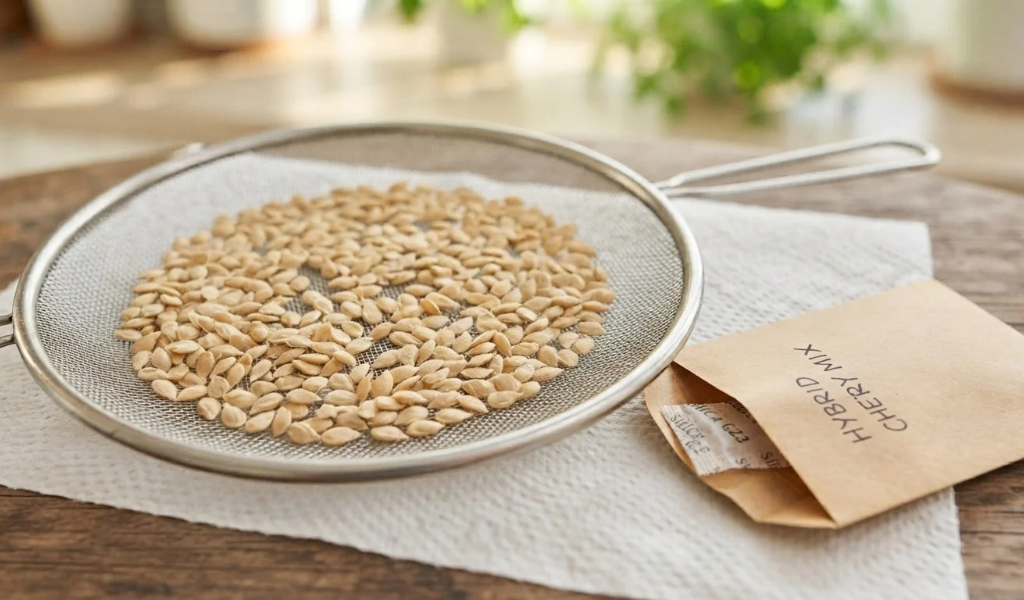 Keep them in a spot with good airflow and no direct sun. Stir them once a day so they do not stick together. Drying usually takes about one week, and the seeds should snap rather than bend when they are ready.
Once dry, place each variety in a labeled paper envelope. Put the envelopes inside a glass jar with a tight lid. Adding a small packet of silica gel or a spoonful of dry rice helps absorb stray moisture. Store the jar in a cool and dark place, such as a closet or a cool basement shelf.
The refrigerator also works well if the seeds are fully dry and sealed. Under good conditions, tomato seeds stay viable for four to ten years. Germination does drop slowly each year, so plant older seeds a little thicker.
Check your stored seeds every few months for any sign of dampness or mold. Replace any silica gel that has turned pink or lost its color. Good storage keeps your seed saving effort from going to waste.
Growing Seeds Saved from Hybrid Tomatoes: What to Expect in the Second Year
In the second year, plan to start more seeds than you need. Because results can vary, extra seedlings give you room to pick the best ones. Sow the seeds about six to eight weeks before your last frost date, using a light seed starting mix. Some growers add vermiculite to hold moisture and keep the mix loose.
Expect most seeds to germinate within five to ten days. The seedlings should look strong and green. Keep them under bright light so they stay short and sturdy.
Once the plants grow and set fruit, you will see how much they differ. Some may grow tall and some short. An indeterminate plant keeps growing and producing all season, while a determinate plant stops at a set height and ripens fruit over a short window. Saved seeds from a hybrid may show either habit, even if the parent had just one.
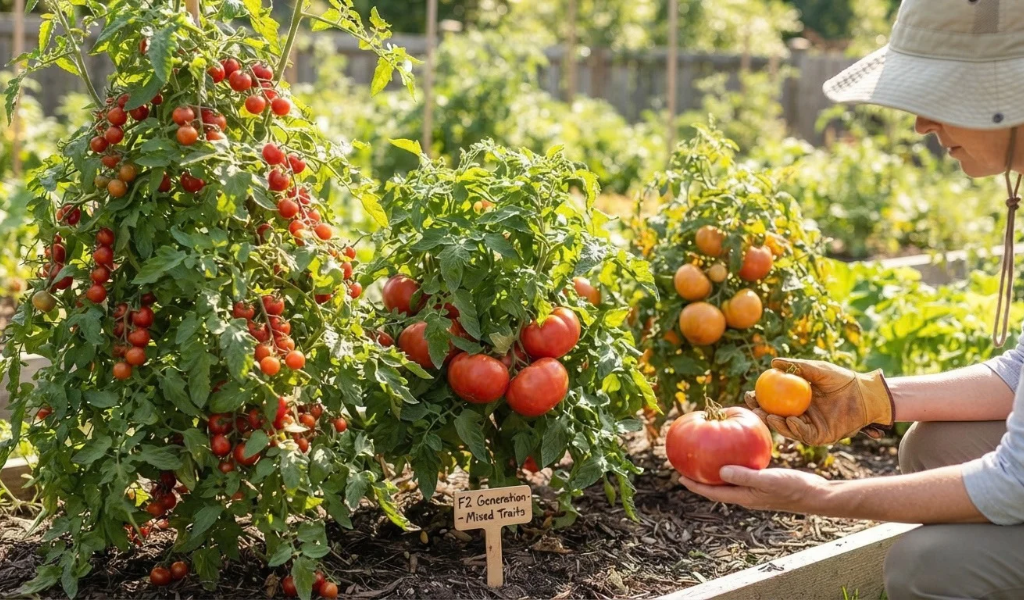 Keep notes on each plant. Record the ripening date, fruit size, taste and disease problems. These notes will help you choose which plants deserve a place in next year’s garden.
Common Mistakes to Avoid When Saving Seeds from Hybrid Tomatoes
Even careful gardeners make errors when learning how to save seeds from hybrid tomatoes. Knowing the common ones will save you time and seed.
The first mistake is picking fruit that is not fully ripe. Seeds from green tomatoes often fail to sprout or produce weak plants. Always wait until the fruit is soft and richly colored.
The second mistake is skipping the cleaning step. Gel left on the seed slows sprouting and can invite mold. Ferment or dry the seeds properly every time.
The third mistake is storing seeds before they are fully dry. Damp seeds rot inside the envelope and can spoil the whole batch. Wait until each seed snaps cleanly.
Another common problem is poor labeling. After a few months, no one remembers which jar held which variety. A short label takes seconds and prevents confusion.
Finally, many people expect identical plants from hybrid seed. This sets them up for disappointment. Treat the first season as an experiment, and the results will feel like a bonus instead of a failure.
Growing Out Seeds from Hybrid Tomatoes: Tips for Better Results
You can improve your results with a few smart habits. Start by saving seeds from several fruits, and from more than one plant, so you keep a wider mix of genes. This gives you more choices when you select the best plants later.
Always pick seed from your top performers. Choose plants with strong vines, healthy leaves and the best-tasting fruit. Over a few seasons, this simple selection moves your tomatoes closer to a stable line.
Watch out for cross-pollination. Tomatoes are mostly self-pollinating, which means each flower can fertilize itself. Still, bees can occasionally move pollen between plants, especially in varieties with exposed flower parts. Planting different varieties a few feet apart, or bagging a few flower clusters, lowers the chance of crossing.
Grow a few plants out in separate rows if you can. This lets you compare results side by side. Keep records from year to year, since patterns are easy to forget. Over time, you may also notice tomato volunteers popping up in the garden from fallen fruit. These can be a free way to see how saved seed performs in your own soil.
Final Thoughts
Learning how to save seeds from hybrid tomatoes is simple once you know the steps. Pick fully ripe fruit from healthy plants, ferment the seeds, rinse them well, dry them completely and store them in a cool and dry place. Each step protects the quality of the seed and the success of next year’s crop.
The main point to remember is that seeds from a hybrid will not always match the parent. That is not a flaw but a chance to explore. Some gardeners enjoy the surprise, and some prefer reliable heirloom seed for a predictable result.
Try saving seeds from one or two tomatoes this season. Label them, store them well and plant a few next spring. Start small, keep notes and see what grows. Your garden may reward you with something new.
Frequently Asked Questions
Can hybrid tomato seeds be saved?
Yes, hybrid tomato seeds can be saved. The seeds are alive and will grow into plants. However, those plants may not look or taste like the parent, because the genes reshuffle in the second generation.
Why is it illegal to replant your own seeds?
It is not illegal to save seeds from a regular hybrid tomato in a home garden. The restrictions apply to patented or protected varieties, where the seller’s agreement may forbid replanting. Always read the seed packet and the terms if you are unsure.
Can you plant seeds from a hybrid tomato?
Yes, you can plant them. Most will sprout and grow normally. The fruit may vary in size, color and flavor, so plant extra seeds and choose the best plants.
How do you save seeds from hybrid tomatoes?
Pick a fully ripe fruit from a healthy plant and scoop out the seeds with the gel. Ferment them in water for two to four days, then rinse the seeds and dry them fully. Store them in a labeled envelope in a cool and dry place.
How do you harvest and store tomato seeds?
Harvest the seeds from ripe fruit and clean off the gel using fermentation or the dry method. Dry them on a plate or coffee filter for about one week. Store them in sealed paper envelopes inside a jar and keep it cool and dark.
How to harvest seeds from heirloom tomatoes?
The steps are the same as for hybrids. Scoop out the seeds, ferment them, rinse them and dry them completely. The difference is the result, since heirloom seeds grow plants that match the parent plant in most cases.
How long can saved hybrid tomato seeds last?
Properly dried and stored tomato seeds can remain viable for several years. Keep them in a labeled, airtight container in a cool, dark and dry place. Avoid moisture and heat, as they can reduce seed germination over time.
Should you save seeds from the best hybrid tomato?
Yes, if you want to experiment with future plants. Choose seeds from a healthy, fully ripe tomato with desirable traits. Since hybrid offspring can vary, saving seeds from several good fruits gives you more chances to find plants with qualities you like.