Using Grow Light for Tomato Seedlings: Best Setup for Indoor Gardening
Best Grow Light for Tomato Seedlings for Healthy Tomato Plants
Starting tomatoes indoors sounds simple until your seedlings turn pale, stretch toward the window, and topple over before they ever see soil outside. The missing piece is almost always light. A good grow light for tomato seedlings replaces weak winter sun and gives young plants the steady, strong light they need to grow thick stems and healthy green leaves. Whether you are new to indoor growing or you have struggled with leggy seedlings before, understanding how to pick and use the right grow light for tomato seedlings can be the difference between a handful of weak transplants and a tray full of strong, ready-to-plant tomatoes.
Every tomato plant goes through several tomato growing stages, starting from seed germination, moving into the seedling stage, then vegetative growth, flowering, and finally fruiting. Each stage needs a slightly different light setup, and getting the early stages right sets the tone for everything that follows. This guide walks through everything you need to know about using a grow light for tomato seedlings, from choosing the best fixture to setting the correct height, duration, and spectrum for healthy growth.
Why Tomato Seedlings Need a Grow Light Indoors
Tomatoes are sun-loving plants. Outdoors, they soak up six to eight hours of strong direct sunlight every day. Indoors, even the sunniest windowsill rarely gives seedlings that same intensity, especially in late winter or early spring when days are short and the sun sits low in the sky. This is exactly why so many home gardeners turn to a grow light for tomato seedlings instead of relying on a window alone. Without enough light, tomato seedlings become leggy. Leggy seedlings have long, thin, weak stems as they stretch upward searching for more light. These plants often flop over, struggle to support themselves, and take longer to recover once transplanted outside. A grow light for tomato seedlings solves this problem by delivering steady, bright, and consistent light directly above the plants, so they grow short, sturdy, and compact instead of tall and fragile.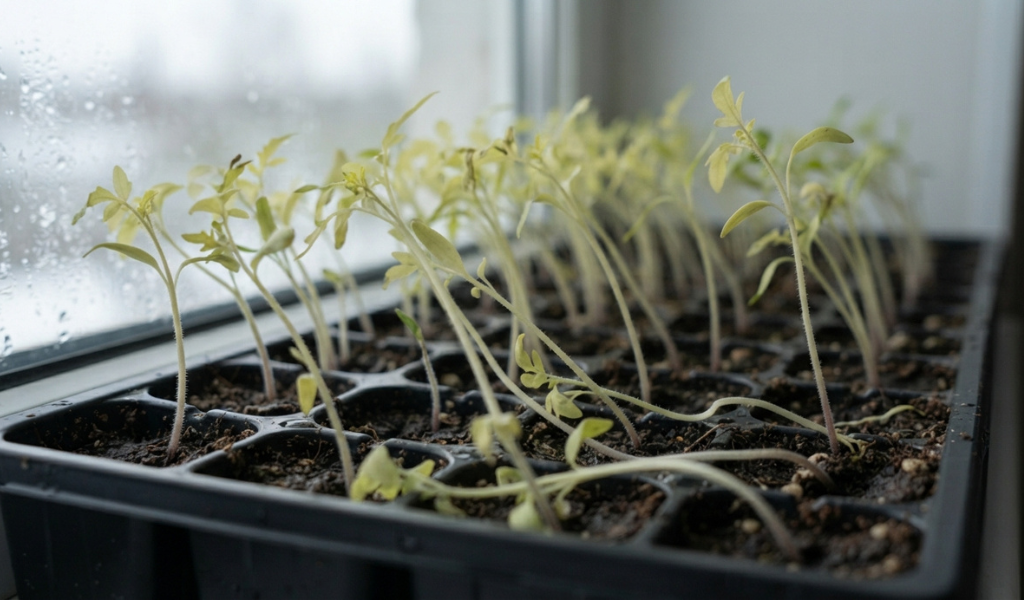
Using a grow light for tomato seedlings also gives you control. You are not waiting for sunny days or worrying about cloudy weather. You decide the exact hours of light, the intensity, and the distance from the plants. This level of control leads to more uniform seedlings, faster germination, and stronger tomato plants overall.
Types of Grow Lights for Tomato Seedlings
Not all grow lights are the same, and choosing the right type matters when growing tomatoes and peppers indoors. Here are the main types you will come across.
LED Grow Lights
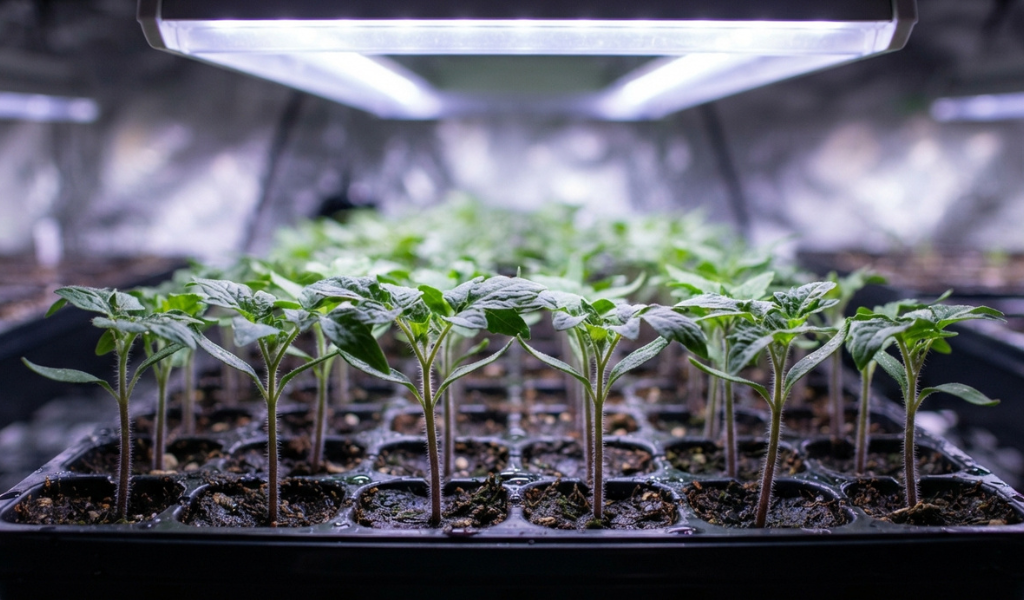
LED grow lights are the most popular choice today for a grow light for tomato seedlings setup. They run cool, use less electricity, and last for years without needing bulb replacements. Full-spectrum LED grow lights mimic natural sunlight by producing a mix of blue and red light along with other wavelengths, which supports both leafy growth and future flowering. Many gardeners prefer a full spectrum LED grow lights panel because it works well for the entire life of the plant, not just the seedling stage.
Fluorescent Grow Lights
Fluorescent lights, especially T5 fluorescent grow lights, have been a trusted option for indoor seed starting for decades. They are affordable, widely available, and produce a gentle, even light that works well for tomato seedlings. Shop lights fitted with fluorescent tubes are a budget-friendly way to start seeds, though they are less energy efficient than LEDs and the bulbs need replacing every year or two.
Fluorescent vs LED for Seedlings
Fluorescent lights are cheaper upfront and simple to set up, which makes them a good starting point for beginners. LED grow lights cost more initially but pay off over time with lower energy bills and stronger light output. If you plan to grow tomatoes indoors year after year, investing in a full spectrum led grow light for tomato seedlings is usually worth it in the long run.
Best Grow Lights for Tomatoes: LED vs Fluorescent
When people search for the best grow lights for tomatoes, they usually want a straightforward answer. The truth is that both LED and fluorescent lights can grow healthy tomato seedlings when used correctly. What matters most is intensity, spectrum, and how close the light sits to the plants.
What Makes a Grow Light “Best” for Tomatoes
The best grow lights for tomatoes share a few common traits. They produce enough light energy to keep growth compact, they cover the full growing area evenly, and they offer a spectrum close to natural white light, often rated around 6000k, which appears bright and slightly blue-white. This color temperature closely resembles daylight and supports strong vegetative growth in young tomato plants.
Linkable and Dimmable Options
If you are setting up multiple trays, look for linkable LED fixtures that connect end to end, letting you cover a large seed-starting area with one power source. Dimmable grow lights are also useful because you can lower the intensity for tiny seedlings just breaking through the soil, then increase it as the plants mature and need more light.
Hydroponic and Larger Setups
For gardeners growing tomatoes indoors on a bigger scale, including hydroponic systems, higher intensity LED panels designed for larger plants are worth considering. These fixtures produce more light energy per square foot and can support tomatoes all the way from seed starting through flowering.
Understanding PPFD and Light Intensity for Tomatoes
If you want to go a bit deeper into light intensity, PPFD is a term worth knowing. PPFD stands for photosynthetic photon flux density, and it measures how much usable light energy actually reaches the plant’s leaves, expressed per square foot or square meter. While casual growers do not need to obsess over exact PPFD numbers, understanding the concept helps explain why grow light distance and fixture strength matter so much. A grow light for tomato seedlings placed too far away delivers a much lower PPFD reading at the leaf surface, even if the bulb itself is powerful. This is why simply buying a bright light is not enough. Positioning it at the right grow light distance is what actually delivers the light intensity tomato plants need to absorb light efficiently and fuel healthy growth. Higher intensity light generally supports faster, stronger growth, but tomato seedlings can also experience stress if light is too intense and too close for extended periods without any distance buffer.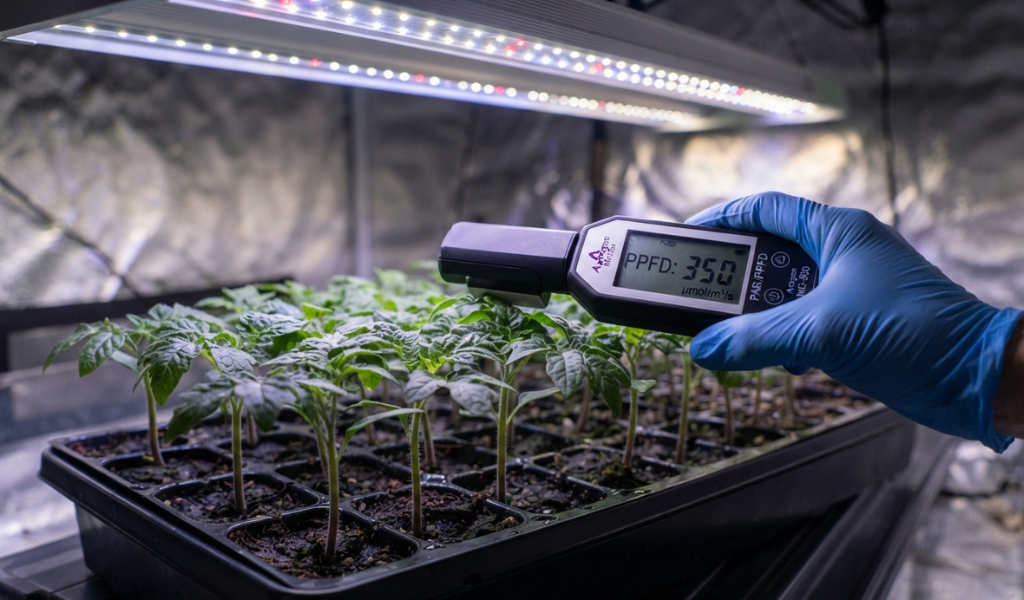 Watching your plants and adjusting height based on how they respond is more practical for most home growers than measuring exact PPFD figures.
How Much Light Do Tomato Seedlings Need
This is one of the most common questions new indoor growers ask, and it is central to using a grow light for tomato seedlings correctly. Tomatoes need a lot of light, more than most houseplants, and definitely more than a typical windowsill provides in winter.
Lumens are a measure of visible light as perceived by the human eye, but they do not tell the full story for plant growth. Tomato seedlings respond best to specific light intensity and duration rather than just brightness as we see it. Insufficient light is the number one cause of leggy, weak seedlings, so erring on the side of slightly more light, positioned at the correct distance, is generally safer than too little.
As a general guide, a grow light for tomato seedlings should sit close enough and be strong enough to replace direct sun for at least fourteen to sixteen hours a day during the earliest growing environment stage. As seedlings grow bigger and closer to transplant size, the light requirement stays high, though the plants can also start acclimating to slightly less consistent light if you are hardening them off for the outdoors.
How Long Should Grow Lights Stay On for Tomatoes
Duration matters just as much as intensity. So how long should grow lights stay on for tomatoes to get the best results?
- Seed Starting Stage: During germination and the earliest seedling stage, keep your grow light for tomato seedlings running for fourteen to sixteen hours per day. This extended light duration compensates for the lack of strong natural sunlight indoors and encourages steady, compact growth right from the start.
- Growing and Pre-Transplant Stage: As seedlings develop true leaves and grow taller, many gardeners extend light duration to sixteen to eighteen hours per day. This 14–18 hours range is widely recommended for starting tomatoes indoors because it gives plants enough light energy to build strong stems and healthy root systems before they head outside.
- Why Tomatoes Still Need Darkness: Plants need a rest period just like people do. Running lights for twenty-four hours straight is not recommended, since tomato seedlings use the dark hours to process the energy they absorbed during the day. A consistent schedule, ideally on a timer, keeps light duration steady and removes the guesswork.
Grow Light Distance: How Close Should Lights Be
Grow light distance is one of the most overlooked details when growing tomatoes indoors, yet it has a huge impact on seedling health.
- LED Grow Light Distance: Most full-spectrum LED grow lights should sit about six to twelve inches above the top of the seedlings. Because LEDs run cooler than older bulb types, you can usually keep them close to the plants without worrying about heat damage, though it is still smart to check leaves regularly for any signs of stress.
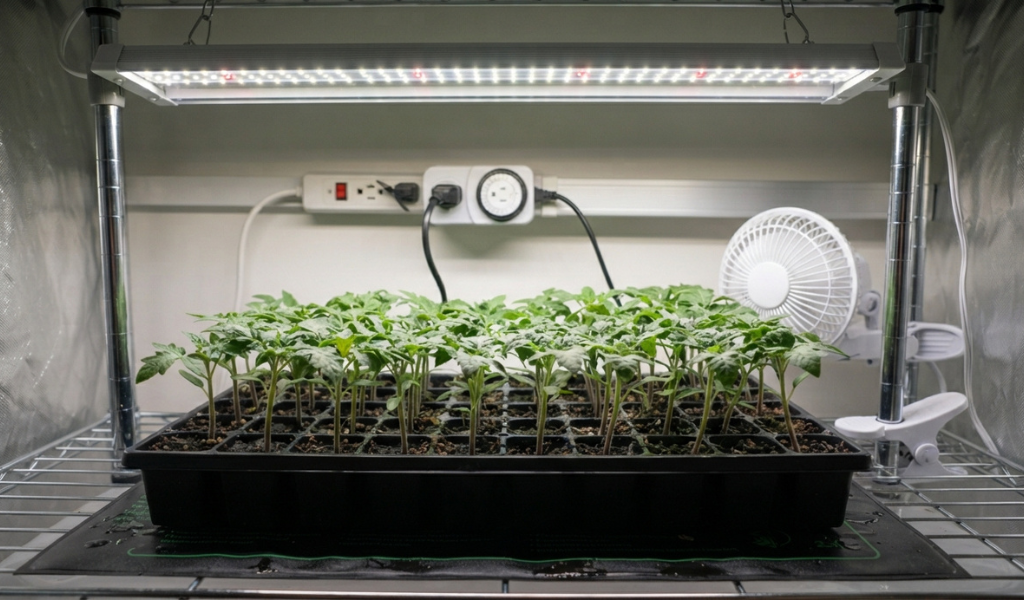
- Fluorescent Grow Light Distance: Fluorescent grow lights, including T5 fixtures, typically work best positioned two to four inches above the seedlings. Since fluorescent tubes are less intense than LEDs, keeping them close to the plants ensures the tomato seedlings actually receive enough usable light.
- Adjusting the Height as Plants Grow: You will need to adjust the height of your grow light for tomato seedlings regularly. As plants grow taller, raise the fixture or use an adjustable stand so the distance between the light source and the leaves stays consistent. Letting the gap grow too wide is a common reason seedlings start reaching and stretching again after doing well for the first week or two.
Setting Up a Grow Light for Starting Tomatoes Indoors
Setting up grow lights for starting tomatoes does not need to be complicated. Here is a simple, practical approach.
- Choosing Your Fixture: Pick a full-spectrum LED or T5 fluorescent grow light sized to fit your seed-starting trays. A four-foot linkable fixture works well for most home setups and can expand as your indoor tomato growing area grows.
- Setting Up the Growing Environment: Place trays on a stable surface, ideally with a heat mat underneath. Using a heat mat under tomato seeds speeds up germination by keeping the soil at an ideal warm temperature, which pairs well with strong light once seedlings emerge.
- Positioning the Light: Hang or place your grow light for tomato seedlings at the recommended distance for your fixture type, then adjust as seedlings grow. A simple pulley system or an adjustable lamp stand makes raising the light much easier over time.
- Timing It Right: Connect your grow light for tomato seedlings to an inexpensive outlet timer set for fourteen to sixteen hours a day at first. This removes the need to remember turning lights on and off manually every day, which is especially helpful for busy growers.
Common Mistakes When Growing Tomatoes Indoors
Even experienced gardeners run into a few recurring issues with indoor seed starting.
- Keeping the Light Too Far Away: This is the most common mistake. Seedlings stretch and become leggy almost immediately when the grow light for tomato seedlings sits too high above the tray.
- Inconsistent Light Duration: Turning lights on and off at random hours confuses plant growth cycles. A timer solves this instantly and keeps light duration steady day after day.
- Using the Wrong Color Spectrum: A light with the wrong color spectrum, such as a plain white bulb not designed for plants, will not give tomato seedlings the blue and red wavelengths they need for strong growth and future flower development.
- Overwatering Under Grow Lights: Because grow lights create a warm, active growing environment, soil can dry out faster or, if overwatered, stay soggy and encourage root problems. Check moisture at the soil surface daily.
Tips for Healthy Tomato Seedlings Under Grow Lights
A few extra habits go a long way toward growing tomatoes and peppers indoors successfully.
- Rotate trays occasionally so all seedlings receive even exposure across the fixture.
- Use a small fan nearby to gently move air, which helps build stronger stems and reduces disease risk.
- Start with quality tomato and pepper seeds, including heirloom varieties, for reliable germination.
- Watch leaf color closely. Pale or yellowish leaves often signal insufficient light or a nutrient issue.
- Harden off seedlings gradually before moving them outdoors, even after weeks under a strong grow light for tomato seedlings.
Final Thoughts
A reliable grow light for tomato seedlings takes the guesswork out of starting tomatoes indoors. By choosing the right fixture, whether a full-spectrum LED or a dependable fluorescent setup, and paying attention to light duration, distance, and intensity, you give your tomato plants the strongest possible start. Understanding the tomato growing stages and matching your lighting approach to each one helps you avoid leggy seedlings and grow thick, healthy plants ready for transplant.
If you have been relying on a windowsill and struggling with weak, stretched-out seedlings, it may be time to invest in a proper grow light for tomato seedlings. Set up your timer, adjust your fixture height as plants grow, and enjoy stronger, more productive tomato plants this season.
Frequently Asked Questions
- Do tomato seedlings really need a grow light indoors?
Yes. Natural window light is usually too weak and inconsistent, especially in winter, so a grow light for tomato seedlings provides the steady intensity plants need to avoid becoming leggy. - What is the best grow light for tomato seedlings, LED or fluorescent?
Both work well. Full-spectrum LED grow lights are more energy efficient and last longer, while fluorescent grow lights are more affordable upfront and still produce healthy seedlings. - How close should a grow light be to tomato seedlings?
LED lights typically sit six to twelve inches above the plants, while fluorescent grow lights work best around two to four inches away, since they produce less intense light. - How many hours a day should grow lights run for tomatoes?
Most growers run their grow light for tomato seedlings for fourteen to sixteen hours a day during early growth, extending to sixteen to eighteen hours as seedlings mature. - Can too much light harm tomato seedlings?
Yes, if a light is placed too close for extended periods without adjustment, seedlings can show stress. Watching leaf color and spacing helps you find the right balance. - What color spectrum works best for growing tomatoes indoors?
A full spectrum light, often around 6000k, works well because it includes the blue and red wavelengths tomato plants use for both leafy growth and later flowering. - Should I use a heat mat along with my grow light?
Yes. Using a heat mat under trays speeds up seed germination, and pairing it with a proper grow light for tomato seedlings creates an ideal growing environment for strong, healthy starts.