How Far Apart to Plant Peppers: Proper Pepper Plant Spacing for Every Garden
Pepper Plant Spacing Guide: How Far Apart to Plant Peppers for a Big Harvest
Getting pepper plant spacing right is one of the most important decisions you’ll make as a vegetable gardener. Too close, and your plants compete for light, water, and nutrients. Too far apart, and you’re leaving valuable garden space unused. Either way, your harvest suffers.
Knowing how far apart to plant peppers isn’t complicated, but it does depend on a few key factors: the variety you’re growing, your growing space, and your local climate. Whether you’re planting bell peppers in a raised bed or growing jalapeños in containers on a balcony, this guide has everything you need to get your spacing right from the start.
By the end of this post, you’ll know the ideal spacing for the most popular pepper plant varieties, how to avoid the most common planting mistakes, and how to set up your garden for the best possible yield throughout the growing season.
Why Proper Pepper Plant Spacing Matters
Spacing might seem like a small detail, but it has a big impact on how well your pepper plants grow. Plants that are too close together will struggle from the moment they go in the ground, while plants with the right amount of room around each pepper plant tend to thrive with minimal fuss.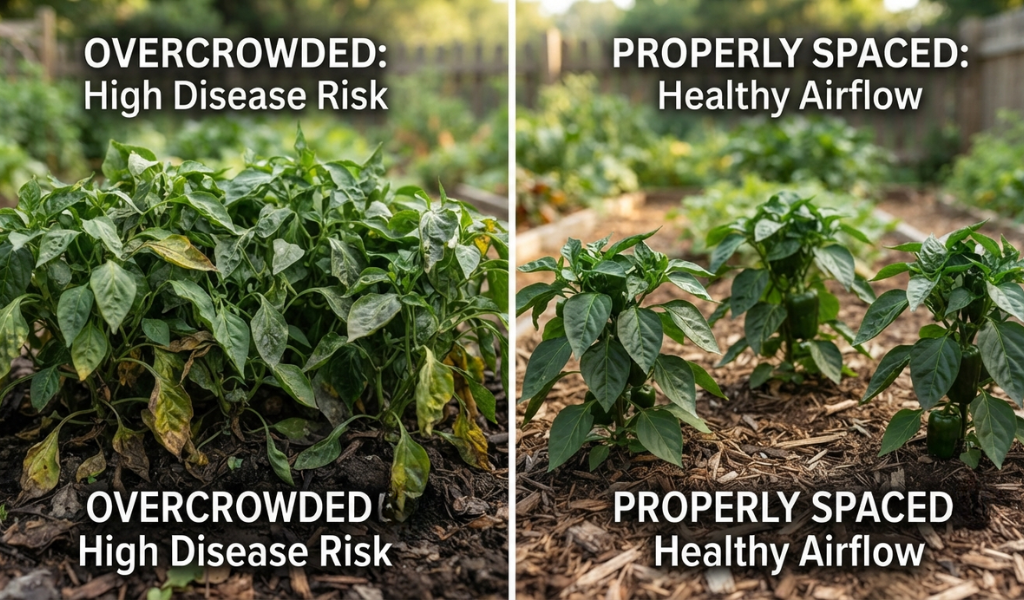
Benefits of Good Air Circulation
Air circulation is a big deal when it comes to plant health. When pepper plants are bunched together, moisture gets trapped between the leaves and stems. That warm, damp environment is exactly what fungal diseases and pests like aphids love. Powdery mildew, bacterial leaf spot, and various plant viruses spread much faster through a crowded garden bed.
Good airflow also helps your plants regulate their temperature in hot weather, which matters a lot since peppers grow best in warm conditions. When air can move freely around each plant, leaves dry out faster after rain, reducing the risk of disease throughout the season.
How Spacing Affects Plant Health and Yield
Pepper plants need access to sunlight from multiple angles to develop properly. When plants are too close, the ones on the outside get full sun while the ones in the middle end up shaded. Shaded plants produce fewer pepper flowers, and fewer flowers means a smaller harvest.
Root competition is another issue. Each pepper plant needs room to spread its roots and pull in water and nutrients. Crowded plants end up competing for the same resources, which leads to smaller fruit and slower ripening. Give your plants the space to thrive, and you’ll notice the difference come harvest time.
General Spacing Recommendations
Before diving into specific varieties, here are the baseline pepper plant spacing guidelines that apply to most pepper plants.
Ideal Distance Between Pepper Plants
For most pepper varieties, spacing pepper plants 18 to 24 inches apart in every direction is a solid starting point. Compact plants, like many chile pepper and hot pepper varieties, can often do well at the closer end of that range. Larger varieties, especially bell peppers, generally need closer to 24 inches of space around each plant.
If you’re following square foot gardening principles, most pepper plants do well with one plant per square foot when grown in a very fertile, well-maintained raised bed, though most gardeners prefer giving them a bit more room.
Recommended Row Spacing for Easy Maintenance
If you’re planting peppers in rows (common for in-ground garden beds), keep rows about 2 to 3 feet apart. This spacing gives you enough room to walk between the rows to water, fertilize, prune, and check for pests without disturbing the plants. Wider rows also improve airflow, which, as we covered above, is key for keeping your plants healthy.
Pepper Plant Spacing by Variety
Not all peppers are the same size, and their spacing guidelines reflect that. Here’s a closer look at how far apart to plant the most popular varieties.
How Far Apart to Plant Bell Peppers
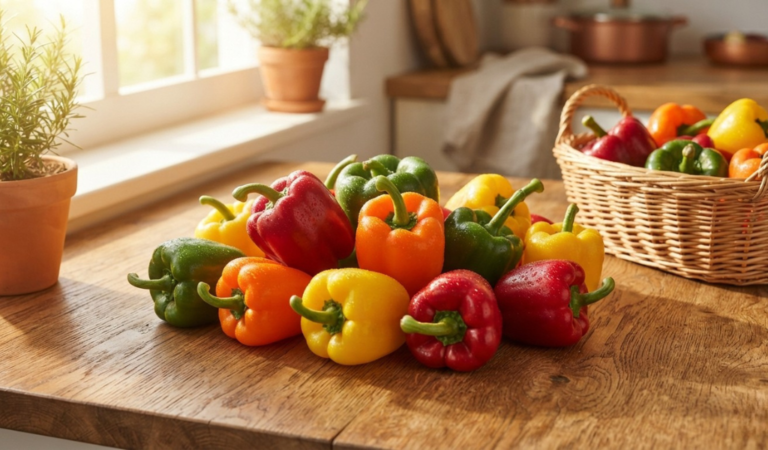
Bell peppers are one of the most popular sweet peppers grown in home gardens, and they’re also one of the larger pepper plant varieties. Because bell peppers develop into fairly wide, bushy plants and produce large fruit, they need plenty of elbow room.
Best Spacing for Large Sweet Pepper Varieties
For bell peppers and other large sweet pepper varieties like banana peppers and red peppers, aim for 18 to 24 inches apart within rows, with rows spaced about 2 to 3 feet apart. Bell peppers may spread up to 2 feet in diameter at full maturity, so that extra room isn’t wasted.
Common Bell Pepper Planting Mistakes
One of the most common mistakes gardeners make with bell peppers is planting them the same distance apart as tomato plants, which often need more space. The opposite mistake is just as common: planting bell peppers too close together because they look small as seedlings. Pepper seedlings grow quickly once the weather warms up, so always plan for their mature size, not their size at transplant time.
Spacing for Hot Pepper Plants
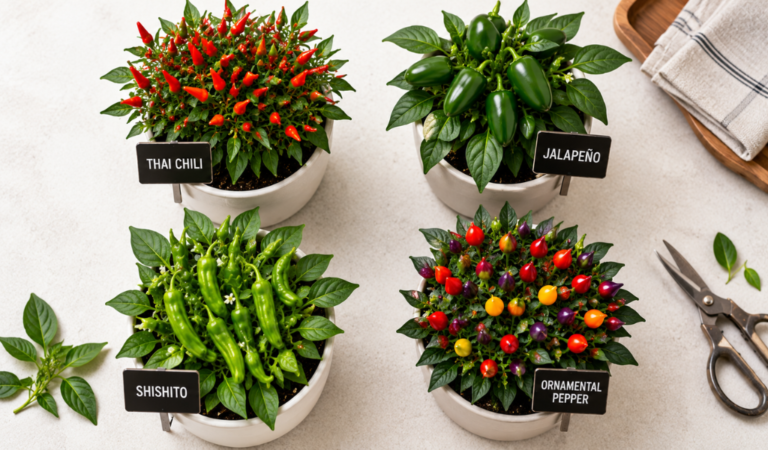
Hot peppers, including jalapeños, cayenne, habanero peppers, and ghost peppers, tend to grow a bit more compactly than bell peppers, which gives you a little more flexibility with spacing.
Jalapeño, Cayenne, and Chili Pepper Spacing
Jalapeño plants and cayenne plants typically do well at 14 to 18 inches apart. These are moderately compact plants that don’t spread as wide as bell peppers. Chili pepper varieties are similar. Habanero peppers are a bit bushier and benefit from closer to 18 inches of space. Ghost peppers, which can get quite large under the right conditions, may need closer to 18 to 24 inches.
Compact vs. Large Hot Pepper Plants
Compact hot pepper varieties, including many ornamental and small chile pepper types, can sometimes be planted as close as 12 inches apart. Large hot pepper varieties, on the other hand, should be treated similarly to bell peppers and given at least 18 inches of space. When in doubt, check the seed packet or plant tag for the expected mature size of the specific variety you’re growing.
Planting Peppers in Different Growing Spaces
Where you grow peppers changes how you should think about spacing. Garden beds, raised beds, and containers all have different rules.
Pepper Spacing in Raised Garden Beds
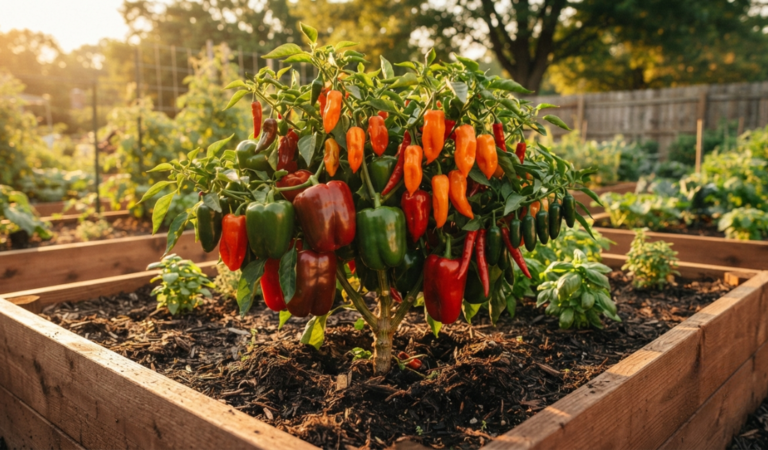
Raised beds offer better soil drainage, warmer soil temperatures, and easier weed control, all of which help peppers grow well. Because raised bed soil is typically more fertile than in-ground soil, plants can sometimes be spaced a little more closely than in a traditional garden.
Square Foot Gardening Guidelines
In square foot gardening, one pepper plant per square foot is sometimes recommended, but this is best suited to compact varieties in very productive, well-amended soil. Most gardeners find that giving each plant at least 16 to 18 inches of space in a raised bed produces better results, especially for larger varieties like bell peppers.
Maximizing Space Without Overcrowding
To get the most out of a raised bed without overcrowding, try planting in a triangular or staggered pattern rather than straight rows. 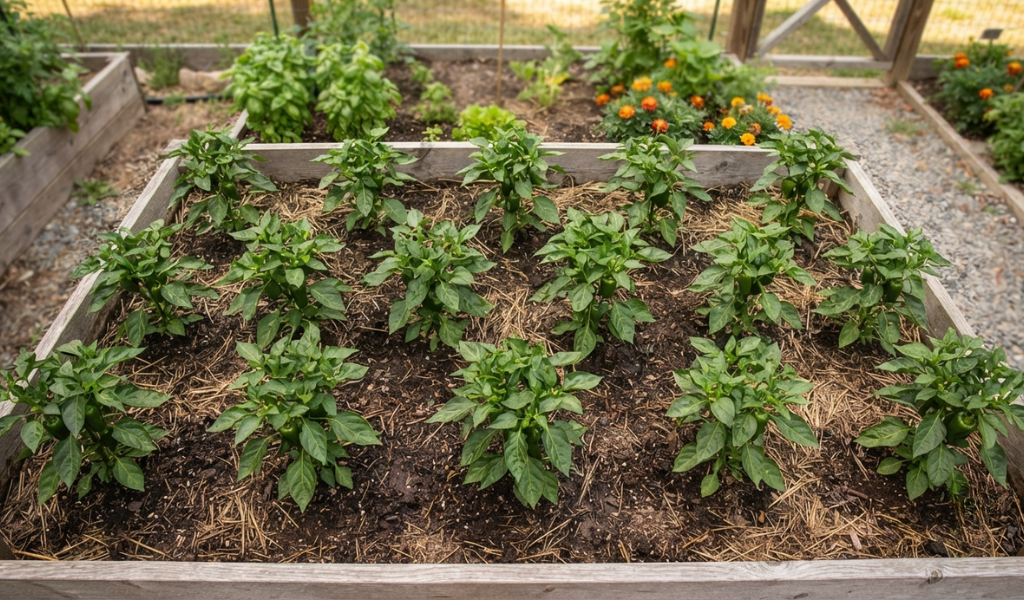 This allows you to fit more plants in the same area while still maintaining adequate airflow around each plant.
How Far Apart to Plant Peppers in Containers
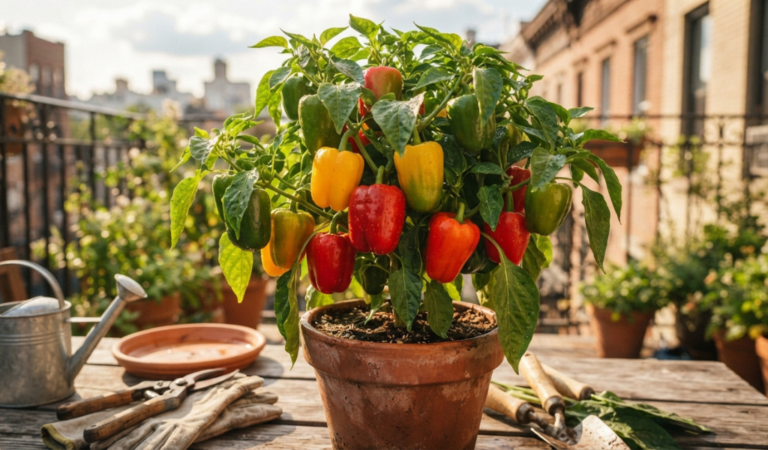
Container growing is a great option for small spaces, balconies, and patios. Peppers adapt reasonably well to container growing, but the container size matters a lot.
One Plant Per Pot vs. Multiple Plants
For most pepper varieties, one plant per pot is the right call. 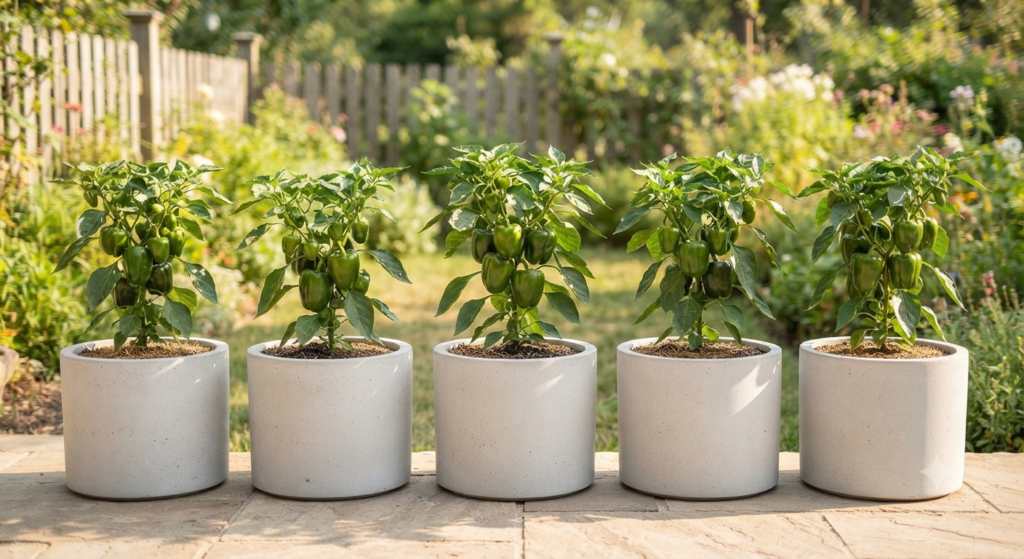 This gives the plant enough root space to develop fully and reduces competition for water and nutrients. Compact varieties can sometimes share a large pot, but you’ll need to monitor them carefully throughout the growing season to make sure they’re not getting stressed.
Choosing the Right Container Size
For bell peppers and habanero peppers, use containers that are at least 12 to 16 inches wide and deep. Jalapeño plants and other compact hot peppers can do well in slightly smaller pots, but bigger is always better when it comes to container growing. A larger pot holds more soil, which means more nutrients and better moisture retention.
Factors That Affect Pepper Plant Spacing
Spacing guidelines are a starting point, not a fixed rule. Your local growing conditions play a big role in how much space your plants actually need.
How Climate and Growing Conditions Influence Spacing
Humid vs. Dry Climate Considerations
Gardeners in humid climates should lean toward the wider end of the spacing range for their chosen variety. Humidity increases the risk of fungal disease, so maximizing airflow around each plant is especially important. In dry climates, slightly closer spacing can actually help, since nearby plants create a little shade for the fruits, which protects them from sunscald during hot weather.
Sunlight and Airflow Requirements
Peppers grow best in full sun, meaning at least 6 to 8 hours of direct sunlight per day. Space your plants so that taller plants or other garden crops don’t cast shade over your peppers during peak sun hours. If you’re planting peppers near tomato plants or other tall vegetables, give peppers the sunnier side of the bed.
Soil Quality and Plant Growth
Fertile Soil vs. Poor Soil Spacing Needs
In rich, well-amended soil, peppers tend to grow larger and fuller than in poor soil. That means you may actually need more space between plants in a highly fertile garden bed than you would in an average one, since the plants will get bigger. In poorer soil, plants stay smaller and can tolerate closer spacing, though improving your soil is always the better long-term solution.
Using Mulch to Support Healthy Growth
Mulch is one of the best tools a vegetable gardener has. Spread 2 to 3 inches of organic mulch around each pepper plant to retain soil moisture, suppress weeds, and regulate soil temperature. Mulching is especially helpful in hot weather, when pepper seedlings and young transplants are most vulnerable to heat and moisture stress.
Common Pepper Plant Spacing Mistakes
Even experienced gardeners get spacing wrong sometimes. Here are the most common errors to watch for.
Problems Caused by Planting Too Close Together
Increased Risk of Disease
Overcrowded plants create the perfect environment for disease. Fungal infections, bacterial issues, and plant viruses all spread more easily when plants are touching or nearly touching. Poor airflow keeps leaves wet and gives pathogens a foothold that’s hard to get rid of once established.
Reduced Airflow and Smaller Harvests
When plants compete for light and air, they put more energy into survival and less into fruit production. Pepper flowers may drop before they’re pollinated, and the fruits that do develop will often be smaller than expected. A crowded garden bed almost always produces a disappointing harvest compared to one where plants have room to breathe.
Problems Caused by Planting Too Far Apart
Wasted Garden Space
On the flip side, planting peppers too far apart wastes valuable growing space that could be used for companion plants or additional crops. Wide gaps between plants also leave more bare soil exposed, which encourages weed growth and makes your garden harder to maintain.
Lower Overall Garden Productivity
Garden productivity is directly tied to how efficiently you use your available space. Spreading plants too far apart reduces the total number of plants you can grow, which reduces your overall harvest. Finding the right balance is key to getting the most from your garden throughout the season.
How to Plant Peppers for Maximum Harvest
Getting spacing right is just one part of the equation. How you plant your peppers matters too.
Step-by-Step Guide to Spacing Pepper Plants
Measuring Plant and Row Distance
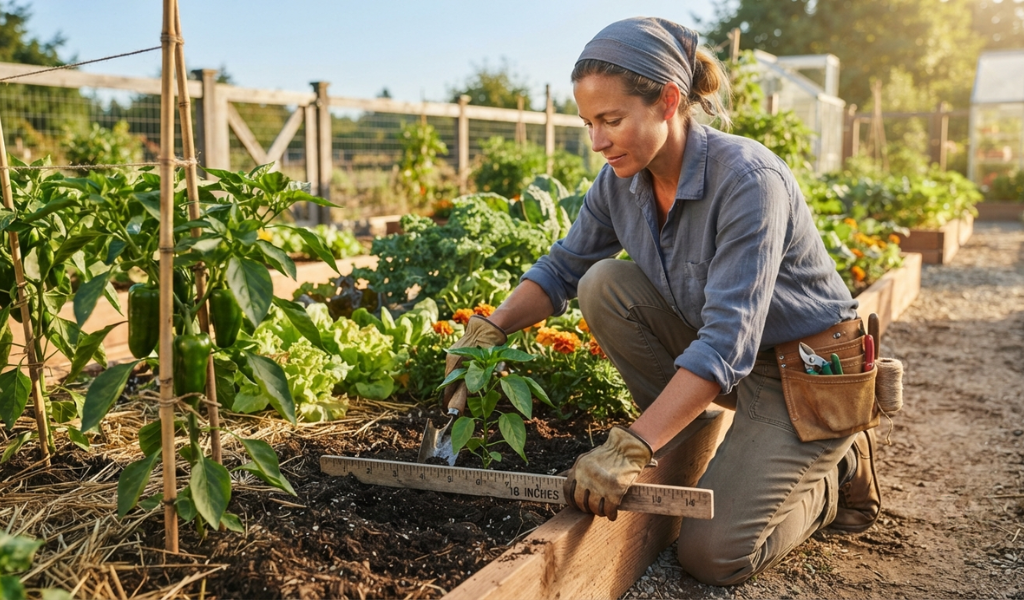
Use a tape measure or a marked garden stake to measure out your planting spots before you dig a single hole. Mark each spot with a small stake or a sprinkle of sand. This takes a few extra minutes but saves a lot of headaches later. Aim for consistent spacing throughout the bed so every plant has an equal share of light and resources.
Transplanting Without Damaging Roots
When moving pepper seedlings from seed trays or nursery pots into the garden, handle them gently. Dig your hole slightly wider and deeper than the root ball, set the plant in at the same soil depth it was growing at before, and firm the soil gently around the roots. Water thoroughly right after transplanting to help the roots settle in and reduce transplant shock. If you’re planting after the last frost date has passed and the soil is warm, your plants will establish quickly.
Caring for Peppers After Planting
Watering and Mulching Tips
Water pepper plants deeply and consistently, especially during hot weather. Peppers prefer soil that stays evenly moist but never waterlogged. Deep watering encourages roots to grow downward, which makes plants more resilient. After watering, top up your mulch layer to lock in that moisture.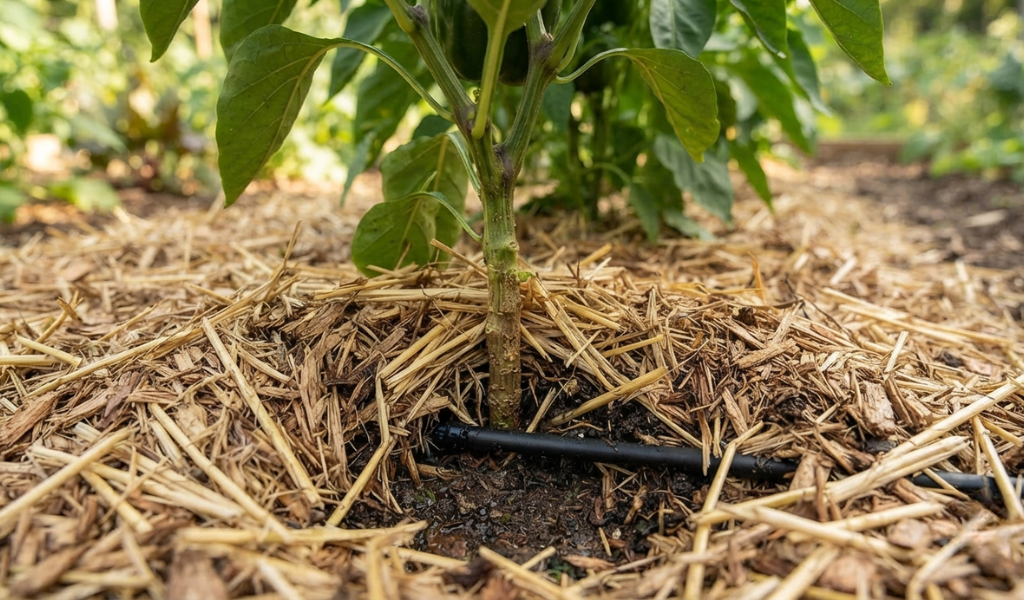
Fertilizing and Supporting Healthy Growth
Apply a balanced fertilizer at planting time to give your seedlings a strong start. Once plants are established and begin to flower, switch to a fertilizer that’s slightly lower in nitrogen and higher in phosphorus and potassium to support fruit development. Use a trellis or stake for larger varieties to keep heavy, fruit-laden branches from breaking. Check for pests like aphids regularly throughout the growing season, and prune any dead or diseased leaves promptly to keep your plants healthy.
Final Thoughts on Growing Peppers the Right Way
Getting pepper plant spacing right sets the foundation for a productive, healthy garden. The core rule is simple: most peppers do best at 18 to 24 inches apart, with rows spaced 2 to 3 feet apart. Adjust from there based on your specific variety, growing space, and climate.
Whether you’re a first-time vegetable gardener or someone who’s been growing peppers for years, the same principles apply: give your plants room to grow, keep the air moving, and stay consistent with your watering and feeding. Do those things, and you’ll have a garden full of peppers ready to harvest from mid-summer through fall.
Frequently Asked Questions About Pepper Plant Spacing
How far apart should I plant jalapeño peppers?
Jalapeño plants grow best when spaced 14 to 18 inches apart. They’re moderately compact, so they don’t need as much room as bell peppers, but they still benefit from good airflow to stay healthy throughout the growing season.
Can I grow peppers closer together to save space?
You can try closer spacing, especially with compact varieties, but there are real risks. Closer spacing reduces airflow, increases the chance of disease, and leads to smaller harvests. If you need to save space, consider using a raised bed or containers instead.
How many pepper plants can I fit in a 4×4 raised bed?
In a 4×4 raised bed, you can comfortably fit 4 to 6 pepper plants, depending on the variety. Compact hot peppers can be spaced a little closer, while bell peppers and habanero peppers need more room.
Does pepper plant spacing change for containers?
Yes. In containers, one plant per pot is usually the best approach. Use a pot that’s at least 12 to 16 inches wide and deep for most varieties. Multiple plants can share a larger container, but you’ll need to fertilize and water more frequently to keep up with their needs.
What happens if I plant peppers too close together?
Peppers planted too close together will compete for light, water, and nutrients. This leads to poor airflow, higher disease risk (including fungal infections and plant viruses), fewer pepper flowers, and a smaller harvest overall. Aphid and other pest infestations can also spread faster in crowded plants.
How far apart should I plant bell peppers from other vegetable plants?
Bell peppers should be kept at least 18 to 24 inches from other pepper plants and at least 12 to 18 inches from neighboring vegetable plants. Avoid planting bell peppers directly next to tall crops like tomato plants that might shade them during peak sun hours.
When is the right time to transplant pepper seedlings outdoors?
Transplant pepper seedlings outdoors after your last frost date has passed and soil temperatures are consistently above 60°F. Peppers are sensitive to cold, and transplanting too early can stunt their growth or damage young plants permanently.