Hydrogen Peroxide for Tomato Plants: Effects of H2O2 on Plant Health and Fungal Control
Hydrogen Peroxide for Tomato Plants: Benefits, Uses, and Safety Tips
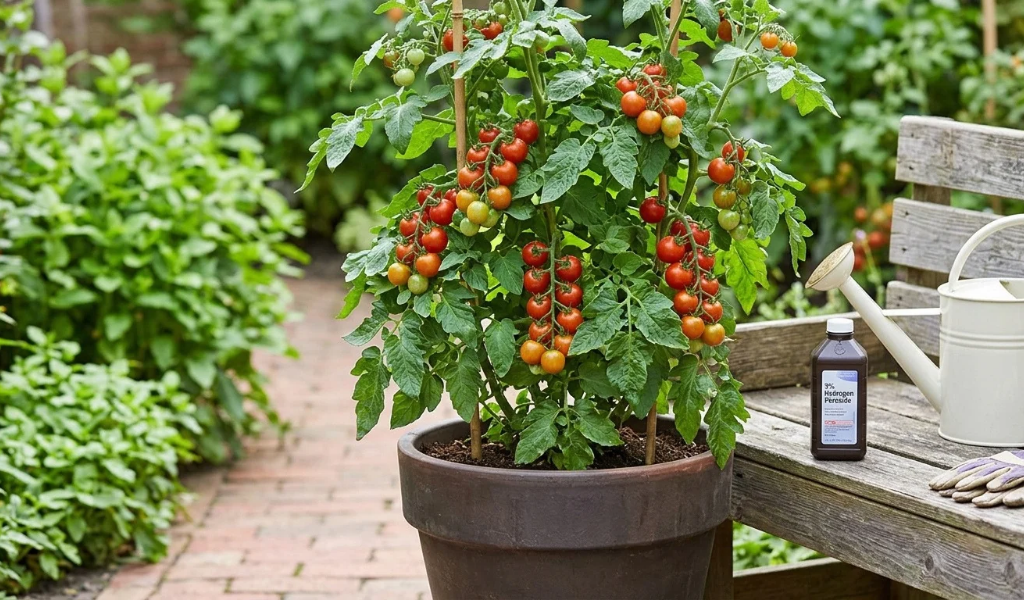
Hydrogen peroxide for tomato plants is one of those garden tricks that people either swear by or ignore completely. I first heard about it from a neighbor who lost half her crop to root rot one wet July. She poured a diluted mix around the stems and changed her watering habits. The next batch of seedlings did far better. Was it magic? Not really, but there is real science behind it. Hydrogen peroxide, also written as H2O2, is just water with one extra oxygen atom. That extra atom breaks off fast, and in small doses it can help the soil, the roots, and even the leaves.
In this guide you will learn how hydrogen peroxide for tomato plants works, how to dilute it, and when to spray it. You will also see where it falls short. Start with Good Soil for Tomato Plants, because no mix can fix compacted and soggy ground. Think of peroxide as a helper and not a rescue plan. Used the right way, it is cheap and easy to find at any pharmacy. Used the wrong way, it can burn leaves and harm roots. Let us look at both sides so you can decide with confidence.
How Hydrogen Peroxide Works in Tomato Plant Care
Plants make their own tiny amounts of hydrogen peroxide all the time. A tomato plant (Solanum lycopersicum) uses it as a signal. When a fungal pathogen touches a leaf, the plant releases a quick burst of reactive oxygen species, usually shortened to ROS. This oxidative burst helps wall off the attack and wakes up the plant’s defenses. Researchers have studied this in tomato and tobacco plants for years. Plants treated with low doses of H2O2 often show stronger disease resistance, because the treatment activates enzymes and antioxidants that fight infection. 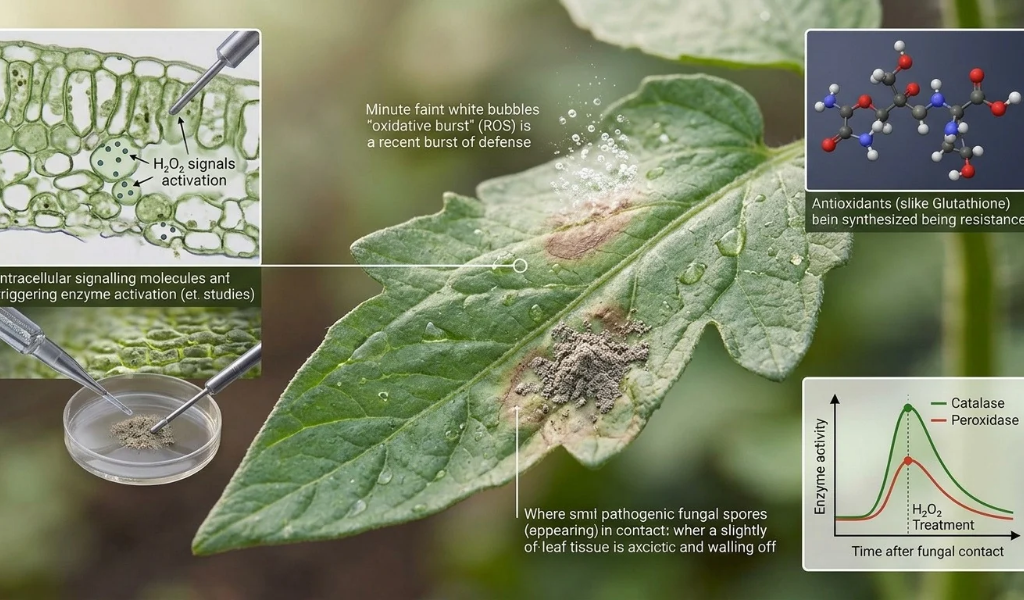
That is the lab side. In your garden the effect of hydrogen peroxide is simpler. It oxidizes whatever it touches, including some fungus spores and bacteria on the surface of leaves and soil. Then it breaks down into plain water and oxygen. Nothing toxic stays behind, which is why gardeners like it. The catch is the dose. Too weak and nothing happens. Too strong and it oxidizes healthy leaf cells too. Most real-world success comes from small and careful use, not from heavy dousing.
The Role of Oxygen in Tomato Root Health
Tomato roots need air as much as water. When soil stays wet for days, oxygen runs out, and roots begin to suffocate. Weak roots then invite rot. Hydrogen peroxide adds a small boost of oxygen as it breaks down in the soil. I tried this on a tray of seedlings that kept collapsing after heavy watering. The diluted drench helped them perk up within a week, but only after I also let the tray dry between waterings. The extra oxygen is a short bonus. It does not replace drainage.
Hydrogen Peroxide and Soil Microorganisms
Soil is alive. Good bacteria and fungi help tomatoes take up nutrients. Peroxide does not tell the good from the bad, so a strong dose can knock back helpful microbes along with harmful ones. A mild mix usually causes only a brief dip, and healthy soil recovers fast, especially when you add compost. A heavy mix used every few days is another story. You can end up with sterile soil that grows weaker plants. Keep the mix light and the schedule loose.
Hydrogen Peroxide for Tomato Plants With Root Rot and Fungal Problems
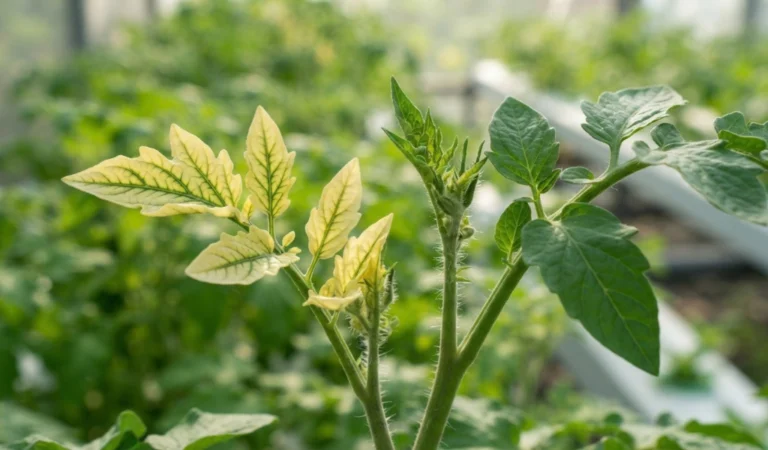
Root rot is the main reason most people look up hydrogen peroxide for tomato plants. The signs are easy to spot. Leaves turn yellow and droop even though the soil is wet. The base of the stem may look dark or mushy. Pull the plant gently and the roots will look brown and slimy instead of white and firm. Damping-off disease does the same to young seedlings. They pinch at the soil line and fall over overnight.
Here is how a gardener might use peroxide. First, stop watering and let the top inch of soil dry. Then drench the soil with a weak mix, which I will explain below. The oxygen helps the roots, and the oxidation may slow the mycelium of the fungus. Some people also trim away the rotten roots and replant in fresh mix before treating. This works best when the problem is caught early. If the stem is already black and soft, the plant is usually lost, and the better move is to start over with a clean pot.
It also helps to know what peroxide cannot do. It will not cure wilt disease caused by soil fungus deep in the stem. It will not repair a plant that sat in water for two weeks. And it cannot make up for poor soil. Think of it as first aid. It buys time while you fix the real cause, which is nearly always too much water or heavy ground.
How to Dilute Hydrogen Peroxide for Tomato Plants Safely
Dilution is where most gardeners go wrong, so take your time here. The bottle in your pharmacy is usually 3 percent.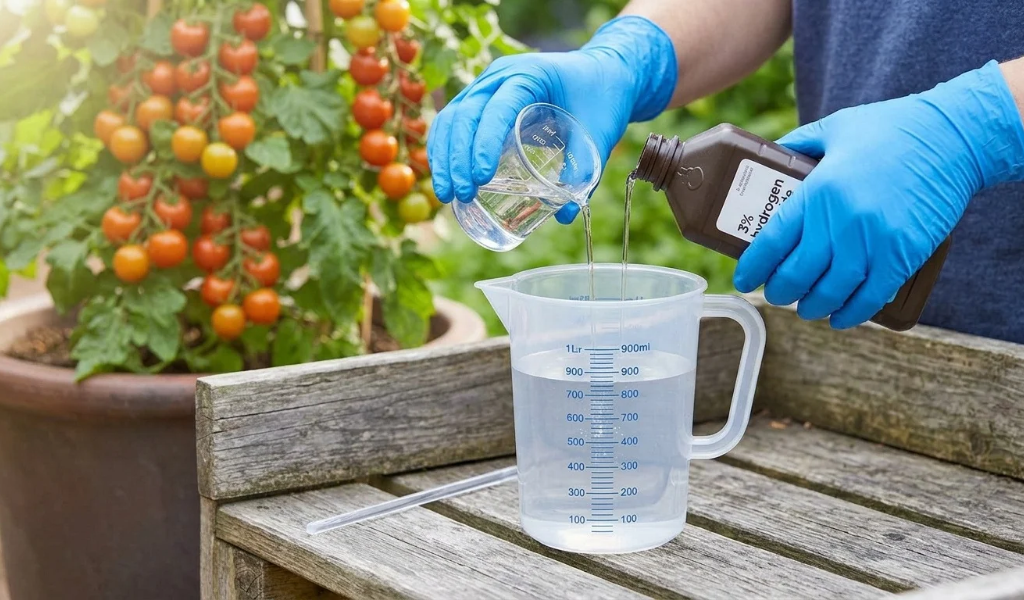 That is already a mild strength for humans, but it is still strong for a tender leaf. Never use the 35 percent food grade kind in the garden. It can burn skin and ruin plants in seconds. Always use fresh peroxide, because an old and opened bottle loses strength and turns to water over time. Store it in its dark bottle and keep it away from light.
Choosing the Right Hydrogen Peroxide Concentration
For soil drenches, a good starting point is one part of 3 percent peroxide to four parts of water. For foliar use, go lighter, around one part to nine parts of water, which is about 0.3 percent. Some old garden advice mentions 3 and 5 percent mixes in other forms, and some books mention six ounces per gallon of water. That is a strong mix and I would only try it on soil, never on leaves, and never on young plants. When in doubt, start weaker. You can always repeat the application, but you cannot undo a burn.
Preparing a Diluted Solution for Garden Use
Use a clean bucket or spray bottle. Pour in the water first, then add the peroxide, and stir gently. Mix only what you need, since the solution loses strength within hours. Do not store it in a clear bottle in the sun. For a quick spray bottle, a rough guide is two tablespoons of 3 percent peroxide with enough water to fill a one pint bottle. For a gallon of water, many gardeners use about one cup of 3 percent for a soil drench. Label the container so no one mistakes it for plain water. Wear gloves if your skin is sensitive, and keep it out of your eyes.
Using Hydrogen Peroxide for Tomato Plants in Soil and Containers
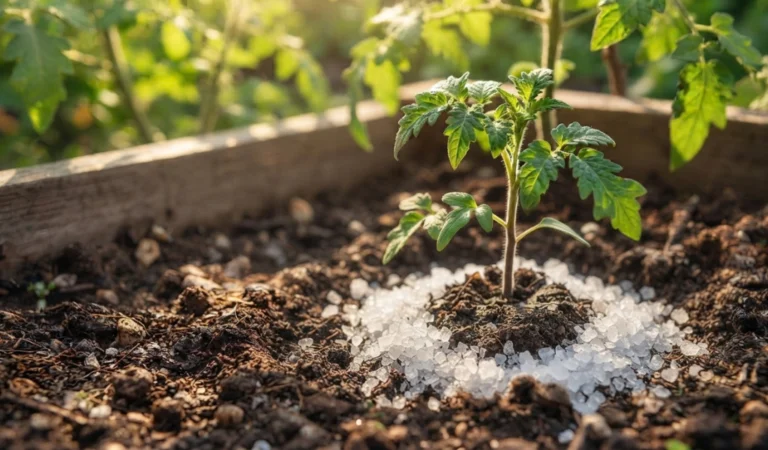
Soil use is the safest way to start. The roots sit below the surface, and the soil buffers some of the oxidation. Water the plant lightly first so the roots are not dry and thirsty. Then pour the diluted mix slowly around the base. Do not pour straight onto the stem. After a drench, hold off on feeding for a few days, since fertilizer and peroxide can stress roots together.
Treating Soil Around Tomato Roots
For garden beds, apply the mix to the root zone in a ring about a hand’s width from the stem. Use about a cup for a small plant and up to a quart for a large one. You will often see light fizzing, which is the peroxide breaking down. A little fizz is normal. Heavy foaming is not, and it means the mix is too strong. Repeat once after a week if the plant seems to respond. If nothing improves after two applications, stop.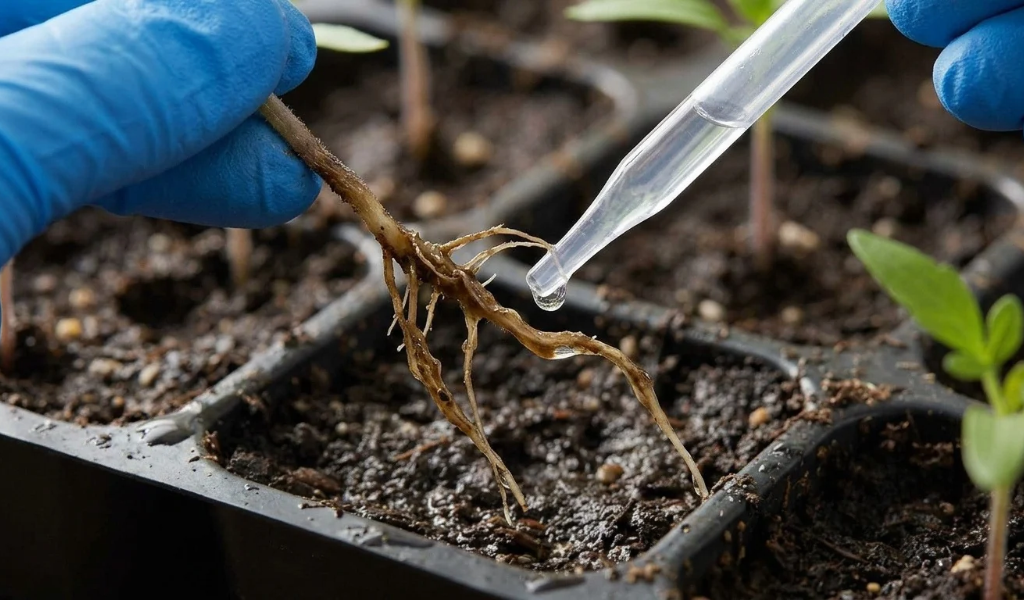 The cause is probably something peroxide cannot fix.
Caring for Tomatoes Grown in Pots and Raised Beds
Pots dry and flood faster than the ground, so containers need extra care. Check the drainage holes first. A blocked hole is the number one cause of root trouble in pots. When you use hydrogen peroxide for tomato plants in containers, drench until a little water runs out the bottom. That flushes extra salts and lets fresh oxygen reach the roots. In raised beds, mix in compost every season. Good Soil for Tomato Plants stays loose, drains well, and holds a little moisture. If your bed turns hard or sour, fix that first, then think about peroxide.
Hydrogen Peroxide Spray for Tomato Leaves and Fungal Issues
A foliar spray is the more tricky way to use H2O2. The leaves are thin, and the chemical can burn them in hot sun. Still, it is popular for early blight and leaf spot. Early blight starts as small brown rings on the lower leaves. Leaf spot looks like dark dots with yellow edges. Both are caused by fungus, and both spread in damp weather. Studies on hydrogen peroxide-induced resistance show the plant itself can become tougher after a mild application, which may lower disease severity of tomato leaves.
To spray, mix the light foliar blend I described earlier. Always test first. Spray one leaf or one small branch and wait 48 hours. If you see spots, curling, or bleaching, the mix is too strong. If the leaf looks fine, go ahead and spray the plants in the early morning or late evening. Cover the tops and undersides of the leaves, because fungus loves the hidden side. Never spray in bright midday sun. Spray damage often looks like pale and papery patches, and it spreads fast on a hot day.
Be honest with yourself about the results. Peroxide kills spores on contact, but it does not reach fungus that is already inside the leaf. It also does not stay on the plant for long. That means a spray works best as a preventative step in humid weather, and not as a cure for a plant already covered in blight. Remove badly infected leaves, give plants space for airflow, and water at the base so the foliage stays dry.
How Often to Use Hydrogen Peroxide for Tomato Plants
Less is more. For prevention, a gardener might spray the plants every 10 to 14 days during warm and wet stretches. In dry weather, skip it. For a plant that is already sick, a spray every 7 days for two or three rounds is the most you should try. If there is no change after that, switch methods. Using peroxide every day or every other day will stress the plant, and the leaves will show it.
A simple spray routine looks like this. Check your plants once a week and look under the leaves. If you spot the first signs of fungus, remove the worst leaves and spray with the light mix. Wait a week and check again. Keep notes in a small notebook, since results vary by cultivar, weather, and soil. One of my neighbors grows two kinds of tomato, and one handles peroxide with no problem while the other gets spots after the first spray. Your own plants will tell you what they can take.
For soil drenches, once every two weeks is plenty during the main growing season. Stop a few weeks before harvest if you can. Tomato fruits are not harmed by a light mix, but there is little reason to treat late in the season. A strong plant with dry leaves and good airflow rarely needs more.
Common Mistakes to Avoid When Using Hydrogen Peroxide on Tomatoes
The first mistake is using too strong a mix. A plant treated with full 3 percent peroxide can lose its leaves in a day. The second is spraying in sunlight. Water drops on the leaf act like tiny lenses, and the peroxide makes the burn worse. The third is using old peroxide. If your bottle has been open for months, it may be mostly water, and you will think the method does not work when the real problem is your bottle.
Another common error is treating the symptom and ignoring the cause. If the soil is soggy because of poor drainage, no amount of peroxide will fix it. If your plants are packed too closely and the air is stagnant, fungus will return in a week. Many people also mix peroxide with other products, like vinegar or fertilizer, in the same bottle. Do not do that. Mixing peroxide with vinegar can make peracetic acid, which is harsh on plants and on your skin.
Last, do not expect miracles. Studies show an effect on tomato disease, but most of the careful work is done in labs and greenhouse settings with controlled doses. Backyard results are mixed. Treat peroxide as one tool in a bigger plan and watch your plants closely.
Safer Alternatives to Hydrogen Peroxide for Healthy Tomato Plants
If peroxide feels too risky, you have other options. A fungicide with copper or sulfur is a proven choice for blight and leaf spot, and neem oil can help with early signs of fungus and some insects. Baking soda is another popular home remedy. A teaspoon in a quart of water with a drop of dish soap can slow some leaf fungus. It does not cure anything, but it makes the leaf surface less friendly to spores.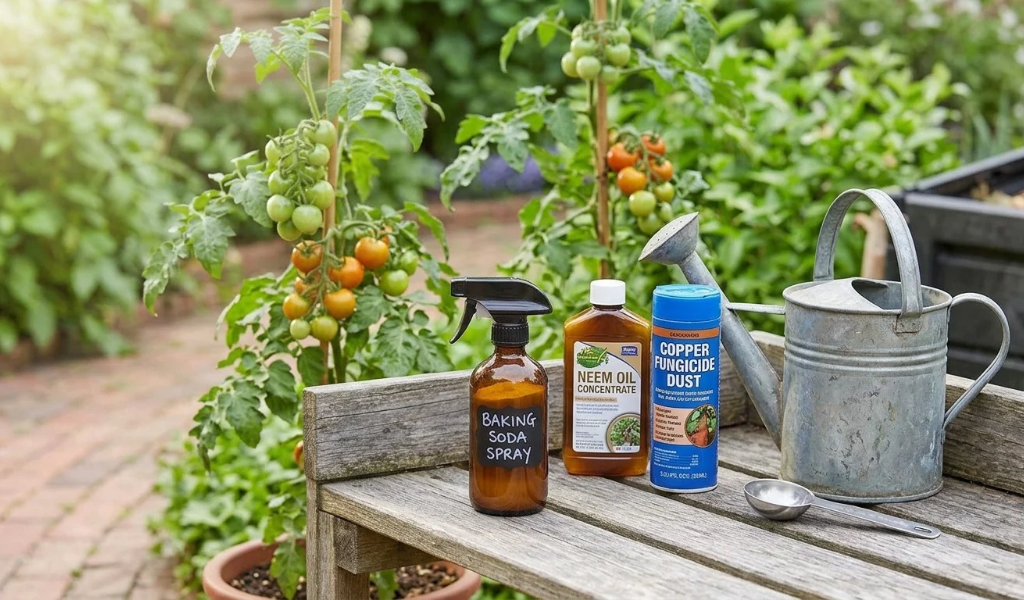 Each of these has its own limits, so read the label and test on one leaf first.
Improving Drainage and Preventing Overwatering
Water is the cause of most tomato trouble. Plant in a spot with full sun and soil that drains well. If your ground is heavy clay, build a raised bed or add coarse compost and a little sand. Water deeply but less often, and let the top inch dry out between sessions. Stick your finger in the soil. If it feels cool and wet, wait. Mulch with straw to keep soil from splashing onto the lower leaves, which is how many fungal diseases spread.
Using Compost, Proper Watering, and Disease Prevention
Healthy soil makes healthy plants. Add a few inches of finished compost each spring, because it feeds good microbes that crowd out harmful ones. Water in the morning at the base of the plant. Space plants at least two feet apart and prune the lower leaves so air can move through. Rotate your crop each year, so tomatoes do not grow in the same spot twice in a row. Clean your tools after pruning a sick plant. These small habits do more than any spray, and they make peroxide less necessary.
Final Thoughts
Hydrogen peroxide for tomato plants can be a useful and low-cost helper. It adds a little oxygen to tired soil, it can slow some fungal problems, and it may even help plants switch on their own defenses. But it is not a miracle cure. Success depends on the right strength, fresh product, careful timing, and a gardener who keeps an eye on the plants. Start weak, test on one leaf, and wait 48 hours. Fix drainage, build good soil, and give your plants room to breathe.
Now it is your turn. Mix a small batch this week and try it on one plant. Watch how it responds and take notes. If it helps, you have a new tool. If it does not, you have lost almost nothing. Either way, you will learn more about your garden, and that is the best way to grow better tomatoes.
Frequently Asked Questions
Does hydrogen peroxide work on tomato blight?
It can help a little, but it is no cure. Peroxide kills spores on the leaf surface and may lower early blight pressure when used as a preventative spray. It cannot reach fungus that has already entered the plant. For serious blight, remove infected leaves and use a proper fungicide.
What kills fungus better, rubbing alcohol or hydrogen peroxide?
For garden use, hydrogen peroxide is the gentler and more practical choice. Alcohol dries out leaves and can burn them fast. Peroxide breaks down into water and oxygen, so it leaves no residue. For heavy fungus, neither one beats a labeled garden fungicide.
What does baking soda do for your tomato plants?
Baking soda makes the leaf surface less friendly to fungus spores. It can slow leaf spot and mildew when sprayed early. It will not kill an established infection. Use a weak mix, because too much baking soda can build up salts and harm leaves.
How to use hydrogen peroxide for plants?
Dilute 3 percent peroxide with water, test it on one leaf, and wait 48 hours. Then apply as a soil drench or a light foliar spray. Mix a fresh batch each time and avoid spraying in hot sun.
Can you use hydrogen peroxide on tomato plants?
Yes, when it is diluted well. A weak mix works for soil and leaves, but a full strength product will burn them. Start light and watch how the plant reacts.
Is hydrogen peroxide safe for tomato plants?
Used at a low strength, it is generally safe, and it breaks down into water and oxygen. Strong mixes, frequent use, and midday spraying are what cause harm. Keep it weak, keep it occasional, and test first.
How much hydrogen peroxide per litre of water for plants?
For plants, mix 5–10 ml of 3% hydrogen peroxide with 1 litre of water for a cautious starting dilution. Test on a small area first, as hydrogen peroxide can damage roots and beneficial soil microbes. Avoid using concentrated hydrogen peroxide, and do not apply it routinely without a specific need.