Easy to Grow Veggies in Pots: Best Vegetables for Container Gardening
Easy to Grow Veggies in Pots: Best Container Vegetables for Beginners
If you have ever stood on a tiny balcony or a small patio and wondered whether you could actually grow your own food, the answer is yes, and it starts with easy to grow veggies in pots. You do not need a large backyard or years of gardening experience to create a productive vegetable garden. With the right container, quality soil, proper sunlight, good drainage, and regular care, even a small space vegetable gardening can become a rewarding place to grow fresh vegetables. For beginners, easy to grow veggies in pots are a practical choice because container gardening gives you better control over soil, watering, sunlight, and plant placement. You can grow vegetables on balconies, patios, porches, rooftops, and other limited spaces without needing a traditional garden bed.
This guide covers how to choose suitable pots, prepare the growing medium, select beginner-friendly vegetable plants, and provide the care they need throughout the growing season. Whether you have a small balcony or a compact patio, easy to grow veggies in pots can help you turn available space into a productive vegetable garden.
Why Container Gardening Works So Well for Beginners
Container gardening takes away much of the guesswork that can make starting a vegetable garden feel difficult.
Instead of dealing with poor garden soil, weeds, compacted ground, or limited planting space, you can create a suitable growing environment directly inside a container. This is one reason easy to grow veggies in pots are a practical choice for renters, apartment gardeners, and beginners with limited outdoor space.
You can move pots when sunlight changes, control the quality of the soil, and choose containers that match the size of each vegetable plant. easy to grow veggies in pots also let beginners start small without investing in a large garden setup. A few well-chosen pots can provide fresh herbs, leafy greens, tomatoes, peppers, radishes, and other vegetables right outside your door. The key is to choose vegetables that suit your container size and growing conditions. Once you see your first healthy harvest, container gardening becomes much more enjoyable and easier to maintain.
Choosing the Right Containers for Vegetable Gardening
The container you pick can make or break your results, so this step deserves real thought. Size is the first thing to consider, since a vegetable container that is too small will limit root growth and reduce your harvest. As a general guideline, 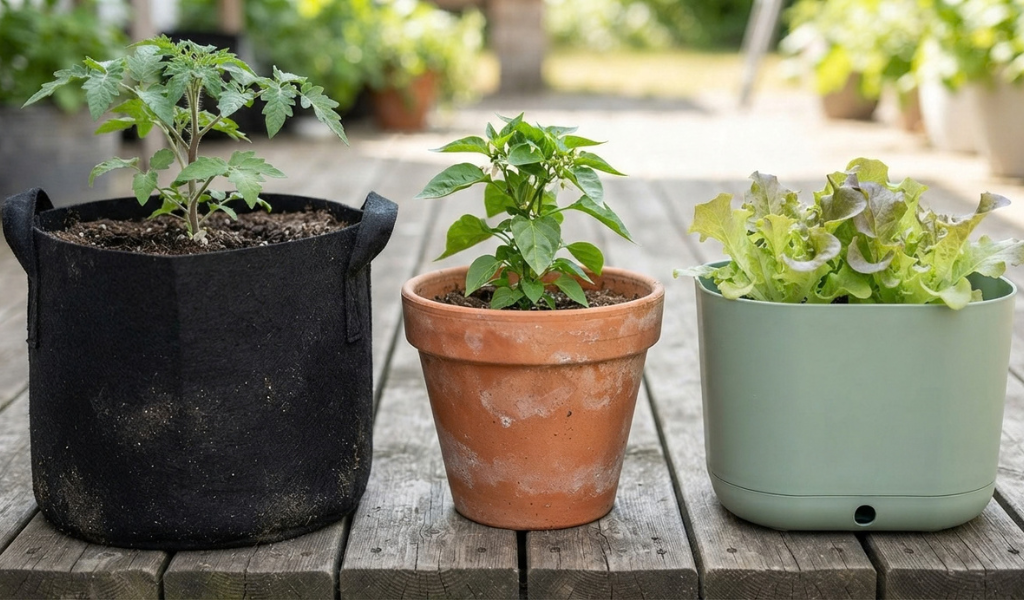 a 5-gallon container works well for tomatoes, peppers, and eggplant, while a smaller pot is fine for lettuce, spinach, or herbs. Every good container needs holes in the bottom, no exceptions. Without drainage, water collects at the bottom of the pot, roots sit in it, and the plant eventually rots from below. This single detail trips up more beginners than anything else on this list. Grow bags have also become popular in recent years, and for good reason. They are lightweight, affordable, and their fabric material naturally improves drainage while encouraging healthier root systems.
How Large Should the Drainage Holes Be?
Drainage holes do not need to be huge, but there should be enough of them spread across the base of the pot. A single tiny hole in the middle is not enough for a large container holding a thirsty tomato plant. Aim for several holes, roughly a quarter inch to half an inch wide, so water can escape freely without washing out too much soil.
The Best Easy to Grow Veggies in Pots for First-Timers
Not every vegetable takes to container life equally well, so it helps to start with the ones that practically want to grow.
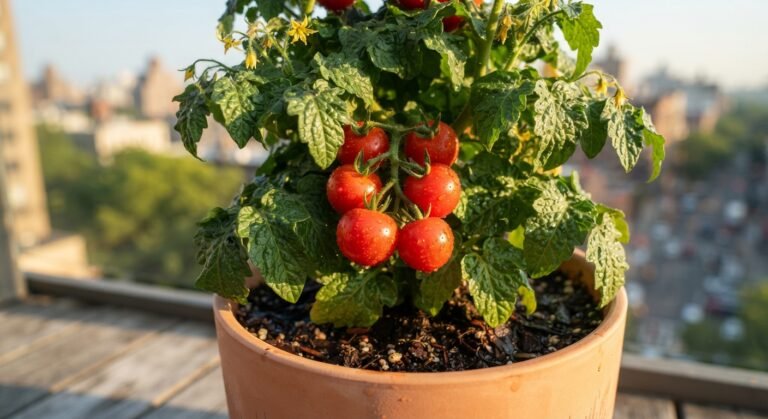
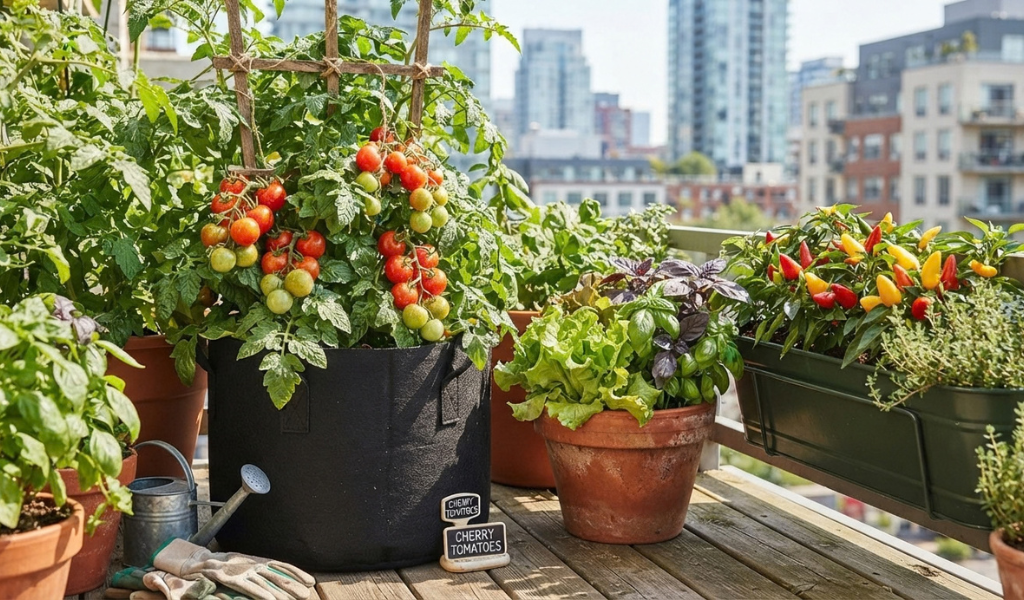
- Cherry tomatoes are usually the first recommendation, and for good reason. They handle a large container well, they produce heavily, and the payoff of a warm, ripe tomato picked straight off the vine tends to hook people for life.
- Lettuce and other leafy greens are another smart pick, since they have shallow roots and do not mind a smaller container.
- Spinach, kale, and swiss chard fall into this same easy category, and all three can be harvested a few leaves at a time without pulling the whole plant.
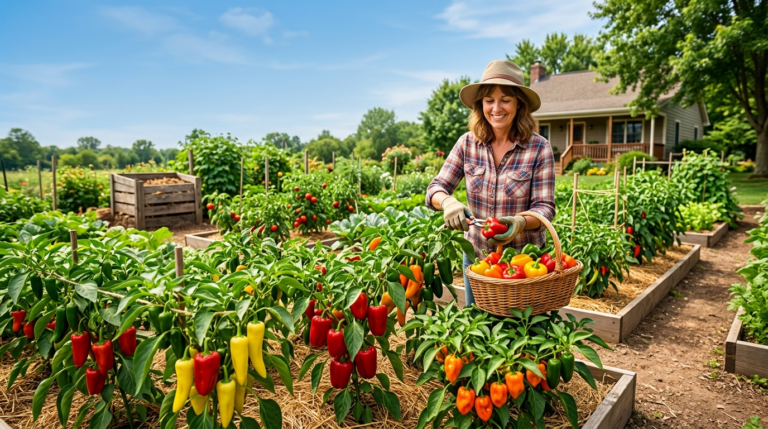
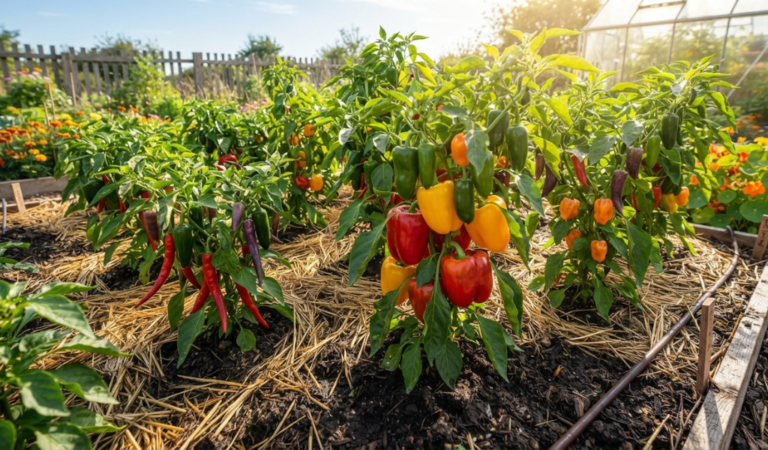
- Peppers, both sweet and hot, grow surprisingly well in pots and tend to be more forgiving than people expect.
- Radishes deserve a mention because they mature fast, sometimes in under a month, giving new gardeners a quick win.
- Cucumbers and eggplant can also work beautifully in containers as long as the pot is large enough to support their roots.
Any list of the best vegetables for containers usually circles back to these same names, and that is because they genuinely perform well when growing in the ground is not an option.
A Note on Root Vegetables
Root vegetables like carrots and radishes can grow in pots, but they need depth more than width.
A container that is shallow will produce stunted, twisted roots, so if you want root vegetables, go deep rather than wide.
Herbs Count Too, and They’re Almost Foolproof
Herbs are technically edible plants too, and they might be the easiest thing you can grow in a pot. Basil, parsley, mint, and chives all thrive in small containers and do not ask for much beyond sunlight and regular water. Basil in particular pairs well with tomatoes, both in the kitchen and in the pot, since some gardeners believe planting them together improves flavor and helps repel certain pests. Mint is famous for taking over garden beds, which makes a container the smarter home for it anyway.
If you are nervous about killing your first plant, start with parsley or chives, since both are nearly impossible to mess up.
Material Matters More Than You’d Guess
Clay pots, also called terracotta, look lovely on a patio but dry out fast because the material is porous. That means more frequent watering, which can be a downside if you travel often or tend to forget. Plastic pots hold moisture longer and are much lighter to move around, which matters if you are rearranging containers to chase the sun. Grow bags sit somewhere in the middle, offering good drainage without drying out as quickly as clay. 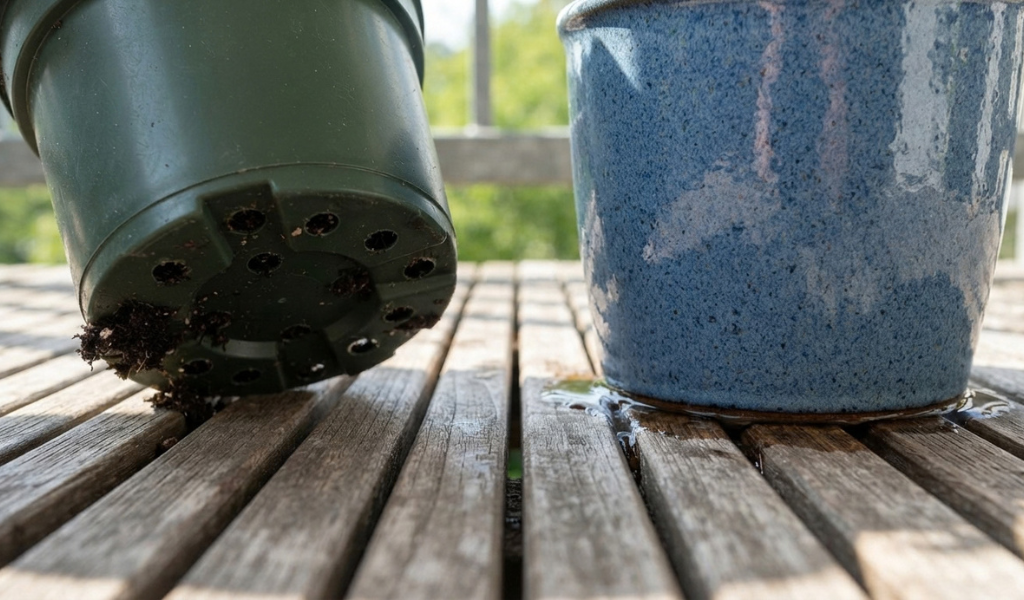 There is no single right answer here, but knowing the trade-offs helps you pick the best container for your specific setup and how much attention you can realistically give it.
Soil and Sunlight: The Two Things You Can’t Skip
Regular garden soil is not built for pots. It compacts quickly, holds too much water, and starves roots of oxygen once it settles. Potting soil is designed differently, using a lighter growing medium that usually includes peat moss, perlite, and compost to keep things airy. This one swap alone solves a huge number of problems that new container gardeners run into. Sunlight is the other non-negotiable. Most vegetable plants, especially tomatoes, peppers, and cucumbers, need six to eight hours of direct sun to produce well. Leafy greens like lettuce and spinach are a bit more tolerant of shade, which makes them ideal if your space only gets partial sun.
A Quick Story About Getting Sunlight Wrong
A friend of mine set up her first container vegetable garden on a patio that looked bright all day. Turns out, a large tree canopy shifted shade over her pots by early afternoon, and her peppers barely grew all summer. Once she moved the containers just eight feet to the left, into a spot with full afternoon sun, the same plants doubled in size within weeks. The lesson here is simple: watch your space for a full day before committing your pots to one spot, because sunlight patterns can be trickier than they first appear.
Watering Container Vegetables Without Overdoing It
Pots dry out more quickly than garden beds, which surprises a lot of beginners. On hot days, a small container might need water once or even twice, especially if it sits in full sun. The simplest test is sticking a finger about an inch into the soil. If it feels dry, water it. If it still feels damp, wait. Overwatering is just as harmful as underwatering, since soggy soil suffocates roots and invites rot. Self-watering containers, which use a small reservoir to wick moisture upward, have become popular for gardeners who cannot check on their plants daily.
Feeding Your Plants Since Pots Run Out of Nutrients Fast
Because container plants get watered so often, nutrients wash out of the soil faster than they would in the ground. This means fertilizer is not optional if you want a strong harvest from your vegetable container garden. A balanced liquid fertilizer applied every two to three weeks usually keeps plants steady throughout the growing season. Slow-release granules mixed into the potting soil at planting time can also carry a plant a long way before it needs a boost.
Signs Your Plant Is Hungry
Yellowing leaves, especially older ones near the bottom, often signal a nitrogen shortage. Slow growth, pale color, and fewer flowers are other common signs that your container vegetable garden needs a feeding. Catching these signs early and adjusting your fertilizer schedule can save a plant that might otherwise stall out for the rest of the season.
Sunlight Requirements for Thriving Container Vegetables
It is worth repeating because so many container gardens underperform simply due to poor light. Fruiting vegetables like tomatoes, peppers, cucumbers, and eggplant need close to full sun to set fruit properly. Leafy greens and herbs can get by with four to six hours and still perform reasonably well. One advantage of growing vegetables in containers is mobility. If a spot is not working, you can move the pot, something a traditional in-ground garden never allows.
Small Space Solutions: Vertical and Balcony Gardening
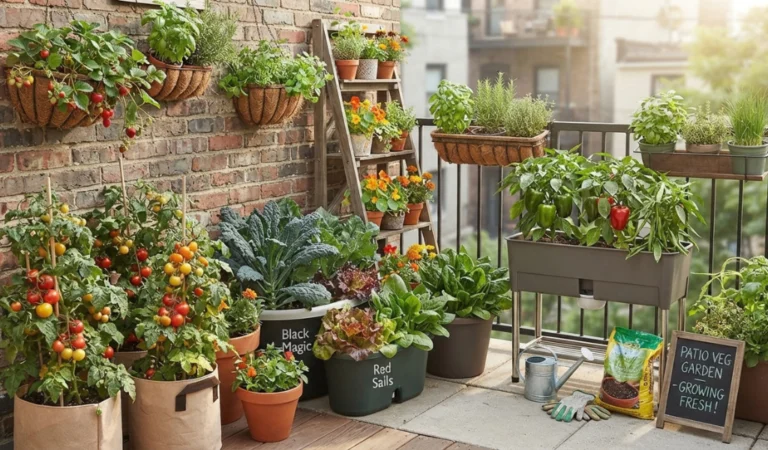
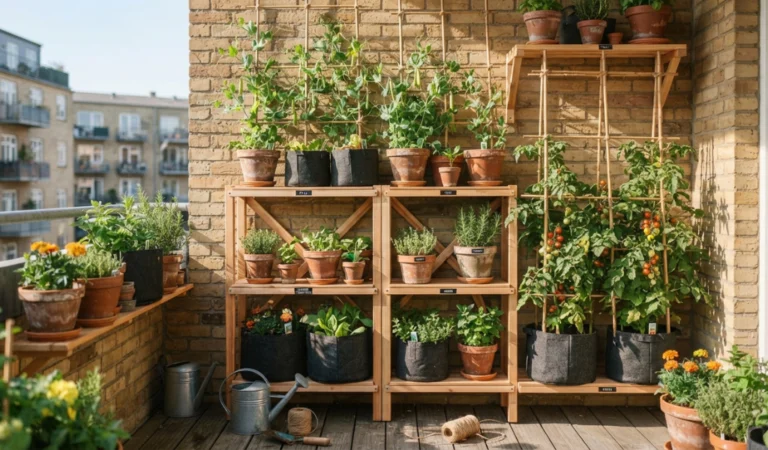
A small garden or a narrow balcony does not have to limit what you grow. Vertical gardening solves the space problem by letting plants grow up instead of out. A simple trellis works wonders for cucumbers, pole beans, and even some smaller melon varieties, keeping vines off the ground and improving airflow around the leaves. Hanging baskets are another smart trick, especially for strawberries or trailing herbs, since they use overhead space that would otherwise go to waste. 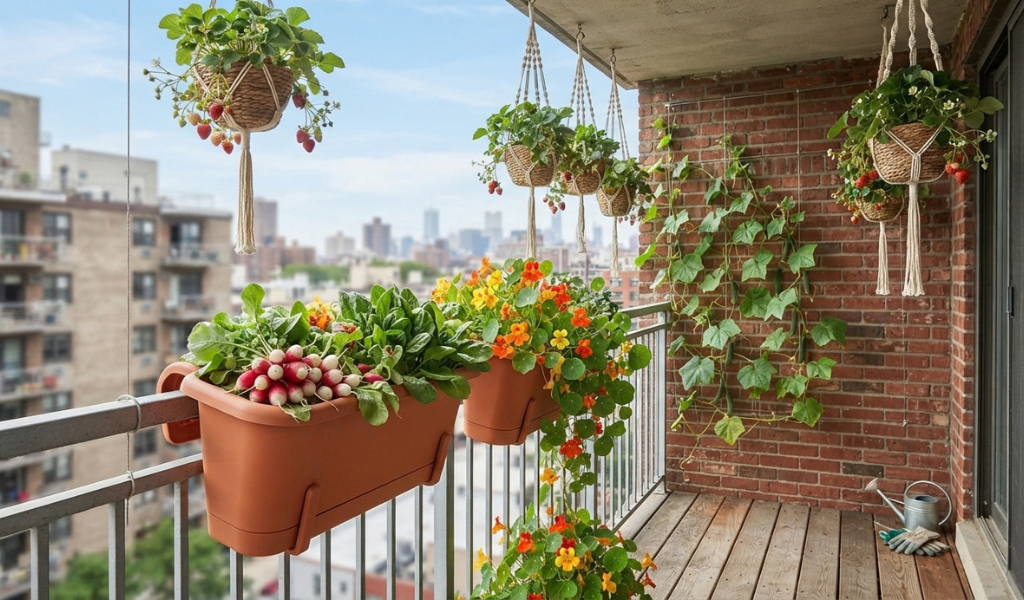 Railing planters can turn a plain balcony railing into a working vegetable container garden without taking up any floor space at all. This approach to small space vegetable gardening has made container gardening realistic even for people in apartments with barely any outdoor room to spare.
Common Mistakes to Avoid With Potted Vegetables
Overcrowding is probably the most common mistake, since it is tempting to squeeze in one more seedling than the pot can actually support. Crowded plants compete for water, nutrients, and light, and the result is usually a weaker harvest across the board. Choosing a container that is too small is another frequent issue, particularly with tomatoes and peppers that need real root space to thrive. Skipping drainage holes, as mentioned earlier, is a mistake that can quietly kill a plant over several weeks. Forgetting to fertilize is another quiet failure point, since container plants burn through nutrients faster than in-ground vegetables. Finally, ignoring seasonal shifts, like intense midday heat in peak summer, can scorch plants that were doing fine just weeks earlier.
Harvesting Tips to Maximize Your Container Garden Yield
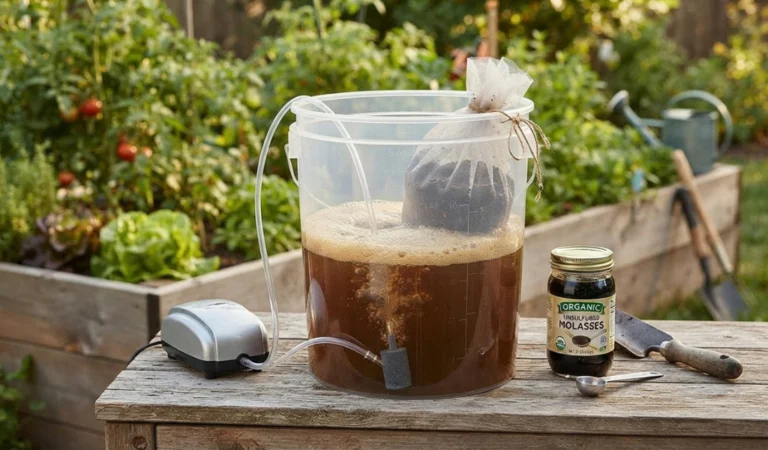
Picking vegetables regularly actually encourages many plants to keep producing more. Cherry tomatoes, beans, and cucumbers especially respond well to frequent harvesting, almost like the plant is being told to keep working. Letting vegetables sit too long on the vine can signal the plant to slow down, so do not be shy about harvesting a bit early. Morning tends to be the best time to pick, since vegetables are crisp and full of moisture before the heat of the day sets in. A steady harvesting rhythm is one of the simplest ways to get more out of the same container vegetable garden all season long, just as using compost tea at home can be another simple part of a regular garden-care routine.
Seasonal Considerations for Container Vegetables
Container vegetables react to seasonal changes faster than in-ground plants because there is less soil buffering them from temperature swings. In early spring, cool season crops like lettuce, spinach, and kale handle light frost reasonably well and can go outside earlier than warm season vegetables. Once summer heat arrives, tomatoes, peppers, and cucumbers take over as the stars of the container vegetable garden. As fall approaches, moving pots closer to a wall or indoors on cold nights can stretch the growing season by several extra weeks. Because pots can be relocated, gardeners growing vegetables in containers have an advantage that a fixed in-ground bed simply cannot offer.
Final Thoughts
Growing your own food does not require a big yard, expensive equipment, or years of practice. Easy to grow veggies in pots have proven, over and over, that a few containers, some potting soil, and consistent care are enough to produce a genuinely satisfying harvest. Whether you have a wide patio or a narrow balcony, start small with something forgiving like cherry tomatoes, lettuce, or basil, and build confidence from there. Once you see your first vegetable container garden produce something you can actually eat, it becomes hard to imagine going back to buying everything from the store. Grab a pot, some soil, and a seedling this weekend, and give container gardening a real try.
Frequently Asked Questions
What vegetable plants are easiest to grow in pots?
Cherry tomatoes, lettuce, spinach, kale, peppers, and radishes are widely considered the easiest to grow veggies in pots, since they tolerate container life well and do not demand advanced skills.
What vegetables grow in 2 weeks?
Nothing reaches full maturity in two weeks, but radish sprouts and microgreens like arugula or mustard greens can be ready to snip for salads within that timeframe.
What are the 10 easiest vegetables to grow?
Cherry tomatoes, lettuce, spinach, kale, radishes, peppers, swiss chard, green beans, cucumbers, and herbs like basil and parsley all rank among the easiest vegetables for a beginner’s container vegetable garden.
How big should your pot be?
As a rule of thumb, use at least a 5-gallon container for tomatoes, peppers, and eggplant, while smaller 1 to 2-gallon pots work fine for lettuce, spinach, and most herbs.
What plants are good for pots all year round?
Herbs like chives and parsley, along with hardy leafy greens such as kale, can often survive in pots across multiple seasons in milder climates, especially if moved to a sheltered spot during extreme weather.
What kind of soil is best for container vegetable gardening?
A lightweight potting soil blended for vegetables, containing peat moss, perlite, and compost, works far better than regular garden soil, which tends to compact and drain poorly in containers.
How large should the drainage holes be?
Several holes around a quarter inch to half an inch wide, spread across the base of the pot, are enough to let excess water escape without washing away too much soil.
What type of pot should I use for container gardening?
Grow bags and plastic pots are excellent choices for beginners because they retain moisture well and stay lightweight, while clay pots offer good looks but require more frequent watering to keep easy to grow veggies in pots happy throughout the season.