Root Knot Nematode Tomato: Best Nematicide and Natural Remedies
Root Knot Nematode Tomato Problems: What Every Grower Needs to Know
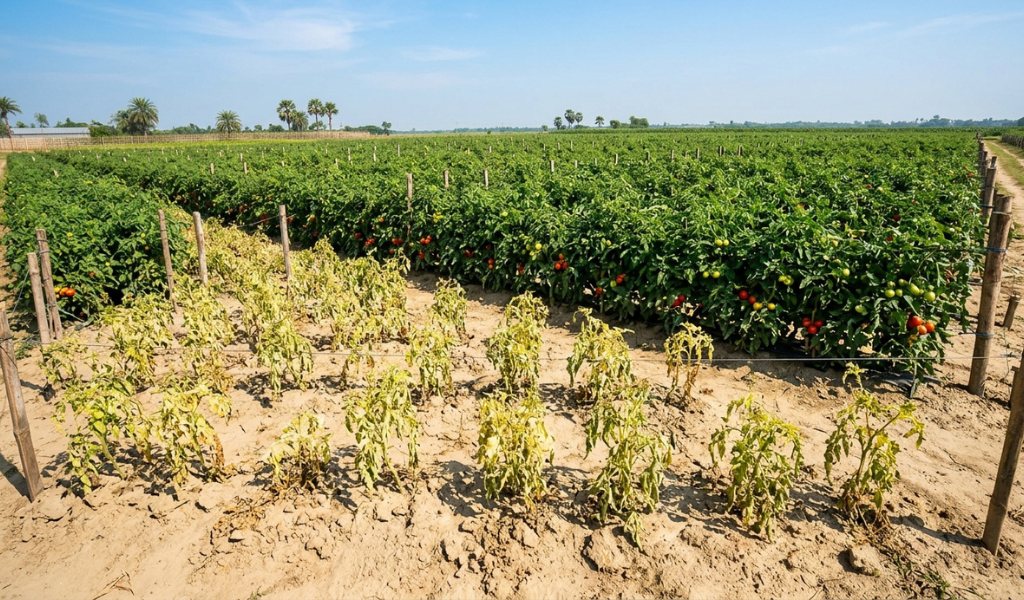
A root knot nematode tomato infestation can turn a promising crop into a weak and wilting patch within a single growing season. Many growers blame poor weather or a lack of food when their plants fall behind. They add compost, mix homemade fertilizer for tomatoes, and water more often, yet the plants keep struggling. The real cause is often hidden below the soil line, where a tiny nematode feeds on the root system.
The root-knot nematode is a microscopic worm that lives in the soil and attacks plant roots. It targets tomato more than almost any other vegetable crop. Once a root knot nematode tomato problem starts, nematode populations grow fast in warm weather, especially in sandy soil.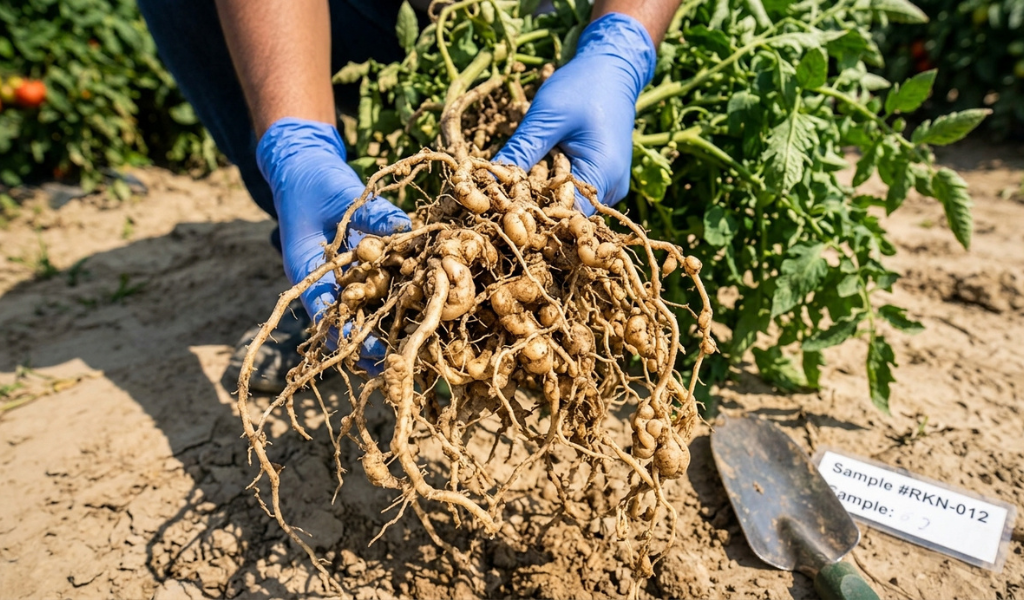 Each female lays hundreds of eggs, and the next group of juveniles looks for fresh roots right away.
This guide explains how the nematode in tomato plants lives, how to spot root-knot nematode symptoms early, and how to protect your crop. You will also learn how nematicide products, resistant varieties, and crop rotation fit into a sound pest management plan. Whether you grow a few plants in a backyard bed or several rows on a farm, the steps below will help you keep the problem under control.
What Exactly Are Root Knot Nematodes?
Root knot nematodes belong to the genus Meloidogyne. They are plant-parasitic nematodes, which means they feed on living plant tissue instead of dead matter. Most are smaller than one millimeter, so you cannot see them without a microscope. The most common root-knot nematode species on tomato are Meloidogyne incognita, Meloidogyne javanica, and Meloidogyne arenaria. A cooler climate species called Meloidogyne hapla also shows up in some regions.
The life cycle is simple but effective. Eggs sit in a sticky mass on the root surface. After the eggs hatch, tiny juveniles move through the soil and enter the root near the tip. They use a sharp mouth part called a stylet to pierce cells and feed. The juvenile then settles in one spot, grows into an adult, and begins to produce eggs. Under warm conditions one full cycle takes about four to six weeks.
This is why a single crop can support several generations before harvest ends. The pest also attacks many other vegetable crops, including pepper, okra, carrot, and cucumber, so root knot nematode tomato trouble rarely stays limited to one bed.
Early Warning Signs of Root Knot Nematodes in Tomato Gardens
The first signs of a root knot nematode tomato problem appear on the leaves and not on the roots. That makes them easy to miss. Plants in the affected area grow slower than their neighbors even when they get the same water and food. The leaves turn pale yellow and may droop during the hottest hours of the day. They often recover at night, which leads many growers to think the plant only needs more water.
Look at the pattern in your bed as well. Root-knot nematode symptoms often show up in patches instead of across the whole garden. You might see a circle of weak plants beside a row of healthy ones. The patch tends to grow wider each season as nematodes spread through tools, boots, and irrigation water.
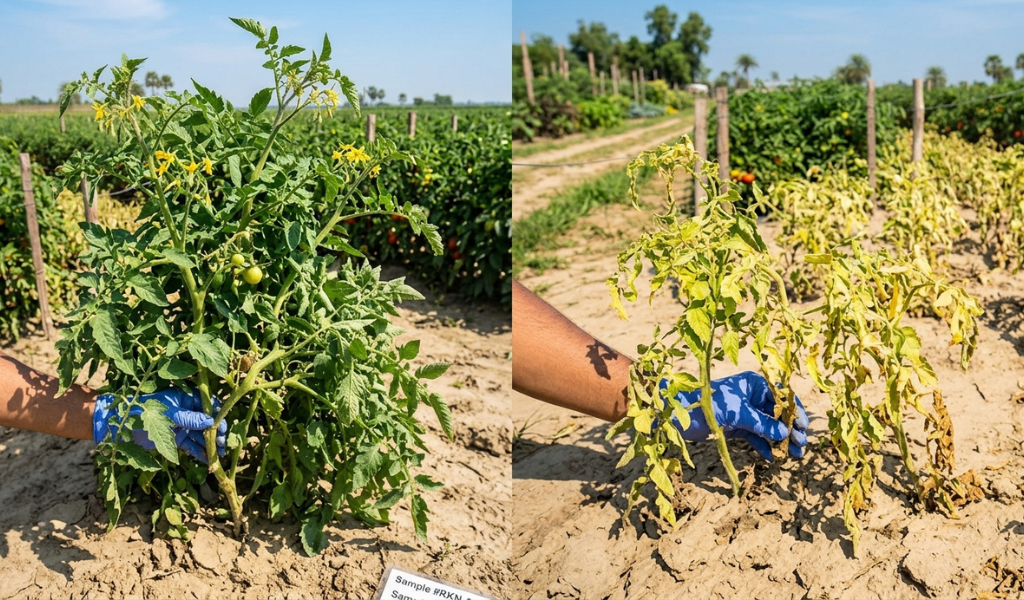 Flowering and fruit set also give clues. Infected plants produce fewer flowers and drop many of the ones they make. The tomatoes that do form stay small and ripen unevenly. If you see these signs together, dig up one plant and check the roots before you spend money on more fertilizer. A quick look can save an entire growing season.
How Root Knot Nematodes Affect Tomato Roots, Growth, and Fruit Production
A healthy tomato root system works like a pipe network. It pulls in water and nutrient from the soil and sends them up to the leaves and fruit. Root knot nematode tomato infections damage that network from the inside, and the effects show up in several ways.
Root Galls and Swollen Roots
The most direct damage comes from gall formation. When a juvenile settles inside the root, it releases substances that change nearby cells into large feeding cells. The root swells around them and forms a knot. Galls can be tiny beads on young roots or thick lumps as big as a marble on older ones. Heavily infected tomato roots often look twisted, short, and bushy because the plant keeps sending out new roots to replace the damaged ones.
Inside a gall the normal flow of water and nutrient is blocked. The plant also spends a large share of its energy feeding the nematode instead of building fruit. Studies in warm regions report yield loss from about 20 percent in light cases to over 50 percent in severe infestation. Damaged roots also let soil-borne disease in, and the Fusarium fungus is a common partner that makes wilt much worse.
Stunted Growth and Persistent Leaf Wilting
Above ground the plant pays the price. With less uptake from the roots, tomato plants stunt and stay small even in good weather. Leaves turn yellow from the bottom up and may curl or look dull. The plant wilts easily on sunny afternoons because the damaged roots cannot keep up with water loss through the leaves. Watering more does not fix this and can even cause root rot on top of the nematode problem.
Over time the plant makes fewer flowers and the fruit stays small and low in quality. In a young planting root knot nematode tomato stress can collapse the whole crop before the first harvest. In older plantings the decline is slower, but the final yield is still much lower than it should be.
Main Causes of Root Knot Nematode Problems in Tomato Soil
Root-knot nematodes do not appear out of nowhere. Most root knot nematode tomato problems begin with a handful of nematodes already living in the soil. Infested transplants are one of the biggest sources. A seedling grown in contaminated potting mix or a nursery bed can carry eggs and juveniles into a clean garden. Soil stuck on tools, wheelbarrows, and boots can do the same thing.
Warm weather and light soil make the problem worse. Sandy soil drains fast and allows the nematode to move easily between root zones. High soil temperatures between 65 and 85 degrees Fahrenheit speed up egg hatching and shorten the life cycle. This is why the pest is a bigger issue in southern states, greenhouses, and tropical farms.
Farming practices also play a role. Growing tomato or another host crop in the same spot year after year lets nematode populations build with no break. Weeds like pigweed and nutsedge keep feeding the pest even when no crop is planted. Low organic matter and poor soil health reduce the natural enemies that would otherwise keep numbers down. Finally, leaving old infected roots in the ground after harvest gives the next generation a ready inoculum for the following season.
Identifying Root Knot Nematode Damage Before Tomato Plants Decline
Early identification of a root knot nematode tomato issue gives you the best chance to protect the crop. Waiting until plants collapse leaves very few options. A simple root check and a basic comparison with other problems can confirm the cause.
Checking Roots for Knots and Abnormal Swelling
Carefully dig up a weak plant with a garden fork so you do not break the roots. Shake off the loose soil and rinse the roots with water. Healthy tomato roots are pale and fairly smooth with fine branches. Roots hit by root knot nematode tomato attack show swollen knots along the main and side roots. These galls are part of the root itself and will not rub off.
Check two or three plants from different parts of the bed. Compare them with a healthy plant at the edge. For a firm answer send a soil and root sample to a lab or ask a local extension agent for help. The lab can count nematodes and name the species, which matters when you choose resistant varieties or a nematicide.
Recognizing Nematode Damage vs. Nutrient Deficiencies
Yellow leaves and slow growth can come from many causes, so it helps to know the difference. A nutrient deficiency usually affects the whole bed in a similar way. A nitrogen shortage gives even yellowing of the older leaves, and the roots still look normal. Nematode damage tends to show in patches and comes with knotted roots.
Be careful with the nodules on legume roots as well. Those small bumps hold helpful bacteria and come off easily. A gall from a nematode in tomato roots stays firm and cannot be rubbed off. Wilt caused by Fusarium or bacterial disease also looks similar, but the stem inside often shows brown streaks and the roots lack galls. When symptoms overlap, a lab test is the best way to avoid guessing.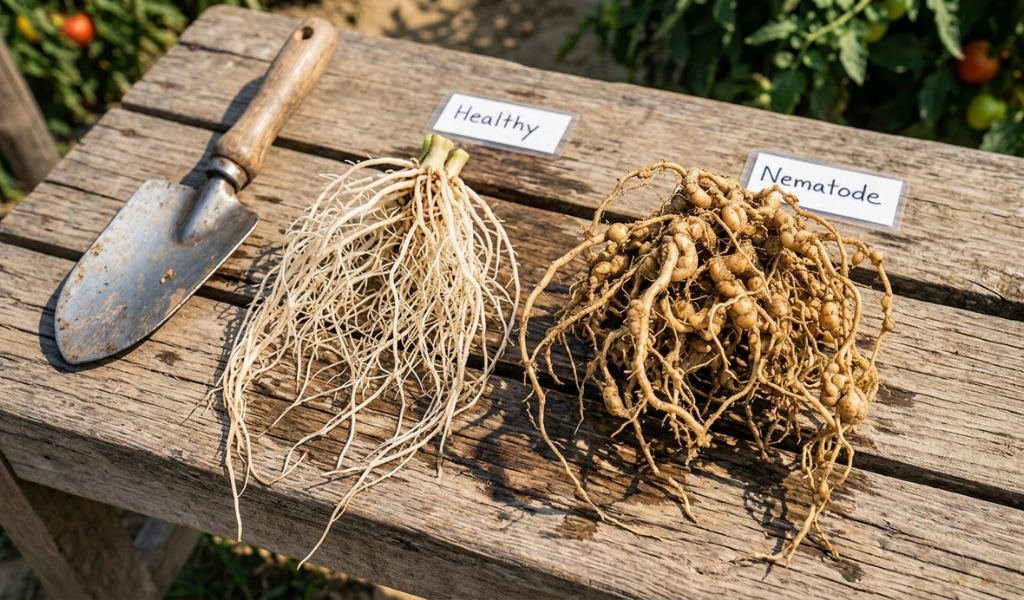
Effective Ways to Get Rid of Root Knot Nematodes in Tomato Soil
Root knot nematode tomato control needs more than one tool. No single method removes every nematode from the soil, so the best results come from combining several steps in an integrated pest management plan. The goal is to reduce nematode numbers below the level that harms the crop and not to wipe them out.
Chemical options exist but need care. Several nematicide products are registered for vegetable crops, and oxamyl is one example used in some regions. Methyl bromide was once the standard pre-plant fumigant, but it has been phased out in most places because of its harm to the environment. Many chemical pesticides carry strict rules about dose, timing, and protective gear, and repeated applications can lead to weaker results over time. Always read the label and ask a local extension agent which product is legal and suitable for your area. Home gardeners usually get better value from the non-chemical methods below.
Organic Soil Treatments and Natural Controls
Organic soil treatments work slowly but build soil health at the same time. Soil solarization is one of the best known. Till the bed, wet it well, and cover it with clear plastic for six to eight weeks in the hottest part of summer. The heat can reduce root knot nematode tomato populations in the top layer of soil, though deeper layers may stay infested.
Adding neem cake or neem meal to the soil is another popular step. Neem has shown nematicidal activity in several trials, and it also feeds the soil as it breaks down. Biological control products that contain fungi such as Purpureocillium lilacinum or bacteria such as Pasteuria penetrans can attack nematode eggs and juveniles. Results vary by soil and temperature, so treat them as a helper and not a cure. Marigolds, especially French types, release compounds that harm the nematode when grown as a dense cover for a full season. A few flowers beside your tomato plants will not do much.
Smart Gardening Practices to Protect Tomatoes From Root Knot Nematodes
Prevention costs far less than cure. A few smart habits can keep root knot nematode tomato trouble from taking hold or returning.
Resistant Tomato Varieties and Crop Rotation
Resistant varieties are the first line of defense against root knot nematode tomato damage. Look for the letter N on the seed packet or plant tag, which marks nematode resistance. Many popular tomato types carry the Mi gene that blocks common root-knot nematode species. The gene loses strength when soil temperatures rise above about 82 degrees Fahrenheit, and some nematode populations have overcome it, so resistance is helpful but not perfect. Grafting a favorite variety onto resistant rootstock is another strong option.
Crop rotation breaks the nematode life cycle by removing its food. Avoid planting tomato, pepper, eggplant, okra, or carrot in the same bed for two or more years. Rotate to grasses, corn, or small grains instead. A fallow period with clean tillage can also lower nematode populations, as long as weeds are kept out.
Soil Improvement and Garden Hygiene
Healthy soil supports natural enemies of the nematode. Add compost or other organic matter each season to raise microbial activity and improve water holding, especially in sandy soil. Balanced feeding also matters. Homemade fertilizer for tomatoes, such as compost tea or well rotted manure, can help plants tolerate some root damage, but it will not remove the nematodes themselves.
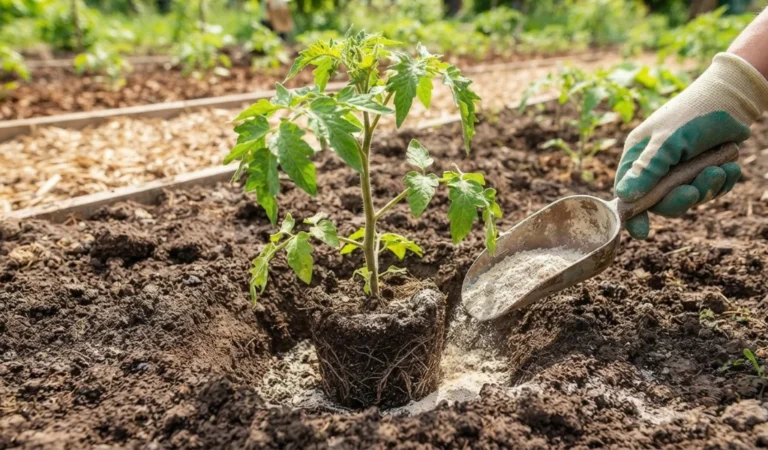
Hygiene keeps the problem from spreading. Buy certified clean transplants and use fresh potting mix for seedlings. Clean tools, boots, and wheelbarrows after working in an infested bed. At the end of the season pull out the whole root system and dispose of it away from the garden. Do not add galled roots to a cool compost pile because the eggs can survive.
Natural Soil Management Methods for Long-Term Nematode Control
Long-term control depends on how you manage the soil over many seasons. Sustainable farming focuses on lowering the nematode problem slowly while keeping the soil alive. A practical plan starts with a yearly rotation that includes at least one non-host crop. Cover crops like sorghum-sudangrass, certain mustards, and sunn hemp can be grown and then turned under as green residue. As the plant material breaks down it feeds soil life and may release compounds that harm nematode eggs.
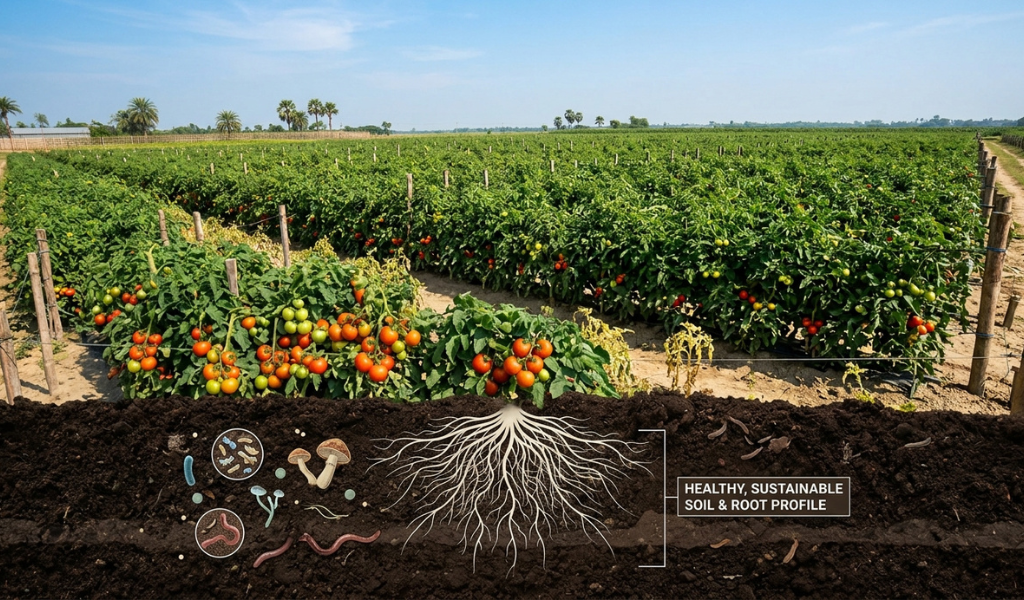 Keep irrigation steady since drought stress makes damaged roots suffer even more. Mulch helps hold moisture and lowers soil temperature, which can slow nematode activity a little. Test your soil every year or two to track nematode populations and adjust your plan. Growers who track results usually find that numbers fall after two or three seasons of steady effort. Good crop protection is a habit and not a single event, and the reward is a stronger root knot nematode tomato crop with less need for chemical pesticides.
Final Thoughts
Root knot nematode tomato problems are hard to see but manageable once you understand them. Watch for patchy growth, yellow leaves, and wilt, then check the roots for galls before you decide on a fix. Choose resistant varieties, rotate your crops, and build healthy soil with organic matter. Use solarization, neem, or biological products as part of a wider plan, and keep any nematicide as a careful last step guided by your local extension agent.
Start today by digging up one weak plant and looking at its roots. That small step could save your next crop. Share this guide with another grower and keep it handy for your next planting.
Frequently Asked Questions
Do root-knot nematodes affect fruit trees?
Yes. Many fruit trees and vines can host root-knot nematodes, including peach, fig, grape, and citrus in some areas. The damage shows as weak growth, small leaves, and galled roots. Resistant rootstocks are the best protection for orchards.
How to get rid of bad nematodes?
You cannot remove every nematode but you can reduce their numbers. Combine crop rotation, resistant varieties, solarization, organic matter, and clean planting stock. Use a nematicide only when needed and follow the label rules.
What are the effects of nematodes on tomatoes?
Nematodes cause root galls, stunted growth, wilt, fewer flowers, and smaller fruit. Yield can drop by 20 to 50 percent or more in heavy infestation. The weak roots also let fungus such as Fusarium enter the plant.
Are onions affected by root-knot nematodes?
Onions are usually less affected than tomato by the common warm climate species, which is why they work well in rotation. Some species such as Meloidogyne hapla can still harm onions in cooler regions. Check with your extension agent for your area.
Will root knot nematode tomatoes recover?
Light infections may recover with steady water, good feeding, and fewer nematodes in the soil. Plants with heavy galling and severe wilt rarely recover fully. Early action gives the best chance.
Is root knot nematode tomato blight?
No. Blight is a fungal or fungus-like disease that causes spots and lesions on leaves, stems, and fruit. Root knot nematode tomato damage starts in the roots and causes galls, though the wilting can look similar. Both problems can also occur together.
What causes root knot nematodes?
Nematodes enter a garden through infested transplants, contaminated soil, tools, and water. They multiply in warm and sandy soil when host crops and weeds are available year after year. Poor soil health also helps them thrive.
Should root knot nematode tomatoes be removed?
If plants are badly galled, wilted, and not producing, remove them. Pull the full root system and discard it away from the garden. Lightly infected plants can stay until harvest ends, but their roots should still be removed at season end.