Homemade Fertilizer for Tomatoes: Best Liquid and Natural Recipes
Homemade Fertilizer for Tomatoes: Natural Ways to Boost Growth
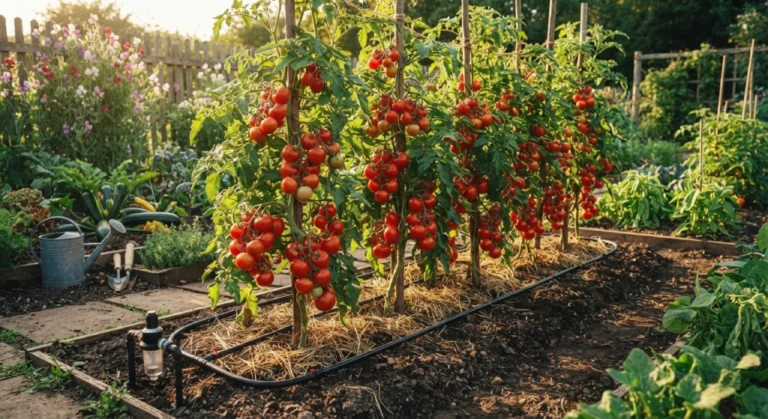
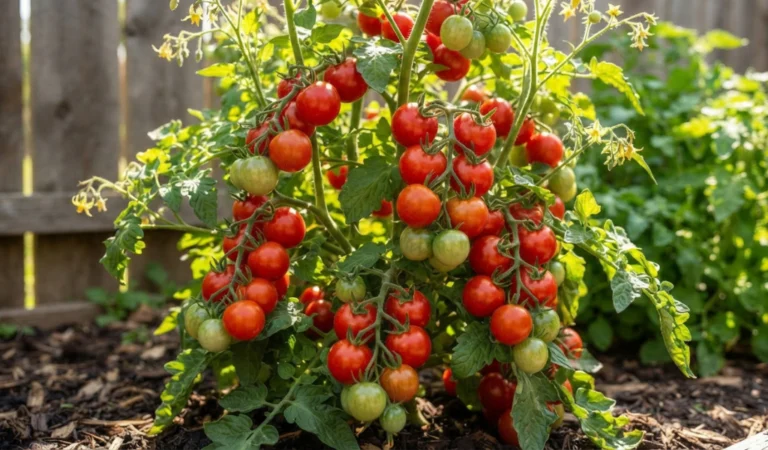
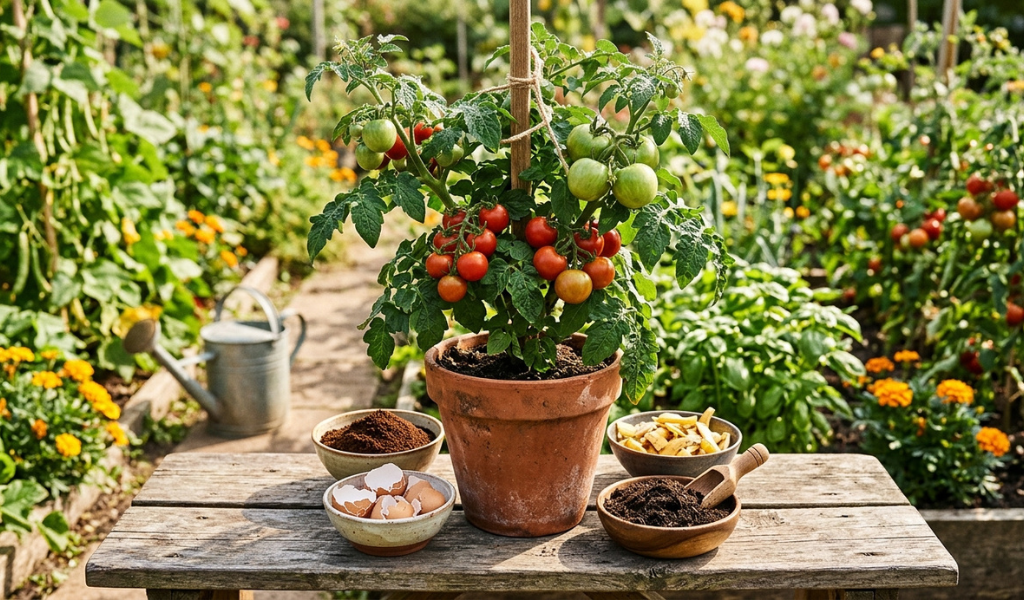
Homemade fertilizer for tomatoes is one of the easiest ways to grow stronger plants without spending much money. Most kitchens already produce the raw material. Banana peels, coffee grounds, eggshells and vegetable scraps all carry nutrients that a tomato plant can use. When these items are turned into compost or a simple liquid fertilizer, they become an eco-friendly way to feed the plant and improve the soil at the same time.
Tomatoes are heavy feeders. They pull a lot of nitrogen, potassium, phosphorus and calcium out of the ground in one season. If the soil runs low, the plant shows it with pale leaves, few flowers and small fruit. Many gardeners look for the best fertilizer for tomatoes plants on store shelves, but a well-made natural fertilizer can do the same job in many gardens. It also adds organic matter, which helps the soil hold water and air.
 This guide explains how to make fertilizer at home from common scraps. It covers natural recipes for each growth stage, safe ways to apply them and the mistakes that can hurt a tomato plant. Each method is simple, low cost and easy to repeat throughout the growing season.
Benefits of Using Homemade Fertilizer for Tomatoes
Cost is the first benefit. Bagged tomato fertilizers add up over a season, while kitchen scraps cost nothing. A gardener who saves peels, shells and grounds can feed a whole bed for free.
Control is another gain. Homemade fertilizer for tomatoes lets the gardener decide exactly what goes into the soil. There are no hidden fillers and no sudden jumps in salt levels. Because the nutrients come from organic matter, they release slowly and lower the risk of burned roots.
Soil health improves too. Compost, worm castings and plant scraps feed the tiny life in the soil, and that life breaks nutrients down into a form roots can take up. Over time the ground becomes darker, looser and better at holding moisture. Waste also drops, since scraps that would go in the bin now feed the garden. That makes this natural fertilizer a practical and eco-friendly choice.
Essential Nutrients Tomato Plants Need for Healthy Growth
Nitrogen drives leafy growth and gives leaves their deep green color through chlorophyll production. Too little makes the older leaves turn yellow. Too much creates a big plant with very few flowers.
Phosphorus supports root growth, flowering and fruit development. Potassium helps with water use, fruit ripening and disease resistance. Balanced fertilizers aim to supply potassium and phosphorus in the right ratio once the plant starts to bloom.
Calcium builds strong cell walls. A shortage is the main cause of blossom end rot, which shows up as a sunken dark patch at the bottom of the fruit. Uneven watering makes the problem worse because calcium travels through the plant with water.
Magnesium and sulfur matter as well. Magnesium sits at the center of the chlorophyll molecule, so a lack of it slows photosynthesis and leaves yellow patches between the veins. Knowing what tomatoes need makes it easier to choose the right homemade fertilizer for tomatoes instead of guessing. A simple soil test before applying anything is the best first step.
Best Homemade Fertilizer for Tomatoes Using Kitchen Scraps
Kitchen waste is the easiest place to start. Scraps like peels, grounds and shells break down into nutrients that a tomato plant can use. The three options below are the most popular, and each one covers a different need.
Banana Peels for Potassium and Flower Development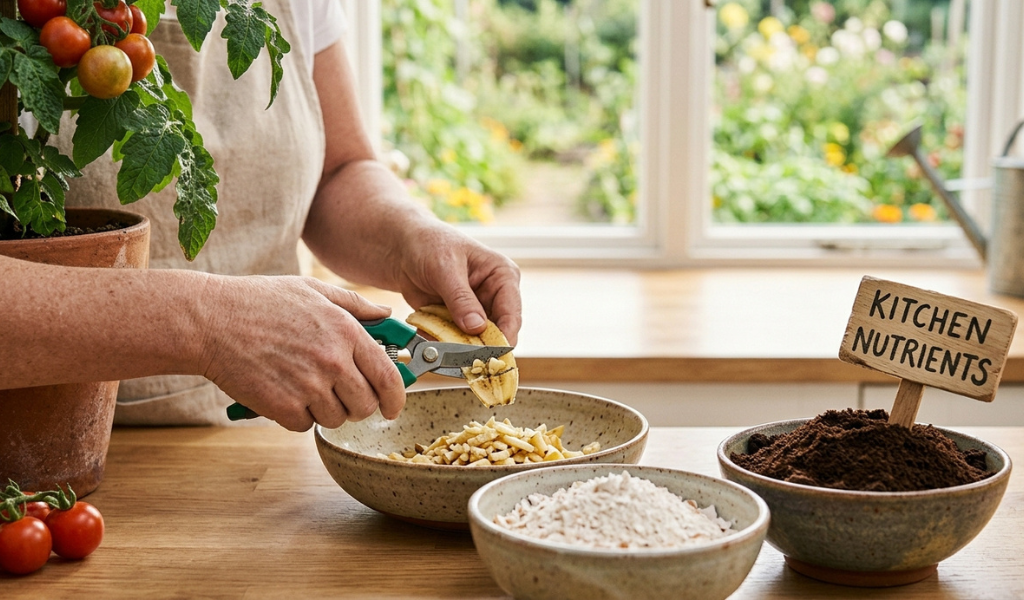
Banana peels are rich in potassium, which helps a tomato plant set flowers and then fill out its fruit. They also hold small amounts of phosphorus and magnesium. Chop the peels into small pieces and bury them a few inches deep in the soil around the plant. They break down within a few weeks and release nutrients slowly.
Another option is to dry the peels and grind them into a powder that can be mixed into the planting hole. Fresh peels left on top of the soil can attract fruit flies, so burying them is better. Banana peels will not replace a full fertilizer, but they give a useful boost during flowering.
Coffee Grounds for Nitrogen and Soil Health
Used coffee grounds contain nitrogen, and they also add organic matter that loosens heavy soil. Fresh grounds are acidic, but used grounds are close to neutral, so they rarely change the soil much. The safest method is to add them to the compost pile, where they count as a green material.
They can also be sprinkled in a thin layer and worked into the soil around the plant. A thick layer can form a crust that blocks water, so keep it light. A small handful per plant every few weeks is plenty.
Eggshells for Calcium and Stronger Tomato Plants
Eggshells are rich in calcium, the nutrient behind strong cell walls and the best defense against blossom end rot. Whole shells decay very slowly, so they need some preparation. Save your eggshells, rinse them, dry them and crush them into a fine powder. Mix one to two tablespoons of the powder into the soil at planting time.
Eggshell water is another route. Soak crushed shells in water for a day and use the liquid to water the plant. Results come slowly, so this works best as a steady supply across the season.
Compost and Organic Matter for Nutrient-Rich Tomato Soil
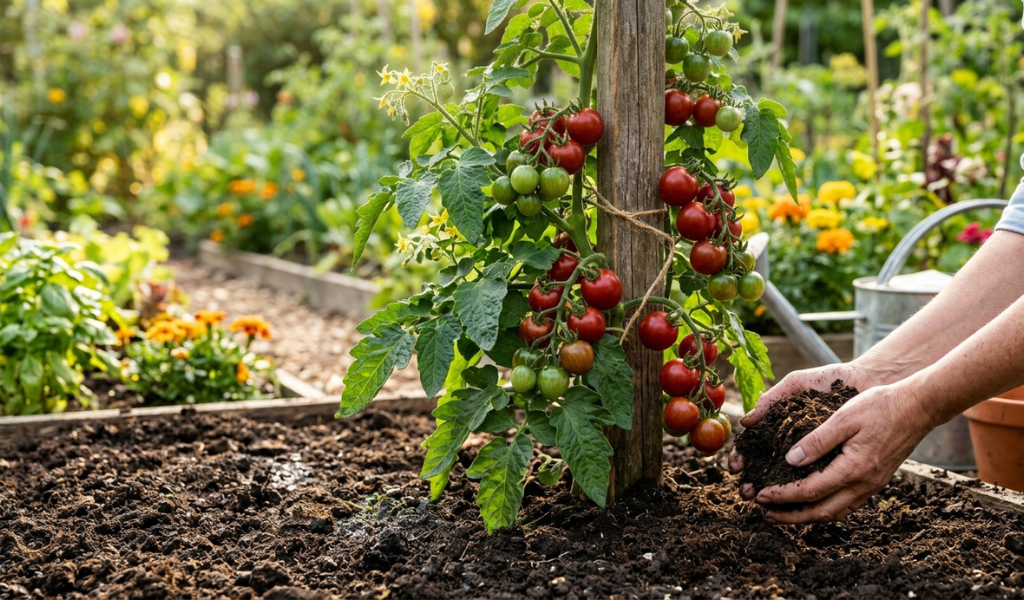
Compost is the backbone of any homemade fertilizer for tomatoes. It supplies a wide range of nutrients, improves soil structure and feeds helpful microbes. Unlike quick liquid feeds, it works over weeks and months.
Homemade Compost for Tomatoes
A good pile mixes brown and green materials. Browns include dry leaves, straw and cardboard. Greens include vegetable peelings, grass clippings and fruit scraps. A ratio of about two parts brown to one part green keeps the pile balanced.
Keep the pile damp like a wrung-out sponge and turn it every week or two so air reaches the center. In two to six months it turns dark and crumbly.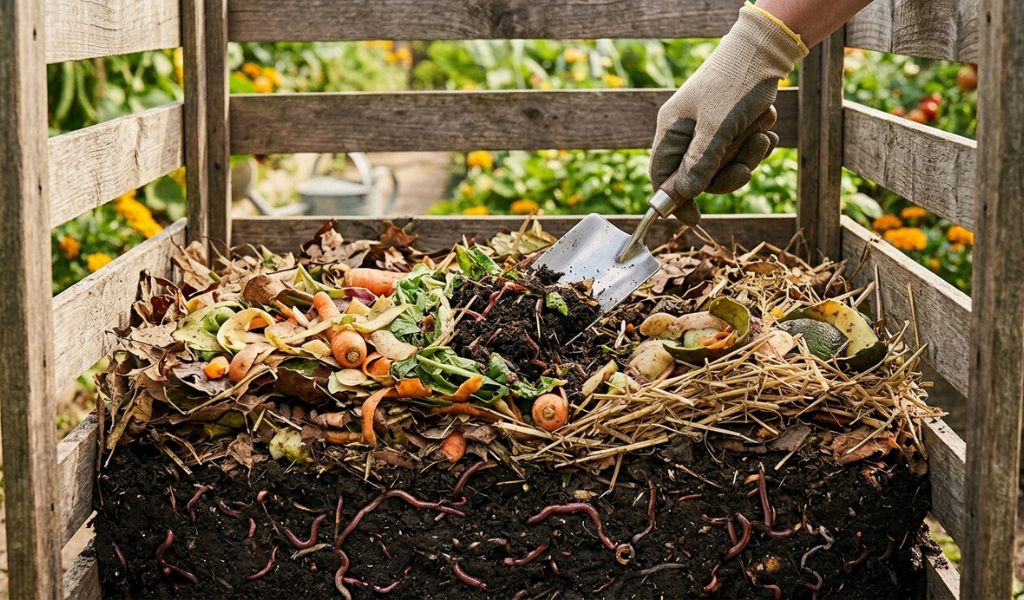 Mix a few inches into the bed before planting, or spread a layer as mulch around the base of each plant. Skip meat, dairy and pet waste because they can carry harmful pathogens. If manure is used, make sure it is fully composted first.
Worm Castings for Strong Roots and Better Growth
Worm castings are the finished product of earthworms and are among the gentlest natural fertilizer options. They hold nitrogen, potassium and phosphorus in a form that plants take up easily. They will not burn roots, so even young plants can handle them.
Put a handful in each planting hole and add a scoop around the base every month. A small worm bin in the kitchen can turn vegetable scraps into castings over a few months. Castings also help the soil hold water, which supports steady fruit production.
Liquid Homemade Fertilizer for Tomatoes
Liquid fertilizer works faster than solid scraps because the nutrients are already dissolved. It suits plants that need a quick lift, such as those with pale leaves or slow growth. Homemade fertilizer for tomatoes should always be diluted before use. Apply it to the soil rather than the leaves unless a recipe says otherwise.
Banana Peel Fertilizer Tea
Place two or three chopped banana peels in a quart jar and fill it with water. Let it sit for two days and then strain out the peels. Dilute the liquid with an equal amount of water and pour it around the base of the plant.
This tea is a mild source of potassium and works well when plants begin to flower. Use it every two weeks. Make a fresh batch each time because old tea turns smelly. The used peels can go into the compost pile. This is a simple homemade fertilizer for tomatoes that uses everyday kitchen scraps.
Compost Tea for Tomato Plants
Compost tea is made by steeping finished compost in water. Put two shovelfuls of compost in a mesh bag or an old pillowcase and hang it in a bucket of water for one to two days. Stir it now and then. The finished liquid should look like weak tea.
Use it within a day and pour it on the soil around the plant. It adds nutrients and helpful microbes. A diluted version can also be used as a foliar spray in the morning. Compost tea is gentle enough for seedlings and mature plants alike, making it another useful homemade fertilizer for tomatoes.
Homemade Fish Emulsion Fertilizer
Fish emulsion is high in nitrogen, so it suits early growth best. Place fish scraps in a lidded bucket with water, a handful of dry leaves and a spoon of molasses to speed things up. Let it ferment for several weeks and stir it once a week. The smell is strong, so keep the bucket away from the house.
Strain the liquid and dilute it at about one part to ten parts water. Apply it every two to three weeks in the early stage. Cut back once flowers appear, since extra nitrogen leads to leafy growth instead of fruit. Use this homemade fertilizer for tomatoes carefully to avoid excessive nitrogen.
Homemade Fertilizer for Tomato Plants at Different Growth Stages
Tomatoes need different nutrients as they grow. Matching the feed to the stage gives better results than using the same mix all season. Choosing the right homemade fertilizer for tomatoes at each stage helps support healthy roots, flowering, and fruit development.
Fertilizing Tomato Seedlings and Young Plants
A seedling needs very little food at first because the seed holds its own supply. Once the first true leaves appear, feed with a weak compost tea. Keep the strength low, about half of normal, since young roots are tender.
At transplanting, mix compost and a spoon of crushed eggshell into the planting hole. A light dose of diluted fish emulsion can help build a strong frame in the following weeks. Avoid heavy feeding for the first two weeks after transplant while the roots settle.
Feeding Tomatoes During Flowering and Fruiting
Once flowers open, the plant shifts its energy toward fruit. This is the time to lower nitrogen and raise potassium and phosphorus.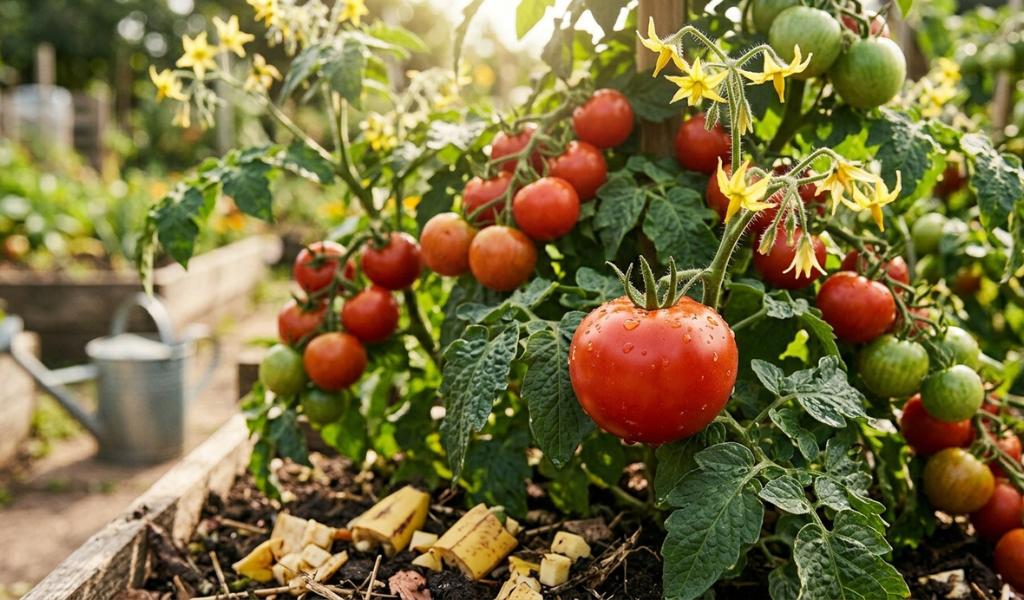
Banana peel tea and compost work well here. Diluted Epsom salt can help if the leaves show signs of low magnesium.
Feed every two weeks until fruit starts to ripen and then reduce. Keep watering even so calcium reaches the fruit and blossom end rot stays away. A layer of mulch holds moisture and adds organic matter as it breaks down.
How to Apply Homemade Fertilizer for Tomatoes Safely
Good results depend on how the feed is applied. Always dilute liquid feeds and pour them slowly around the base of the plant, not on the stem. Water the soil lightly before feeding so roots do not take up too much at once. Morning is the best time because the plant can use the nutrients during the day.
Solid materials like compost and worm castings should be worked into the top few inches of soil and watered in. For Epsom salt use one tablespoon per gallon of water, and only once or twice in a season. Foliar spray should be applied in the early morning or evening, never in strong sun.
Test a new recipe on one plant first and watch it for a week. If the leaves stay healthy the recipe can be used on the rest. A basic soil test before applying homemade fertilizer for tomatoes shows what is missing, so nothing is added blindly.
Common Homemade Fertilizer Mistakes That Can Harm Tomato Plants
The biggest mistake is too much nitrogen. Heavy use of fish emulsion or grass clippings creates tall leafy plants with very few tomatoes. Fresh manure is another problem. It can burn roots and carry harmful pathogens, so it must be composted first.
Overuse of any single item also causes trouble. Epsom salt in large amounts can upset the balance of other nutrients, and thick layers of coffee grounds can block water. Peels left on the soil surface attract pests. Feeding a dry plant is risky too, since the roots can take in too much salt at once.
Finally, patience matters. Natural fertilizer works slowly, and adding more every few days will not speed it up. A steady schedule throughout the growing season gives the best harvest.
Final Thoughts
Homemade fertilizer for tomatoes is simple, cheap and kind to the soil. Kitchen scraps, compost and a few liquid recipes can supply the essential nutrients that a tomato plant needs from seedling to harvest. The key is to match the feed to the growth stage and to avoid overuse.
Start with one or two methods from this guide. Add compost at planting, try banana peel tea at flowering and watch how the plants respond. Small steps build healthier soil and better fruit each year. Pick a recipe today and give your tomato plants a natural way to feed.
Frequently Asked Questions
How to make tomato plants grow faster?
Give the plant six to eight hours of sun, steady water and rich soil. Feed with compost at planting and a mild liquid fertilizer every two weeks. Warm soil also speeds growth, so plant after the cold has passed. Remove extra suckers so the plant puts energy into fruit.
Can yeast be used in the garden?
Yes, but mostly in compost. A little yeast can speed up the breakdown of organic matter in the pile. Yeast is not a true fertilizer, and the proof for using it directly on tomato plants is limited. Compost and natural teas are more reliable.
What is poor man’s fertilizer?
It usually means free or very cheap materials like compost, grass clippings, leaf mold, coffee grounds and kitchen scraps. These items feed the soil without any cost. For many home gardens, this is enough to grow healthy tomatoes.
Is baking soda good for tomato plants?
Baking soda is not a fertilizer because it has no useful nutrients. Some gardeners spray a weak mix to fight fungus, but the evidence is thin. The sodium can build up in soil and harm roots, so it is best avoided as a feed.
What fertilizer do I use for tomatoes?
Start with compost or a balanced feed during early growth. Once flowers appear, switch to a fertilizer lower in nitrogen and higher in potassium and phosphorus. Homemade options like banana peel tea and compost tea fit both stages well.
How to fertilize tomato plants naturally?
Mix compost into the planting hole and add a layer around the base every month. Use compost tea or banana peel tea every two weeks. Add crushed eggshells for calcium and cover the soil with mulch to hold moisture and feed the plant slowly.
Is Epsom salt good fertilizer for tomatoes?
Only when the soil is low in magnesium. Signs include yellowing between the leaf veins. Dissolve one tablespoon in a gallon of water and apply once or twice in a season. If magnesium is already enough, extra Epsom salt gives no benefit.