Growing Tomatoes Watering Guide: How to Water Your Plants for the Best Harvest
Growing Tomatoes Watering Tips for Better Fruit Production
If your tomato plants keep dropping flowers, cracking fruit, or looking wilted no matter how much you care for them, the problem is almost always watering. Growing tomatoes watering the right way is one of the biggest factors that separates a backyard gardener with a few sad, small tomatoes from one with baskets full of ripe, juicy fruit every summer. It sounds simple, just add water, but tomatoes are surprisingly picky about how much, how often, and even what time of day they get it.
This guide covers everything you need to know about watering tomato plants at every stage, from tiny seedlings to fully loaded vines. If you are also curious about smaller varieties, our guide on Growing Grape Tomatoes: Complete Guide From Seed to Harvest covers the same watering principles with a few extra tips specific to grape and cherry types. For now, let’s focus on getting your watering routine right, since that one habit will do more for your harvest than almost anything else you do in the garden.
Why Proper Watering Matters for Tomato Plants
Water is not just something tomatoes need to survive, it plays a direct role in how well the plant grows, flowers, and produces fruit. Get the watering wrong and you will see the effects show up in the leaves, the flowers, and eventually the tomatoes themselves.
How water supports tomato growth
Tomato plants are made up of mostly water, and every part of the plant depends on a steady supply to function properly. Water carries nutrients from the soil up through the roots and into the stems, leaves, and fruit.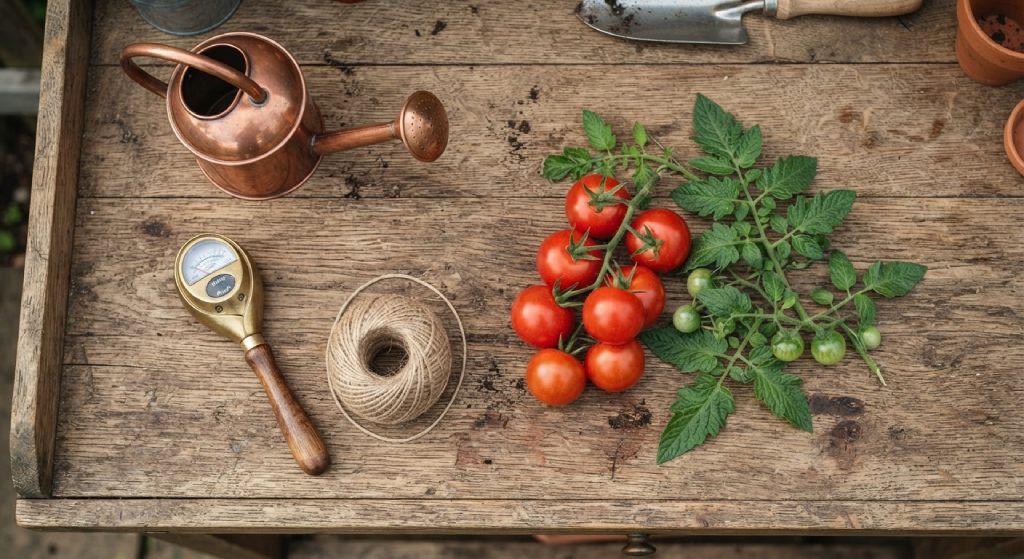 It also helps regulate the plant’s temperature, especially during hot summer days, and keeps the cells inside the plant firm, which is why a well-watered tomato plant stands upright while a thirsty one droops and wilts.
Beyond just keeping the plant alive, consistent water supply directly affects fruit development. Tomatoes need steady moisture to swell properly and develop that juicy texture people love. Without enough water, fruit stays small and can taste bitter or bland, since the plant is focused on survival rather than producing quality fruit.
Effects of inconsistent watering
This is where most home gardeners run into trouble. Tomato plants do not handle inconsistent watering well, and the effects show up fast. One of the most common problems is blossom end rot, which shows up as a dark, sunken spot on the bottom of the fruit. While this is technically a calcium issue, it is almost always triggered by irregular watering, since inconsistent moisture prevents the plant from absorbing calcium properly even when there is enough in the soil.
Cracked or split tomatoes are another classic sign of inconsistent watering. This usually happens when a dry spell is followed by a sudden heavy watering or rainstorm. The fruit absorbs water too quickly, the skin cannot stretch fast enough, and it splits open. Keeping watering steady and predictable avoids this problem almost entirely.
How Often Should You Water Tomato Plants?
There is no single answer that works for every garden, since watering frequency depends on your soil type, climate, and the size of your plants. That said, a good general rule is to water tomato plants deeply about two to three times per week rather than giving them a little water every single day.
Deep, less frequent watering encourages roots to grow downward in search of moisture, which builds a stronger, more drought-resistant plant. Light daily watering, on the other hand, keeps roots shallow since they never need to search for water, which makes the plant more vulnerable during hot spells or if you miss a watering day.
During particularly hot or dry weeks, you may need to water more often, sometimes every other day, especially for plants in containers, which dry out faster than those in garden beds. The best way to know for sure is to check the soil about two inches down. If it feels dry at that depth, it is time to water. If it still feels slightly moist, you can usually wait another day.
How Much Water Do Tomato Plants Need
On average, a mature tomato plant needs about one to two inches of water per week, which translates to roughly one to two gallons per plant depending on size and weather conditions. This number goes up during hot, dry stretches and can be slightly lower during cooler or rainy periods.
Rather than guessing, many experienced gardeners use a simple trick: stick a finger or a small trowel a couple inches into the soil near the base of the plant. If it feels dry, water thoroughly until you see moisture reaching several inches down. Shallow watering that only wets the top layer of soil does more harm than good, since it encourages roots to stay near the surface instead of growing deep and strong.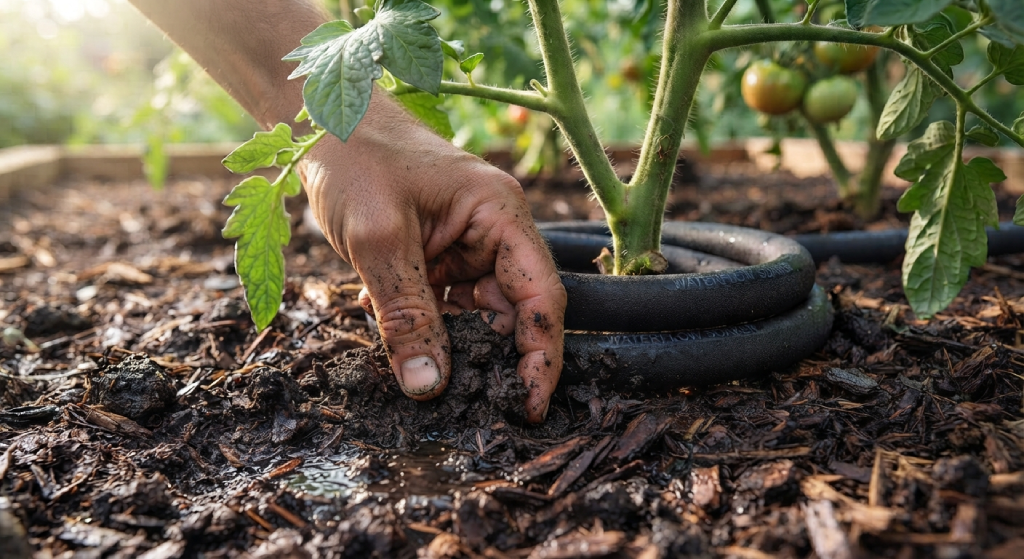
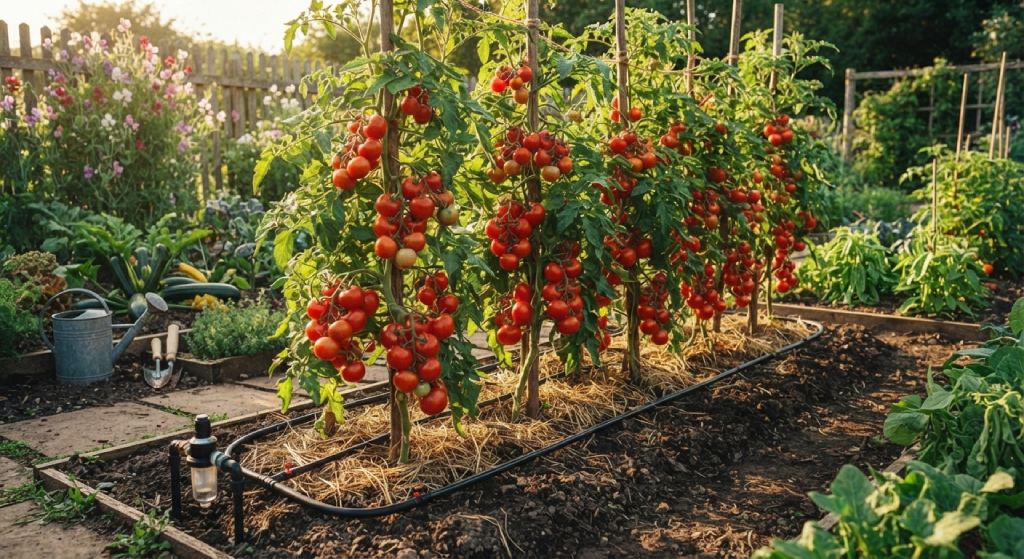
A drip irrigation system or soaker hose makes this much easier to manage consistently, since it delivers a slow, steady amount of water directly to the root zone without the guesswork of hand watering.
Best Time of Day to Water Tomatoes
Timing matters more than most new gardeners realize. The best time to water tomato plants is early in the morning, ideally before 10 a.m. Watering in the morning gives the plant time to absorb moisture before the heat of the day causes evaporation, and it also allows any water that splashes onto the leaves to dry off quickly, which helps prevent fungal diseases like blight.
Watering in the evening is the second-best option if morning watering is not possible, but it comes with a slightly higher risk. Leaves that stay wet overnight create a damp environment that fungal spores love, increasing the chance of disease. If evening watering is your only option, try to water at the base of the plant rather than overhead to keep the leaves dry.
Avoid watering during the hottest part of the afternoon. Not only does a lot of that water evaporate before it even reaches the roots, but water droplets on leaves can sometimes act like tiny magnifying glasses under direct sun, leading to leaf scorch in extreme cases.
How to Water Tomatoes at Different Growth Stages
Tomato plants do not need the same watering routine throughout their entire life cycle. Watering needs shift as the plant moves from a small seedling to a fruit-producing vine, and adjusting your approach at each stage makes a real difference in plant health.
Seedling stage
Young tomato seedlings have small, shallow root systems, so they need frequent but light watering to keep the soil consistently moist without becoming soggy. At this stage, the soil should feel like a wrung-out sponge, damp but not dripping wet. Overwatering seedlings is a common mistake that leads to damping off, a fungal issue that kills young plants quickly by rotting the stem at the soil line.
Water seedlings gently, using a spray bottle or a watering can with a soft flow, since a strong stream of water can knock over these delicate young plants or expose their shallow roots.
Flowering stage
Once tomato plants start flowering, their water needs increase slightly, and consistency becomes even more important. Irregular watering during flowering is one of the main causes of blossom drop, where the plant sheds its flowers before they can develop into fruit. Keeping soil moisture steady during this stage helps the plant hold onto its blooms and set fruit successfully.
This is also a good time to start deep watering less frequently rather than shallow watering often, encouraging the root system to expand and support the plant through the heavier demands of fruit production ahead.
Fruiting stage
As tomatoes begin to form and grow, water needs increase again, since the fruit itself is made up mostly of water. This is the stage where consistency matters most. Sudden changes, like letting the soil dry out completely and then soaking it heavily, are what lead to cracked fruit and blossom end rot.
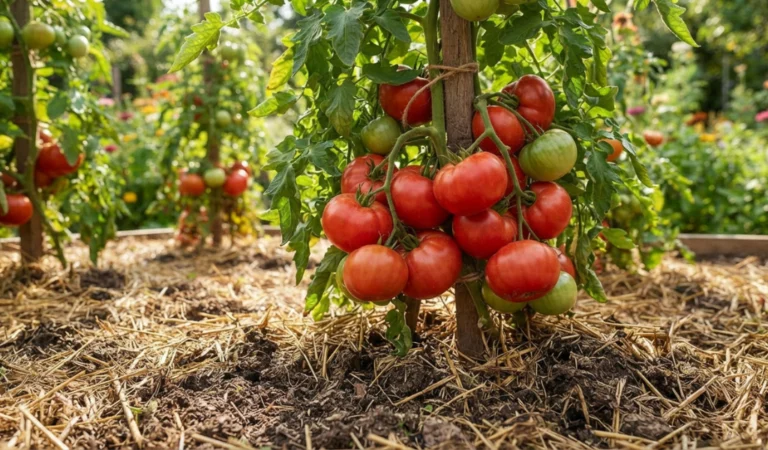
Many gardeners find that mulching around the base of the plant during fruiting helps maintain even soil moisture, reducing how often they need to water while also protecting against sudden swings caused by heavy rain or heat waves.
Best Watering Methods for Tomato Plants
There are several ways to water tomato plants, and each comes with its own pros and cons. Hand watering with a hose or watering can gives you full control and lets you check on your plants closely, but it can be time-consuming and inconsistent if you are not careful about watering deeply enough each time.
Soaker hoses and drip irrigation systems are widely considered the best option for tomatoes, since they deliver water slowly and directly to the root zone, minimizing waste and keeping foliage dry, which reduces disease risk. These systems can also be put on a timer, which takes the guesswork out of maintaining a consistent schedule, especially helpful during busy weeks or vacations.
Overhead sprinklers are the least recommended method for tomatoes specifically, since they wet the leaves, increasing the risk of fungal diseases like early blight and powdery mildew.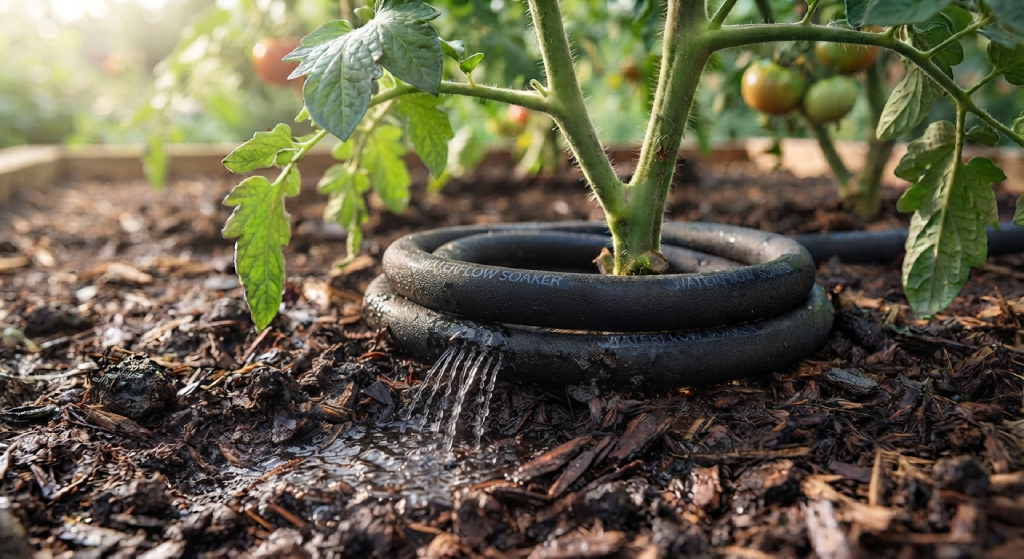 If sprinklers are your only option, try to water early in the day so leaves have plenty of time to dry before evening.
Watering Tomatoes in Pots vs. Garden Beds
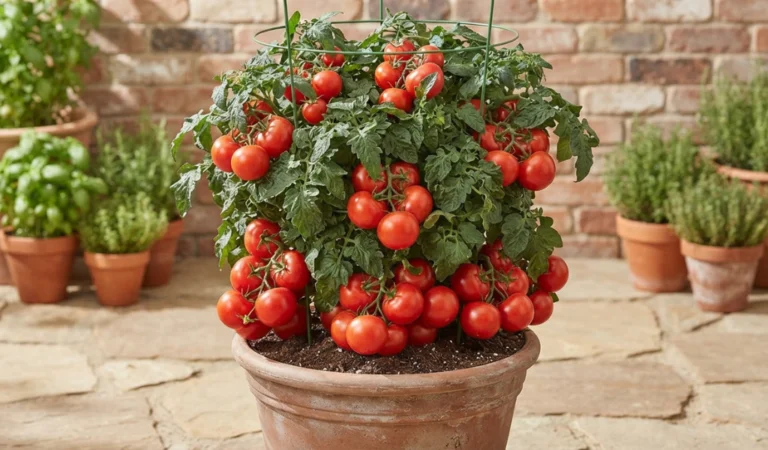
Container-grown tomatoes and those planted directly in garden beds have very different watering needs, mainly because of how quickly soil dries out in each setting. Pots and containers dry out much faster than garden soil, especially during hot weather, sometimes needing water once a day or even twice during extreme heat.
Garden bed tomatoes benefit from the surrounding soil’s ability to retain moisture longer, meaning they usually need watering every two to three days rather than daily. The soil in a garden bed also has access to a larger reservoir of moisture below the surface, which containers simply do not have.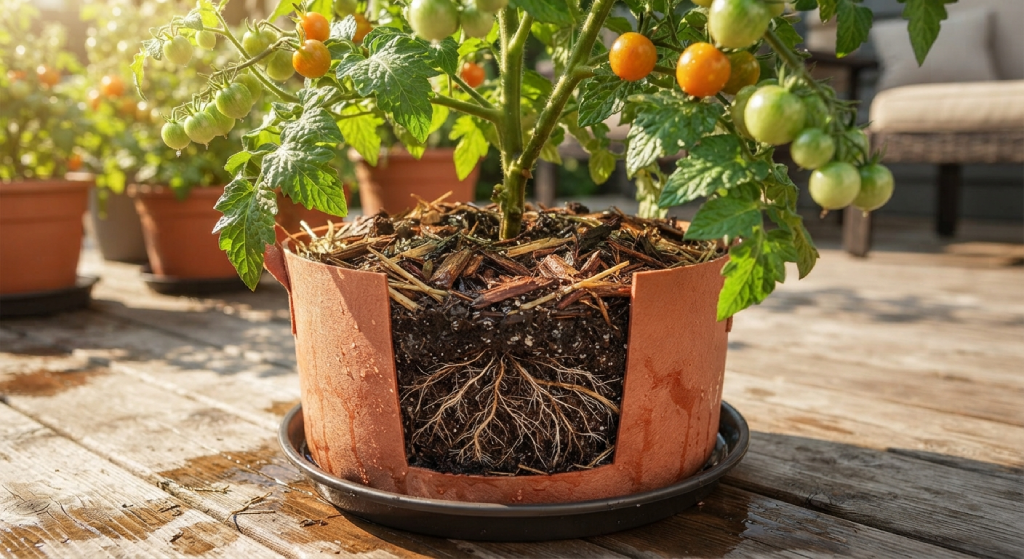
One tip for container gardeners is to choose pots with good drainage holes and consider adding a layer of mulch on top of the soil to slow down evaporation. Self-watering containers or ones with a built-in water reservoir can also make a big difference for anyone growing tomatoes on a balcony or patio where checking soil moisture daily is not always practical.
Signs of Overwatering and Underwatering
Learning to read your tomato plant’s signals saves you from guessing and helps you catch problems early before they seriously affect your harvest.
Overwatered tomato plants often show yellowing leaves, particularly starting at the bottom of the plant, along with a wilted appearance despite moist soil. This happens because waterlogged roots cannot get enough oxygen, which ironically causes the same wilting look as a thirsty plant, just for the opposite reason. You might also notice the soil staying wet for unusually long periods or a slight moldy smell near the base of the plant.
Underwatered plants show more obvious signs, like drooping leaves that perk back up soon after watering, dry and crumbly soil, and slower growth overall. Fruit on underwatered plants tends to stay smaller and can develop a tougher skin as the plant tries to conserve moisture.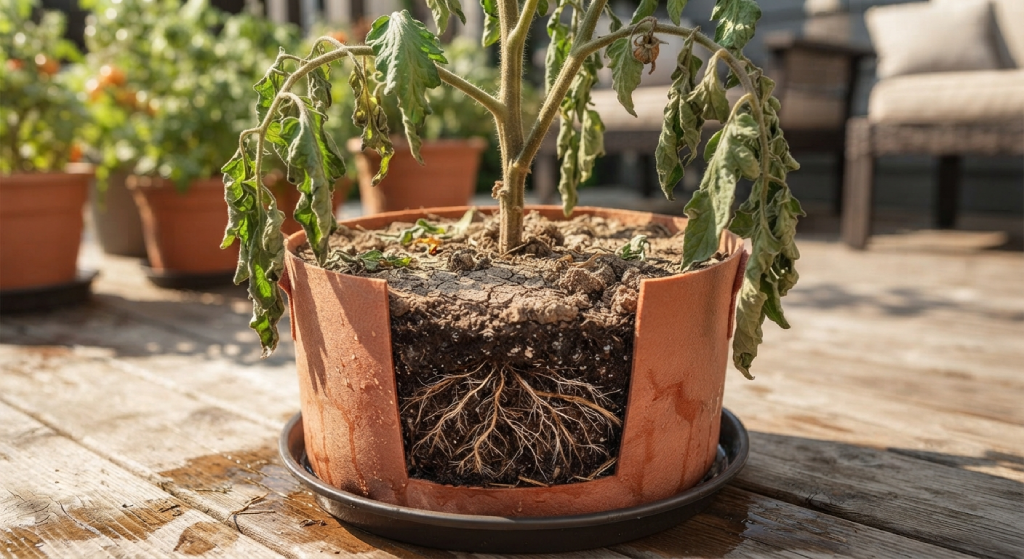
The key difference to watch for is soil moisture. If leaves are wilting but the soil feels wet, you are likely dealing with overwatering. If leaves are wilting and the soil feels dry, it is time to water.
Common Tomato Watering Mistakes
Even experienced gardeners fall into a few common traps when it comes to watering tomatoes. One of the biggest mistakes is watering a little bit every day instead of watering deeply a few times a week, which trains roots to stay shallow and makes plants more vulnerable to stress.
Another common issue is watering inconsistently, letting the soil dry out completely between waterings and then soaking it heavily to compensate. This swing between dry and wet is exactly what causes cracked fruit and blossom end rot, so steady, predictable watering always beats an all-or-nothing approach.
Watering overhead and getting the leaves wet, especially late in the day, is another mistake that increases the risk of fungal disease. Aiming water at the base of the plant instead of the foliage avoids this problem entirely.
Lastly, many gardeners forget to adjust their watering schedule as the weather changes. What works during a mild spring week will not be enough during a scorching midsummer heatwave, so checking soil moisture regularly rather than sticking to a fixed schedule leads to much better results.
Final Thoughts
Mastering growing tomatoes watering really comes down to consistency, timing, and paying attention to what your plants and soil are telling you. Deep, regular watering, done early in the morning and adjusted for each growth stage, sets your tomato plants up for strong roots, healthy foliage, and a bigger, better harvest. Whether you are growing full-size slicing tomatoes or working through our Growing Grape Tomatoes: Complete Guide From Seed to Harvest for smaller varieties, the same core watering principles apply across the board.
Start paying closer attention to your soil moisture this week, adjust your schedule based on the weather, and watch how much of a difference proper watering makes by harvest time.
Frequently Asked Questions
How often should I water tomato plants in hot weather?
During hot, dry stretches, tomato plants often need water every other day, and container plants may need daily watering since they dry out faster than garden beds.
Can I water tomato plants too much?
Yes, overwatering is just as harmful as underwatering and can lead to yellowing leaves, root rot, and reduced fruit quality due to lack of oxygen in waterlogged soil.
Why are my tomatoes cracking after watering?
Cracking usually happens when a plant goes through a dry period and then receives a heavy amount of water at once, causing the fruit to absorb water faster than the skin can stretch.
Is it better to water tomatoes in the morning or evening?
Morning watering is generally best since it allows leaves to dry before evening, reducing the risk of fungal disease, though evening watering at the base of the plant works as a backup option.
Do tomato plants in pots need more water than those in the ground?
Yes, container soil dries out much faster than garden bed soil, so potted tomatoes usually need more frequent watering, especially during warm weather.
What does blossom end rot have to do with watering?
Blossom end rot is caused by a calcium imbalance that is usually triggered by inconsistent watering, which prevents the plant from absorbing calcium properly even when it is present in the soil.
Should I water tomato leaves or just the soil?
It is best to water the soil directly at the base of the plant rather than the leaves, since wet foliage increases the risk of fungal diseases like blight.