Stink Bugs on Tomato Plants: Identification, Eggs & Early Damage Signs
Stink Bugs on Tomato Plants: How to Identify, Treat, and Prevent Damage
You walk out to the garden on a warm morning, ready to pick the first big tomato of the season. It looks perfect from the top. Then you turn it over and find pale, hard patches under the skin. That is the classic sign of stink bugs on tomato plants, and they can ruin a good harvest in just a few weeks. The good news is that you can stop them. Below, you will find a clear plan for How to Get Rid of Stink Bugs on Tomatoes in Your Garden, from simple hand methods to safe sprays and smart habits. You will also learn how to spot the damage early and how to tell these pests apart from helpful insects that deserve to stay.
Understanding Stink Bug Damage on Tomatoes
Stink bugs are shield shaped insects that suck juice from plants. They love fruit and seed crops, which makes tomatoes an easy target. Gardeners often blame birds or bad weather for blemished fruit, but the real cause is often a small bug sitting quietly on the underside of a leaf. Once you know what the damage looks like and how it happens, you can catch the problem before it spreads across your whole row.
How Stink Bugs Feed on Green and Ripe Tomatoes
A stink bug has a long mouth part that works like a straw with a sharp tip. It pushes this tip into the skin of a tomato and injects saliva. The saliva breaks down the cells under the skin so the bug can slurp up the liquid. This feeding can happen on green fruit and on fruit that is already turning red.
The timing matters a lot. When a bug feeds on a young green tomato, the fruit keeps growing but the damaged area does not grow the same way. You may end up with a lumpy or slightly twisted tomato. When a bug feeds on a ripe tomato, the spot may look fine for a day or two and then turn soft or sunken. Feeding holes are so tiny that most people never see them. What you notice later is the damage around the hole.
Stink bugs also feed on stems and leaves, but they prefer fruit. They tend to move from one tomato to the next and take a few sips from each one. That habit is why a small group of bugs can mark dozens of fruits. A friend of mine in Ohio once lost nearly half of her Roma crop in August because she thought the odd spots were sunscald. By the time she checked under the leaves the bugs had already moved through the whole bed.
Identifying “Cloudy Spot” Damage and Spongy Flesh
The most common sign of stink bug feeding is called cloudy spot. On a green tomato you will see small pale patches with a fuzzy or blurry edge. On a ripe tomato these patches look yellow or white and stay hard even when the rest of the fruit turns red. They often sit just under the skin and have no sharp border, which is why the word cloudy fits so well.
If you cut the tomato open, you will usually find white and spongy flesh below the spot. The texture feels dry and corky compared to the juicy part around it.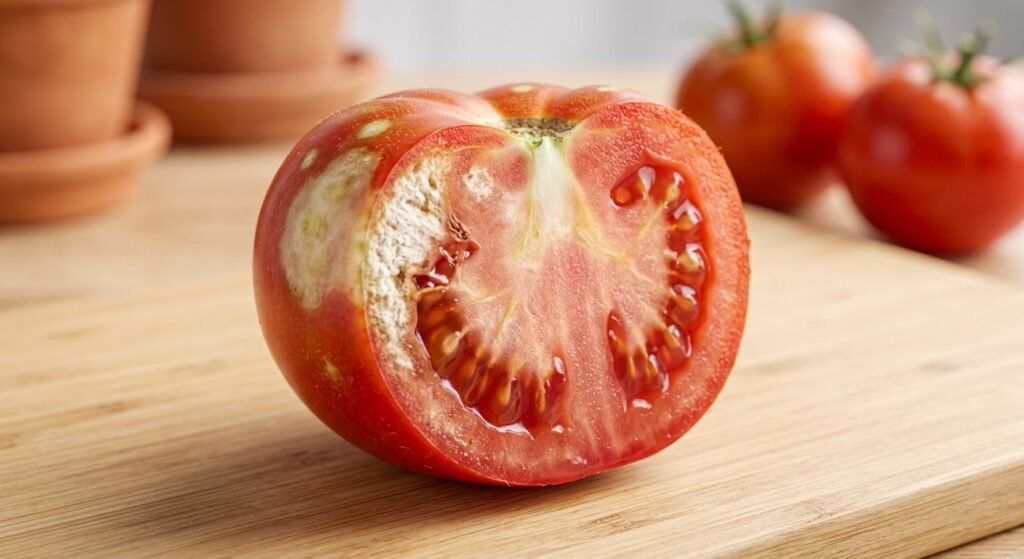 Some spots also have tiny dark marks in the center where the bug pushed its mouth part in. The taste is not harmful, but the dry spongy section is unpleasant to eat, so most people cut it away.
It helps to know what cloudy spot is not. Blossom end rot makes a dark and leathery patch at the bottom of the fruit. Sunscald makes a smooth pale area that looks papery. Cracking shows up as clear splits in the skin. Cloudy spot appears as pale, hazy patches anywhere on the fruit. If you see these marks on several tomatoes at once, check the plants right away for bugs and egg clusters.
Identifying Common Stink Bug Species in the Garden
Not every shield shaped insect in your garden is a pest. Some are helpers that eat caterpillars and beetles. Others are the exact bugs you want to remove. Learning to tell them apart saves you time and keeps your garden healthy. Most North American gardeners deal with two main pest types and one common lookalike that works in your favor.
Brown Marmorated Stink Bugs vs. Green Stink Bugs
The brown marmorated stink bug is the one most gardeners fear. It is about as long as a thumbnail and has a mottled brown body. Look closely at its antennae and you will see light bands that look like tiny stripes. The edge of its belly also has light and dark patches. This species came from Asia and now lives across much of the United States. It feeds on hundreds of plants and loves tomatoes, peppers, and eggplants.
The green stink bug is easy to spot because of its bright green back and thin pale edge. It is a bit larger and rounder than the brown one. Adults are common in late summer and often hide under leaves or inside tomato clusters. The green type can still cause real harm, but it is usually easier to control because it moves more slowly and sticks to one area of the garden.
Both species lay eggs on the underside of leaves. The eggs look like small barrels in tight groups of about twenty or thirty. Green stink bug eggs are pale and brown marmorated eggs are light green or white. Young bugs, called nymphs, hatch and stay close to the eggs for a short time. They look round and often have red and black markings. Nymphs eat just as much as adults and are worth removing too.
A quick tip is to check your plants in the early morning. Bugs are slow when it is cool and you can catch them easily. Also look at the leaf undersides every few days during July and August. A few minutes of checking can save you weeks of trouble later.
Beneficial Wheel Bugs vs. Pest Stink Bugs (Don’t Kill the Good Guys!)
The wheel bug is a large grayish insect with a strange half circle crest on its back. It looks a bit like a small armored creature. It is a predator and eats caterpillars, beetle larvae, and even some stink bugs. Gardeners should welcome it because it helps keep other pests down. Its long beak is very sharp though, so never pick one up with bare fingers. A bite can hurt for days.
Several other helpful bugs look like stink bugs at first glance. The spined soldier bug has pointed shoulders and feeds on caterpillars and beetle grubs. The two spotted stink bug has a red and black pattern and also hunts other insects. You can tell a predator from a pest by looking at the head. Predators have a thick curved beak that is tucked under the body. Pests have a thin straight beak.
Body shape gives another clue. Wheel bugs are long and narrow and their legs look thin and stretched. Pest stink bugs are wide and flat like a shield. Predators also tend to move around on stems and leaves in search of prey, while pest bugs sit still while they feed on fruit.
If you are not sure what you found, take a clear photo and ask your local extension office. Many offer free identification. It is better to wait a day than to kill a helpful predator by mistake. A garden that keeps its natural predators will usually have fewer problems over time.
How to Get Rid of Stink Bugs on Tomatoes (Organic & Chemical Solutions)
There is no single trick that works for every garden. The best plan starts with simple hand methods and moves to sprays only when numbers get high. This keeps pollinators safe and keeps the cost low. If you grow food for your family, it also keeps your tomatoes cleaner. Start gently and step up only if you need to.
Hand-Picking and the Soapy Water Bucket Method
Hand picking is still one of the best ways to control stink bugs in a home garden. It costs nothing and works right away. Take a bucket or wide jar and fill it halfway with warm water. Add a good squirt of dish soap and stir it a little. The soap breaks the surface tension so the bugs sink and cannot escape.
Hold the bucket under a leaf or a tomato cluster and tap the bug gently with your other hand. 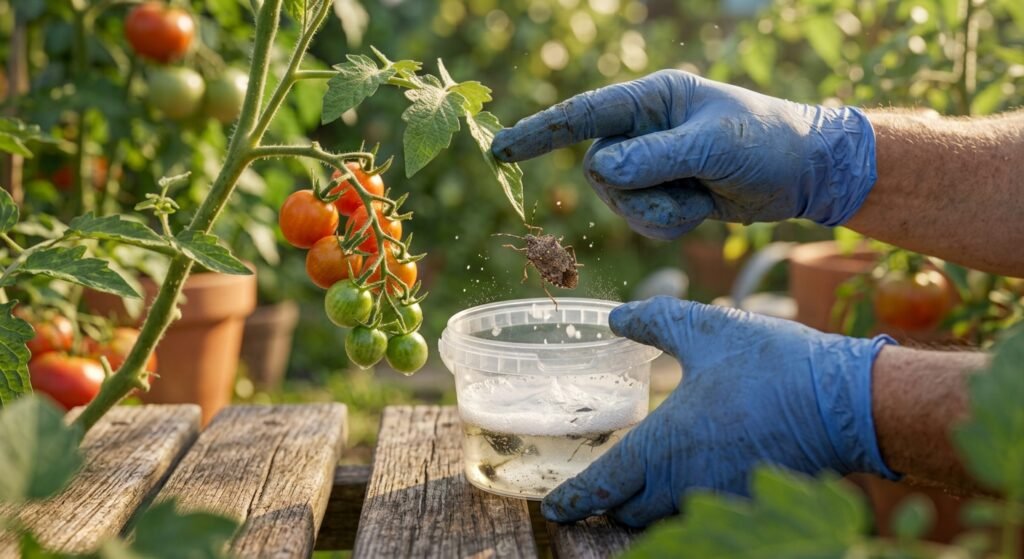 Stink bugs have a habit of dropping when they feel danger. They fall straight into the soapy water and drown within minutes. Wear gloves if the smell bothers you. The odor is strong when the bugs are crushed but mild when they are dropped into water.
Morning and evening are the best times for this job. The bugs move slowly in cool air and are much easier to catch. Check the tops of the leaves, the undersides, the stems, and the spaces between the fruit. Do not forget to scrape off egg clusters with a piece of tape or a wet paper towel. Removing one cluster can stop twenty or thirty new bugs from hatching.
In a small garden this method alone can keep damage low. One reader told me she spent ten minutes a day with a bucket and saved nearly all of her heirloom Cherokee Purple tomatoes. If you have a large plot or a heavy invasion, the bucket method still helps but you may need extra tools.
Organic Insecticidal Soaps, Neem Oil, and Pyrethrins
When hand picking is not enough, you can try a few safe sprays. Insecticidal soap is a good first choice. It works on contact and is most useful on young nymphs, which have softer bodies. Adult stink bugs have a tough shell and often survive a soap spray. Mix and apply the product exactly as the label says and spray in the early evening so bees are not around.
Neem oil comes from the seeds of the neem tree. It does not kill bugs fast but it upsets their feeding and slows their growth. It also acts as a mild repellent. Spray both sides of the leaves and the fruit surface in the cool part of the day. Never spray in strong sun because oil can burn leaves. Repeat every week or so until the numbers drop.
Pyrethrins come from chrysanthemum flowers and work much faster. They can knock down adults and nymphs on contact. They are still natural but they are strong and can harm bees and other helpful insects. Use them only as a last step, spray late in the day, and avoid blooming plants. Always read the label for the number of days to wait before you pick the fruit.
Some gardeners also reach for stronger synthetic sprays. These can work but they raise the risk to pollinators and to predators like wheel bugs. If you decide to use one, pick a product made for vegetables and follow the waiting time on the label. For most home gardens the softer options are enough, especially when you pair them with hand picking.
Preventing Future Stink Bug Infestations
Killing bugs that are already on your plants is only half the job. The real win comes from making your garden a poor place for them to live. Stink bugs look for food, shelter, and a quiet place to lay eggs. If you take away the easy options, they move on to a neighbor’s yard instead. A few simple habits can make a big difference from one season to the next.
Installing Floating Row Covers and Mesh Netting
A floating row cover is a light fabric that sits over your plants and lets in sun, air, and water. It blocks insects from reaching the leaves and fruit. For young tomato plants this is one of the strongest tools you can use. Lay the fabric over a simple hoop frame and hold the edges down with soil, rocks, or garden staples. Leave a little slack so the plants have room to grow.
Mesh netting works in the same way and is often used on taller plants. Choose a mesh with holes small enough to stop adult stink bugs. Many gardeners pick a fine insect net with holes of about one millimeter or less. Make sure the net reaches the ground on every side. Even a small gap lets the bugs crawl in.
There is one catch. Tomatoes need bees or wind to shake the flowers so they can set fruit. If you leave covers on all season, you may need to lift them for a short time each day or shake the plants by hand. Many people keep covers on until the first flowers open and then switch to other methods. Check the cover often because bugs that sneak in early will be trapped with your plants and can multiply fast.
For a few extra dollars you can use cages wrapped in mesh for each plant. This is useful in raised beds and in small gardens. It also helps against other pests like hornworms and fruit flies.
Managing Weeds and Garden Debris Near Solanaceous Crops
Tomatoes belong to the solanaceous family, along with peppers, eggplants, and potatoes. Stink bugs love this group and often move between them. Keeping these crops in separate beds can slow the spread a little. If you plant them together, check all of them whenever you check your tomatoes.
Weeds are another big reason stink bugs show up. Plants like pigweed, mullein, thistle, and wild mustard give them food early in the season. They also give shelter on hot days. Pull weeds near your beds and keep a clear strip around the garden edge. A tidy border leaves fewer places for the bugs to hide before they climb into your tomatoes.
Garden debris matters just as much. Adult stink bugs spend the winter under old leaves, boards, stacks of pots, and loose bark. When spring comes they wake up and look for the nearest food. Clear away fallen fruit, dead plants, and piles of clutter at the end of the season. Turn the soil lightly in the fall to expose eggs and hiding insects.
Some gardeners plant a trap crop like sunflowers or okra at the edge of the yard. The bugs gather on the trap plants and you can collect or spray them there. This takes a bit more planning but it can cut damage in your main bed by a good amount. Combine all these steps and your tomatoes will have a much better chance each year.
Final Thoughts
Stink bugs on tomato plants can feel like a big problem, but you do not need fancy tools to beat them. Learn to spot cloudy spot and spongy flesh so you know what you are dealing with. Tell the pest species from the helpful wheel bugs and soldier bugs. Start with hand picking and the soapy water bucket, then add neem oil, insecticidal soap, or pyrethrins only when you must. Most of all, build good habits like row covers, weed control, and a clean garden in the fall.
This week, take ten minutes to check the undersides of your tomato leaves. Look for egg clusters and small nymphs. If you find any, remove them today and write down the date so you can see how the season goes. Small steps now will give you firm and juicy tomatoes later. If this guide helped you, share it with a gardening friend who is fighting the same bugs.
Frequently Asked Questions (FAQ)
Do stink bugs on tomato plants make the fruit unsafe to eat?
No. The damage is mostly about looks and texture. The pale and spongy parts are dry and not pleasant to eat, but they are not harmful. Cut away the bad spots and wash the rest of the fruit well. If you see mold or a sour smell, throw that tomato away.
When are stink bugs most active in the garden?
They wake up in spring when the weather warms and become most active from midsummer to early fall. Egg laying often starts in June or July in many areas. Late summer is when you may see the most nymphs and adults on ripening fruit.
Can I just spray dish soap on the plants?
It is better to use a product made for plants. Strong household soaps can burn leaves and harm fruit skin. A proper insecticidal soap is milder and gives more steady results. If you use the soapy bucket method, keep the soap in the bucket and not on the plants.
Why do stink bugs smell so bad?
They release a strong odor from small glands on their body when they feel threatened. The smell is a defense that keeps predators away. It can stick to your hands and tools, so wear gloves when you pick them up and avoid crushing them near your face.
Will stink bugs come back every year?
They often do, especially if your area has lots of weeds, woods, or old buildings nearby. Adults overwinter in sheltered spots and return in spring. Good cleanup in the fall, early checks in spring, and the use of row covers can keep their numbers low.
Are there natural enemies that help control stink bugs?
Yes. Wheel bugs, spined soldier bugs, birds, spiders, and a tiny wasp that lays eggs inside stink bug eggs all help. Avoid broad sprays that kill everything so these helpers can do their job. A mixed garden with flowers and some wild corners often has more natural help.
Should I pick tomatoes early to avoid damage?
Yes, it can help. Picking tomatoes when they start to show color and letting them ripen indoors cuts the time bugs have to feed on them. The flavor is slightly better when fruit ripens on the vine, so use this tip mainly when you see heavy bug activity.