DIY Tomato Trellis Ideas for a Stronger Garden
Creative DIY Tomato Trellis Ideas for Your Vegetable Garden
If you’ve been searching for DIY tomato trellis ideas because your plants have turned into a sprawling, tangled mess in your garden, you are far from alone. Every summer, home gardeners everywhere watch their tomato plants collapse under their own weight, and by the time August rolls around, half the fruit is rotting on the ground instead of ripening on the vine. The truth is, a good trellis changes everything about how your tomato plant grows, how easy harvesting becomes, and how healthy your plants stay throughout the growing season. Whether you are growing tomatoes in raised beds, in containers, or straight in the ground, the right tomato trellis system can be the difference between a mediocre harvest and one that keeps producing fruit right up until the end of the season.
In this guide, we are going to walk through the most reliable, budget-friendly, and genuinely effective DIY tomato trellis ideas that gardeners actually use, along with when each method works best depending on the type of tomatoes you are growing. Growing Tomatoes in Raised Beds has become one of the most popular approaches for home gardeners, mostly because raised beds offer better drainage, warmer soil, and more control over the growing environment, but even in a raised bed, an unsupported tomato plant will still sprawl, flop, and eventually break under its own weight if you skip the trellis altogether.
Why Every Tomato Plant Needs a Trellis or Support System
Before jumping into specific trellis ideas, it helps to understand why a support system matters so much in the first place. A tomato plant left without a stake, cage, or trellis will grow low to the ground, and once fruit starts to form, the weight pulls the vines down into the dirt, where pests, slugs, and fungal diseases are waiting. A trellis provides airflow around the leaves, which cuts down dramatically on diseases like blight, and it also keeps ripe tomatoes off the soil where they are far more likely to rot or get eaten before you ever get to pick them. There is also a harvesting factor that a lot of new gardeners underestimate. When a tomato plant is trellised properly, easy harvesting becomes the norm rather than the exception, since the fruit hangs at eye level or waist level instead of being buried under a pile of leaves and stems.
Understanding Indeterminate and Determinate Tomato Varieties First
One thing that changes which DIY tomato trellis ideas will actually work for you is whether you are growing indeterminate tomato varieties or determinate tomato varieties. Indeterminate tomato plants keep growing and producing fruit all season long, often reaching heights of 6 to 8 feet or more, and these varieties absolutely need a tall, sturdy trellis system to keep up with them.
Determinate tomato varieties, sometimes called bush tomatoes, grow to a set height, produce their fruit in a shorter window, and generally need less aggressive support, which means a simple stake or a smaller tomato cage is often enough. Knowing which type of tomatoes you are growing before you build anything will save you time, money, and a lot of frustration halfway through the season when your trellis frame turns out to be too short.
Classic Stake and Twine Trellis Method
One of the simplest and most affordable DIY tomato trellis ideas is the classic single stake method using a sturdy wooden or metal stake driven into the ground next to each plant.
As the tomato plant grows, you loosely tie the main stem to the stake using garden twine or soft tomato clips, checking every week or two to add another tie point as the plant climbs higher.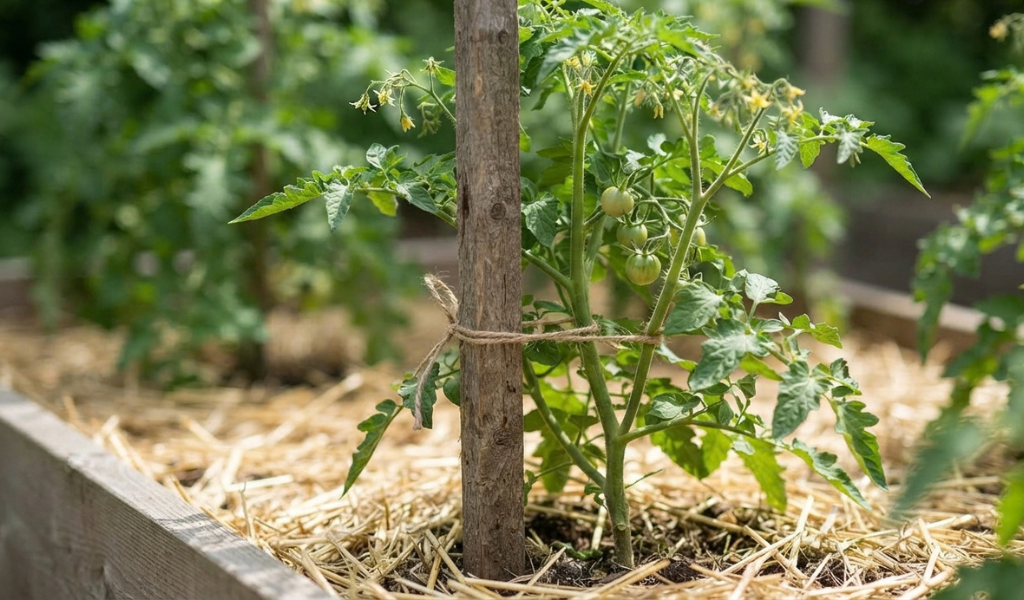
This method works particularly well for determinate tomato varieties or smaller container gardens, though indeterminate tomato plants will often outgrow a single stake by midsummer unless you are diligent about pruning.
Using the String Trellis Method for Taller Plants
A string trellis system takes the stake method a step further by running a length of twine or string from a horizontal support at the top down to the base of each plant, allowing you to gently wind the stem around the string as it climbs. This string method is a favorite among greenhouse growers and market gardeners because it lets indeterminate tomato plants grow surprisingly tall, sometimes well past 8 feet, without needing a rigid frame at all.
DIY Tomato Cages Using Concrete Reinforcing Wire
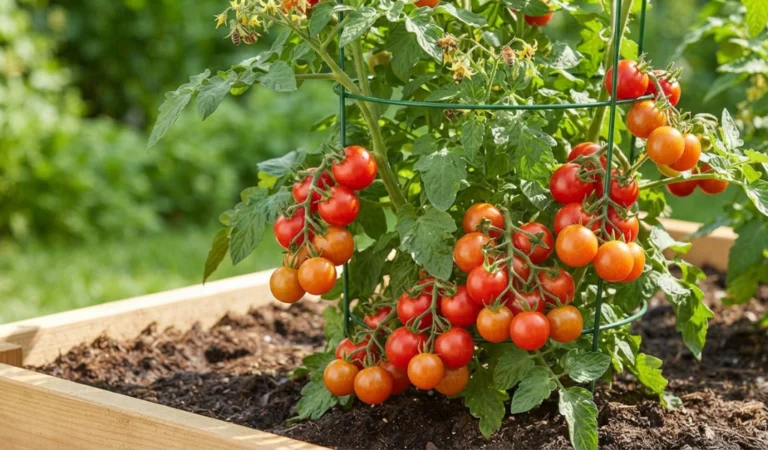
Store-bought tomato cages are notorious for being too flimsy for anything beyond a small determinate variety, which is why so many experienced growers build their own diy tomato cages using concrete reinforcing wire instead. To make one of these upgraded tomato cages, you roll a length of wire into a cylinder roughly 18 to 24 inches wide, secure the seam, and simply place it over the tomato plant early in the season before the vines get unruly. The openings in this style of tomato cage are wide enough that you can reach through easily for pruning or picking, and the wire itself is rigid enough to provide support even when the plant is loaded down with ripening fruit late in the season.
Compared to the wobbly, cone-shaped cages sold at most garden centers, homemade diy tomato cages built from reinforcing wire tend to last for many growing seasons and rarely tip over in wind or heavy rain.
Cattle Panel Trellis Ideas for Serious Tomato Growers
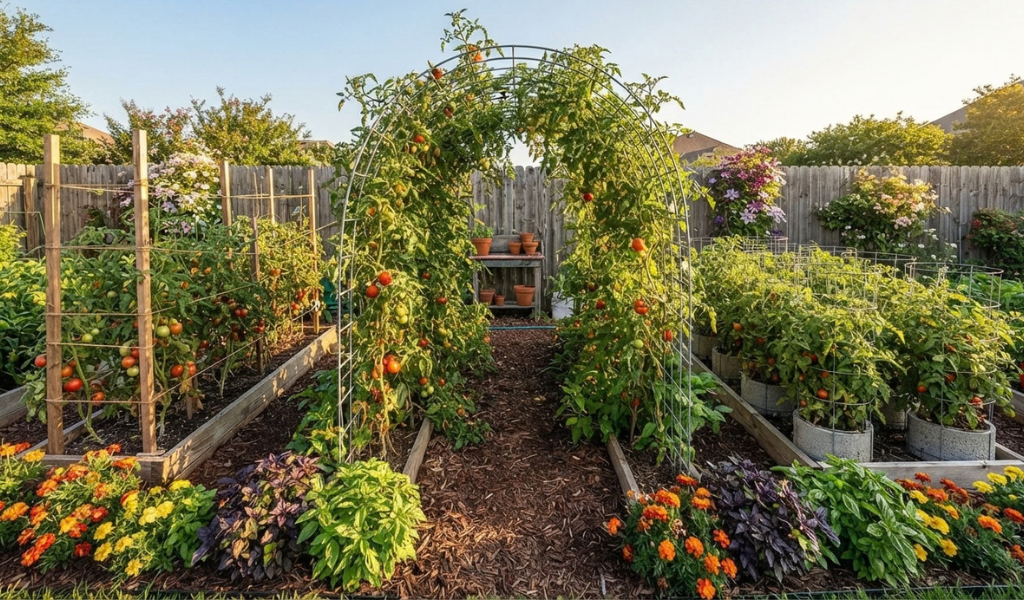
If you want one of the sturdiest, longest-lasting DIY tomato trellis ideas available, a cattle panel trellis is hard to top. You take a livestock cattle panel, usually sold in 16 foot lengths at a farm supply store, and either bend it into an arch between two beds or stand it upright between metal T-posts along a single row. Gardeners love the cattle panel trellis because it is essentially indestructible, it handles the weight of heavily loaded indeterminate tomato plants without bowing or sagging, and the wide grid squares make it simple to weave stems through as the plant grows.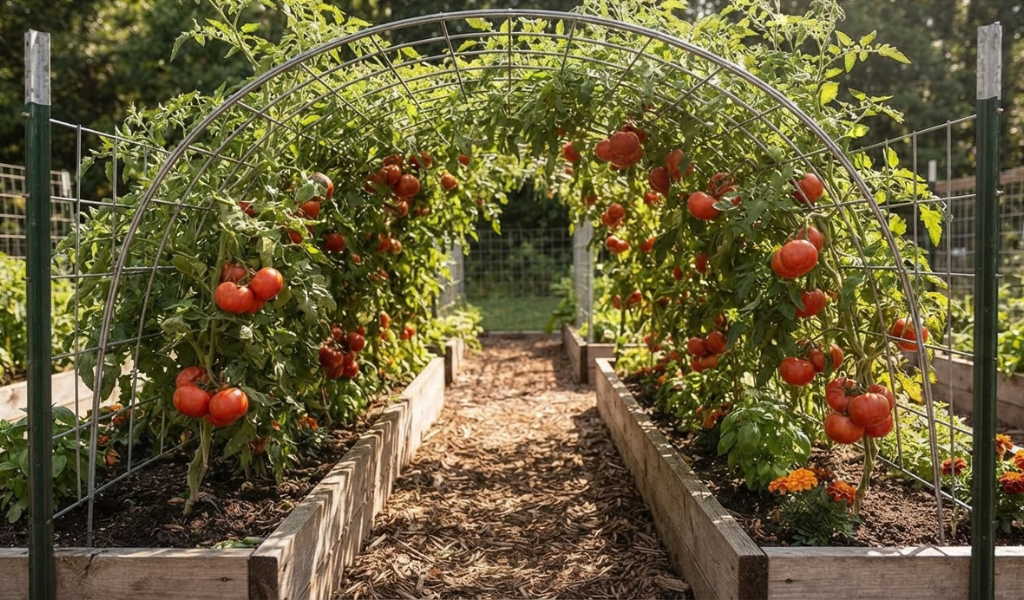
Because a cattle panel trellis does not rot, rust, or need yearly replacement the way wooden stakes often do, many gardeners consider it the best tomato trellis investment for anyone planning to grow tomatoes for years to come.
The Florida Weave Trellis System for Rows of Tomatoes
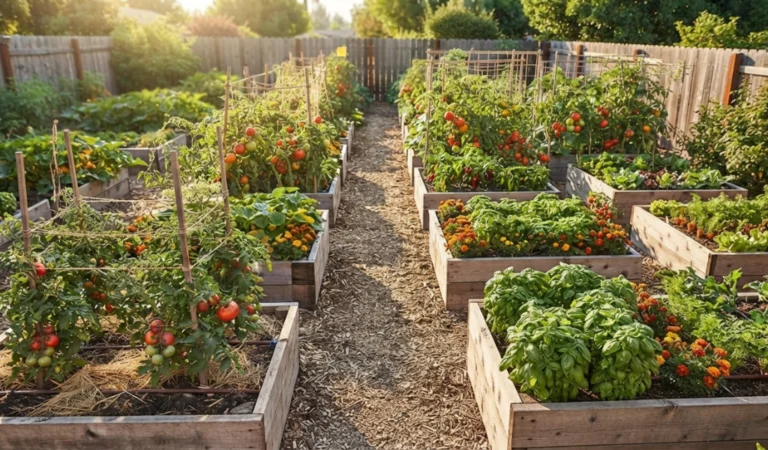
The Florida weave, sometimes called the basket weave trellis system, is one of the most efficient DIY Tomato Trellis Ideas for supporting tomato plants when you are growing several in a row rather than just one or two. You drive a sturdy stake into the ground every two or three plants, then weave garden twine back and forth between the stakes on both sides of the row, sandwiching the stems gently between two lines of string as the plants grow taller.
This trellis method scales beautifully for anyone with a larger vegetable garden, since you can support a dozen tomato plants with just a handful of stakes and a roll of twine, and it remains one of the fastest DIY Tomato Trellis Ideas for supporting tomato rows without building individual cages for every plant.
Tips for Weaving Twine Correctly
When using the Florida weave, keep each row of twine roughly six to eight inches above the last one, and always weave in the opposite direction from the row before it, which locks the stems in place and keeps the whole trellis frame from shifting. This simple technique makes the Florida weave one of the most practical DIY Tomato Trellis Ideas for gardeners growing multiple plants.
Wooden Ladder Trellis Built from Scrap Lumber
If you have old boards, a broken wooden ladder, or scrap lumber sitting in the garage, building a ladder-style trellis is one of the most satisfying easy DIY Tomato Trellis Ideas you can take on in a weekend. You construct a simple rectangular frame with evenly spaced horizontal rungs, then stake it upright in the garden or lean it against a fence or wall so the tomato vines have plenty of points to climb and tie off as they grow. Because the frame is flat, this type of garden trellis works especially well against a south-facing wall, where it can capture reflected heat and light that helps produce fruit earlier in the season.
Bamboo Teepee Trellis for Small Gardens and Containers
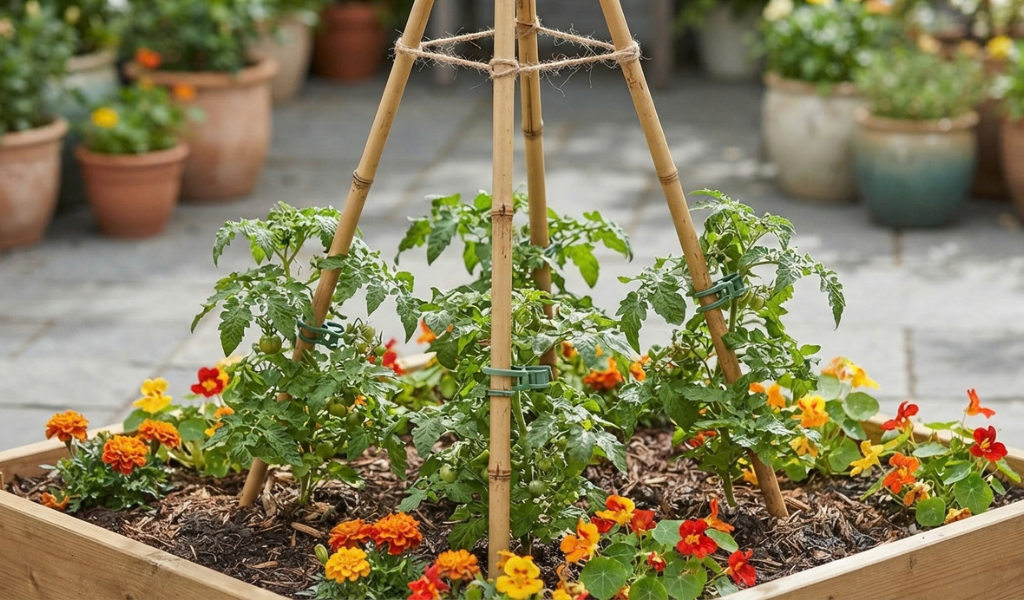
For anyone working with a smaller raised bed, patio containers, or a compact vegetable garden, a bamboo teepee trellis is one of the most space-efficient DIY Tomato Trellis Ideas around. You lash three or four bamboo poles together near the top, spread the bottoms out into a wide teepee shape, and plant a tomato at the base of each pole so the vines climb naturally upward as the season progresses. This design uses very little ground space compared to a horizontal cattle panel trellis, which makes it a great garden trellis option for anyone growing tomatoes alongside other vegetables in a tight raised bed layout.
Pallet Wood Trellis for a Rustic, Budget-Friendly Garden Look
Wooden pallets are easy to find for free almost anywhere, and turning one into a trellis frame is a low-cost way to support tomato plants while adding a bit of rustic charm to your vegetable garden. Among simple DIY Tomato Trellis Ideas, this option is especially useful when you already have spare pallet wood available. You can either space out the existing pallet slats to form a natural lattice, or take the pallet apart and rebuild the wood into a custom trellis frame with your own crossbar spacing. Just be sure any pallet you use has not been chemically treated, since you do not want anything leaching into the soil near food crops.
Hanging String Trellis for Greenhouses and Covered Beds
For gardeners with a greenhouse, hoop house, or pergola with sturdy overhead beams, a hanging string trellis skips ground stakes entirely by tying twine to the overhead structure and letting it hang down to each plant. You loosely tie the bottom end of the string around the base of the tomato plant, then gently wind the growing stem around the twine as it climbs, adjusting every week or so as new growth appears. Commercial greenhouse operations rely on this trellis system constantly because it allows indeterminate tomato plants to grow far taller than any ground-based structure would allow, sometimes past 10 feet in a single season. It is also one of the most useful DIY Tomato Trellis Ideas when you have a strong overhead structure available.
Pruning Your Tomato Plants for a Better Trellis Result
No matter which of these DIY Tomato Trellis Ideas you choose, pruning plays a huge role in how well the whole system performs. Removing the small suckers that form between the main stem and side branches keeps the plant from becoming overly bushy, which makes it far easier to tie stems to a stake, weave them through a cattle panel, or wind them around a hanging string trellis. Regular pruning also improves airflow around the leaves, which is one of the simplest ways to keep tomato plants healthy and reduce the risk of fungal disease as the season goes on.
Choosing the Best Tomato Trellis for Your Garden
The best tomato trellis for your situation really comes down to a few practical factors, including how many plants you are growing, whether you are working with indeterminate tomato varieties or determinate types, how much space your garden or raised bed offers, and how much of a weekend project you are in the mood for. Different DIY Tomato Trellis Ideas work better for different garden setups, so think about your available space and the mature size of your tomato plants before choosing one.
A single container plant on a patio might only need a simple stake or a small tomato cage, while a full row of indeterminate tomatoes in a vegetable garden is going to perform far better with a cattle panel trellis or a Florida weave system. Both options are practical DIY Tomato Trellis Ideas when you need strong support for multiple plants.
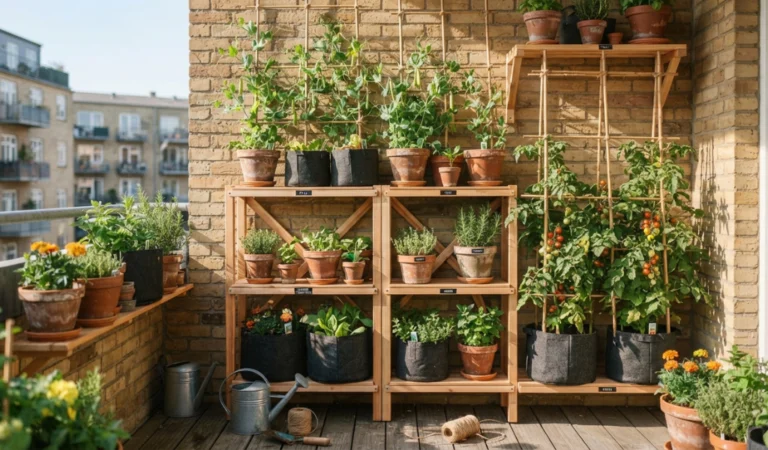
Gardeners who are growing tomatoes in raised beds often find that a compact bamboo teepee or a ladder-style trellis frame fits the limited footprint perfectly, without sacrificing the height these plants need to keep producing fruit all season long. These DIY Tomato Trellis Ideas can provide strong support while making better use of limited garden space.
Final Thoughts
At the end of the day, there is no single perfect answer when it comes to DIY tomato trellis ideas, only the option that best matches your garden, your budget, and the type of tomatoes you are growing. Start with materials you already have on hand before buying anything new, pay attention to how tall your particular variety tends to grow, and stay consistent with tying and pruning throughout the growing season.
Once you experience how much easier harvesting becomes, how much healthier your plants stay, and how much more fruit you actually get to eat instead of losing to rot, you will understand why so many experienced gardeners consider a good trellis system just as essential as the tomato plant itself.
Frequently Asked Questions
What Shape Trellis Is Best for Tomatoes?
An A-frame or teepee shape works well for most gardens because the wide base resists tipping and gives plants plenty of climbing surface. For rows of plants, a flat cattle panel or Florida weave trellis is easier to access from both sides.
What Is the Cheapest Way to Support Tomato Plants?
A single stake and twine is the cheapest option, especially with scrap wood or bamboo on hand. The Florida weave comes in close behind, since a few stakes and a roll of twine can support an entire row.
How Do I Make a Tomato Arch Trellis at Home?
Bend a cattle panel into a curved arch and anchor both ends to metal T-posts on either side of a path or bed. Plant tomatoes along the base so vines climb up and over as they grow.
Why Do Tomatoes Need a Trellis or Support System?
Without support, tomato plants sprawl on the ground, where fruit is more likely to rot or get eaten by pests. A trellis lifts the plant, improves airflow to reduce disease, and makes harvesting far easier.
What Can Be Used Instead of Tomato Cages?
Stake and twine, a Florida weave, or a cattle panel trellis all work as cage alternatives. A homemade cage rolled from concrete reinforcing wire is sturdier than most store-bought cages if you still want that cage shape.
Which DIY Tomato Trellis Ideas Work Best for a Small Garden?
A bamboo teepee trellis takes up minimal ground space, and a ladder-style trellis leaned against a fence works well in tight spots. Container gardens often do fine with just a stake and soft tomato clips.
Can I build a tomato trellis from recycled materials?
Yes. Scrap lumber, bamboo, suitable wire, and safe pallet wood can work well for DIY Tomato Trellis Ideas. Just make sure the materials are clean, sturdy, and strong enough to support mature tomato plants.