Beefsteak Tomato Growing Stages: Grow Beefsteak Tomatoes From Seed to Harvest
Beefsteak Tomato Growing Stages: A Complete Guide to Growing Beefsteak Tomatoes From Seed to Harvest
If you have ever bitten into a thick, juicy slice of homegrown tomato and wondered how it got so big and flavorful, you were probably eating a beefsteak tomato. Understanding the Beefsteak Tomato Growing Stages is the first step every gardener needs before they start digging in the dirt. This guide walks you through the full journey of the beefsteak tomato plant, from a tiny seed sitting in a tray to a heavy, meaty fruit ready for slicing on your kitchen counter.
Growing beefsteak tomatoes is one of the most rewarding projects a home gardener can take on. These are not your average cherry tomatoes. Beefsteak varieties are known for their large size, dense flesh, and rich flavor, which makes them a favorite for sandwiches, salads, and sauce. But because they grow so large, they also need a bit more attention than smaller varieties. Knowing the Beefsteak Tomato Growing Stages ahead of time will help you avoid common mistakes and set your plants up for a strong, productive season.
 In this article, we will cover everything from choosing the right seeds to harvesting your first ripe beefsteak tomato. Whether you are a beginner gardener or someone who has grown tomatoes for years, this guide will give you practical, real-world tips for growing healthy, flavorful beefsteak tomatoes from seed to harvest.
A Brief History of the Beefsteak Tomato
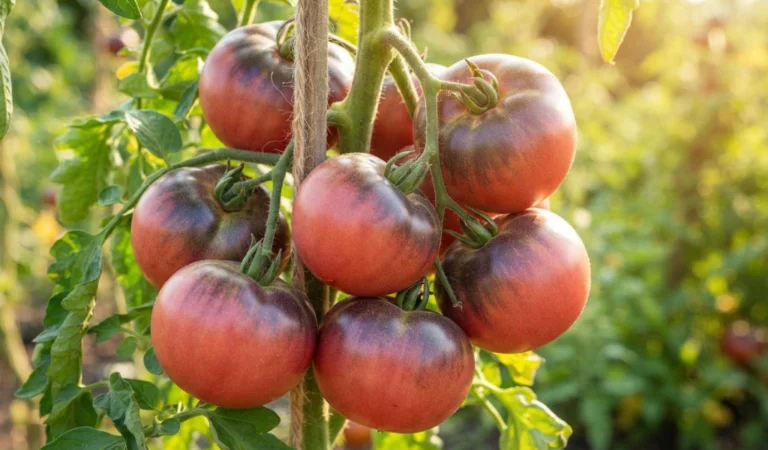
The beefsteak tomato earned its name because of its thick, steak-like slices and meaty texture. Unlike smaller slicing tomatoes, beefsteak varieties can weigh over a pound each, with some heirloom types growing even larger. Gardeners have been growing beefsteak tomato seeds for generations, passing down favorite varieties through families and local seed swaps.
Many of the most popular beefsteak varieties trace back to heirloom lines that were never hybridized, which is part of why they carry such deep, old-fashioned tomato flavor. Home gardeners often choose heirloom beefsteak seeds specifically because the taste is richer and more complex than what you typically find in grocery store tomatoes. Learning the Beefsteak Tomato Growing Stages connects you to this long tradition of home gardening and seed saving.
Why Grow Beefsteak Tomatoes
There are plenty of reasons gardeners choose to grow beefsteak tomatoes over other varieties. First, the size and flavor are simply unmatched for slicing tomatoes. A single ripe beefsteak tomato can cover an entire sandwich with one slice. Second, growing your own means you get to enjoy fresh tomatoes at their peak, rather than picking underripe fruit shipped from far away.
Home gardeners also love beefsteak tomatoes because they are versatile in the kitchen. You can slice them for sandwiches, dice them for salsa, or cook them down into a rich sauce. For anyone who wants to learn how to grow tomatoes from seed to harvest, beefsteak varieties are a satisfying choice because the reward, in both size and taste, feels bigger than with smaller tomato types.
The Beefsteak Tomato Growth Cycle
Understanding the full Beefsteak Tomato Growing Stages helps you plan your entire growing season, from starting seeds indoors to picking ripe fruit off the vine. Below is a breakdown of each stage in the beefsteak tomato life cycle.
- Stage One: Seed Starting: The first of the Beefsteak Tomato Growing Stages begins indoors, usually six to eight weeks before the last frost date in your area. Beefsteak tomato seeds are sown in a seed starting mix, which is lighter and better draining than regular garden soil. A heat mat set to around 75 to 80 degrees Fahrenheit speeds up germination significantly.
- Stage Two: Seedling Growth:
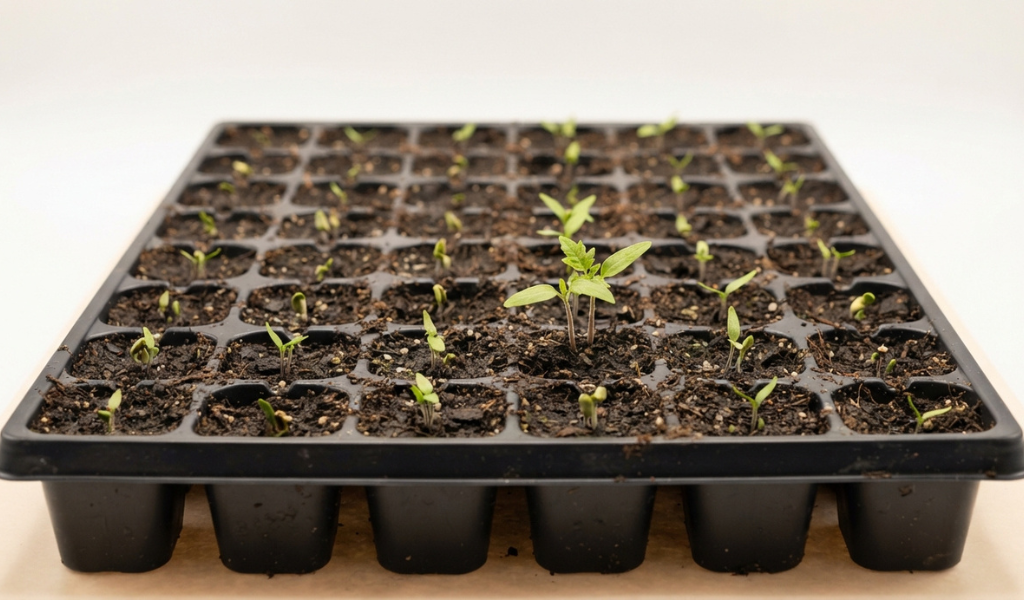 Once the seedlings grow their first true leaves, they enter the seedling stage. This is one of the more delicate Beefsteak Tomato Growing Stages, since young plants are sensitive to cold, overwatering, and lack of light. A sunny windowsill or grow light setup helps prevent leggy, weak stems during this indoor growing period.
 - Stage Three: Vegetative Growth: After transplanting outdoors, the plant shifts into vegetative growth. This stage is all about leafy growth and building a strong stem and root system before the plant puts energy into flowers and fruit. Strong growth here sets the foundation for a productive rest of the season.
- Stage Four: Flowering: Beefsteak flowers typically appear a few weeks after transplant, once the plant has built up enough vegetative growth to support fruit. This stage of the Beefsteak Tomato Growing Stages is when pollination becomes critical, since no flowers means no tomatoes.
- Stage Five: Fruit Development: After successful pollination, small green tomatoes begin to form and grow. Fruit development is one of the longest of the Beefsteak Tomato Growing Stages, often taking several weeks as the fruit slowly increases in size before it starts to change color.
- Stage Six: Ripening and Harvest: The final stage is ripening, when the beefsteak fruit shifts from green to red, orange, or yellow depending on the variety. Most beefsteak varieties take approximately 85 days from transplant to first harvest, though some may need closer to 80 days after transplant depending on growing conditions.
The Science of Germination
Germination is the very beginning of the Beefsteak Tomato Growing Stages, and getting it right matters more than most gardeners realize. Beefsteak tomato seeds need warmth, moisture, and darkness to sprout. A heat mat placed under the seed tray keeps the soil warm and consistent, which speeds up germination and improves success rates.
Once the seedlings break through the surface, they need bright light immediately. Without enough light, seedlings stretch upward searching for it, becoming thin and weak. Many experienced gardeners use a simple fluorescent or LED grow light placed just a few inches above the seedlings, raising it as the plants grow taller.
Tips for Growing Monster Beefsteak Tomatoes
If you want to grow impressive beefsteak tomatoes that can reach the size of a softball, a few simple but important habits can make a big difference throughout the beefsteak tomato growing stages. From choosing the right variety and starting with healthy seedlings to providing enough nutrients, support, and protection, each step plays a role in helping your plants produce large, healthy, flavorful tomatoes.
Choose Good Varieties
Choosing the right variety is one of the first steps toward growing truly large beefsteak tomatoes. Not all beefsteak varieties produce the same size, shape, or quantity of fruit. Some varieties, such as Brandywine and Beefmaster, are well known for producing exceptionally large tomatoes, while others may offer better disease resistance or perform more reliably in certain climates.
Before planting, consider your local growing conditions, available space, and the type of harvest you want. Selecting a variety that matches your climate and growing goals can give your plants a much better start.
Start Healthy
Strong plants begin with healthy seedlings. When starting beefsteak tomatoes from seed, use a good-quality seed-starting mix that drains well while holding enough moisture for young roots. Keep the growing medium consistently moist, but avoid keeping it waterlogged. Provide plenty of light so seedlings develop strong, sturdy stems instead of becoming tall and leggy. If several seedlings emerge close together, thin out the weaker ones so the healthiest plants have enough room, light, and nutrients to develop properly. A healthy start can make a noticeable difference as your plants move through the later beefsteak tomato growing stages.
Time Planting
Planting at the right time is another important part of growing large beefsteak tomatoes. Starting seeds too early can leave you with tall, weak, or rootbound seedlings before outdoor conditions are suitable for transplanting. On the other hand, starting too late can shorten the growing season and push your harvest further into the year. Aim to start seeds early enough for strong seedlings to develop while making sure outdoor temperatures are warm enough for transplanting.
Good timing gives your plants more time to establish strong roots, grow vigorously, flower, and develop fruit before the growing season ends.
Amend Soil
Beefsteak tomatoes are heavy feeders, so they need nutrient-rich soil to support their vigorous growth and large fruit. Before planting, improve your garden bed by mixing in plenty of mature compost or other well-decomposed organic matter. Good soil should provide nutrients while also draining excess water efficiently. Avoid compacted soil because tomato roots need access to both moisture and oxygen.
Preparing the soil before planting gives young roots a healthy environment and helps support strong growth throughout the season.
Feed, Feed, Feed
Large beefsteak tomatoes require plenty of nutrients, especially as plants become larger and begin producing flowers and fruit. Regular feeding during the growing season can help maintain steady growth and support fruit development. A quality tomato fertilizer can provide the nutrients plants need at different stages of development. During fruit production, gardeners may also use a fertilizer with adequate potassium to support flowering and fruit quality.
However, more fertilizer is not always better. Excessive nitrogen can encourage lots of leafy growth while reducing flowering and fruit production. Follow the fertilizer directions and adjust feeding according to how your plants are growing.
Cage and Prune
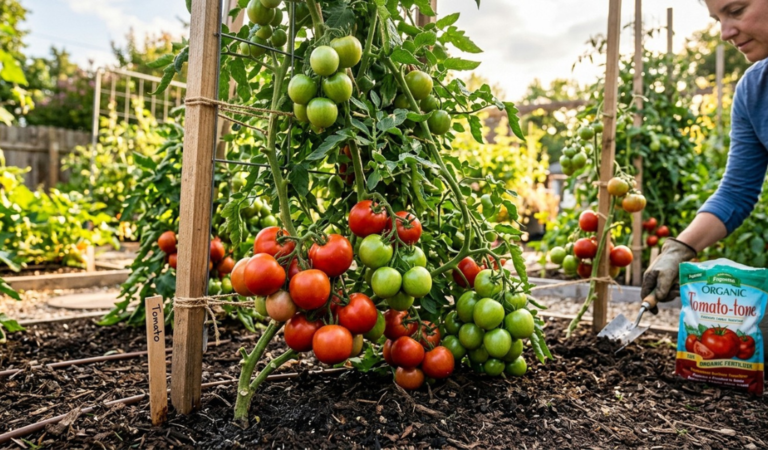
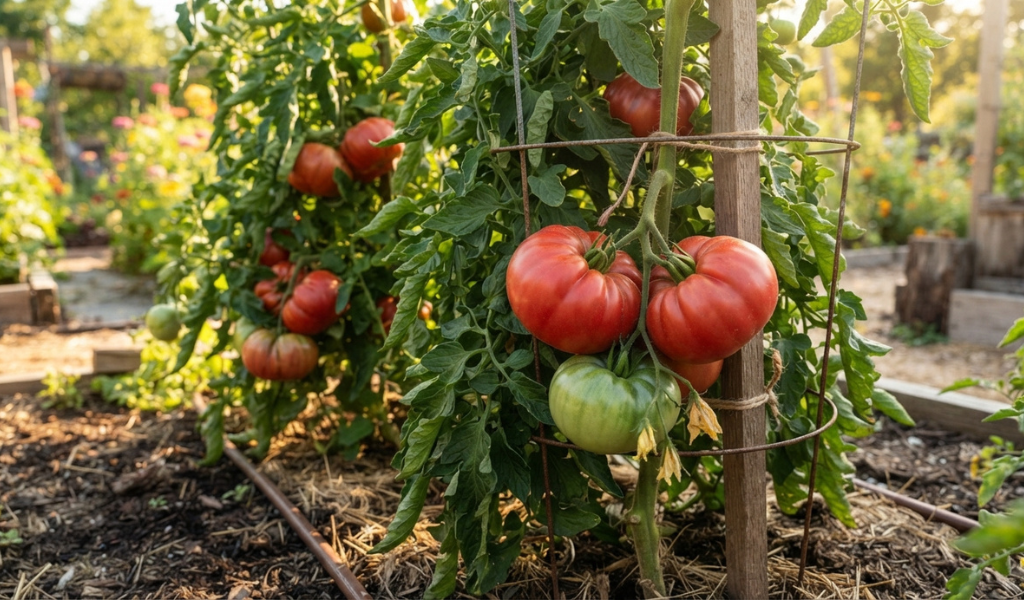
Most beefsteak varieties are indeterminate, which means they continue growing and producing fruit throughout the season as long as conditions remain favorable. Because these plants can become large and heavy, strong support is essential. Use a sturdy tomato cage, trellis, or other reliable support system before the plant becomes too large.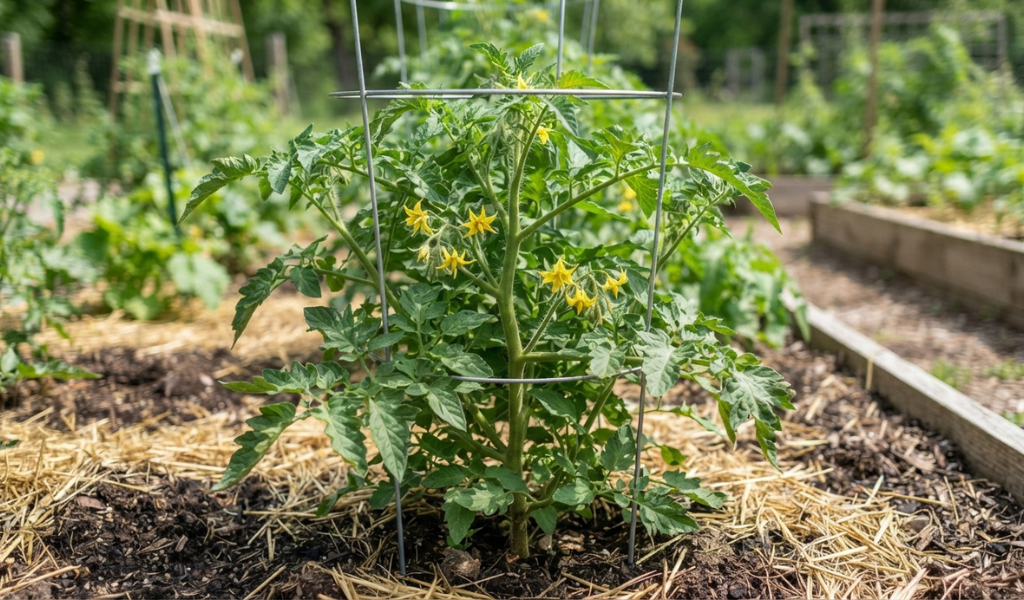 Supporting the vines keeps fruit off the ground and makes harvesting easier.
Pruning can also help manage vigorous plants. Removing some suckers—the small shoots that develop between the main stem and branches—can improve airflow and help direct the plant’s energy toward fewer, larger fruits. Avoid excessive pruning, though, because healthy leaves are still important for photosynthesis and fruit development.
Rotate
Crop rotation is a simple way to help reduce the buildup of soil-borne diseases. Whenever possible, avoid planting tomatoes in the same location year after year. Tomatoes belong to the same plant family as peppers and eggplants, so rotating these crops is helpful as well. Instead, move tomatoes to a different part of the garden and plant a different type of crop where tomatoes previously grew. This practice can help maintain healthier soil and reduce the chance of recurring problems season after season.
Protect
Even the healthiest beefsteak tomato plants can suffer from pests. Tomato hornworms, aphids, and other insects can quickly damage foliage and weaken plants if they are left unchecked. Inspect your plants regularly, especially the undersides of leaves and areas around new growth. Catching pests early makes them much easier to manage. Remove larger pests by hand when practical and use an appropriate garden treatment if an infestation becomes serious. Regular monitoring throughout the beefsteak tomato growing stages helps protect your plants and keeps them in better condition for producing those big, delicious tomatoes.
Nutrient Management for Beefsteak Tomatoes
Because beefsteak tomatoes are heavy feeders, nutrient management plays a major role in every one of the Beefsteak Tomato Growing Stages.
- Key Nutrients by Stage:During the seedling and vegetative stages, nitrogen supports strong leafy growth and stem development. Once the plant reaches flowering and fruit development, potassium becomes more important, helping the plant size up fruit and improve tomato flavor. Too much nitrogen during fruiting can actually reduce yields by pushing the plant toward leafy growth instead of fruit. Choosing the right organic fertilizer for tomato plants can help maintain this nutrient balance.
- The Role of Microbes and Medium: Healthy soil is full of beneficial microbes that help roots absorb nutrients more efficiently. Adding compost or aged manure introduces these microbes naturally, while mulch on top of the soil helps retain moisture and regulate temperature around the root zone.
Environmental Control
Temperature and light both play a big role in how smoothly a plant moves through the Beefsteak Tomato Growing Stages. Beefsteak tomatoes prefer daytime temperatures between 70 and 85 degrees Fahrenheit. Extreme heat can cause blossoms to drop before they are pollinated, while cold nights below 50 degrees can stall growth entirely.
Consistent watering, ideally through drip irrigation, keeps soil moisture even and helps prevent blossom end rot, a common issue caused by inconsistent watering and calcium uptake problems.
Transplanting and Support
Once seedlings have hardened off and outdoor temperatures are reliably warm, it is time to transplant them into the garden. Plant beefsteak tomato seedlings deep, burying part of the stem, since tomato stems can grow roots along their length, creating a stronger root system.
Setting up a tomato cage or trellis at transplant time, rather than waiting until the plant is large, prevents damage to roots and branches later on.
Staking and Pruning
As the plant grows taller during vegetative growth, staking keeps the heavy branches from breaking under the weight of large beefsteak fruit. Pruning suckers regularly throughout the season keeps airflow good, which reduces the risk of fungal disease, and channels the plant’s energy into producing bigger, more flavorful tomatoes.
Pollination and Fruit Set
Tomatoes are self-pollinating, but beefsteak flowers still benefit from a little help. Wind and the vibration from bees naturally shake pollen loose, but on calm days, gently shaking the plant or tapping the flower clusters can improve fruit set. Poor pollination is one of the most common reasons gardeners see flowers but no fruit during this stage of the Beefsteak Tomato Growing Stages.
Harvesting and Ripening
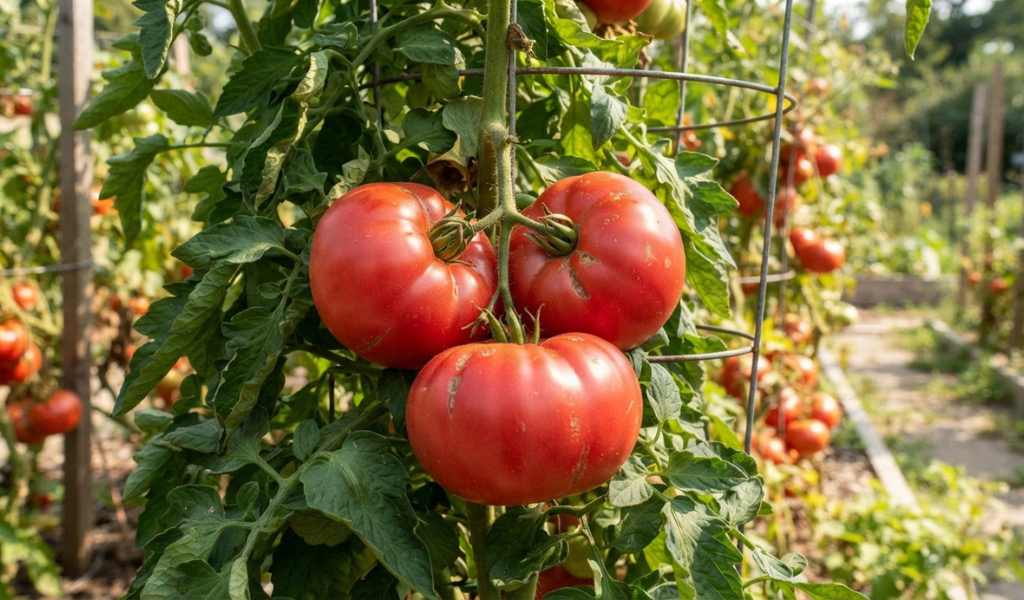
Harvesting beefsteak tomatoes at the right time makes a big difference in flavor. A ripe beefsteak tomato should feel slightly soft to the touch and have deep, even color across the skin. Picking too early results in bland fruit, while waiting too long can lead to cracking or rot, especially after heavy rain.
Storing Beefsteak Tomatoes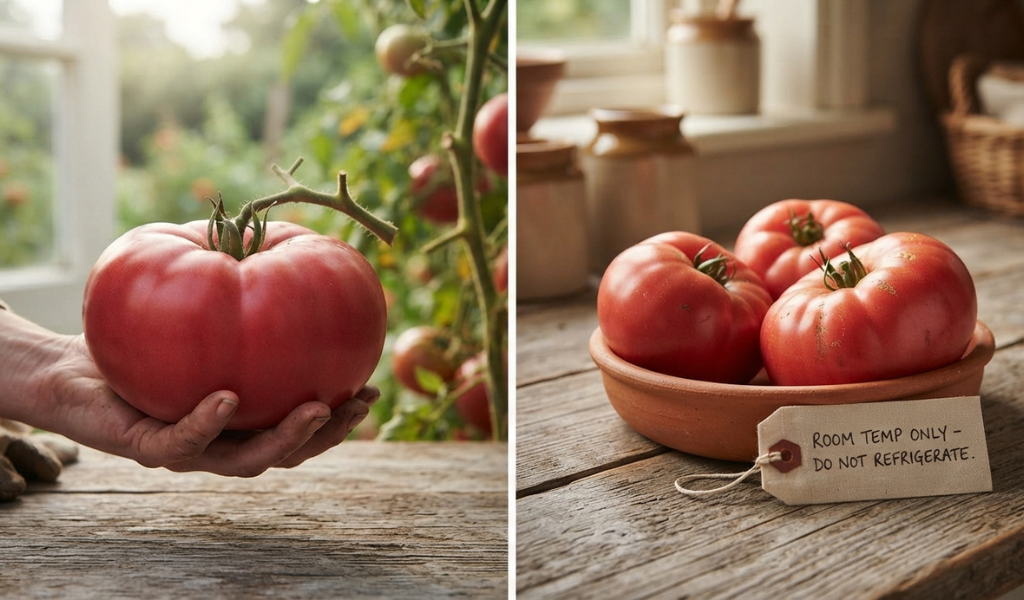
Once harvested, beefsteak tomatoes are best stored at room temperature, never in the refrigerator, since cold temperatures dull their flavor and texture. Store them stem-side down out of direct sunlight, and use them within a week for the best taste.
Common Problems and Solutions
Even experienced gardeners run into challenges during the Beefsteak Tomato Growing Stages. Blossom end rot, caused by calcium deficiency or inconsistent watering, is one of the most common issues, and it can often be fixed by keeping the soil evenly moist with mulch and consistent drip irrigation. Cracking happens when fruit takes in water too quickly after a dry spell, so steady watering habits help prevent this too.
Tomato hornworms can also be a serious threat, chewing through leaves and even fruit quickly. Hand-picking them off in the early morning is often the simplest solution for a small home garden.
Final Thoughts
Growing beefsteak tomatoes from seed to harvest takes patience, but the payoff is worth it. Once you understand the Beefsteak Tomato Growing Stages, from germination and seedling care to transplanting, flowering, fruit development, and finally harvest, the whole process becomes much easier to manage. Every gardener who sticks with it is rewarded with big, juicy, homegrown tomatoes that taste far better than anything from a store.
If you are ready to start your own beefsteak tomato garden this season, begin with quality seeds, give your seedlings a strong start indoors, and stay consistent with feeding and watering. Your future self, slicing into a warm, ripe beefsteak tomato fresh off the vine, will thank you.
Frequently Asked Questions
How long do beefsteak tomatoes take to grow? Most beefsteak varieties take around 80 to 85 days after transplant to reach harvest, though total time from seed can stretch closer to three to four months when you include the indoor seedling stage.
Why are beefsteak tomatoes hard to grow? Beefsteak tomatoes are heavy feeders that need consistent watering, strong support, and regular pruning because of their large fruit size. Skipping any of these steps during the Beefsteak Tomato Growing Stages can lead to smaller yields or problems like blossom end rot.
How many beefsteak tomatoes do you get from one plant? A healthy, well cared for beefsteak plant can produce anywhere from 10 to 20 large tomatoes over a full growing season, depending on the variety and growing conditions.
Do beefsteak tomatoes grow back every year? No, beefsteak tomatoes are annual plants and will not survive frost. Gardeners need to start new seeds or seedlings each growing season.
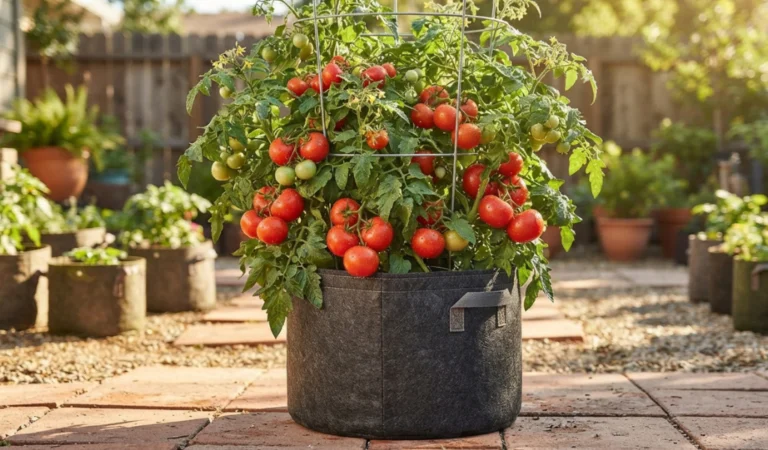
Can I grow beefsteak tomatoes in containers? Yes, beefsteak tomatoes can grow in large containers, ideally 15 to 20 gallons in size, as long as they have a sturdy cage or stake and consistent watering, since containers dry out faster than garden soil.
How many beefsteak tomatoes can one plant yield? On average, one indeterminate beefsteak plant can yield several pounds of fruit across the season, with individual tomatoes often weighing one pound or more each.
When is the best time to plant beefsteak tomatoes? Start beefsteak tomato seeds indoors six to eight weeks before your last expected frost date, then transplant seedlings outdoors once nighttime temperatures stay reliably above 50 degrees Fahrenheit.