Fertilizer for Tomato Seedlings: Fertilize Tomato Seedlings for Faster, Stronger Growth
The Best Fertilizer for Tomato Seedlings: A Complete Growing Guide
Growing your own tomatoes from seed is one of the most rewarding parts of having a garden, but it only works if your seedlings get the right nutrients at the right time. Picking the best fertilizer for tomato seedlings can mean the difference between a leggy, weak sprout and a sturdy plant ready to thrive once it hits the ground. In this guide, we’ll walk through everything you need to know about how to fertilize tomato seedlings, from choosing the right fertilizer to spotting the warning signs of overfeeding.
Whether you’re a first-time gardener or someone who’s grown tomatoes for years, these tomato growing tips will help you build healthier plants from the very start. Tomatoes are heavy feeders, which means they pull a lot of nutrients from the soil as they grow. Give them what they need early on, and you’ll set the stage for bigger harvests later in the season.
Why Fertilizer Matters for Tomato Seedlings
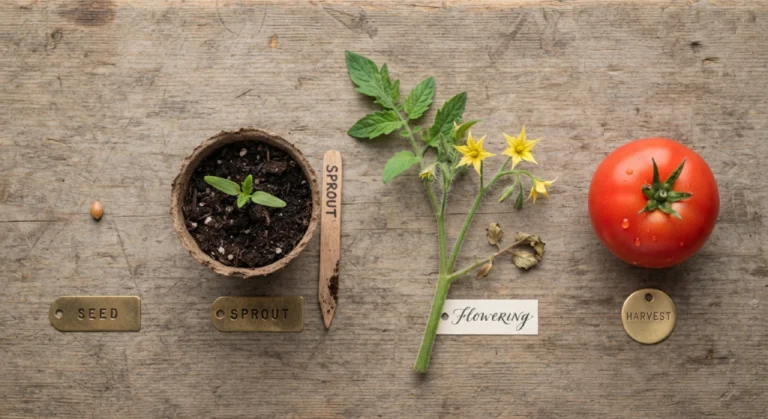
When a tomato seed first sprouts, it doesn’t need any extra fertilizer. The seed itself contains enough stored energy and nutrients to fuel the plant through its earliest days. But once your seedling develops its first set of true leaves, it starts pulling nutrients from the soil instead of relying on what’s left in the seed. This is the point where fertilizer becomes important.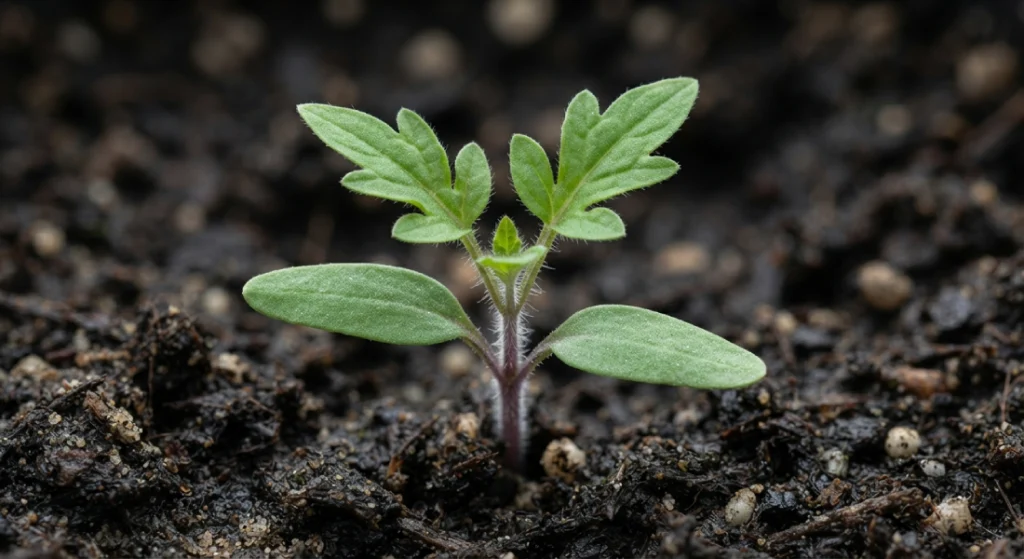
Without enough nutrients, tomato seedlings often become pale, thin, and slow to grow. Their stems may look weak, and their leaves can turn yellow or purple, which is often a sign of a phosphorus or nitrogen deficiency. On the other hand, giving seedlings the right nutrients at the right time helps build strong roots, thick stems, and healthy foliage. This early foundation matters. A tomato seedling with a strong root system will handle transplant shock better and grow into a more productive plant.
Since seedlings are still delicate, the goal isn’t to overload them with fertilizer, but to give them a gentle, steady supply of nutrients that supports plant growth without overwhelming their young root systems.
Choosing the Right Tomato Seedling Fertilizer
Not all fertilizers are created equal, and tomato seedlings have different needs than mature tomato plants. Choosing the right tomato seedling fertilizer comes down to understanding the three main types available to home gardeners: liquid fertilizer, slow-release fertilizer, and organic fertilizer.
Liquid Fertilizer
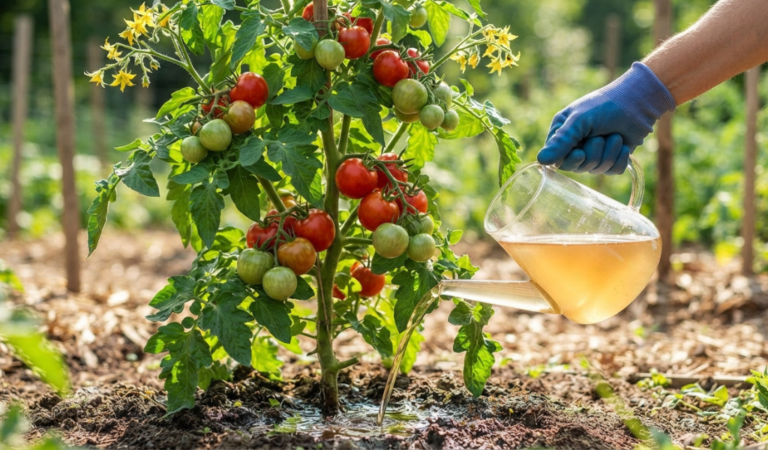
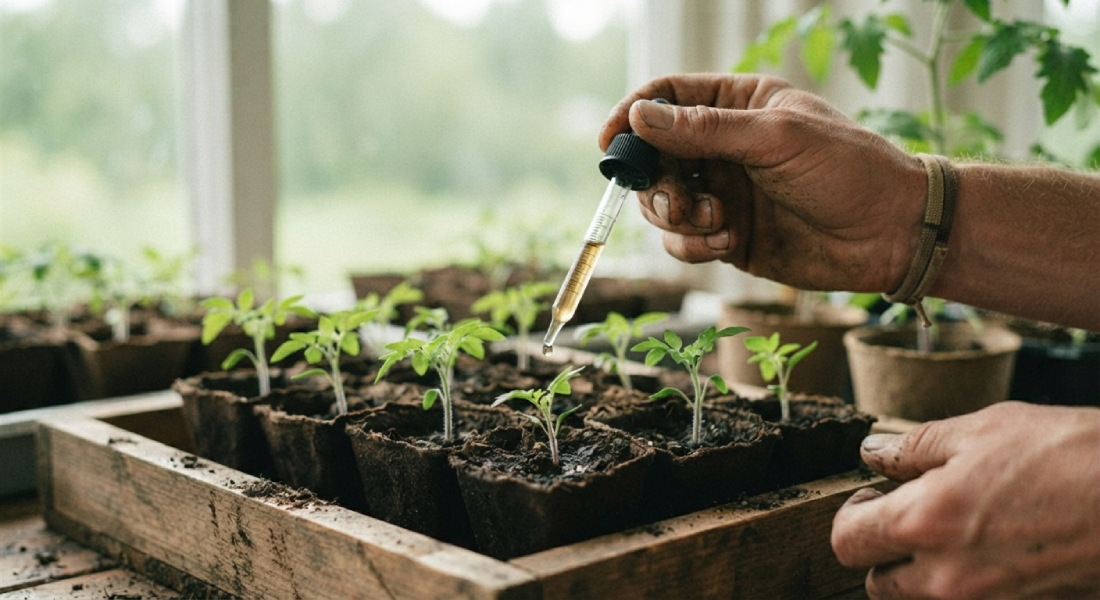
Liquid fertilizer is one of the most popular choices for seedlings because it’s fast-acting and easy to control. Since it’s water-soluble, you can dilute it to a weaker strength than what you’d use on mature plants, which helps prevent fertilizer burn. Many gardeners use a diluted liquid fertilizer at quarter or half strength when watering their tomato seedlings, gradually increasing the concentration as the plants grow bigger.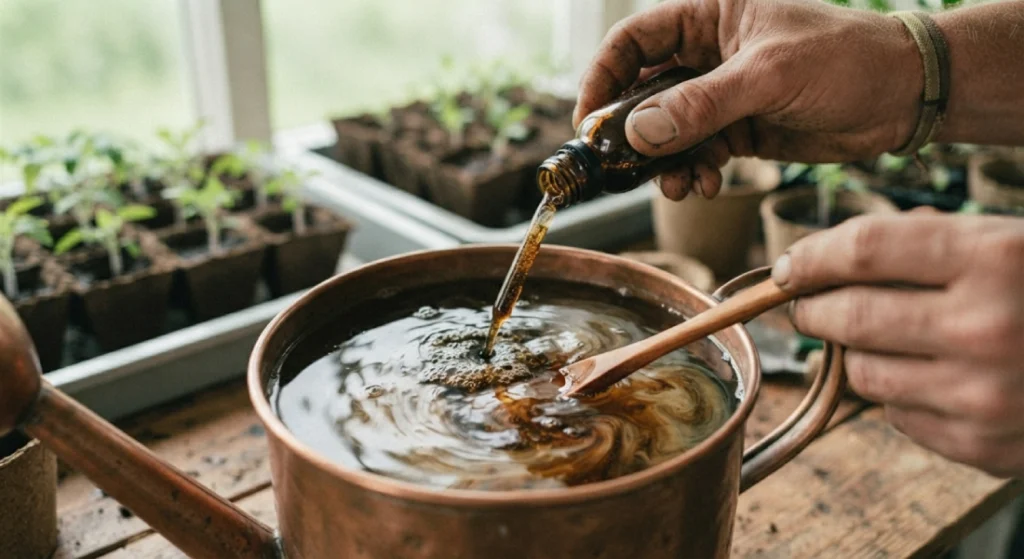
The main advantage of using a liquid fertilizer is how quickly the plant roots can absorb the nutrients. This makes it a great option if you notice your seedlings are struggling and need a nutrient boost right away. Fish emulsion, which we’ll cover in more detail later, is a popular liquid option among organic gardeners.
Slow-Release Fertilizer
A slow-release balanced fertilizer works differently. Instead of delivering nutrients all at once, it releases small amounts over time as the granules break down. This can be convenient because you don’t have to fertilize as often, but it also means less control over how much your seedlings are getting at any given moment.
For seedlings still in small pots, a slow-release balanced fertilizer should be used sparingly, since the concentrated granules can sit close to tender roots and cause damage. Many gardeners wait until seedlings are transplanted into larger containers or the garden before switching to this method.
Organic Fertilizer
Organic fertilizer options, like compost, worm castings, and bone meal, release nutrients gradually as microorganisms in the soil break them down. This slower release matches well with the gentle needs of tomato seedlings. Organic fertilizer also tends to improve soil structure over time, which supports long-term plant vigor and healthier tomato plant roots.
The tradeoff is that organic fertilizer can take longer to become available to the plant compared to liquid fertilizer. If your seedlings need a quick nutrient boost, organic options may not act fast enough on their own, so some gardeners combine organic fertilizer with a diluted liquid fertilizer for balanced feeding.
Best Organic Fertilizer Options
If you’re leaning toward an organic approach, there are several proven options for feeding tomato seedlings naturally.
Compost
Compost is often considered the gold standard for organic gardening. Mixing finished compost into your potting soil before planting seeds gives seedlings access to a wide range of nutrients, along with beneficial microbes that support root health. Compost also improves moisture retention, which is helpful for young seedlings that can dry out quickly in small pots.
Because compost releases nutrients slowly, it’s gentle enough to use directly in seed starting mix without the risk of burning tender roots. Many experienced gardeners top-dress their seedlings with a thin layer of compost every few weeks to keep a steady supply of nutrients available.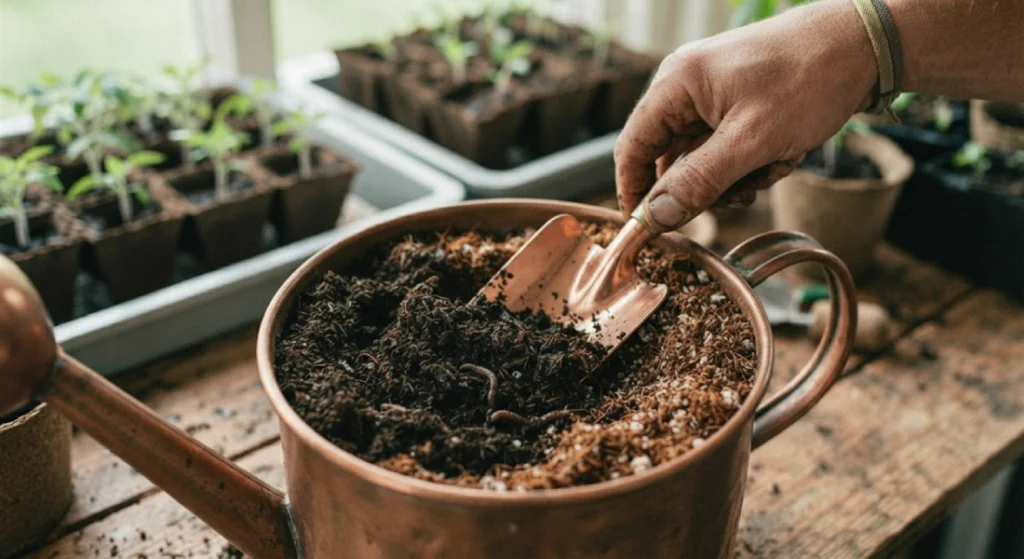
Fish-Based Fertilizers
Fish emulsion is a favorite among organic gardeners for good reason. It’s rich in nitrogen, which supports strong leafy growth, and it also contains trace minerals that support overall plant health. Since fish emulsion is a liquid, it’s easy to dilute and apply directly to the soil around the plant or seedling.
The biggest drawback of fish emulsion is the smell, which can be strong when first applied. That said, the odor fades within a day or two, and the nutrient benefits make it well worth using for many gardeners who are starting tomatoes from seed.
Other Organic Nutrient Sources
Beyond compost and fish emulsion, a few other organic nutrient sources are worth considering. Worm castings are gentle, nutrient-dense, and unlikely to burn seedlings even when used generously. Bone meal is another popular choice, particularly for its high phosphorus content, which supports root development and helps prepare plants to start producing flowers later in the season.
Some gardeners also use products like tomato-tone, a granular organic fertilizer formulated specifically for tomato plants. If you decide to use the tomato-tone, follow the package instructions carefully, since granular products can be more concentrated than compost or worm castings.
Understanding NPK for Tomato Seedlings
Every fertilizer label includes three numbers separated by dashes, like 10-10-10. These numbers represent the percentage of nitrogen, phosphorus, and potassium in the product, often referred to as NPK. Understanding what each nutrient does will help you choose a fertilizer that actually matches what your tomato seedlings need.
Nitrogen supports leafy, green growth. It’s essential in the early stages, but too much nitrogen can cause seedlings to grow tall and thin without developing strong stems, a problem often referred to as legginess. Phosphorus supports root development and helps young plants transition successfully after transplant. Potassium supports overall plant health and plays a role in helping tomato plants resist disease and stress.
For tomato seedlings, a balanced fertilizer, meaning one with roughly equal parts nitrogen, phosphorus, and potassium, such as a 10-10-10 blend, works well in most cases. As seedlings grow closer to transplant size, some gardeners shift toward a fertilizer slightly higher in phosphorus to encourage strong root systems before the move to the garden.
It’s worth noting that many seed starting mixes already contain a small amount of nutrients, so seedlings do not need fertilizer immediately after germination. Waiting until the first set of true leaves appears is generally the safest approach.
When and How Often to Fertilize Tomato Seedlings
Timing matters just as much as the type of fertilizer you choose. As mentioned earlier, tomato seedlings do not need fertilizer until they develop their first set of true leaves, which typically happens one to two weeks after germination. Before this point, the seedling is still living off nutrients stored in the seed itself.
Once true leaves appear, you can begin fertilizing with a diluted liquid fertilizer, usually at around a quarter strength. From there, most gardeners fertilize every one to two weeks, gradually increasing the strength of the fertilizer as the seedlings grow bigger and their root systems develop.
If you’re using a slow-release balanced fertilizer, a single light application when potting up seedlings into larger containers may be enough to sustain them for several weeks. Always check the specific product instructions, since slow-release fertilizers vary in how long their nutrients last.
A good general rule of thumb is to fertilize and water together, spreading nutrients evenly around the plant rather than concentrating them right against the stem. This helps nutrients reach the plant roots without causing localized damage.
When to Stop or Adjust Seedling Fertilizer
As your tomato seedlings get closer to transplant time, it’s a good idea to adjust your fertilizing routine. About a week before moving seedlings outdoors or into their final pots, many gardeners reduce or pause fertilizing altogether. This gives the plant a chance to focus its energy on root development rather than leafy growth, which can make the transplant process smoother.
After transplanting into the garden or a larger pot, wait about one to two weeks before resuming fertilizer applications. This gives the plant roots time to settle into their new environment without added stress. Once the plant is established and actively growing, you can begin a regular fertilizing schedule suited to a mature tomato plant, which often includes a switch to a fertilizer with more potassium and phosphorus to support fruit production.
If you’re unsure exactly what your soil needs at this stage, it’s worth taking the time to get your soil tested. A simple soil test can reveal existing nutrient levels, helping you avoid guesswork and preventing you from adding nutrients your plant may not need.
How to Avoid Fertilizer Burn and Signs of Overfertilization
One of the most common mistakes new gardeners make is applying too much fertilizer too soon. Because tomato seedlings are small and their root systems are still developing, they’re especially sensitive to concentrated nutrients. Too much fertilizer can pull moisture away from plant roots instead of feeding them, a problem known as fertilizer burn.
Signs of overfertilization include yellowing or browning leaf edges, wilting despite adequate watering, and stunted growth. In more severe cases, the entire seedling may collapse. If you notice these symptoms, stop fertilizing immediately and flush the soil with plain water to help dilute the excess nutrients.
To avoid this problem in the first place, always dilute liquid fertilizer more than the label suggests when using it on seedlings, and apply granular or slow-release fertilizer sparingly, keeping it a few inches away from the stem rather than piling it directly against the base of the plant. When in doubt, it’s better to underfeed slightly than to risk burning delicate seedlings.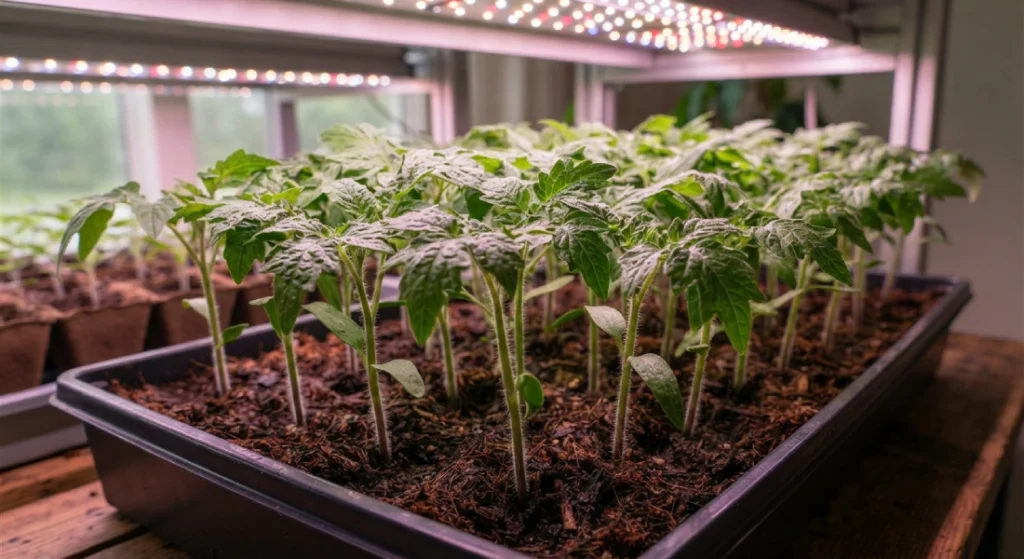
Tips for Maintaining Healthy Seedlings
Beyond fertilizing, a few extra habits can go a long way toward growing strong, healthy tomato seedlings.
Give your seedlings plenty of light. Weak, leggy growth is often more about insufficient light than a lack of nutrients, so make sure seedlings get at least 12 to 16 hours of light a day, whether from a sunny window or grow lights.
Water consistently, but avoid soggy soil. Overwatering can suffocate plant roots and make it harder for them to take up nutrients, even if fertilizer levels are correct. Let the top layer of soil dry slightly between waterings.
Provide airflow. A small fan or regular airflow in your growing space helps strengthen stems and reduces the risk of fungal issues, which can be common in humid indoor setups.
Harden off seedlings before transplanting. Gradually introducing seedlings to outdoor conditions over 7 to 10 days helps reduce transplant shock and prepares the plant for its new environment.
Following these tomato growing tips alongside a thoughtful fertilizing routine will help your seedlings grow into strong, productive plants ready to thrive in the garden.
Final Thoughts
Fertilizing tomato seedlings doesn’t have to be complicated once you understand what your plants need and when they need it. Start light, watch for true leaves before introducing fertilizer, and choose a product, whether liquid, slow-release, or organic, that matches your garden’s needs. Pay attention to how your seedlings respond, and don’t be afraid to adjust as they grow.
With the right fertilizer for tomato seedlings and a bit of patience, you’ll be well on your way to a healthy harvest of homegrown tomatoes, whether you’re growing cherry tomatoes on a windowsill or heirloom tomatoes in a backyard garden.
FAQs About Tomato Seedling Fertilizer
Do tomato seedlings need fertilizer right after they sprout?
No. Newly sprouted seedlings still have nutrients stored from the seed itself. Wait until they develop their first set of true leaves before starting a fertilizing routine.
What is the best fertilizer for tomato seedlings?
A diluted liquid fertilizer with a balanced NPK ratio, such as 10-10-10, works well for most seedlings. Organic options like fish emulsion or compost are also excellent choices for gentle, steady feeding.
How often should I fertilize my tomato seedlings?
Most gardeners fertilize every one to two weeks once true leaves appear, gradually increasing strength as the seedlings mature.
Can I use the same fertilizer for seedlings and mature tomato plants?
You can, but seedlings need it diluted more heavily to avoid fertilizer burn. Mature plants can typically handle stronger concentrations and often benefit from a fertilizer higher in phosphorus and potassium once they start producing flowers.
What are the signs of overfertilizing tomato seedlings?
Yellowing or browning leaf edges, wilting, and stunted growth are common signs. If you notice these symptoms, flush the soil with water and hold off on fertilizing for a while.
Is organic fertilizer better than synthetic fertilizer for seedlings?
Organic fertilizer releases nutrients more slowly, which reduces the risk of burning tender roots. Synthetic liquid fertilizer acts faster but requires careful dilution. Many gardeners use a combination of both for balanced results.
When should I stop fertilizing seedlings before transplanting?
Pause fertilizing about a week before transplanting to help the plant focus on root development, then resume one to two weeks after it’s settled into its new location.