How Overwatering Pepper Plants Kills Roots: Signs, Recovery, and Prevention Guide
Overwatering Pepper Plants: How to Identify, Fix, and Prevent It
You love your pepper plants, so you give them plenty of water. Every morning you head out with the can or the hose. Then the leaves turn yellow, the stems droop, and the plant looks sad. Many new gardeners are surprised to learn that overwatering pepper plants is one of the most common ways to kill them with kindness. Love is great, but roots need air as much as they need water.
The good news is that an overwatered plant can often be saved if you act fast. Whether you grow sweet bells, a single hot pepper in a pot, or a row of chilies in the garden, the fixes are simple. In this guide we will cover what happens inside the plant, the signs to watch for, a step-by-step rescue plan, and the right way to water. If the problem turns out to be a disease and not just too much water, our guide on How to Identify and Prevent Bacterial Wilt of Tomato can help, since peppers face similar threats.
What Happens When You Overwater Pepper Plants?
When you water pepper plants too often or too much, the soil stays soaked. That sounds harmless, but it sets off a chain of trouble below the surface. Roots do not just drink water. They also breathe. Every root cell needs oxygen to take in water and nutrients. When the soil is full of water, there is no room left for air.
How Excess Moisture Stifles Pepper Roots
Healthy soil is made of tiny particles with small gaps between them. In a good soil those gaps hold air and a little water. When you overwater, water fills every gap and pushes the air out. The roots start to suffocate within a day or two. Weak roots cannot absorb water or nutrients, so the plant slowly starves even though it sits in a puddle.
Then things get worse. Soggy soil is the perfect home for harmful fungus and bacteria. Damaged roots turn brown, then black, and begin to rot. Rotting roots cannot feed the plant at all. The leaves begin to wilt, which is confusing because the plant looks thirsty even though the soil is wet. Many gardeners add more water, and that finishes the job.
Overwatering hits young plants the hardest. Pepper seedlings have tiny roots and little reserve, so a few days of wet soil can cause them to flop over. In a pot with no drain holes, extra water collects at the bottom and the roots sit in it. In heavy garden soil, water pools around the root zone after rain or heavy irrigation.
There is another effect that matters to hot pepper growers. A plant that is always wet grows lots of soft leaves and fewer flowers. The fruit may taste bland, and hot types often make less capsaicin, which is the stuff that gives chilies their heat. A little dryness between waterings tends to produce stronger flavor and more heat.
Overwatering vs. Underwatering: Key Differences
Both mistakes make a plant droop, so it helps to know how to tell them apart. The soil is the best clue.
With underwatering, the soil feels dry and may pull away from the edge of the pot. The pot feels light. Leaves look dull and curl up, and the edges turn brown and crispy. The plant perks up within hours after a good drink.
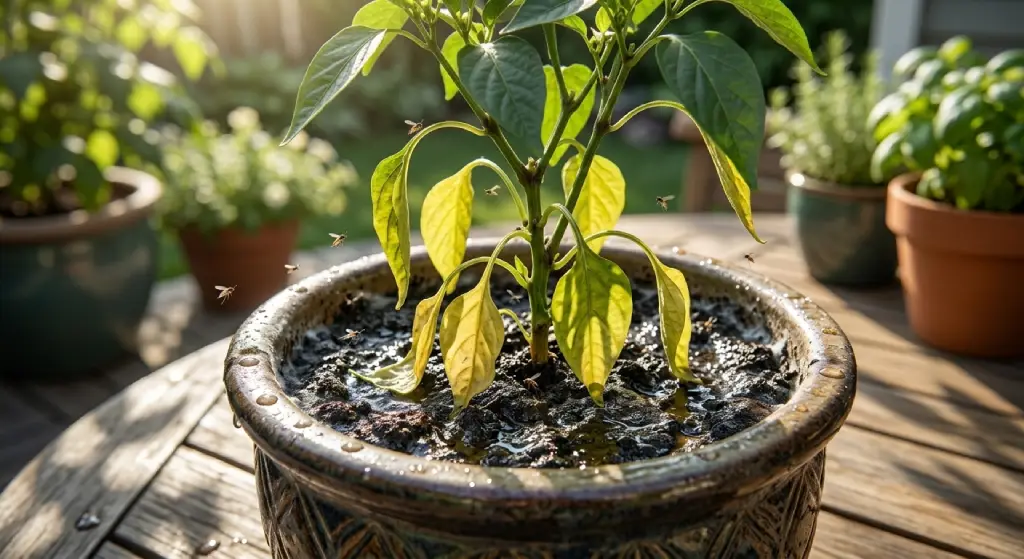
With overwatering, the soil feels wet, heavy, and sometimes smells sour. The pot feels heavy even days after watering. Leaves turn yellow, especially the lower ones, and feel soft and limp. The edges may look dark and watery instead of crispy. Giving more water makes the plant worse, not better.
Here is a quick way to check. Push your finger two inches into the soil. If it is dry, the plant needs water. If it is damp or wet, wait. You can also lift the pot. After some practice you will get a feel for the weight of a dry pot compared with a wet one.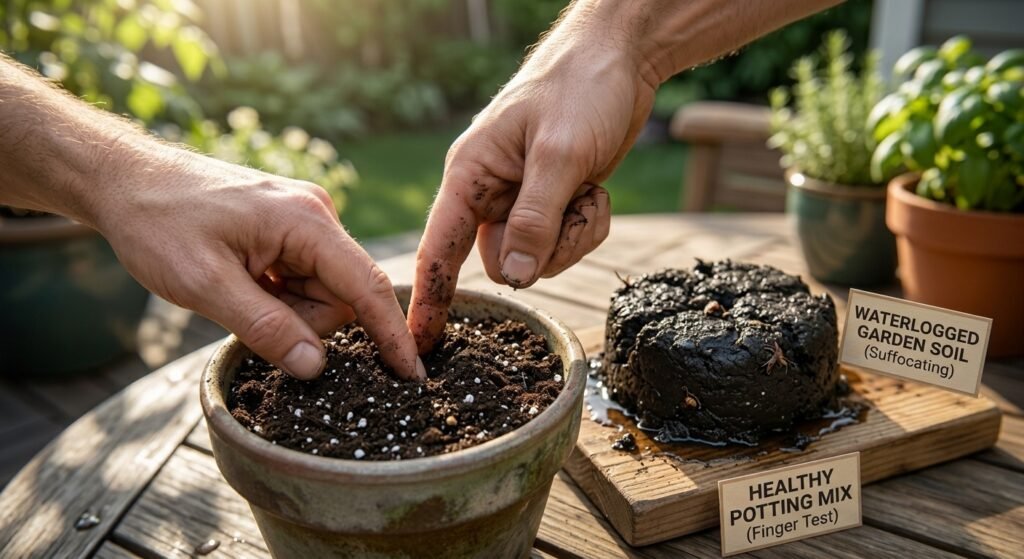
Sometimes the signs overlap. A plant that has been overwatered for weeks may end up with damaged roots that cannot take up water, so it wilts in wet soil. That is why checking the soil and the roots matters more than guessing from the leaves.
Early and Late Signs of Overwatered Pepper Plants
Spotting the problem early gives you the best chance to save the plant. Here are the signs, from mild to serious.
Early signs
- Leaves look a little dull or slightly droopy, even in the morning.
- The soil stays wet for more than three or four days.
- The lowest leaves begin turning pale green, then yellow.
- Tiny fungus gnats hover around the soil surface. These small flies love damp soil.
- Green algae or white mold shows up on the top of the soil.
- Growth slows down, and new leaves look small.
Late signs
- Many yellow leaves fall off, and the plant looks thin and weak.
- Leaves wilt and droop all day, and the plant does not recover at night.
- The stem near the soil feels soft, dark, or mushy.
- Blisters or bumps show on the underside of leaves, which come from water building up inside the leaf cells.
- Flowers and young fruit drop off.
- The soil smells sour or musty.
- Roots look brown or black, feel slimy, and have a bad smell.
A real-life example shows how fast it can go. A reader wrote that she bought a few jalapeno seedlings and kept them on a windowsill in small pots. She watered them every day because the windowsill was warm. After a week the lowest leaves turned yellow, and after two weeks two plants fell over. When she pulled them out, the roots were brown and mushy. She had been drowning them slowly. With the next batch she watered only when the top inch of soil felt dry, and all of them grew strong.
Take the signs seriously. Yellowing leaves alone can also come from a lack of nutrients or from pests, so always check the soil before you add fertilizer. Feeding a drowning plant makes things worse because stressed roots cannot use the food and may get burned.
Step-by-Step Guide to Saving an Overwatered Pepper Plant
If you caught the problem in time, you can rescue your plant. Work through these steps in order.
Step 1: Stop watering. Put away the hose or can. Give the soil time to dry out. This simple step solves mild cases all by itself.
Step 2: Check the drainage. Look at the bottom of the pot. Make sure there are open drain holes. Empty any water standing in the tray or saucer. If the pot has no holes, move the plant to one that does. For garden beds, check if water is pooling and dig a small channel to carry it away.
Step 3: Move the plant to a better spot. Place it in a bright spot with good airflow. Wind and warmth help the soil dry out. Avoid harsh direct sun at first if the plant is wilting, since stressed leaves can scorch. Bright, indirect light for a few days is fine.
Step 4: Loosen the soil. Gently poke a few holes in the soil with a chopstick or pencil, taking care not to hurt the roots. This lets air in and speeds up drying. In a garden, you can lightly rake the surface or remove thick mulch from around the stem.
Step 5: Remove damaged leaves. Take off leaves that are fully yellow or dead. This helps the plant focus on healthy growth. Do not strip it bare. Leave green leaves so the plant can still make food.
Step 6: Speed up drying if the pot is very wet. Tip the plant out of its pot and set the root ball on a stack of dry newspaper or paper towels for a few hours. The paper pulls out extra water. Then put the plant back. Do this gently and keep the roots out of the sun.
Step 7: Hold off on fertilizer. Wait until you see new growth. Then feed lightly with a diluted fertilizer.
Step 8: Water only when needed. Wait until the top inch or two of soil feels dry. Then water slowly and deeply, and let the extra water drain away fully. Do not set a fixed schedule yet. Let the soil tell you.
Give it a week or two. Signs of recovery include perky leaves, steady growth, and fresh green shoots at the tips. Plants that stay limp after a week of dry soil may have root rot, which needs more action.
How to Treat Root Rot Caused by Overwatering
Root rot is the serious result of too much water over time. It happens when fungus and bacteria in soggy soil attack the roots. Common culprits include fungi like Pythium and Phytophthora. You cannot fix it with a spray. You must remove the damage and give the plant fresh, well-drained soil.
How do you know it is root rot? Slide the plant out of its pot, or dig gently around a garden plant. Healthy roots are white or light tan and feel firm. Rotten roots are brown or black, soft, and slimy, and they may smell bad. The outer layer may slip right off when you rub it.
Here is how to treat it:
Take the plant out. Gently shake off the old soil. You can rinse the roots in lukewarm water to see them clearly.
Cut away the rot. Use clean scissors or pruners. Wipe the blades with rubbing alcohol before you start and between plants. Cut off every black, mushy root back to healthy white tissue. 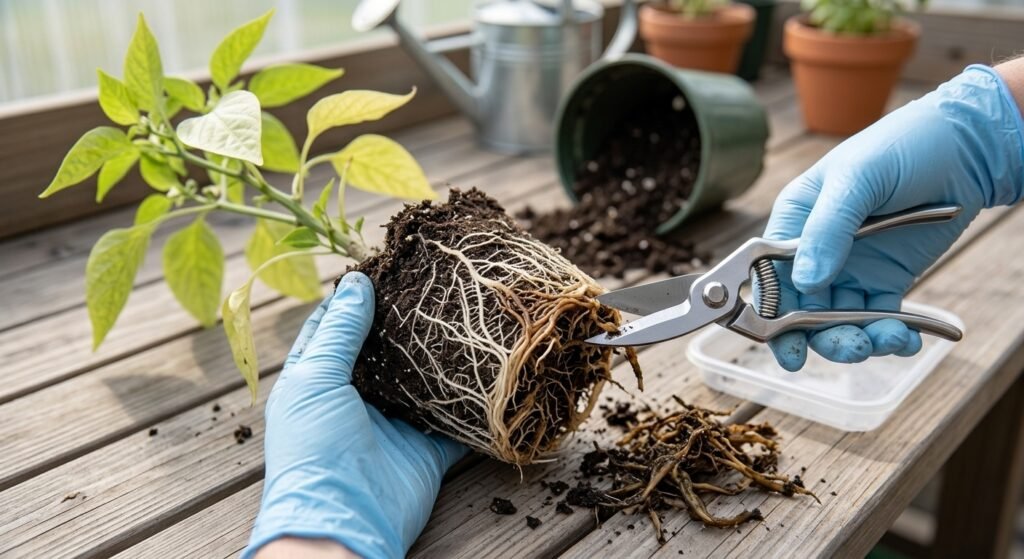 If more than half the roots are rotten, the plant may not recover, but it is still worth trying.
Trim the top to match. With fewer roots, the plant cannot support all its leaves. Remove a few leaves and any flowers so it can put energy into new roots.
Clean the pot. Scrub the old pot with soap and a mild bleach solution, then rinse well. Or use a new pot with plenty of drain holes. The container should be big enough for the roots but not huge. A very large pot holds extra water the plant cannot use.
Repot in fresh soil. Use a light mix with perlite or similar bits for drainage. Never reuse the old soil, since it holds the fungus. Plant at the same depth as before.
Water lightly. Give a small drink to settle the soil, then wait until the top layer dries. Keep the plant in bright, indirect light for a week while it recovers.
Watch and wait. New leaves are a good sign. If the plant keeps dropping leaves after two or three weeks, it may be time to start over with a fresh seedling.
For garden plants, you can often save the plant only if rot has not spread far. Pull it up, trim the roots, and replant it in a raised mound or a new spot with better drainage. If many plants in one bed are failing, improve the whole bed with compost and coarse material, and plant in a new area next season.
Some gardeners use a hydrogen peroxide rinse or a beneficial fungus product to help the roots. These may give a small boost, but they are no substitute for good drainage and careful watering.
How Often Should You Water Pepper Plants?
Here is the honest answer. There is no magic schedule. How often to water depends on the size of the plant, the pot, the soil, and the weather. A better plan is to water when the plant needs it, and you learn that by checking the soil.
The finger test. Push a finger two inches into the soil. If it feels dry, water. If it feels damp, wait a day or two. This works for pots and garden beds.
The weight test. Lift a container right after a deep watering. Lift it again every day. When it feels much lighter, it is time to water again.
Here are rough guides:
- Seedlings: Keep the soil lightly moist, never soggy. Water small pots every two to three days, and check daily. Bottom watering works well here. Set the pot in a tray with an inch of water for about 15 to 30 minutes and let the soil soak it up from below. Then empty the tray. This encourages roots to grow downward and keeps the top dry, which helps prevent fungus gnats and damping off.
- Container plants: Mature plants in pots may need water every day or two in hot weather and every four to five days in cooler weather. A big pot with good soil holds moisture longer than a small one.
- Garden beds: Peppers need about one inch of water per week, from rain or watering combined. In very hot and dry weather, they may need up to two inches. Water deeply once or twice a week instead of a little every day.
- Hot weather and sandy soil: Plants dry faster, so check more often. Hotter spells can mean watering every other day for pots.
- Cool and cloudy weather: Plants use much less water. Cut back to avoid soggy soil.
- Indoors: Indoor plants dry slowly because of low light and little wind. Check soil carefully and water less often than outdoor plants.
When you water, do it right. Pour slowly at the base of the plant until water runs out the bottom of the pot, so the whole root zone is wet. Then let the pot drain fully. Avoid wetting the leaves, especially late in the day, since damp foliage invites disease. Water in the morning so the plant has moisture for the day and the surface dries before night.
As for water quality, ordinary tap water is fine for most gardeners. If your tap water has strong chlorine, let a bucket sit out for a day before using it, though it rarely harms peppers. Rainwater is a nice bonus when you can collect it.
A few more habits help. Mulch garden beds with straw or leaves to hold steady moisture. Use pots with drain holes and a light, well-draining mix. Do not leave pots sitting in a full saucer. And keep a simple note of when you water, so you see patterns across the season.
Some water stress is not bad. A pepper plant that dries out a little between waterings grows stronger roots. Hot pepper growers often let the top inch dry fully to keep plants tough and the fruit spicy. Just do not let them wilt hard again and again.
Final Thoughts: Water Smart, Not Often
Overwatering pepper plants is easy to do and easy to prevent. Roots need air, so soggy soil is the enemy. Check the soil before you water, use pots with good drainage, and water deeply but only when the top inch or two feels dry. 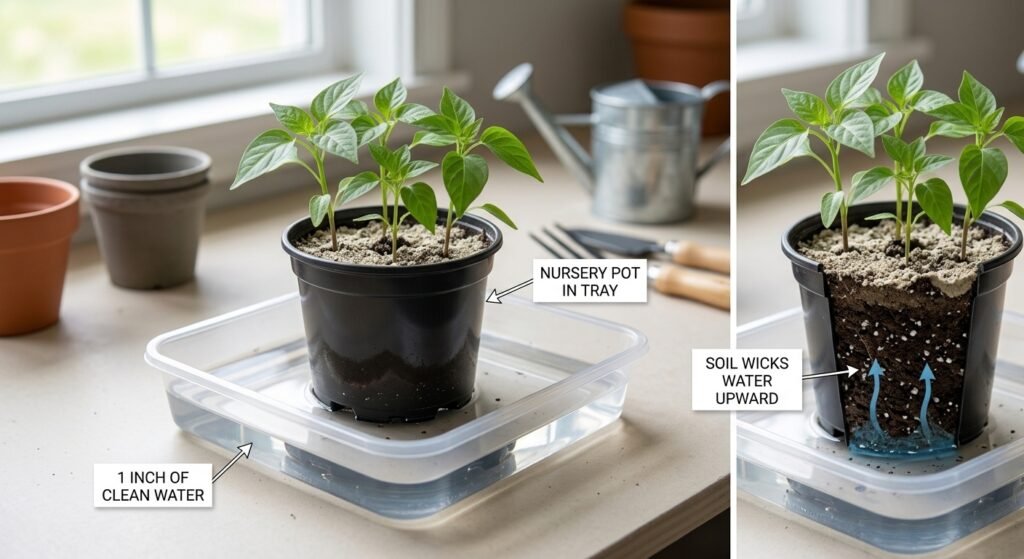 If trouble appears, stop watering, improve drainage, and treat root rot by trimming bad roots and repotting in fresh mix.
Your plants do not need a strict schedule. They need your attention. A quick finger test each morning will save more plants than any fancy product.
Now it is your turn. Walk out to your garden or porch, check the soil in each pot, and adjust your habits. If a plant looks sick, try the rescue steps above and watch for new growth. Share your questions or success stories in the comments so other gardeners can learn from you.
Frequently Asked Questions (FAQ)
How do I know if I am overwatering my pepper plants? Check the soil. If it stays wet for days, the lower leaves turn yellow, and the plant droops, you are likely overwatering. A sour smell and tiny flies around the soil are extra clues.
Can an overwatered pepper plant recover? Yes, if the roots are not badly rotted. Stop watering, improve drainage, and let the soil dry. For root rot, trim the black roots and repot in fresh, well-draining soil.
How often should I water pepper plants in pots? Check the soil every day. Water when the top inch or two feels dry. In hot weather that may be every day or two, and in cool weather every four or five days.
Is bottom watering good for pepper seedlings? Yes. It lets the soil soak up water from below and keeps the surface dry, which helps prevent fungus and gnats. Set the pot in a tray with an inch of water for 15 to 30 minutes, then empty the tray.
Why are the leaves yellow if the soil is wet? Wet soil blocks oxygen, so roots cannot take up nutrients, and the leaves turn yellow. This is one of the most common signs of overwatering, especially on the lower leaves.
How much water do pepper plants need in the garden? About one inch per week, from rain and watering combined. In very hot weather they may need up to two inches. Water deeply and less often rather than a little every day.
Should I fertilize an overwatered pepper plant? Not right away. Stressed roots cannot use the food and may get burned. Wait until you see new healthy growth, then feed lightly.