How to Get Rid of Blister Beetles on Tomatoes & Peppers Plants: Step-by-Step Guide:
How to Get Rid of Blister Beetles: Complete Organic Guide
You step out to check your garden one morning and the plants look like someone chewed through them overnight. Then you spot a cluster of slim, dark insects crowding the leaves and flowers. They look harmless. They are not. Meet the blister beetle, one of the most troublesome garden insects you can find in your yard or hay field.
If you want to know how to get rid of blister beetles without harsh chemicals you are in the right place. This guide walks you through the full plan. You will learn how to spot the pest, why you should never squash one, and which organic steps work best. If you have fought other leaf eaters before, you may also like our guide on Hornworms on Tomato Plants, since the same habits of daily checks and early action help with both.
A small blister beetle infestation can become a big headache fast. The adult beetles feed in groups and can strip a bed of flowering plants in days. They also carry a strong toxin that harms skin and can poison animals. So let us get into it.
Understanding Blister Beetles: Identification and Risks
Blister beetles belong to a large family with more than 7,000 species around the world. Many live in North America and you can find them from warm southern states to cooler northern areas in almost any hardiness zone. They show up most in summer. Adults come out in late spring or early summer and stay active through the mating season in late summer.
The life story of this insect is odd. Females lay clusters of eggs in the soil. The young larva that hatches is a tiny active hunter. It crawls around in search of grasshopper eggs and eats them. In this stage the beetle is actually helpful because it cuts down grasshopper numbers. Then the larva goes through several stages called instars. After that it turns into a pupa underground and finally comes out as an adult. The adult blister beetle is the stage that causes trouble because it eats plants.
Adults love legumes and many garden crops. They go after potato, tomato, bean, beet, and many flowers. They also feed on weeds such as pigweed. Their favorite place of all is an alfalfa field. A blister beetle problem in alfalfa is serious since the beetles can end up inside the hay and cause harm to livestock.
How to Identify Common Blister Beetle Varieties
There are many species so color and size vary. Most adults are long and narrow with a soft body and a head that looks wider than the neck. Their wing covers are often leathery and flexible rather than hard like a ladybug shell. Most are about half an inch to one inch long.
Here are some common looks you may see:
The black blister beetle is solid black or very dark gray. Some people confuse it with a harmless ground beetle. The ash gray blister beetle is soft gray and often feeds on potato and tomato leaves. The striped blister beetle has yellow or tan lines running down black wing covers. The margined blister beetle has a pale border along the edge of each wing cover. Some western species are brightly colored and a few look metallic or emerald green. One of these shiny green types is the original Spanish fly.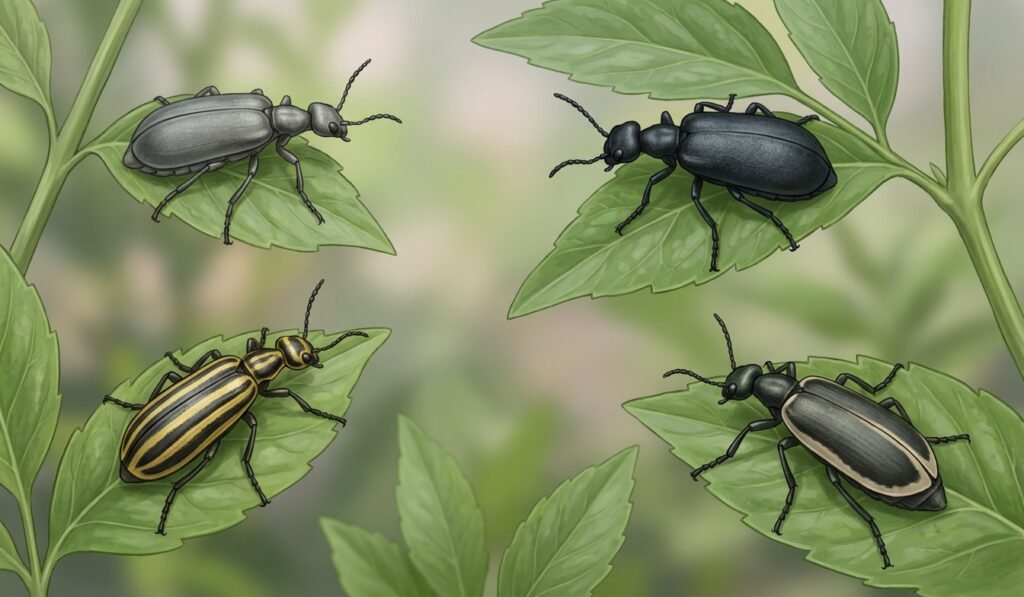
A quick tip for spotting them in the field. Blister beetles tend to congregate. If you see a clump of narrow beetles on one plant while other plants have none you are probably looking at this pest.
Why You Should Never Crush Them (The Cantharidin Hazard)
This is the most important part of the whole guide. A blister beetle makes a chemical called cantharidin. It sits in their blood, known as hemolymph, and the insect can secrete it when it feels scared or gets squeezed. Cantharidin is a strong blistering agent. If it comes in contact with human skin it can cause blisters or welts within hours. The burn may not hurt right away. That is why many people do not notice until later.
The same chemical has a long and strange past. Old books call the dried beetle powder Spanish fly and claim it works as an aphrodisiac. That idea is false and very dangerous. Swallowing it can cause severe pain and can damage the digestive tract and kidneys. People have died from it. Doctors do use tiny controlled amounts of cantharidin to treat a wart on the skin but only under medical care. You should never try anything like that at home.
Livestock face the biggest risk. Horses are especially sensitive. Even a small number of dead beetles in a bale of hay can be toxic to livestock. The toxin does not break down when the beetle dies or when the hay dries. That is why alfalfa growers pay such close attention to this pest. Pets and children who ingest beetles also need quick medical help. In short these insects pose a risk to both animals and people so treat every beetle with care.
Step-by-Step Organic Control Methods
The good news is that you do not need strong poison to solve this problem. Organic blister beetle control works well if you start early and stay steady. Most gardeners need a mix of methods rather than just one. The three steps below go from the simplest to the most hands on.
Before you start dress for safety. Wear long sleeves and long pants. Add rubber gloves and closed shoes. Never touch the beetles with bare skin. Work in the cool part of the day when the beetles move slowly.
Method 1: The Soapy Water Hand-Knock Technique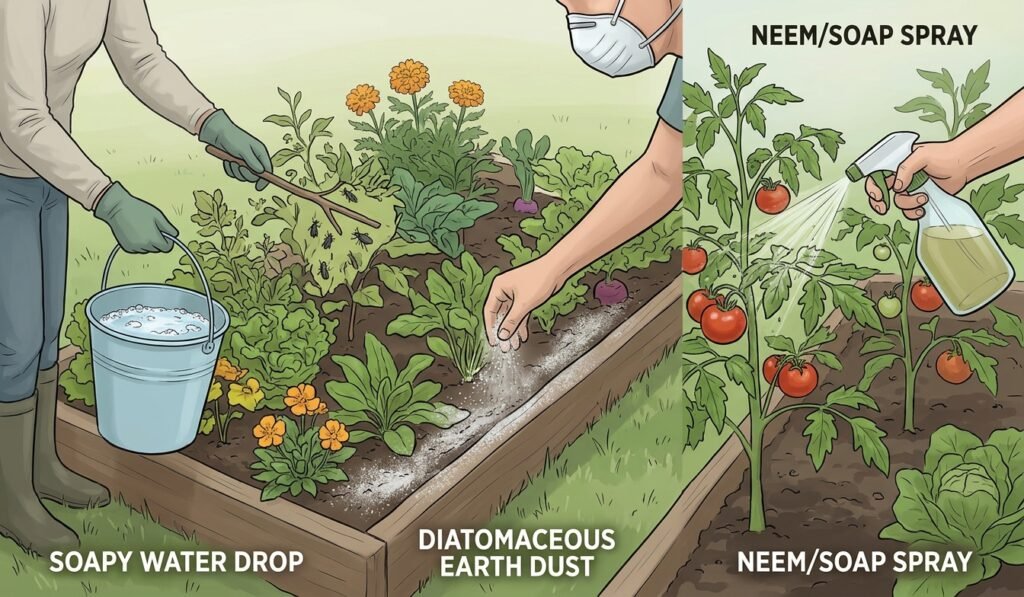
This is the safest and cheapest way to control blister beetles in a small garden. You will need a wide bucket or a pail of soapy water. Mix about two tablespoons of dish soap in a gallon of water. The soap breaks the surface tension so the beetles sink and drown fast.
Hold the bucket right under the plant. Then tap or shake the branch with a stick so the beetles drop straight in. Do not pinch or brush them off with your hand. Knocking works better than hand pick methods because you never touch the insect. Beetles also tend to drop when they feel a shake which makes your job easier.
Do this every morning for a week. Then check every other day. A neighbor of mine in a small backyard plot cleared a swarm from her bean patch in about ten days with nothing more than a bucket and a stick. When you finish dump the water far from the garden and away from pets. Or seal the dead beetles in a plastic bag and put them in the trash. Do not throw them to chickens or leave them near animals.
Method 2: Applying Diatomaceous Earth (DE)
Diatomaceous earth is a fine powder made from tiny fossil shells. To a person it feels like flour. To an insect it feels like broken glass. The sharp edges scratch the waxy coat on the beetle and dry it out.
Use food grade DE and sprinkle a thin layer on dry leaves and soil. A good trick is to put diatomaceous earth around the base of the plants and along the edges of the bed. This helps stop the larvae and new adults coming up from the ground. Wear a mask while you spread it so you do not breathe in the dust.
There are two things to remember. DE stops working when it gets wet so you must reapply it after rain or heavy dew. And it can also harm helpful insects such as bees if it lands on open flowers. Dust the leaves and the soil but skip the blooms. Use it in the evening when bees are less active.
Method 3: Using Neem Oil and Insecticidal Soaps
If the beetles keep coming you can step up to a spray. Neem oil comes from the seeds of the neem tree. It makes plants taste bitter and upsets the way insects feed and grow. Insecticidal soap works a bit differently. It breaks down the outer shell of soft bodied insects on contact and works fast on groups.
Mix the products as the label says. Spray in the early morning or at dusk. Cover the top and bottom of every leaf. Repeat every five to seven days until you stop seeing new beetles. Always test on one leaf first to be sure the plant can handle it.
For a heavy infestation some organic growers use spinosad. It comes from soil bacteria and is approved for organic use. Still it can harm bees so apply it late in the day and keep it off open flowers. Avoid broad chemical sprays unless a cooperative extension office tells you it is needed. Many chemical products kill the helpful insects along with the pest and that can make things worse. If you farm alfalfa or hay talk to your local extension agent. They can tell you the best way to use a pesticide in your area and the right timing for a cut.
Physical Barriers: Preventing Blister Beetles in the Garden
Control is only half the job. Stopping the beetles before they land is just as smart. A physical barrier keeps the adults off your plants so you never have to deal with them in the first place. It also protects bees and other helpful garden insects because nothing gets sprayed.
Timing is key. Adults often arrive in early summer and look for plants that are in bloom. If you put barriers up before that time you can save your crop. It also pays to clean up weeds like pigweed since they act as a snack bar for the beetles. And since grasshoppers attract the larvae a grasshopper problem often leads to a beetle problem. Keeping your grass trimmed can help keep both pests down.
Floating Row Covers and Fine Mesh
A floating row cover is a light fabric you lay over plants. Air water and sun pass through but insects cannot. It is one of the best tools for protecting garden crops from blister beetles.
Here is how to use it. Set the cover over hoops or just drape it right on the plants. Bury the edges in soil or hold them down with rocks or boards so no gaps remain. Even a small hole lets a beetle in. Check the edges every few days.
Fine mesh netting works the same way and it lasts longer. It is great for raised beds and flower gardens. If your plants need bees to set fruit such as squash or tomato you can lift the cover once the flowers open. Then put it back after pollination. Crops that do not need insects such as beans and beets can stay covered the whole season.
For hay and alfalfa you cannot cover a whole field. Instead farmers cut the crop before it blooms because beetles love flowers. Hay that is cut at the early bud stage has far fewer beetles. Many also skip crimping the hay at harvest since crushing the stems also crushes beetles and spreads the toxin through the bale. Check each bale and keep a close look at any hay you buy from far away. Hay that was cut in late summer carries a higher risk.
First Aid and Safety: What to Do If You Touch a Blister Beetle
Even careful gardeners get a surprise now and then. A beetle can hide in a glove or drop onto an arm. Know what to do before it happens.
First do not squish or rub the beetle. Brush it off gently with a stick or a piece of paper. If you were wearing gloves remove them and wash your hands. If the beetle touched your clothes remove any clothing that came in contact with it and wash it by itself in hot water.
Next wash the skin right away. Use plenty of cool water and mild soap and rinse for several minutes. Quick washing can stop the toxin from sinking in. 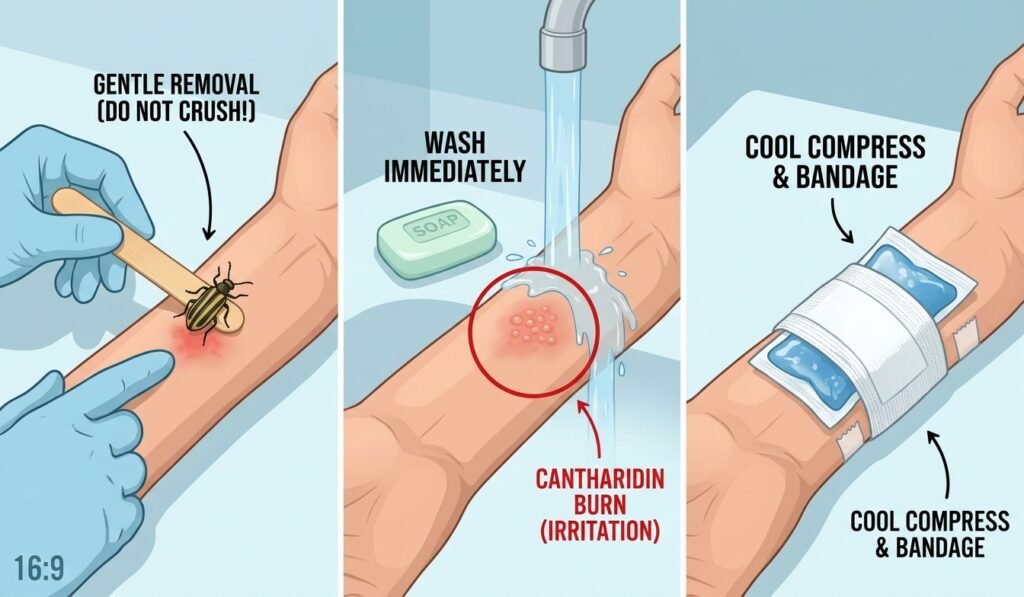 The skin may look normal at first. Within a few hours you may see redness and then blisters or welts. These blisters are not infectious. They result in irritation from the chemical.
Do not pop the blisters. Keep the area clean and covered with a loose bandage. A cold compress can ease the sting. Over the counter hydrocortisone cream may help with itch. Most small burns heal in one to two weeks. See a doctor if the blisters are large or if they touch the eyes or mouth. Also see a doctor if you see signs of infection such as pus or spreading redness.
If you or someone else swallowed a beetle or part of one call poison control or go to the emergency room at once. Signs include mouth pain and trouble swallowing as well as stomach pain and blood in the urine. If a horse or other animal may have eaten contaminated hay call a vet right away. Do not wait for symptoms. Early care gives the best chance of saving the animal.
When you work in the garden make safety a habit. Keep a pair of dedicated rubber gloves near the shed. Teach kids and pets to stay away from any strange beetles. And keep a small bottle of soap near the garden hose.
Final Thoughts: Keep Your Garden Safe and Beetle Free
Blister beetles may look small but they can cause real trouble. They can wreck flowering plants and ruin hay. They can also burn skin and poison animals. The good news is that you can handle them with simple organic steps.
To sum up the plan. Learn to spot them early. Never crush them. Knock them into soapy water each morning. Dust diatomaceous earth around your plants. Use neem oil or insecticidal soap if the numbers stay high. Block them with row covers before they arrive. And keep first aid steps fresh in your mind just in case.
If you stay steady you can control blister beetles in a few weeks. Start today by walking through your garden with a bucket and a pair of gloves. Share this guide with a friend who grows alfalfa or keeps horses. It might save a life.
Frequently Asked Questions (FAQ)
What attracts blister beetles to my garden?
They are drawn to flowering plants and legumes such as beans and alfalfa. Weeds like pigweed also pull them in. Grasshopper eggs in the soil attract the larvae which then grow into adults.
Are blister beetles dangerous to humans?
Yes if you crush them or handle them with bare hands. They release cantharidin which causes blisters and skin irritation. Swallowing the toxin is far worse and needs emergency care.
Can blister beetles kill horses?
Yes. Horses are very sensitive to cantharidin. Even a small number of dead beetles in hay can be fatal. Always buy hay from a source you trust and call a vet at the first sign of trouble.
What is the fastest organic way to kill blister beetles?
Knocking them into a bucket of soapy water works fast and costs almost nothing. For bigger problems use neem oil or insecticidal soap and follow with row covers to keep new beetles out.
Is Spanish fly really a beetle?
Yes. Spanish fly is a green blister beetle from Europe. People once ground it into powder and sold it as an aphrodisiac. That claim is a myth and the powder is highly toxic.
When are blister beetles most active?
Adults show up in late spring and stay busy through summer. Activity peaks in the mating season when females lay eggs in the soil. Check your plants often during these months.
Are blister beetles ever helpful?
In a way yes. The larvae eat grasshopper eggs which cuts down on another pest. But the adults do far more harm than good in most gardens and hay fields so control is still smart.