Cercospora Leaf Spot on Pepper Plants: Identification, Causes, and Easy Fixes
Cercospora Leaf Spot on Peppers: How to Identify, Treat, and Prevent Frogeye Spot
You walk out to your garden one morning and notice small round spots on the lower leaves of your bell pepper plants. A week later the spots have grown, the leaves are turning yellow, and your plants look thinner than they did last month. If this sounds familiar, you may be dealing with cercospora leaf spot on pepper plants growers know as frogeye. It is a common fungal disease, and it can strip a plant of its leaves fast when the weather stays warm and wet.
The good news is that you can stop it. Once you know what the spots look like and why they show up, you can act early and save most of your crop. This guide walks you through how to spot the disease, how to tell it apart from bacterial spot, which weather conditions make it worse, and what to do step by step to get your plants back on track.
What Is Cercospora Leaf Spot? (Cercospora capsici Overview)
Cercospora leaf spot is a fungal disease caused by a pathogen called Cercospora capsici. It attacks pepper plants of all kinds, including bell pepper, jalapeno, and hot types. Many people call it frogeye leaf spot because the damaged spots look a bit like the eye of a frog. You may also see it in eggplant and a few other plants in the same family, so it is worth checking your whole bed if one crop shows signs.
The fungus survives from one season to the next in old plant debris. If you leave diseased leaves lying on the soil at the end of the year, the fungus can wait there all winter and start the cycle again when you plant new transplants. It can also travel on seed and on infected transplants, which is why buying healthy, disease-free plants matters so much. Once spring arrives and the weather warms up, tiny spores form on the old spots and get carried to new leaves by wind and splashing water.
The disease usually starts on the older leaves near the base of the plant. From there it moves up as spores spread. A small outbreak early in the season may look harmless, but it can grow into heavy defoliation by mid summer. Fewer leaves means less shade for the fruit and less energy for the plant, so yields drop and peppers can get sunscald. Many growers lose a good share of their harvest simply because they waited too long to take the first spots seriously.
How to Identify Cercospora (Frogeye) Symptoms on Pepper Plants
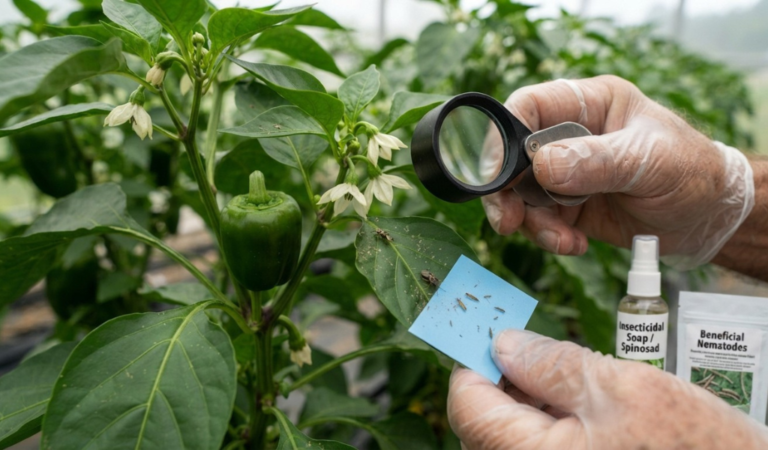
Identifying the problem early is the best way to protect your plants. The disease shows up in a few clear ways, and once you have seen them you will not forget them. Check your plants at least twice a week during warm and humid weather, and look at both sides of the leaves.
The “Frogeye” Pattern: Light Centers with Dark Red-Brown Borders
The classic sign is a round spot with a pale center and a dark ring around it. The center usually looks tan, light gray, or almost white, and the edge is a dark reddish brown. Some spots also have a thin yellow halo around the outside. Each lesion is roughly the size of a pencil eraser at first, though bigger ones can reach half an inch across.
What makes this pattern easy to spot is how neat the spots look. They are fairly round, and the border is sharp rather than blurry. When the weather is humid you may see a faint gray fuzz in the middle of the spot, which is the fungus producing spores. If you hold a leaf up to the light you can often see the center is thin and papery. That thin dead tissue is a big clue that you are looking at cercospora and not another problem.
Leaf Shot-Holes, Yellowing (Chlorosis), and Premature Leaf Drop
As the disease progresses, the pale centers dry out and crack. In many cases the dead tissue falls out completely and leaves a clean round hole, a look often called shot-hole. A leaf with five or six holes still works, but a leaf with twenty is struggling.
Meanwhile the area around the spots begins to turn yellow. When several spots sit close together the lesions coalesce, which means they merge into larger dead patches. The whole leaf then turns yellow, then brown, and finally drops. This drop usually starts at the bottom of the plant and climbs upward. If you see a pepper plant with a bare lower half and a few tired leaves on top, and you can find old frogeye spots on the fallen leaves, cercospora is a very likely cause.
A real life example shows how fast this can go. A home gardener with a raised bed of bell peppers noticed a handful of spotted leaves in late June. After ten days of warm nights and afternoon storms, nearly half the lower leaves had dropped. The fruit that stayed on the plant ripened with pale, soft areas from too much sun. Had the gardener removed the first spotted leaves and changed the watering habits right away, the damage would have been far smaller.
Identifying Lesions on Pepper Stems, Petioles, and Fruit Stalks
Leaves get most of the attention, but the fungus does not stop there. It can also form lesions on stems, on petioles (the little stalks that connect each leaf to the stem), and on the stalks that hold the fruit. These spots tend to be long and narrow rather than round. They look tan to light brown with a darker edge and may be slightly sunken.
Stem and petiole lesions matter because they can weaken the plant. A lesion that wraps around a petiole can cut off the supply to the leaf and make it wilt and fall early. On fruit stalks it can cause flowers and young peppers to drop. Fruit itself is not usually hit as hard as the leaves, but spots on the pods can show up in severe cases. When you inspect your plants, gently lift the leaves and check the stems close to the base of the plant as well as higher up, because the first signs often hide in the shade near the soil.
Cercospora vs. Bacterial Leaf Spot: Key Visual Differences
Many growers mix up cercospora and bacterial leaf spot, and it is easy to see why. Both cause spots, both cause yellowing, and both make leaves fall. But they come from different causes and they need different treatment, so getting the diagnosis right saves time and money.
Bacterial spot is caused by bacteria, mostly species of Xanthomonas. It is a different kind of pathogen from a fungus, and a fungicide that works on frogeye will not cure it. The easiest way to tell the two apart is to look at the spot closely. Bacterial spot lesions start small and water-soaked, which means they look dark and wet, almost greasy, especially on the underside of the leaf. They are often irregularly shaped or angular because they follow the veins. As they age they turn brown or black, and many have a yellow halo. They do not usually have that clean pale center with a dark ring.
The fruit gives another hint. Bacterial spot makes raised, rough, scabby spots on pepper pods, and these look quite different from the mild marks cercospora might leave. The symptoms of bacterial spot also tend to appear on young growth, while cercospora loves the older leaves first. In a bad bacterial outbreak, leaves can look ragged and torn from many small lesions that run together.
If you are still unsure, try this simple check. Pick a spotted leaf and look for a tan or gray center with a crisp dark border. If you find it, think cercospora. If the spots look wet, angular, and dark all the way through, think bacterial spot. When in doubt, take a few leaves to your local extension office for a lab test. It costs little and it tells you exactly what you are fighting. Other problems such as early blight or a nutrient issue can also confuse the picture, so a professional opinion is worth it if your plants are valuable.
Environmental Conditions That Trigger Cercospora Outbreaks
The fungus is always around in some form, but it does not cause real trouble unless the weather helps it. Understanding the conditions for disease development gives you a big edge, because you can change many of them in your own garden.
High Humidity, Warm Temperatures (75°F–90°F), and Leaf Wetness
Cercospora thrives when it is warm and humid. Temperatures between 75°F and 90°F are ideal, and the disease moves fastest when the leaves stay wet for many hours at a time. Think of a stretch of summer with hot days, muggy nights, heavy dew, and frequent rain. Those humid conditions are exactly what the fungus wants.
Wet leaves matter more than most people realize. Spores need a film of water to sprout and enter the leaf. When plants are wet for long periods, the odds of infection rise sharply. That is why overhead irrigation is risky. A sprinkler that soaks the leaves in the evening leaves them damp all night, and splashing water carries spores from older leaves to fresh ones and from plant to plant. Using a drip line or watering at the base of the plant keeps the foliage dry and cuts the risk a great deal.
The growing environment you create plays a big part too. Peppers planted too close together hold humidity around their leaves because air cannot move through the canopy. Heavy weeds add to the problem. Some weeds, especially solanaceous weeds like nightshade, can host the fungus and share it with your crop. Keeping rows open, spacing plants well, and pulling weeds near the bed all help create conditions that are less favorable for disease development. Remember that weather is out of your hands, but airflow, spacing, and watering are not.
Step-by-Step Treatment Plan to Save Infected Pepper Plants
If you already see frogeye spots, do not panic. A few well-timed steps can slow the disease and protect new growth. Keep in mind that no treatment can restore a leaf that is already badly spotted. The goal is to protect healthy tissue and stop the spread, so start as soon as you notice the first signs.
Emergency Pruning and Sanitization Protocols
Begin by removing the worst affected leaves. Pick off any leaf with several spots and any leaf that is turning yellow. Do this on a dry day, because handling wet plants spreads spores more easily. Do not remove more than about a third of the plant at one time, or you may stress it more than the disease does.
Place the infected leaves in a bag and take them away from the garden. Remove and destroy them by burning where it is allowed or by sealing them in the trash. Do not toss them in an open compost pile, because home piles often do not get hot enough to kill the fungus. Also clean up any fallen leaves from the soil around the base of the plant, since that debris is a major source of new spores.
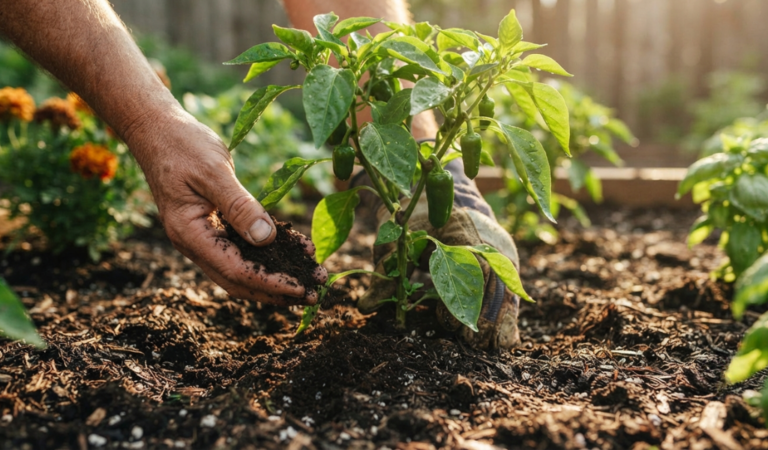
Sanitize your tools as you work. Wipe pruners with rubbing alcohol or a mix of one part bleach to nine parts water between plants. Wash your hands too. These small habits keep you from carrying the pathogen from one plant to the next. Once the pruning is done, mulch the soil with straw or clean plastic to stop rain from splashing spores up from the ground, and stake or cage your plants so the leaves stay off the soil.
Applying Organic Biofungicides and Liquid Copper Sprays
After cleanup, a spray program can help shield the healthy leaves. A protectant fungicide forms a barrier on the leaf surface, so it works best when you apply it before the disease spreads and keep it up on a regular schedule. Think of it as armor and not as medicine.
For organic growers, biofungicides based on Bacillus subtilis are a good starting point. These products use helpful bacteria to crowd out harmful fungi and support the plant’s own defenses. A liquid copper fungicide is another common choice. Copper is well known for bacterial spot, and it also gives some protection against fungal leaf spots, though it is usually less powerful against cercospora than against bacteria. Because of that, it can be a smart pick if you are not sure which disease you have, since it covers both.
Spray in the early morning or late evening so the leaves dry before strong sun hits them, and cover both the top and the underside of the leaves. Repeat every seven to ten days during wet weather, or follow the interval printed on the product. Always read the fungicide labels carefully. Check the allowed crops, the safe amount, the waiting time before harvest, and any warnings about heat, because copper can burn leaves in very hot weather or if you apply too much.
If you grow peppers on a larger scale, talk with your extension agent about other labeled fungicides and about rotating between different modes of action. This helps prevent the fungus from building resistance. Chemical sprays work best as one part of integrated pest management, which blends clean seed, spacing, good watering, sanitation, and sprays so that no single tool has to do all the work.
Final Thoughts
Cercospora leaf spot is one of those problems that feels scary at first and then turns out to be manageable once you understand it. Look for round spots with pale centers and dark borders, tell them apart from bacterial spot, and remember that warm weather and wet leaves are what drive the disease. Remove infected leaves, clean up debris, water at the base of the plant, and use a protectant spray as needed.
The best results come from combining small habits over the whole season. Start with disease-free transplants, give your plants room, rotate your crops, and keep weeds under control. Then check your plants twice a week and act quickly when something looks off. Go take a close look at your pepper plants today, and if you spot those frogeye marks, use this plan to start protecting your harvest right away.
Frequently Asked Questions (FAQ)
Can pepper plants recover from cercospora leaf spot?
Yes, most plants can recover if you catch the disease early. The spotted leaves will not turn green again, but you can protect new growth by pruning, adjusting your watering, and using a protectant spray. A plant that keeps a good amount of healthy leaves will still give you a fair harvest.
Is cercospora leaf spot the same as bacterial spot?
No. Cercospora is a fungal disease caused by Cercospora capsici, while bacterial spot is caused by bacteria such as Xanthomonas. Frogeye spots have a pale center with a dark border, and bacterial spot looks wet and angular. They also call for different management strategies, so a correct diagnosis comes first.
Can I still eat peppers from an infected plant?
In most cases yes. The fungus does not make the fruit harmful to eat. Just cut away any damaged areas, and make sure any spray you used is past its waiting period before harvest. Also watch for sunscald, which can happen when leaf loss leaves the pods exposed.
How does the disease spread in the garden?
It spreads through wind, splashing water, tools, and hands. Old plant debris on the ground and infected seed or transplants are also common sources. This is why sanitation and avoiding overhead irrigation are so important.
Will crop rotation help?
It will. Skip peppers, eggplant, and tomato plants in the same spot for at least two to three years, since the fungus can live in leftover debris. Rotating to a crop like beans or corn gives the old residue time to break down.
Are some pepper varieties more resistant?
Some pepper varieties handle the disease better than others, but few are fully immune to frogeye. Check seed catalogs and ask your local extension office about types that do well in your area. Even a tolerant plant needs good airflow and clean growing habits to stay healthy.
When should I start spraying?
Begin a preventative spray early in the season, before the disease appears, if you have had cercospora in the past. If this is your first year, start when you see the first spots or when long wet and humid weather is in the forecast.