Do Pepper Plants Need Fertilizer to Grow Healthy and Strong? Essential Garden Care Tips
Do Pepper Plants Need Fertilizer? A Complete Growing Guide
Growing peppers can be one of the most rewarding things you do in the garden until the plants stall out, the leaves turn yellow, and the fruits never show up. If you’ve been wondering, do pepper plants need fertilizer? The short answer is yes. But the longer answer is a bit more nuanced, and getting it right makes all the difference between a decent harvest and an incredible one.
This guide covers everything you need to know about fertilizing pepper plants from the essential nutrients they need, to the best fertilizers for peppers, to signs of over- and underfeeding. Whether you’re growing sweet bell peppers or fiery hot peppers in your backyard garden or in pots indoors, this guide will help you feed your pepper plants the right way.
Do Pepper Plants Need Fertilizer?
Yes, pepper plants need fertilizer to grow well. Peppers are heavy feeders meaning they pull a lot of nutrients from the soil throughout the growing season. Without enough nutrients, pepper plants tend to grow slowly, produce fewer flowers, and set very little fruit.
That said, how much fertilizer your pepper plants need depends on your soil. Some garden soils are naturally rich and may already have enough nutrients to support early growth. Others are depleted or sandy and will need regular feeding from the start. The best way to know for sure is to do a soil test before you plant. A basic soil test tells you what’s already in your soil so you can add only what your plants actually need, nothing more, nothing less.
Why Peppers Need Nutrients
Pepper plants go through several growth stages from seedling to flowering to fruit production and each stage puts different demands on the plant. Growing healthy foliage takes one set of nutrients. Producing flowers and setting fruit takes another.
When the soil is nutrient-rich, pepper plants develop strong root systems, thick stems, deep green leaves, and high fruit yields. When the soil is lacking, you’ll notice it quickly: leaves lose their color, growth slows down, and fruit production drops. Because peppers spend a long time in the ground (often five or more months), they deplete soil nutrients steadily. Replacing those nutrients through fertilizer is how you keep the plant healthy from start to finish.
Can Pepper Plants Grow Without Fertilizer?
Technically, yes but they won’t thrive. Pepper plants can survive in average garden soil without added fertilizer, especially if the soil is rich in organic matter. But most gardeners growing peppers for a real harvest will see noticeable improvements when they fertilize consistently.
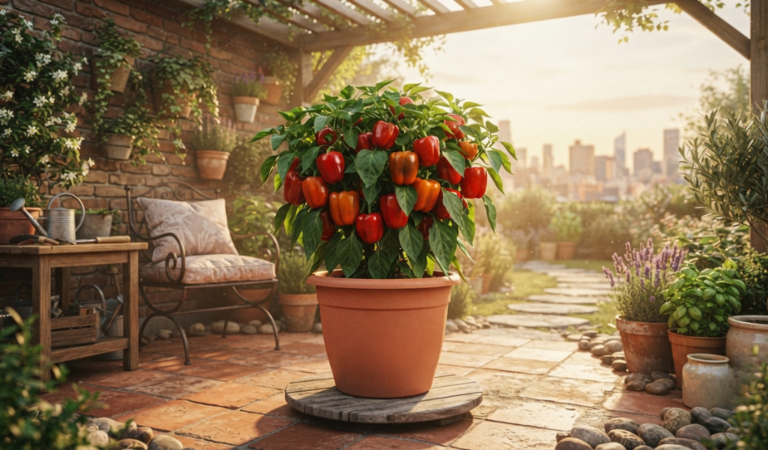
If you’re growing peppers in containers or raised beds with potting soil, fertilizer becomes even more important. Potting soil tends to lose its nutrients quickly, especially with regular watering. Without adding fertilizer, potted pepper plants often hit a wall around midsummer and stop producing. Regular feeding throughout the growing season keeps them going strong.
What Nutrients Do Pepper Plants Need?
Pepper plants, like all vegetables, need a range of nutrients to stay healthy. The three most important are nitrogen, phosphorus, and potassium often listed as N-P-K on fertilizer labels. But peppers also need secondary nutrients like magnesium and calcium, as well as various trace minerals.
Nitrogen for Healthy Leaf Growth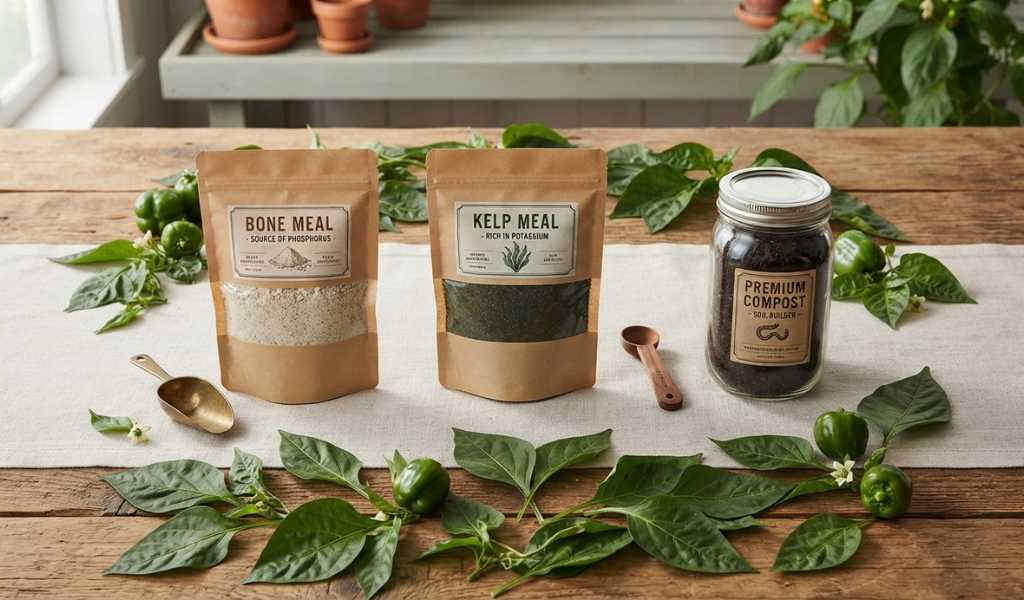
Nitrogen is the nutrient responsible for leafy, green growth. Early in the season, when pepper plants are putting on size and building their structure, nitrogen is the priority. A nitrogen-rich fertilizer at this stage encourages strong stems and full, dark green foliage.
However, too much nitrogen later in the season can work against you. When plants get an excess of nitrogen during flowering and fruiting, they put all their energy into growing leaves instead of producing fruit. Gardeners often say their pepper plants are “going all foliage” ; this is almost always a sign of too much nitrogen at the wrong time.
Phosphorus for Roots and Flowers
Phosphorus plays a big role in root development and flower production. Strong roots help the plant take up water and nutrients more efficiently. More flowers mean more opportunities for fruit. When phosphorus is lacking, you might notice the plant’s leaves take on a purplish tint, and flowering may be delayed or sparse.
Bone meal is one of the best natural sources of phosphorus for pepper plants. It releases slowly into the soil, which makes it a great addition at planting time.
Potassium for Fruit Development
Potassium is the nutrient that carries everything across the finish line. It supports fruit development, improves disease resistance, and helps the plant manage water and stress. Peppers need steady potassium levels throughout the fruiting stage to produce firm, well-sized fruits.
A fertilizer high in potassium during the fruit set helps peppers develop fully and resist common problems like blossom end rot. Look for fertilizers with a higher third number on the N-P-K label when your plants start setting fruit.
When Should You Fertilize Pepper Plants?
Timing matters a lot when it comes to fertilizing peppers. Here’s a simple breakdown:
- At transplanting: Mix a balanced fertilizer or compost into the planting hole to give seedlings a strong start.
- During early growth (weeks 2–6 after transplanting): Use a nitrogen-forward fertilizer to support leafy growth and root establishment.
- At flowering: Switch to a balanced or low-nitrogen fertilizer to encourage blooms without pushing too much foliage.
- During fruit set: Use a fertilizer higher in potassium to support strong fruit development.
- End of the season: Hold off on fertilizing as the season winds down. Late feeding can push new growth that won’t have time to mature before the first frost.
A good rule of thumb: if you’re growing peppers in the ground, start fertilizing about two weeks after transplanting and continue every two to three weeks through mid-summer.
What Is the Best Fertilizer for Pepper Plants?
There’s no single “best” fertilizer for peppers; it depends on your soil, your growing method, and the stage of growth your plants are in. That said, a few options consistently deliver great results.
Balanced NPK Fertilizer
A balanced fertilizer like a 10-10-10 or 5-5-5 is a reliable starting point for most pepper growers. It provides equal amounts of nitrogen, phosphorus, and potassium, making it suitable for general use throughout the growing season. Miracle-Gro All Purpose Plant Food is one of the most widely used balanced fertilizers, and it works well for peppers especially in containers.
As the season progresses and your plants start flowering, consider shifting to a fertilizer with a lower nitrogen number and higher phosphorus and potassium levels.
Organic Fertilizer Options
If you prefer to grow organically, there are excellent organic fertilizers that feed pepper plants effectively. Fish emulsion is a popular choice it’s high in nitrogen and releases quickly, making it useful early in the season. Chicken manure (composted) is another great option, as it’s nutrient-dense and improves soil structure over time.
For phosphorus, look at bone meal. For potassium, kelp meal and greensand are good organic sources. Many gardeners use a combination of these throughout the season rather than relying on a single product.
Liquid vs. Granular Fertilizer
Both liquid and granular fertilizers work well for peppers, but they perform differently.
Liquid fertilizer is fast-acting. It gets absorbed quickly through the roots (and sometimes the leaves, if you’re foliar spraying), making it ideal when plants show signs of nutrient deficiency or need a quick boost. It needs to be reapplied more frequently, usually every one to two weeks.
Granular fertilizer releases nutrients more slowly as it breaks down in the soil. It’s more convenient because it only needs to be applied every four to six weeks. Slow-release granular fertilizers are especially practical for busy gardeners who don’t want to fertilize on a tight schedule.
How Often Should You Fertilize Pepper Plants?
The frequency depends on what type of fertilizer you’re using:
- Liquid fertilizers: Apply every one to two weeks during the active growing season.
- Slow-release granular fertilizers: Apply every four to six weeks, following the label instructions.
- Compost top dressing: Apply every four to six weeks, or as needed throughout the season.
If your plants are in containers, they’ll need more frequent feeding because nutrients flush out of the soil faster with regular watering. For in-ground pepper plants in healthy soil, less frequent feeding is usually enough.
How to Fertilize Pepper Plants Correctly
Getting the technique right is just as important as choosing the right product. Here are a few key steps.
Follow the Fertilizer Label
This sounds obvious, but many gardeners skip it. Fertilizer labels include specific instructions for dosage and application frequency. Using more than recommended won’t make your plants grow faster, it’ll just increase the risk of burning them. Stick to the recommended rates, especially when you’re starting out.
Apply Fertilizer Around the Root Zone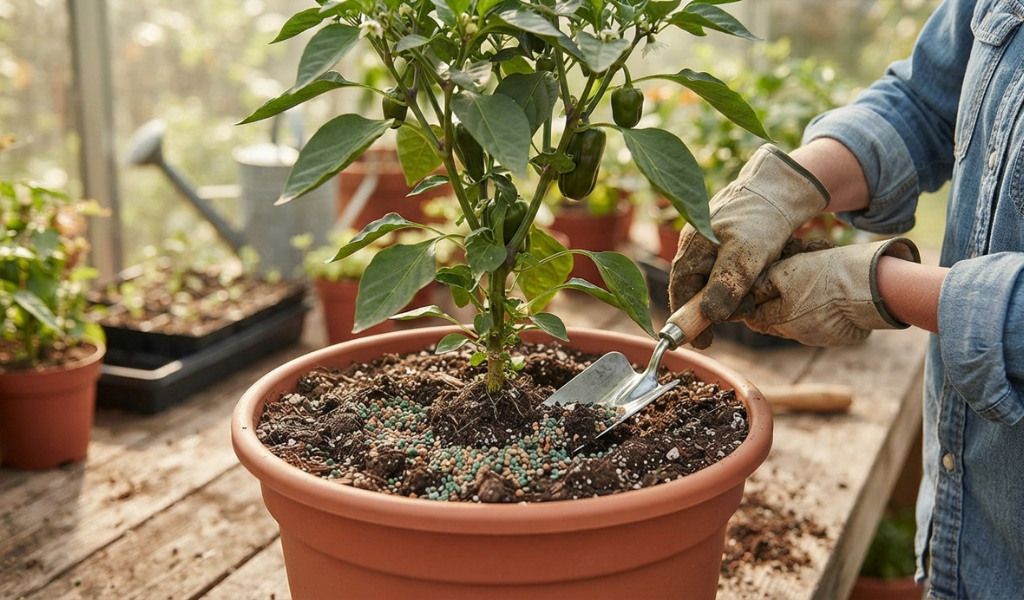
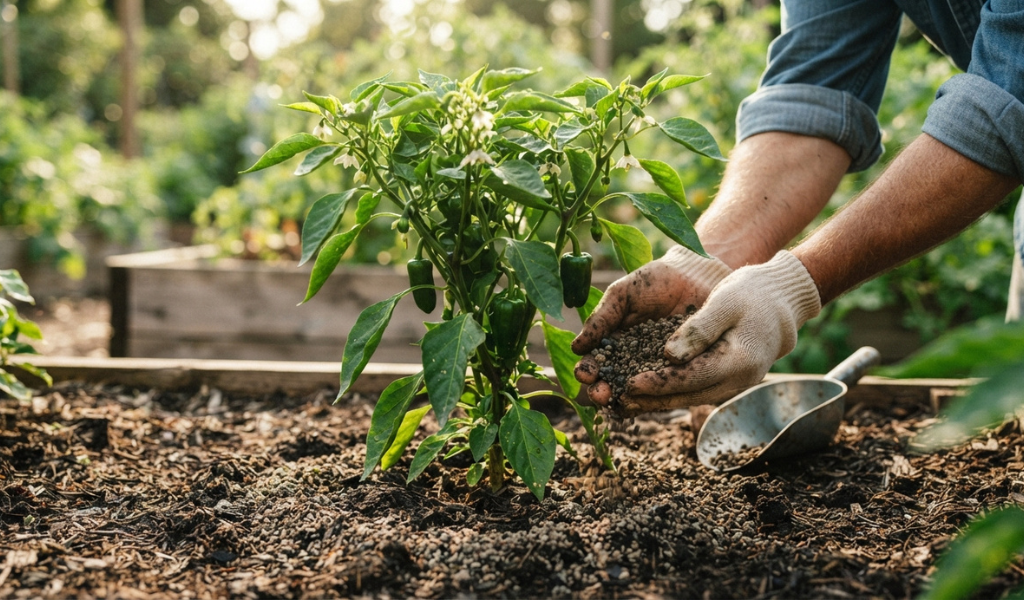
Don’t dump fertilizer right at the base of the stem. Spread it in a ring around the plant, starting about 4 to 6 inches from the stem and extending out to the drip line (the outer edge of the plant’s canopy). This is where the active feeder roots are, and it’s where the fertilizer will be most effective.
Water After Applying Granular Fertilizer
After spreading granular fertilizer around your pepper plants, water the area thoroughly. This helps the nutrients start breaking down and move into the soil where roots can access them. Dry granular fertilizer sitting on the soil surface won’t do much it needs moisture to activate.
Signs Your Pepper Plants Need Fertilizer
Pepper plants are good at sending signals when something’s off. Knowing what to look for helps you catch nutrient deficiencies early.
Yellowing or Pale Leaves
Yellow leaves are one of the most common signs of nutrient deficiency in pepper plants. When lower leaves turn yellow and drop, it often points to a nitrogen deficiency. If the yellowing appears between leaf veins (while the veins stay green), it may be a sign of magnesium or iron deficiency. Adding Epsom salt magnesium sulfate can help when magnesium is the issue.
Slow or Stunted Growth
If your pepper plants seem stuck barely putting on new leaves, staying small well into summer—they’re likely not getting enough nutrients. This is especially common in sandy soils that drain nutrients quickly and in containers where the potting soil has been depleted.
Poor Flower and Fruit Production
When a pepper plant looks healthy but isn’t flowering or setting much fruit, it may be getting too much nitrogen and not enough phosphorus and potassium. Adjusting your fertilizer to a lower-nitrogen formula often gets flowering going again within a few weeks.
Can Too Much Fertilizer Harm Pepper Plants?
Yes. Over-fertilizing is one of the more common mistakes pepper gardeners make. More fertilizer doesn’t mean more peppers. It means more problems.
Signs of Overfertilization
Fertilizer burn typically shows up as brown, crispy leaf edges especially on the tips. You might also see wilting, even when the soil is moist, or excessive leafy growth with very few flowers. In severe cases, the plant may look like it’s dying, and the soil may develop a white crusty layer from built-up salts.
How to Prevent Fertilizer Burn
The easiest way to avoid fertilizer burn is to follow the label and never apply more than recommended. A few other tips:
- Always water the soil before applying fertilizer, especially in dry conditions. Dry soil concentrates salts and increases the risk of burning roots.
- Keep granular fertilizer away from direct contact with the stem.
- If you’re using a liquid fertilizer, dilute it properly before applying.
- Do a soil test before the season starts so you know what your soil actually needs.
How to Fix Overfertilized Pepper Plants
If you’ve overdone it, don’t panic. The most effective fix is to flush the soil with water. Water deeply and repeatedly over a day or two to push excess salts down and away from the root zone. For potted plants, take them outside and water heavily until water runs freely from the bottom.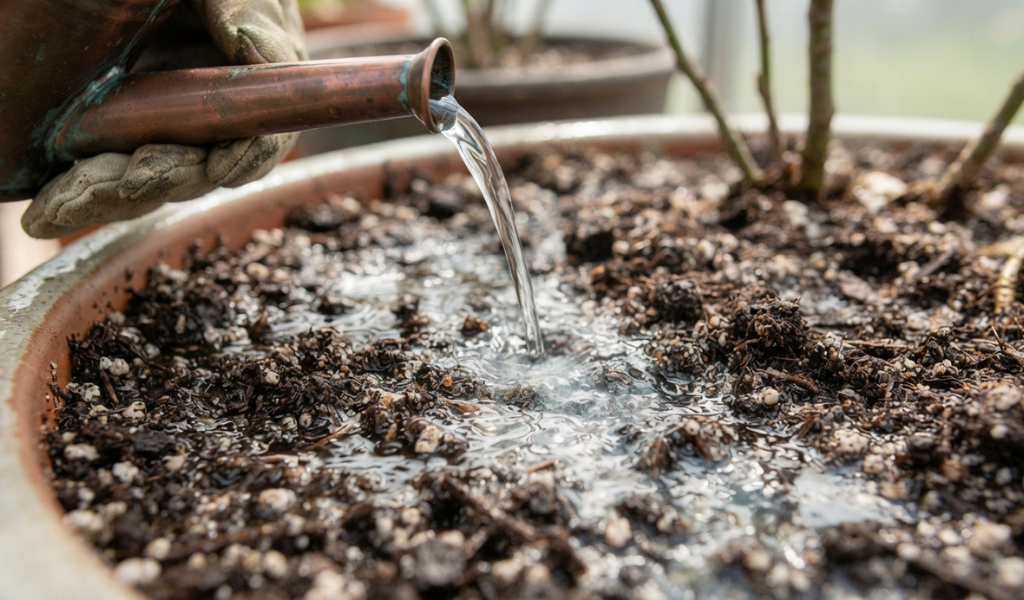
After flushing, hold off on fertilizing for at least two to three weeks. Let the plant recover before adding anything else. Once new growth looks healthy and green again, you can resume a normal fertilizing schedule at a lower rate.
Natural Ways to Feed Pepper Plants
If you’d rather avoid synthetic fertilizers altogether, there are plenty of effective organic options that improve your soil while feeding your plants.
Compost and Organic Matter
Homemade compost is one of the best things you can add to a pepper garden. It improves soil structure, boosts drainage in clay-heavy soils, and provides a slow, steady supply of essential nutrients like nitrogen, phosphorus, and potassium. Work compost into your garden beds before planting, and use it as a top dressing throughout the season.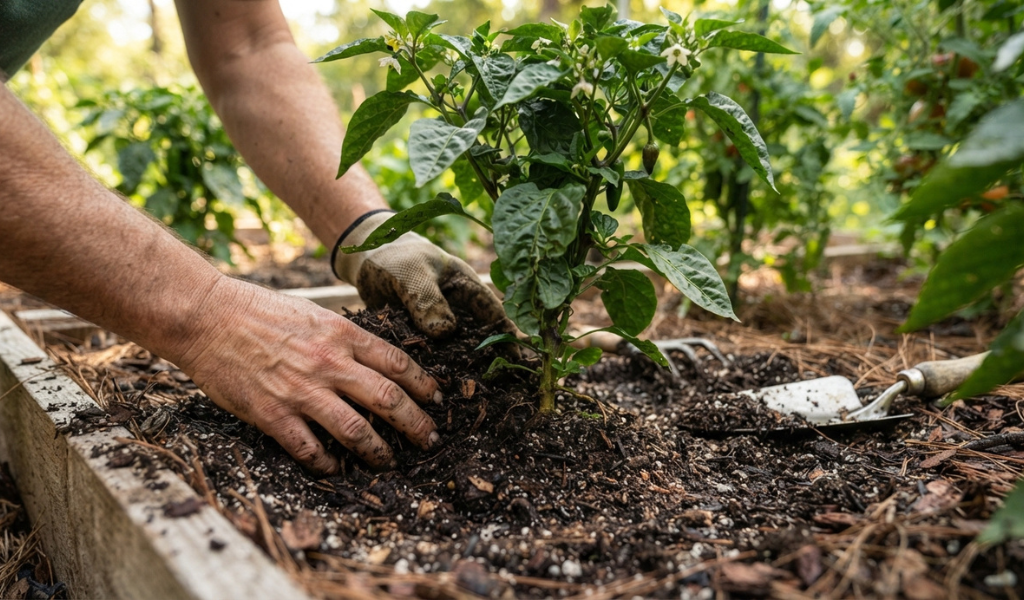
Aged manure, especially chicken manure, is another excellent way to boost soil fertility naturally. It’s high in nitrogen and releases nutrients gradually as it breaks down.
Fish Emulsion and Organic Fertilizers
Fish emulsion is a fast-acting organic liquid fertilizer that peppers respond well to, especially early in the season when they need nitrogen to get established. It has a strong smell, but it works quickly and also supplies trace minerals that synthetic fertilizers often miss.
Compost tea is another popular organic option. Made by steeping compost in water, it delivers a range of nutrients and beneficial microbes directly to the soil. It’s gentle enough to use frequently and works well as part of a regular feeding routine.
Feed Your Peppers Right for the Best Harvest
Fertilizing pepper plants isn’t complicated, but it does require some attention. The key is to match the fertilizer to the growth stage, avoid overdoing it, and watch your plants for signs of what they need. Start with a soil test, choose a good balanced fertilizer for early growth, and shift to a lower-nitrogen formula once flowering begins. Use compost and organic matter whenever you can they build long-term soil health that pays off season after season.
Get the feeding right, and your pepper plants will reward you with an abundance of bright, flavorful fruit from midsummer all the way to the first frost.
Frequently Asked Questions About Fertilizing Peppers
Should I put Epsom salt on my pepper plants?
Epsom salt can be beneficial for pepper plants if your soil is deficient in magnesium. It contains magnesium sulfate, which helps with chlorophyll production and nutrient uptake. If your pepper plants show yellowing between the veins of older leaves, that’s a classic sign of magnesium deficiency. Mix one tablespoon of Epsom salt per gallon of water and apply it as a soil drench or foliar spray every two to four weeks. That said, if your soil already has enough magnesium, adding Epsom salt won’t improve growth and may throw off your soil’s nutrient balance.
Do coffee grounds help bell peppers grow?
Coffee grounds can help, but with some caveats. They add organic matter to the soil and contain small amounts of nitrogen. They can also slightly acidify the soil, which is helpful since peppers prefer a soil pH of 6.0 to 6.8. However, coffee grounds should be used sparingly mixing them into compost first is usually better than applying them directly to the soil in large amounts, as they can compact and repel water.
Is Miracle-Gro good for pepper plants?
Yes, Miracle-Gro works well for pepper plants. Miracle-Gro All Purpose Plant Food is a balanced fertilizer that supports healthy growth throughout the season. For container peppers, Miracle-Gro Performance Organics or similar slow-release products can make feeding easier since you won’t need to apply them as frequently. Just follow the label instructions to avoid overfeeding.
Do peppers like to be watered every day?
Not necessarily. Pepper plants prefer soil that stays consistently moist but not waterlogged. In hot weather or for plants in containers, daily watering may be needed. In cooler weather or for in-ground plants in heavy soil, every two to three days is usually enough. Stick your finger about an inch into the soil if it feels dry, it’s time to water. Overwatering can lead to root rot and makes nutrient uptake less efficient, so always check before you water.
Does it matter what kind of Epsom salt you use?
For garden use, standard food-grade or agricultural Epsom salt works perfectly. Look for plain magnesium sulfate without any added fragrances or skin softeners, which are meant for bath use and can contain additives you don’t want in your soil. Garden-grade Epsom salt is widely available and inexpensive.
How long do peppers take to fully grow?
It depends on the variety. Most sweet bell peppers take about 70 to 90 days from transplanting to reach full maturity. Hot pepper varieties like jalapeños typically take 65 to 80 days, while some specialty hot peppers like ghost peppers or Carolina Reapers can take 100 to 150 days. Keep in mind that peppers started from seed need an additional 8 to 10 weeks before they’re ready to transplant, so plan accordingly if you’re starting from scratch.