How to Fertilize Pepper Plants: Best Fertilizer Tips for Healthy Growth
How to Fertilize Pepper Plants: A Complete Guide for Healthy Growth and Bigger Harvests
If you’ve ever grown pepper plants and ended up with more leaves than fruit, the problem often comes down to one thing: fertilizer. Knowing how to fertilize pepper plants correctly can mean the difference between a handful of peppers at the end of the season and a plant that keeps producing new blooms well into fall.
Pepper plants are heavy feeders. They pull a lot of nutrients from the soil throughout the growing season, and without a steady supply of nutrients, growth slows, flowers drop, and fruit production suffers. Whether you’re growing bell peppers, sweet peppers, hot peppers, or chili peppers, getting your fertilizing routine right is one of the most important things you can do for your garden.
This guide covers everything you need to know: what nutrients pepper plants need, how to choose the best fertilizer for pepper plants, when and how to apply it, and how to avoid the most common mistakes gardeners make. By the end, you’ll have a clear plan to help your pepper plants grow stronger, flower more consistently, and produce a bigger harvest.
Why Pepper Plants Need Fertilizer
Most garden soil doesn’t have enough nutrients to support a pepper plant through an entire growing season on its own. As the season progresses, roots continue absorbing minerals from the surrounding soil, and those nutrients get used up. Rainfall and watering also wash nutrients deeper into the ground, away from where roots can absorb them.
Unlike some vegetables that can get by with minimal feeding, pepper plants require a steady supply of nutrients to keep growing, flowering, and setting fruit at the same time. When the soil runs low, plants prioritize survival over production. You end up with strong stems and leafy growth but very little fruit.
Adding fertilizer replenishes what the soil loses and gives your pepper plants the right building blocks at each stage of growth. Think of it as regular maintenance for your garden, not a one-time fix.
Essential Nutrients Peppers Require
All fertilizers list three main numbers on the packaging. These three numbers represent nitrogen (N), phosphorus (P), and potassium (K), which together form the NPK ratio. These are the main three nutrients every plant needs, but each one plays a different role.
Nitrogen supports strong stems and leafy growth. It’s essential during the early stages when the plant is building size and structure. Too much nitrogen later in the season pushes the plant to keep producing foliage instead of shifting energy toward blossoms and fruit.
Phosphorus supports root development and is critical for flowering and setting fruit. A fertilizer that contains adequate phosphorus helps pepper plants transition from vegetative growth into heavy fruiting.
Potassium strengthens the plant overall. It helps regulate water movement, improves disease resistance, and supports consistent fruit production. During the fruiting stage, peppers generally benefit from more potassium than nitrogen.
Beyond the main three, peppers also need calcium, magnesium, and a range of trace minerals. Calcium prevents blossom end rot, which is a common problem in both bell peppers and hot peppers. Magnesium supports chlorophyll production, keeping foliage healthy and green.
Signs Your Pepper Plants Need Feeding
Before adding any fertilizer, it helps to understand what a deficiency actually looks like. Here are the most common signs your pepper plants are telling you they need nutrients.
Yellowing leaves, especially older ones near the base of the plant, often point to a nitrogen deficiency. The plant is pulling nitrogen from older foliage to support new growth.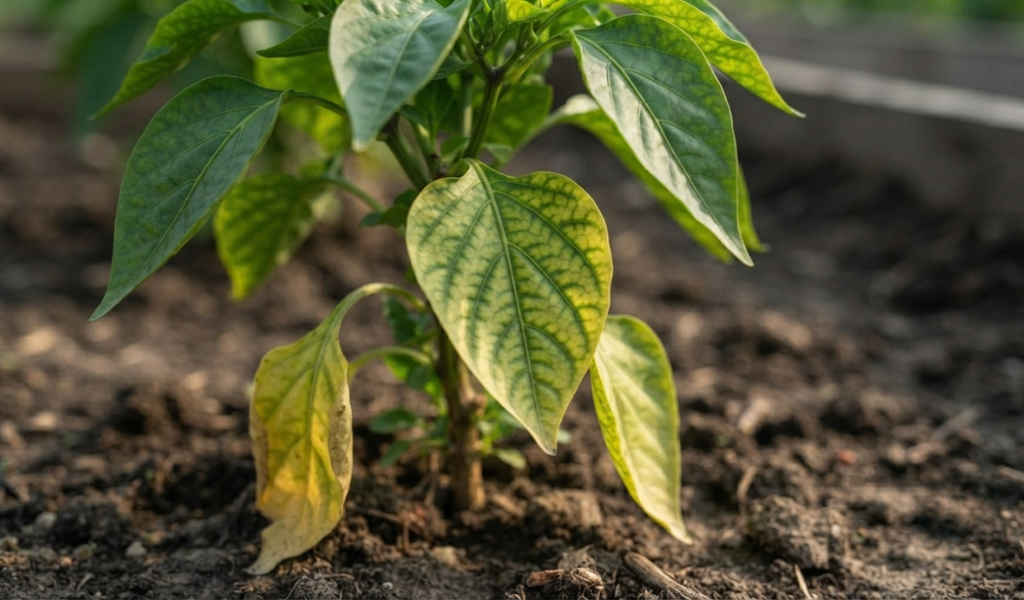
Slow growth or dark purplish coloring on leaves can indicate a phosphorus deficiency, particularly in cooler soils where roots struggle to absorb it.
Brown leaf edges, weak stems, or inconsistent fruit development can signal low potassium levels.
Blossom drop, where flowers form but fall off before setting fruit, sometimes comes down to a calcium or boron deficiency, or inconsistent watering combined with poor nutrient levels.
If your plants show these symptoms, don’t immediately dump extra fertilizer on them. Test your soil first if possible. Identifying the actual deficiency helps you choose the right plant fertilizer instead of guessing.
How Fertilizer Affects Flowering and Fruit Production
The connection between fertilizer and fruit production is more direct than most gardeners realize. During the early weeks of growth, peppers put most of their energy into building roots and foliage. This is when higher nitrogen levels support healthy development.
Once the plant starts flowering, the nutritional demands shift. Feeding your pepper plants with a fertilizer higher in phosphorus and potassium during this phase encourages more blooms and better fruit set. Too much nitrogen at this stage pushes the plant to keep producing new leaves rather than converting flowers into fruit.
The practical takeaway: use a balanced fertilizer or one slightly higher in nitrogen early on, then switch to a fertilizer with more phosphorus and potassium once flowering begins. This single adjustment can significantly improve fruit production throughout the season.
What Nutrients Do Pepper Plants Need?
Pepper plants need a balanced mix of macro and micronutrients. The primary ones are nitrogen, phosphorus, and potassium. Secondary nutrients include calcium, magnesium, and sulfur. Micronutrients like iron, zinc, manganese, and boron are needed in smaller amounts but still matter, especially for consistent fruiting and disease resistance.
A soil test before planting is the most accurate way to know which nutrients your specific garden is lacking. Without it, you’re guessing, and it’s easy to create imbalances that cause just as many problems as deficiencies.
What Do the Best Fertilizers for Peppers Have in Common?
The best fertilizer for pepper plants shares a few consistent characteristics. First, it provides a balanced or adjustable NPK ratio that can be shifted based on the plant’s growth stage. Second, it releases nutrients in a way the plant can actually use, rather than all at once or in a form that sits unavailable in the soil. Third, it supports soil health rather than degrading it over time.
The best organic fertilizer for peppers often ticks all three of these boxes. Organic fertilizers tend to release nutrients more slowly, feed beneficial soil microbes, and improve soil structure with repeated use. Products like fish emulsion, bone meal, and composted manure are popular choices among experienced gardeners growing peppers organically.
Synthetic fertilizers work faster and give you more precise control over the fertilizer’s N-P-K ratio, but they don’t improve soil health and can cause buildup if overused.
Choosing the Best Fertilizer for Pepper Plants
Organic vs. Synthetic Fertilizers
Organic fertilizers come from natural sources: compost, animal manure, fish emulsion, seaweed extract, and bone meal. They break down in the soil slowly, feeding plants over weeks rather than days. This slower release means a lower risk of nutrient burn and better long-term soil health.
Synthetic fertilizers are manufactured compounds. They’re water-soluble and fast-acting, which makes them useful when a plant shows signs of deficiency and needs a quick correction. However, overuse can lead to salt buildup in the soil and reduce beneficial microbial activity over time.
For most home gardeners, a combination of both works well. Build a strong soil base with compost and organic amendments, then supplement with liquid fertilizer during key growth stages for faster results.
Understanding NPK Ratios for Peppers
When you look at a bag of fertilizer, the three numbers on the label tell you the percentage of nitrogen, phosphorus, and potassium in that product. A fertilizer labeled 10-10-10 is a balanced fertilizer with equal parts of each. One labeled 5-10-10 is lower in nitrogen and higher in phosphorus and potassium, which is better suited for the fruiting stage.
During early vegetative growth, look for something around 10-10-10 or slightly higher in nitrogen, like 12-6-6. Once plants begin flowering, switch to a formula with more phosphorus and potassium, such as 5-10-10 or 3-5-7.
Best Fertilizers for Seedlings, Vegetative Growth, and Fruiting
Seedlings need gentle feeding. A diluted liquid fertilizer at half strength is usually enough to get them started without overwhelming young roots. A weak fish emulsion solution or a half-dose of a balanced all-purpose fertilizer works well at this stage.
During vegetative growth, pepper plants are building structure. A balanced fertilizer with slightly more nitrogen, applied every two to three weeks, supports strong stems and good foliage density.
Once flowering starts, that’s when you shift to a fertilizer higher in phosphorus and potassium. This change helps plants direct energy toward producing blossoms and fruit rather than more leaves.
When to Fertilize Pepper Plants
Timing matters just as much as what you feed your plants. Applying the right fertilizer at the wrong stage can reduce yields rather than improve them.
Fertilizing Pepper Seedlings
Start feeding seedlings about two to three weeks after germination, once they have their first set of true leaves. Use a diluted liquid fertilizer at half strength to avoid burning delicate young roots. At this stage, the goal is steady, gentle growth, not rapid development.
Feeding After Transplanting
After transplanting seedlings into the garden or larger containers, hold off on fertilizing for about a week. Transplanting stresses the plant, and adding fertilizer immediately can make that worse. Once the plant has settled and shows signs of new growth, resume a regular feeding schedule using an all-purpose fertilizer.
Fertilizing During Flowering and Fruit Development
This is arguably the most critical window in the pepper growing season. Once you see the first flower buds forming, switch to a fertilizer higher in phosphorus and potassium. Continue feeding every one to two weeks throughout this period to keep the flow of nutrients consistent.
Calcium also becomes particularly important here. If you’ve had blossom end rot in previous seasons, consider adding a calcium supplement or using a fertilizer that contains calcium as part of its formula. Consistent watering is equally important during this phase, because water is what allows roots to absorb those nutrients in the first place.
How to Fertilize Pepper Plants Step by Step
Preparing the Soil Before Feeding
Before applying any fertilizer, water the soil thoroughly. Applying granular or liquid fertilizer to dry soil can stress roots and reduce nutrient uptake. Moist soil helps nutrients move more easily to where roots can reach them.
If you haven’t done a soil test, do one before the season starts. Knowing your baseline pH and nutrient levels helps you choose the right fertilizer from the start. Pepper plants grow best in soil with a pH between 6.0 and 6.8. Outside that range, plants struggle to absorb nutrients even when they’re present in the soil.
Applying Granular Fertilizer Correctly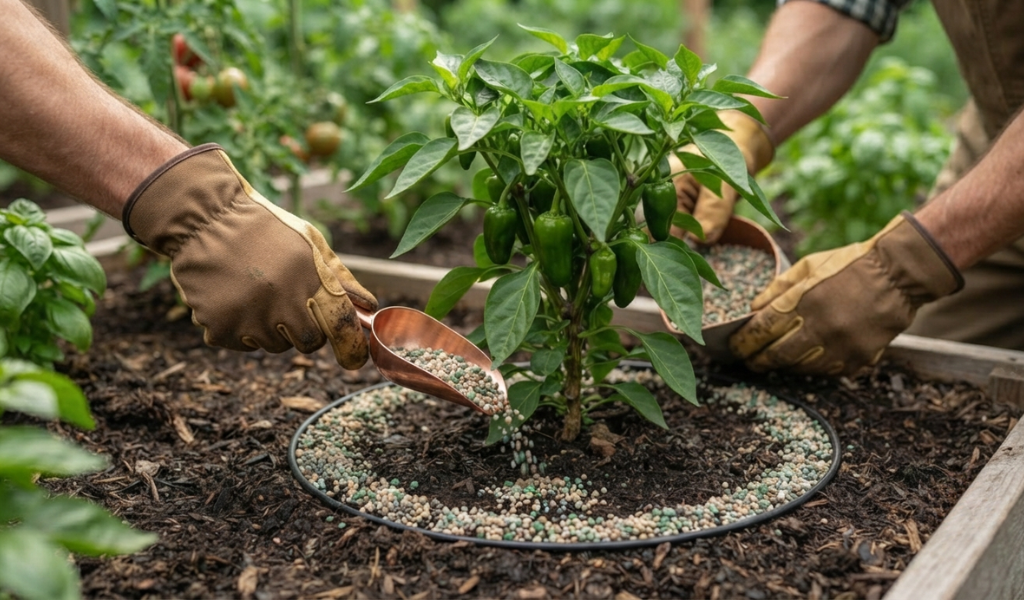
Scatter granular fertilizer evenly around the base of the plant, keeping it a few inches away from the stem to avoid direct contact. Work it lightly into the top inch of soil, then water thoroughly. Granular fertilizers need moisture to dissolve and begin releasing nutrients to the roots.
Slow-release granular fertilizers are particularly convenient for gardeners who want a set-it-and-somewhat-forget-it approach. One application can last six to eight weeks, gradually feeding the plant throughout that period.
Using Liquid Fertilizer for Faster Nutrient Uptake
Liquid fertilizer moves through the soil quickly and becomes available to roots within a day or two. This makes it the better choice when you spot deficiency symptoms and want faster results, or when you’re feeding during key growth stages like early flowering.
Mix liquid fertilizer according to the label instructions, or use a diluted liquid fertilizer at half strength if plants are young or if you’re supplementing an existing feeding schedule. Apply it directly to the soil around the base of the plant rather than spraying it on the foliage, which can cause leaf burn in direct sun.
Natural Ways to Fertilize Pepper Plants
Compost and Well-Rotted Manure
Compost is one of the best natural soil amendments you can use in a pepper garden. It doesn’t just add nutrients; it improves soil texture, increases water retention, and feeds the microbial life that makes nutrients available to plant roots. Work two to three inches of finished compost into your planting beds before the season begins, and top-dress with more compost mid-season.
Well-rotted manure from chickens, cows, or horses is similarly effective. Avoid fresh manure, which can burn plants and introduce pathogens. Aged or composted manure that has broken down over several months is far safer and more beneficial.
Fish Emulsion, Seaweed, and Bone Meal
Fish emulsion is a fast-acting liquid fertilizer made from processed fish. It’s high in nitrogen and also contains trace minerals, making it excellent for boosting vegetative growth early in the season. The smell fades after a day or two, but it’s strong when first applied.
Seaweed extract supports overall plant health rather than targeting one specific nutrient. It’s rich in trace elements and natural growth hormones that help plants handle stress and improve fruit set. It works well as a foliar spray or soil drench.
Bone meal is a slow-release source of phosphorus and calcium. Applied at planting time or worked into the soil before the season begins, it supports root development and reduces the risk of calcium-related problems like blossom end rot.
Homemade Fertilizer for Peppers
Making your own fertilizer at home is more practical than many gardeners expect. Banana peels are high in potassium and can be buried directly in the soil around your plants or soaked in water for a few days to create a potassium-rich liquid feed.
Eggshells are a good source of calcium. Crush them finely and work them into the soil at planting time or add them to your compost pile. They break down slowly, so they’re most useful as a preventive measure rather than a quick fix.
Compost tea, made by steeping finished compost in water for 24 to 48 hours, delivers a diluted but broad range of nutrients in liquid form. It’s gentle enough to use frequently and also supports beneficial microbial activity in the soil.
Wood ash from untreated wood contains potassium and also raises soil pH slightly, which can be helpful in acidic soils. Use it sparingly to avoid making the soil too alkaline.
Common Fertilizing Mistakes to Avoid
Feeding Too Frequently
More fertilizer does not mean better results. Applying fertilizer too often, especially high-nitrogen products, leads to lush, dark foliage but very little fruit. It can also cause salt buildup in the soil that damages roots over time. Stick to a consistent schedule rather than feeding every time you walk past the garden.
Ignoring Soil pH and Nutrient Deficiencies
Even a well-stocked soil can leave plants starved if the pH is off. Below 6.0, nutrients like phosphorus and calcium become chemically locked in the soil, and roots simply cannot absorb them regardless of how much fertilizer you add. Test your soil pH at the start of each season and adjust it with lime to raise pH or sulfur to lower it before feeding.
Treating deficiency symptoms without knowing what’s actually missing is another common mistake. Yellowing leaves have multiple causes. Adding more nitrogen when the real problem is iron or magnesium will make things worse, not better.
Can You Over-Fertilize? (And How to Fix It!)
Yes, over-fertilizing is a real problem, and it happens more often than gardeners expect. The most obvious sign is fertilizer burn: brown, crispy leaf tips and edges, especially on new growth closest to where fertilizer was applied. Other signs include wilting despite adequate water, extremely dark green foliage with no flowering, or a white crust forming on the soil surface from salt buildup.
To fix it, water the plant deeply and repeatedly for several days. This flushes excess salts down through the soil and away from the root zone. Remove any heavily damaged foliage. If the issue is serious, consider repotting container-grown peppers into fresh potting mix.
Going forward, always follow the label dosage and resist the urge to add a little extra. When in doubt, use less fertilizer more often rather than large amounts at once.
Expert Tips for Maximizing Pepper Yields
Combining Fertilizer with Proper Watering
Fertilizer only works when water carries it to the roots. Inconsistent watering creates uneven nutrient uptake, which is one of the most common hidden causes of poor pepper production. Water deeply and consistently, aiming to keep the top six to eight inches of soil evenly moist throughout the growing season. Drip irrigation is particularly effective for pepper gardens because it delivers water directly to the root zone at a steady pace.
Mulching to Improve Nutrient Retention
A two to three inch layer of mulch around your pepper plants does more than suppress weeds. It slows evaporation, keeps soil temperature stable, and gradually breaks down to add organic matter to the soil. Straw, shredded leaves, and wood chips all work well. Mulch also reduces nutrient loss caused by heavy rain or watering, which means more of what you feed your plants actually stays available to the roots.
Fertilization Schedule for Bigger, Healthier Pepper Harvests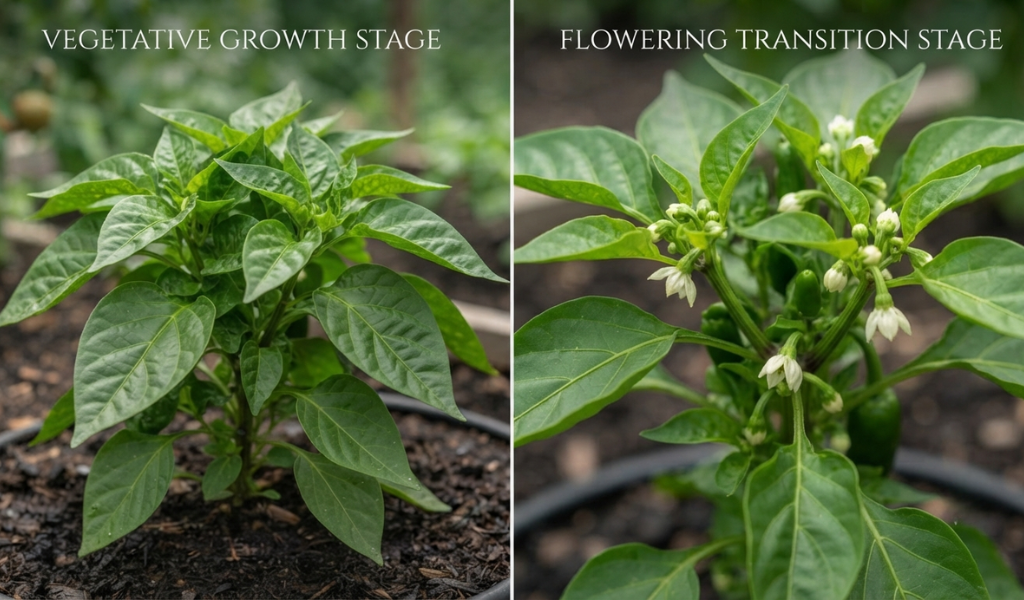
Here’s a practical schedule that works for most pepper varieties, including bell peppers, sweet peppers, hot peppers, and chili peppers:
Before planting: Work compost and bone meal into the soil. Test and adjust pH to fall between 6.0 and 6.8.
At transplanting: Apply a starter fertilizer or diluted liquid fertilizer at half strength to help roots establish quickly.
Weeks 2 through 4: Begin regular feeding with a balanced all-purpose fertilizer every two weeks.
At first flowering: Switch to a fertilizer higher in phosphorus and potassium, such as a 5-10-10 blend. Continue every one to two weeks.
Throughout fruiting: Maintain consistent feeding. Add calcium if needed to prevent blossom end rot. Supplement with seaweed extract for overall plant stress resistance.
Late season: Taper off feeding about four weeks before your expected first frost to allow the plant to ripen existing fruit rather than produce new growth.
Get More From Your Garden This Season
Fertilizing pepper plants doesn’t need to be complicated. Start with healthy soil, choose a fertilizer matched to your plant’s growth stage, apply it on a consistent schedule, and adjust when you see signs of deficiency or excess.
The key is paying attention. Pepper plants communicate through their foliage, growth rate, and flowering behavior. Once you learn to read those signals and pair them with a reliable fertilizing routine, bigger harvests and healthier plants follow naturally.
Start with a soil test, pick up a quality all-purpose fertilizer and a good source of phosphorus and potassium for the fruiting stage, and you’ll be set for the season.
Frequently Asked Questions
Is Epsom salt a good fertilizer for pepper plants?
Epsom salt provides magnesium and sulfur, which are secondary nutrients that pepper plants do need. If your plants show yellowing between leaf veins (a sign of magnesium deficiency), diluting one tablespoon of Epsom salt per gallon of water and applying it as a soil drench or foliar spray can help. That said, Epsom salt is not a complete fertilizer. It does not replace nitrogen, phosphorus, or potassium, and using it without a magnesium deficiency can throw off your soil’s nutrient balance.
Do pepper plants like Miracle-Gro fertilizer?
Yes, Miracle-Gro all-purpose fertilizer works well for pepper plants during the vegetative stage. For fruiting, look for their Tomato Plant Food or Bloom Booster formulas, which are higher in phosphorus and potassium. Follow the label instructions carefully, as Miracle-Gro products are concentrated and easy to over-apply.
Are coffee grounds good fertilizer for peppers?
Coffee grounds add nitrogen to the soil as they break down, and they can also slightly lower soil pH over time, which may benefit peppers growing in alkaline soil. However, applying large amounts directly to soil can compact and form a barrier that reduces water penetration. The best approach is to add coffee grounds to your compost pile, where they’ll break down and contribute to a balanced, finished compost.
How do I get my pepper plants to produce more fruit?
Switch to a fertilizer higher in phosphorus and potassium once flowering begins. Consistently water your plants, as irregular moisture causes flower drop. Make sure plants are receiving full sun (at least six to eight hours daily). Avoid excessive nitrogen during the fruiting stage, which pushes the plant toward foliage growth instead. Pinching off early flowers on young plants can also redirect energy to building a stronger structure that supports heavier production later.
What are the best fertilizers for pepper plants?
The best fertilizer for pepper plants depends on the growth stage. For early vegetative growth, a balanced fertilizer such as 10-10-10 or a good all-purpose fertilizer supports healthy development. During flowering and fruiting, switch to a formula higher in phosphorus and potassium like 5-10-10. For organic growers, fish emulsion, bone meal, and compost are excellent choices that improve both plant health and long-term soil quality.
When should I fertilize my pepper plants?
Start feeding seedlings about two to three weeks after germination with a diluted liquid fertilizer at half strength. After transplanting, wait about a week before resuming feeding. Continue with a balanced fertilizer every two weeks through vegetative growth, then switch to a phosphorus and potassium-heavy formula once flowering begins. Keep feeding every one to two weeks through the fruiting stage, and taper off about four weeks before the end of your growing season.
Can I use the same fertilizer all season long?
You can, but you’ll get better results by adjusting your fertilizer as the plant moves through growth stages. A balanced all-purpose fertilizer works well early on, but pepper plants generally benefit from a switch to higher phosphorus and potassium levels during flowering and fruiting. Using the same high-nitrogen fertilizer throughout the season often leads to strong, leafy plants that produce less fruit than they could with a more targeted approach.