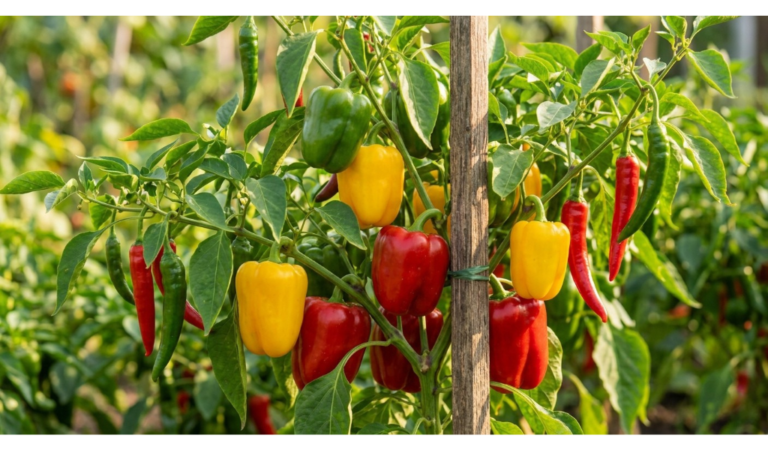
How to Grow Poblano Peppers: The Ultimate Seed-to-Harvest Guide
How to Grow Poblano Peppers: The Complete Seed-to-Harvest Guide
There is something special about walking into your garden and picking a glossy, dark green poblano pepper straight off the plant. Store bought ones are fine, but the ones you grow yourself taste fresher and cost a lot less. The best part is that a poblano pepper is not hard to grow, even if you have only ever tried tomatoes before. It just needs warm weather, steady water, and a little attention at the right times.
This guide takes you through the whole process from seed to harvest. You will learn when to start your seeds, how to set up your soil, how to space and support your plants, how to care for them through summer, and when to pick them for the best flavor. By the end you will know how to get a big crop of peppers ready for roasting, stuffing, and drying.
What Is a Poblano Pepper? (Flavor, Scoville Heat, and Origin)
The poblano is a mild chile that comes from the state of Puebla in Mexico, which is where its name comes from. Some people spell it “pablano,” but the right spelling is poblano. It belongs to the species Capsicum annuum, the same group as bell pepper, jalapeno, and cayenne. If you can grow a bell pepper, you can grow a poblano.
The fruit is large and broad with a shape like a heart or a long cone. Most peppers are about four to six inches long and three inches wide at the shoulders. The skin is dark green and shiny, and the flesh is thick, which makes it perfect for stuffing. Fresh poblano peppers have an earthy and slightly smoky taste with a gentle bite. They are richer and more complex than a bell, and a little grassy when they are green.
On the Scoville scale a poblano usually lands between 1,000 and 2,000 Scoville heat units. That is well below a jalapeno, which can reach 8,000 units or more. The heat comes from capsaicin, and in this pepper it is gentle enough for most people. Every now and then you may get one that surprises you with extra kick, since heat can change with weather and soil. One poblano pepper on a plant may taste milder than the next, so it is smart to taste before you cook for a crowd.
When a poblano is left on the plant to turn red and then dried, it gets a new name. Dried poblano peppers are called ancho, and they taste sweet and fruity with hints of raisin and coffee. Anchos are the base of many Mexican sauces including mole. The same plant can give you fresh green peppers for a chile rellenos recipe and dark red ones to dry for the pantry, which is one more reason to grow it.
Planting Poblano Peppers: Starting Seeds and Transplants
Poblano plants love heat and grow slowly when they are young, so the way you start them matters a lot. Most gardeners get the best results by starting seeds indoors and moving young plants out once the weather is settled. You can also buy transplants at a nursery, which is a good way to save time if you missed the window for seeds.
When to Start Seeds Indoors vs. Direct Sowing
Start your seeds indoors about eight to ten weeks before the last frost date in your area. Peppers need a long season, and a poblano takes about 65 to 75 days from transplanting to reach a green harvest and even longer to turn red. If you wait too late the plants will not have enough time to make a good crop.
Fill small pots with a light seed starting mix and plant each seed about a quarter inch deep. Keep the soil moist but not soaked. Pepper seeds can take one to three weeks to sprout, and they do best when the soil is around 80°F. A heat mat under the tray works very well here. Once the seedlings come up, place them under a grow light or in a bright window for 12 to 14 hours a day so they stay short and sturdy instead of tall and thin.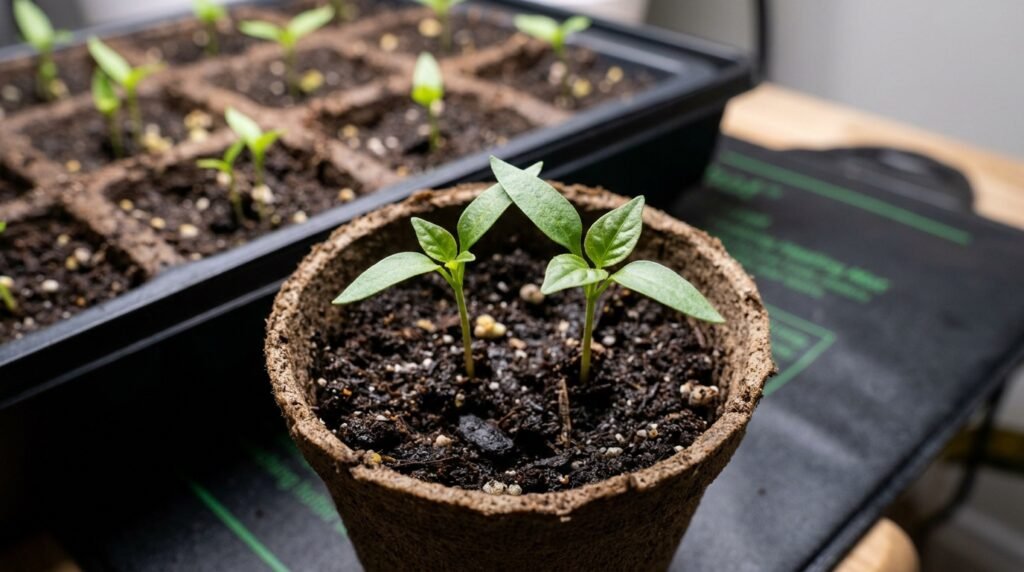
Direct sowing in the garden works only in places with long hot summers. Even then the seeds sprout slowly in cool ground and may rot before they come up. A good way to avoid damping-off, a problem where seedlings collapse at the soil line, is to use clean trays and fresh mix and not to overwater. If you live in a cooler climate, starting indoors is the safer choice.
When the seedlings have two sets of true leaves, move them into larger pots. About a week before planting outside, start hardening them off. Set them outdoors in a shady spot for a few hours and add more sun and time each day. This step keeps the young plants from getting shocked by wind and bright light.
Ideal Soil Temperature, pH, and Drainage Requirements
Poblano plants will not grow well in cold soil. Wait until the soil is at least 65°F and nighttime air stays above 55°F before you transplant. A cheap soil thermometer takes the guessing out of this. If you plant too early, the plants stall and may never catch up with the ones planted later.
The ideal soil pH is between 6.0 and 7.0, which is slightly acidic to neutral. You can test it with a simple kit from a garden store. If your soil is too acidic, add some garden lime. If it is too alkaline, sulfur or compost can bring it down over time.
Drainage is just as important. Peppers hate wet feet, and soggy soil leads to root rot. Work two to three inches of compost into the top of the soil to loosen it and feed the plants. Heavy clay soil should be mixed with compost and a little sand or perlite. A real life example is a gardener in a rainy area who planted poblanos in flat clay ground and lost half the plants to rot. The next year she moved them to mounded rows and the plants did great.
In-Ground, Raised Bed, and Container Planting Specifications
You can grow a poblano plant in the ground, in a raised bed, or in a pot. Each option works well if you match it to your space and soil. In-ground planting is the simplest and costs nothing, but it depends on how good your native soil is. Raised beds warm up faster in spring and drain better, so they are great for cooler or wetter places. Containers let you grow peppers on a patio or balcony and move them to chase the sun.
For containers choose a pot that holds at least five gallons, and ten gallons is even better since a full plant can reach three to four feet tall. Make sure the pot has several drainage holes. Use a quality potting mix, not soil from your yard, because garden soil gets heavy and packs down in a pot. Dark colored containers heat up quickly in summer, so in very hot areas a lighter color can protect the roots. Container plants dry out fast and need more frequent watering than those in the ground.
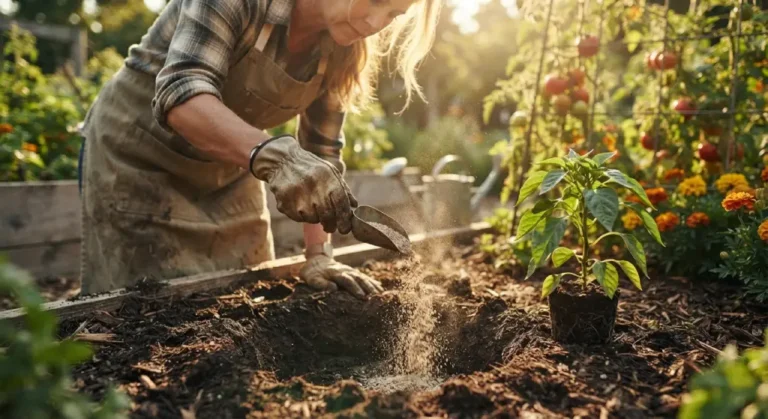
When you transplant, set each seedling in at the same depth it was growing in its pot. Peppers do not root along the stem the way tomatoes do, so there is no need to bury them deep. Water well right after planting, and add a few inches of mulch such as straw or shredded leaves to hold moisture and keep weeds down.
Plant Spacing, Staking, and Support Needs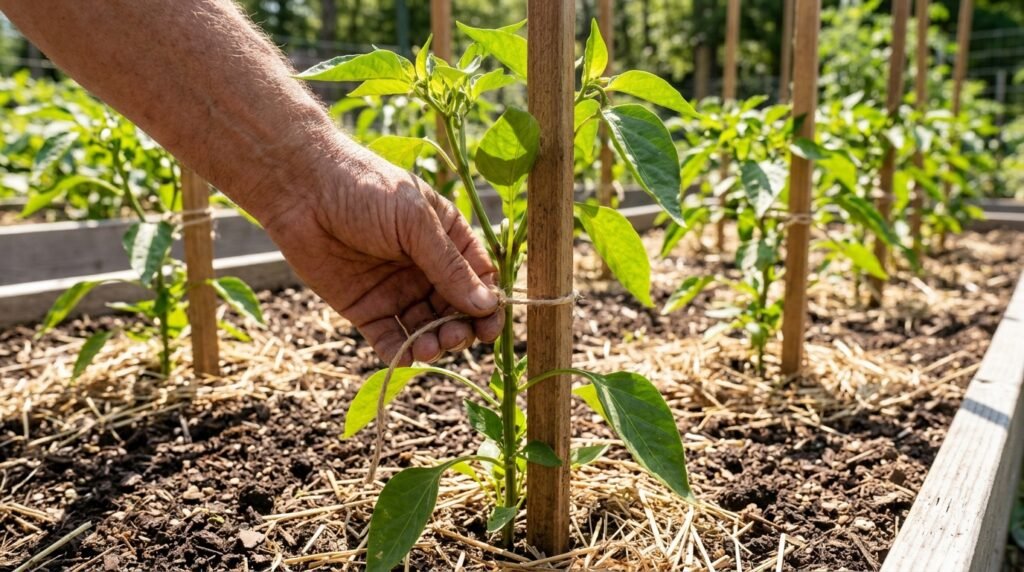
Give each poblano plant room to breathe. Space plants 18 to 24 inches apart in the garden with rows about 30 inches apart. Tight spacing might seem like a way to fit more plants, but crowded peppers get less air and more disease. In raised beds you can plant slightly closer, about 18 inches, as long as the leaves are not packed together.
Poblano plants can get heavy once they are loaded with big peppers. The branches are fairly brittle and can snap in strong wind or under the weight of the fruit. A stake pushed in next to the plant at planting time is a simple fix. Tie the main stem loosely to it with soft twine or strips of cloth, and add a new tie every foot or so as the plant grows. Tomato cages also work well, and they give support without any tying. In windy gardens a row of stakes with string run along both sides can hold a whole row steady.
Place stakes at the time of planting and not later. Pushing a stake in after the roots have spread can damage them. If you grow in a container, put the stake in before you add the plant, or use a small cage inside the pot.
Seasonal Care Routine for Maximum Pepper Yields
Once your plants are in the ground, the job shifts from planting to care. A good routine does not take much time, but it makes a big difference in how many peppers you pick. Think of it as three habits: smart watering, the right food at the right time, and protection from too much sun or heat.
Watering Schedules and Deep Root Drenching
Poblanos need about one to one and a half inches of water each week, from rain or from you. It is better to water deeply once or twice a week than to sprinkle a little every day. Deep watering pushes the roots down into the soil, and plants with deep roots handle heat and dry spells far better.
Soak the ground around the base of each plant until the water has gone down at least six inches. A drip line or a soaker hose is ideal because it puts water right where it is needed and keeps the leaves dry. Check the soil with your finger. If the top two inches feel dry, it is time to water. In containers this might mean every day or every other day during a heat wave.
Uneven watering causes problems. When the soil swings from bone dry to soaking wet, plants can drop flowers and develop blossom end rot, which looks like a sunken dark patch on the bottom of the fruit. A layer of mulch evens things out by slowing down evaporation. Try to water in the morning so the plants have moisture to face the afternoon heat.
Fertilizer Requirements: Nitrogen Boosts vs. Flowering Phosphorus
Poblano plants are fairly hungry, but feeding them the wrong thing can backfire. Early in the season nitrogen helps the plant grow strong leaves and stems. At planting time mix in a balanced fertilizer or a good scoop of compost, and give a light feeding about three weeks later.
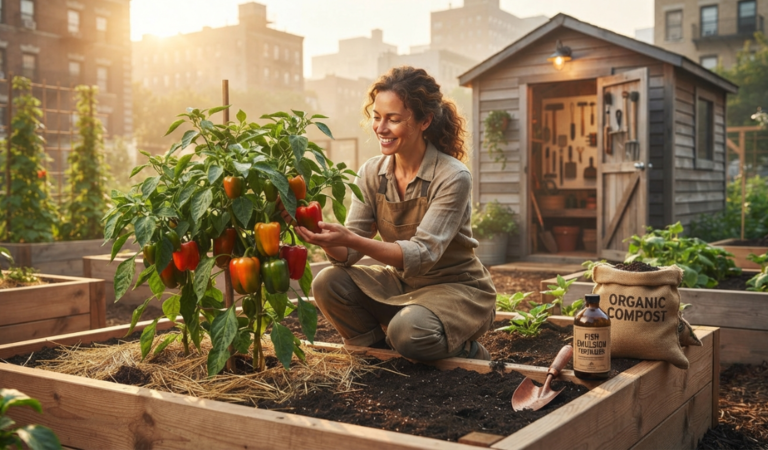
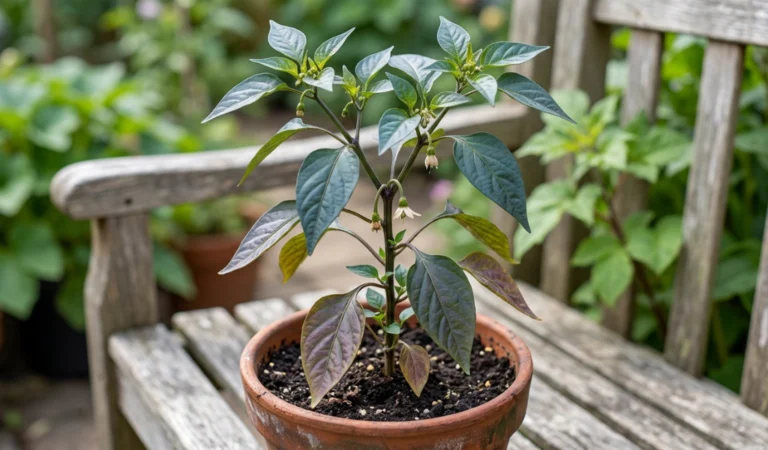
Once the plants start to flower, change the plan. Too much nitrogen at this stage gives you a big leafy bush with very few peppers. Switch to a fertilizer that is lower in nitrogen and higher in phosphorus and potassium, which support flowers and fruit. Something like a 5-10-10 blend works well. Fish emulsion, bone meal, and compost tea are good organic options. Apply every three to four weeks and follow the label so you do not burn the roots.
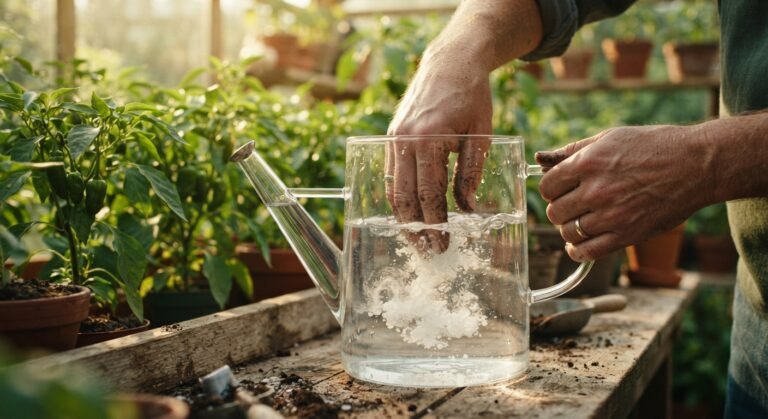
Calcium matters too. A steady supply helps stop blossom end rot, so work in crushed eggshells or a bit of gypsum at planting if your soil is low. A simple soil test every year will tell you exactly what your garden needs and keep you from guessing.
Sun Exposure and Heat Wave Management
Poblano plants want at least six to eight hours of direct sun each day. Choose the sunniest spot you have, and keep taller plants like corn or pole beans from casting shade on them. In most places full sun is perfect for peppers.
Very hot weather can cause trouble, though. When daytime highs stay above 90°F or nights stay above 75°F, many pepper plants drop their flowers and stop setting fruit. Do not worry if this happens. The plants usually start again when things cool down. To help them through a heat wave, cover them with a 30 percent shade cloth during the hottest part of the afternoon and keep the soil mulched and moist. Water early in the morning, not in the heat of the day.
Do not forget to check your plants for pests such as aphids and for diseases that like wet leaves. Good spacing, clean tools, and watering at the base keep most problems away.
When and How to Harvest Poblano Peppers (Green vs. Ancho Red)
Most poblano peppers are ready to pick about 65 to 75 days after transplanting. Look for fruits that are four to six inches long, dark green, shiny, firm, and heavy for their size. Avoid peppers that look thin, soft, or wrinkled. Use scissors or pruning shears to cut the pepper with a short piece of stem. Pulling by hand can break the branch.
Picking green peppers often tells the plant to make more, so keep harvesting through the season. Green poblanos have the classic earthy flavor that works so well in a chile rellenos recipe, in soups, in salsas, and in a creamy sauce with crema.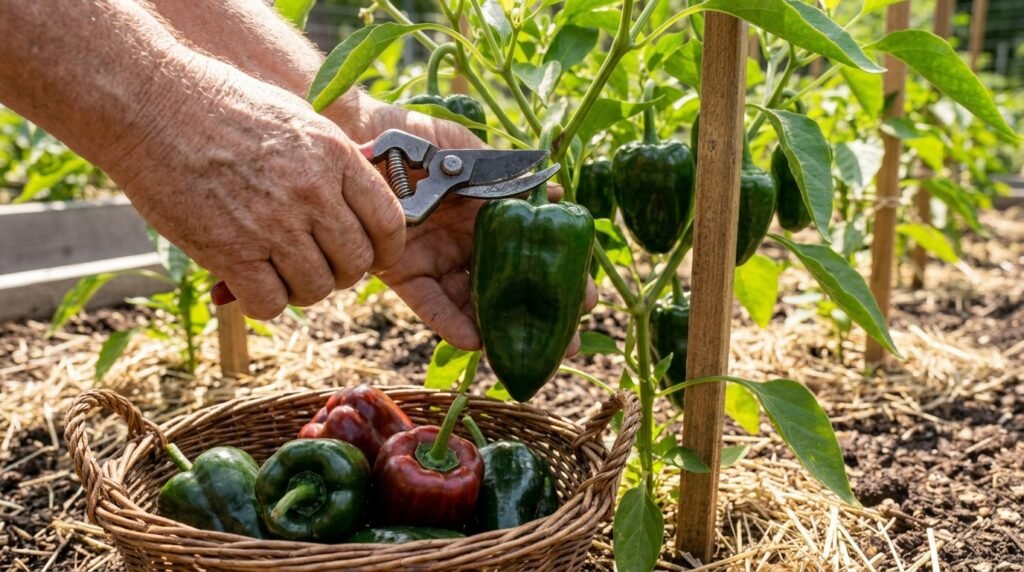
If you want ancho, leave some peppers on the plant. Over about three more weeks they turn from dark green to deep red. Red poblanos are sweeter and a little hotter than green ones, with a richer taste. Once they are fully red and the skin looks a bit wrinkled you can pick them and dry them. Hang them in a warm airy place, use a dehydrator, or dry them in a low oven. When fully dried they keep for several months in an airtight jar. Dried ones are used for mole, stew, and red chile sauce, and their smoky and fruity flavor is hard to match.
Roasting is the best way to cook fresh poblano peppers. Place each pepper over an open flame on a gas burner or grill, or under the broiler, and turn it until the skin is blackened and blistered all over. Then drop the peppers into a bowl and cover it with a plate, or put them in a plastic bag, and let them sweat for about 15 minutes. The steam loosens the skin so you can peel it off easily. Slice each pepper open, scrape out the seeds, and it is ready to stuff with cheese or slice into strips for tacos and rice.
If you end up with more than you can eat, freeze roasted and peeled peppers in flat bags, or dry the red ones. Canning needs a pressure canner because peppers are low in acid, so follow tested guidelines closely. Fresh peppers stay good in the fridge for about a week when stored in a paper towel lined bag to absorb extra moisture. A single pepper also gives you a nice dose of vitamin C and some fiber.
Final Thoughts
Growing your own poblano pepper plants is easy and rewarding. Start your seeds early, plant them into warm well drained soil, and give them space and support. Water deeply, feed them wisely, and protect them from the hottest afternoon sun. Then pick green peppers for roasting and stuffing, and let a few ripen to red for your own homemade ancho.
There is no better time to begin than now. Pick up a packet of seeds or a few transplants, choose a sunny spot, and get growing. Once you taste a freshly roasted poblano from your own garden, you will not want to go back to the grocery store version.
Frequently Asked Questions (FAQ)
How long does it take to grow a poblano pepper?
From seed it takes about 90 to 100 days to get green peppers. If you start with transplants, it takes around 65 to 75 days. Red peppers for drying take three to four weeks longer on the plant.
Can I grow a poblano plant in a pot?
Yes. Use a container that holds at least five gallons, with drainage holes and good potting mix. Water more often than you would in the ground and give the plant a stake or small cage once it starts to fruit.
Are poblano peppers spicy?
They are considered mild with a Scoville rating of about 1,000 to 2,000. Most people find them gentle, though some peppers can be hotter than others. Red ones tend to taste a little spicier than green ones.
Why are my poblano plants dropping flowers?
The most common causes are heat above 90°F, uneven watering, and too much nitrogen. Try giving shade in the afternoon, keep the soil evenly moist, and switch to a fertilizer higher in phosphorus. The plant will usually recover.
What is the difference between poblano and ancho?
They are the same pepper at different stages. A poblano is the fresh green pepper. When it ripens to red and is dried it becomes an ancho. The taste changes from earthy and grassy to sweet and fruity.
Do I need to peel poblano peppers?
For most recipes yes. The skin is tough and does not soften when you cook it. Roasting and sweating the peppers makes the skin slide right off.
Can I save seeds from my own poblano peppers?
You can. Choose a fully ripe red pepper, scoop out the seeds, and let them dry for a week or two. Store them in a cool dry place. Keep in mind that peppers cross with each other, so seeds from plants grown near hot peppers may give surprising results.