How to Soak Pepper Seeds Before Planting for 2x Faster Germination
Should You Soak Pepper Seeds Before Planting? Complete Beginner’s Guide
If you have ever grown peppers from seed, you know the waiting game. You plant the seeds, check the tray every morning, and nothing happens for two weeks or more. So it is fair to ask if you should soak pepper seeds before planting them. The short answer is yes, it often helps, mostly with slow hot pepper varieties and older seeds. It will not bring dead seeds back to life, and fresh sweet pepper seeds may not need it, but it is a cheap trick that costs one cup of water and one night.
This guide shows you how to soak pepper seeds the right way, how long to leave them, and how to plant them once they turn soft. If you are also reading up on How to Grow Poblano Peppers, this is the first step in that whole process, so it is worth doing well. Pepper seeds are tiny and picky, and a few small habits decide whether you end up with a tray of healthy pepper seedlings or a lot of empty soil. You will also see how tomato seeds compare, since many beginners start both at the same time.
Why Soak Pepper Seeds Before Planting?
Soaking is a simple way to wake your seeds up before they ever touch soil. In nature a pepper seed waits for rain to soften the ground and warm weather to arrive. When you soak pepper seeds you copy that rain on your kitchen counter, and the seed gets the message that it is safe to grow. Most growers who soak pepper seeds before planting say sprouts show up sooner and more of them appear on the same days.
That said, soaking is not magic. Fresh seed from a reliable seed catalog with a high germination rate may sprout just fine without it. The real gains show up with older seeds, saved seeds and slow hot pepper seeds. Think of soaking as a small boost and not a rescue plan.
Breaking Seed Dormancy and Softening the Outer Shell
Every pepper seed is wrapped in a hard outer layer called the seed coat. This coat protects the tiny plant inside for years while the seed sits dry in a packet. It works so well that the seed can wait through a long winter without harm. The trade off is that the same coat makes it harder for water to get in and for the first root to get out.
Pepper seeds also carry natural chemicals that keep them from sprouting at the wrong time. Gardeners call this dormancy. The seeds need to absorb the water before dormancy fades, and a warm soak helps wash away some of those chemicals and gets things moving. When you soak to soften the seed coat and break dormancy, the seed is already awake by the time you plant it.
Hot pepper seeds and older seeds usually gain the most. Their coats are often thicker or drier after long storage. A bell pepper seed from this year’s pack may not care much, but a three year old habanero seed often does.
How Soaking Speeds Up Germination Times
A dry seed in soil has to pull water in slowly from the damp mix around it. Until it has taken in enough, nothing else starts. A pre soaked seed has already finished that step. Once it lands in warm soil it can go straight to growing, which is why soaking helps seeds germinate faster.
How much faster depends on the variety, the age of the seed and the soil temperature. Sweet peppers might gain two or three days. Slow types can gain a week or more. Soaking also tends to even things out, so most of your seeds sprout close together instead of trickling in over three weeks. That makes it easier to give every seedling the same light and care.
There is another small bonus. A shorter wait means less time for the soil to sit wet and grow mold. Soaking will not fix cold soil though, and heat matters even more than the soak, as you will see later in this guide.
How to Soak Pepper Seeds Step-by-Step
The process is easy and takes about five minutes of real work. Start with a small clean bowl or glass. Place pepper seeds in the bowl and pour in enough lukewarm water to cover them by about an inch. If you are growing more than one variety, use a separate cup for each and label it right away. Soaked seeds all look alike, and mixing a sweet pepper with a super hot one is a mistake you will only notice months later.
Set the cup somewhere warm and out of direct sun, like a shelf near a window. 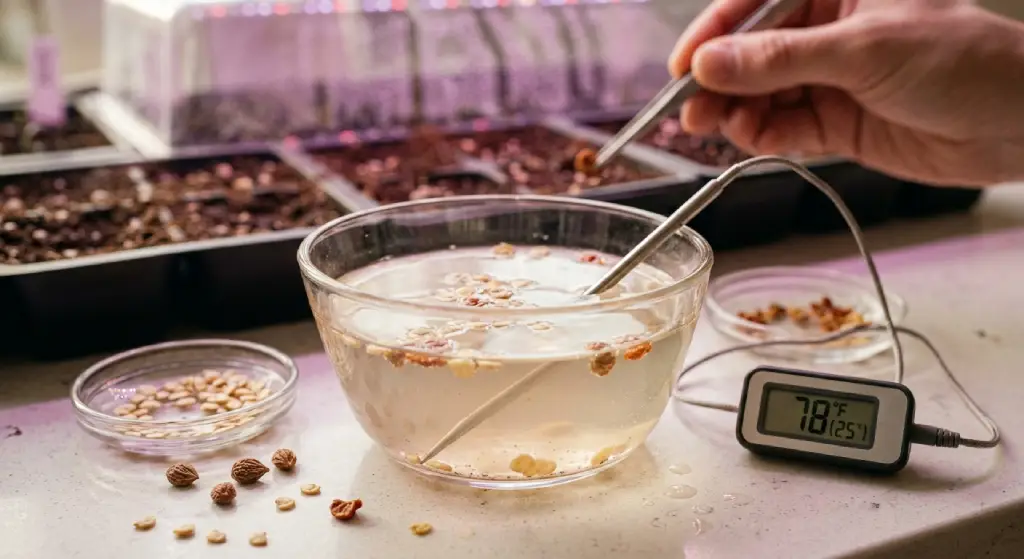 When the time is up, drain the seeds through a small strainer or lay them on a damp paper towel. Then plant them the same day. Keeping the seeds wet in a bowl for long stretches will only hurt them, so move them into soil soon.
Many home growers soak in the evening and plant the next morning. For example, someone starting twelve jalapeno seeds on a Saturday night can drop them in a cup, go to bed and have soft, ready seeds by breakfast. Check the seed packets for the variety name and any special notes, then write that name on the cup. No special gear is needed.
Choosing the Best Soaking Liquids (Water vs. Chamomile Tea)
Plain water is the standard and it works well. Tap water is fine for most people. If your tap water is heavily treated you can use filtered or bottled water instead. Whatever you pick, keep it lukewarm and never hot.
Chamomile tea is a favorite among gardeners who worry about damping off, a fungus problem that kills seedlings at the soil line. Chamomile has mild antifungal properties and the tea costs almost nothing. To use it, brew a weak cup with one tea bag, let it cool all the way down and strain it. Then soak the seeds just as you would in water. The evidence here comes mostly from experience, so do not expect a miracle. Clean trays and fresh seed starting mix protect seedlings far more than any tea.
Some growers also use a very weak hydrogen peroxide mix, about one teaspoon of 3 percent peroxide per cup of water, for a short soak. It may help clean the seed surface. If you try it, keep the soak short and rinse the seeds well. For a first try, water or chamomile tea is the safer choice.
Ideal Soaking Duration and Water Temperature
Aim for lukewarm water between 70 and 85 degrees F (21 to 29 C). Water that feels pleasantly warm on your wrist is about right. Hot water can cook the tiny plant inside the seed and ruin it before it starts.
For timing, 8 to 12 hours is the sweet spot for most pepper varieties. Slow super hot types like ghost pepper or Carolina Reaper can sit in water for up to 24 hours to soften the seed. Do not go past 24 hours. Seeds need oxygen, and in standing water they can rot or drown. If your soak runs longer than 12 hours, swap in fresh water once so it does not turn stale.
Older seeds and tough hot pepper seeds like the longer end of that range. Fresh bell pepper seeds are happy with a short overnight soak.
How to Plant Soaked Pepper Seeds Safely
Soaked seeds need a gentler hand than dry ones. They are soft, slippery and ready to grow, so the way you move and plant them matters. Get your seed trays, damp seed starting mix and a pair of tweezers ready before the soak ends so the seeds never sit around and dry out.
Start pepper seeds indoors about 6 to 10 weeks before your last frost date. That gives the plants time to get strong before transplant. Slow super hot varieties often need a couple of extra weeks. This timing works the same whether you plan to grow bells, jalapenos or poblanos.
Handling Delicate Sprouted or Softened Seeds
Skip your fingers and use tweezers or a damp toothpick. The seed coat is soft after a soak, and a little pressure can crush the seed or snap the tiny root.  A damp toothpick works well because the seed sticks to the tip and drops into the hole with ease.
Sometimes you will see a small white tip poking out. That means the seeds have sprouted, which is great news but also a warning. The root is very fragile. Place the seed with the root pointing down, cover it lightly and never pull or straighten it. If the root breaks the seed may not recover.
If a seed has not sprouted yet that is fine too. Most soaked seeds will not show a root until they sit in warm soil. Just never let softened seeds dry out again, and plant them within a few hours of draining.
Proper Soil Depth and Moisture Control
Plant each seed about a quarter inch (6 mm) deep, which is roughly twice the seed’s thickness. Going deeper delays sprouting because the seedling has to spend more energy reaching the surface. Use a light seed starting mix instead of garden soil, and wet it ahead of time until it feels like a wrung out sponge.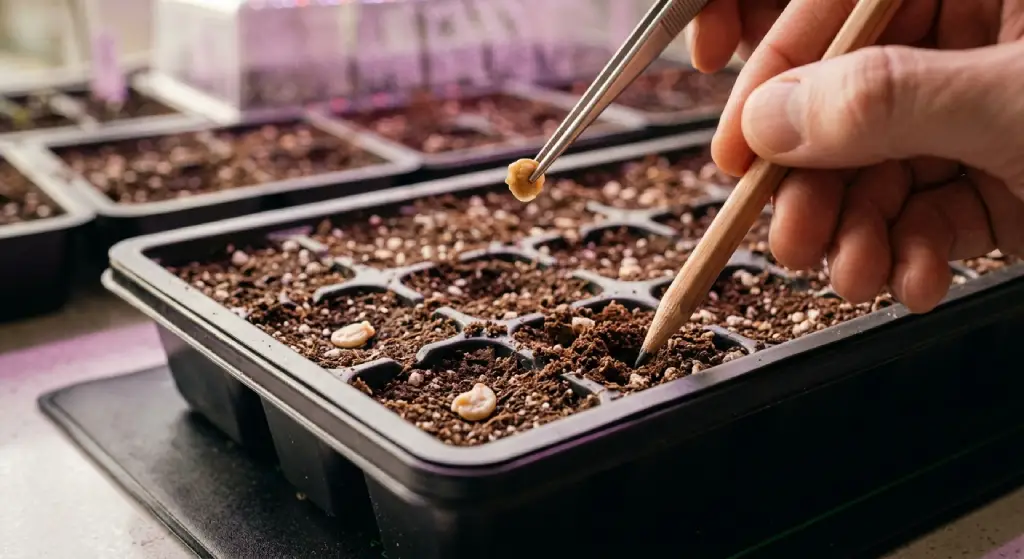
Keep the mix moist but never soggy. Soaked seeds are already full of water, so wet soil around them can lead to rot. Cover the tray with a humidity dome or loose plastic wrap and open it a little each day for fresh air. Water with a gentle mist so the seeds do not wash away.
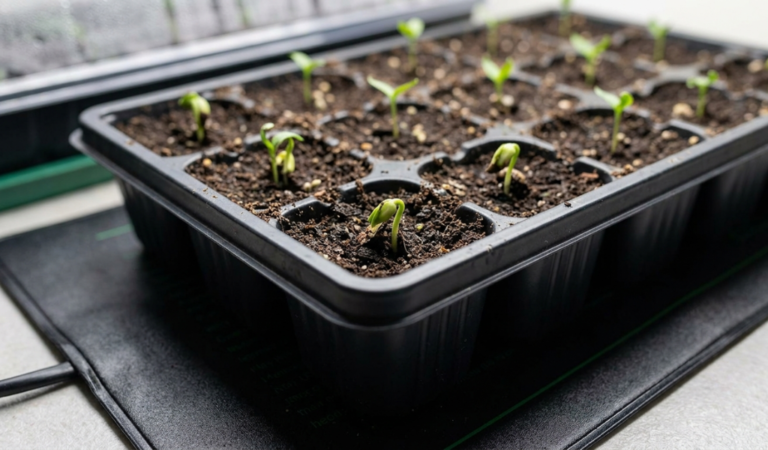
Warmth matters just as much as the soak. Peppers germinate best when soil temperature sits between 80 and 85 degrees F (27 to 29 C). A seedling heat mat under the tray is the best add on for anyone growing peppers from seed. Once the first green loops appear, take off the dome and move the tray under a grow light a few inches above the seedlings. A sunny window alone often leaves pepper seedlings tall and weak, and that makes the later transplant harder.
Comparing Germination Timelines: Soaked vs. Non-Soaked Seed
Numbers help here, so here is a simple comparison. At a steady 80 to 85 degrees F, dry sweet pepper seeds such as bell peppers usually sprout in 7 to 14 days. Soaked ones often show up in 5 to 10. Medium heat types like jalapeno and serrano commonly take 10 to 21 days dry and about 7 to 14 days after a soak.
Super hot varieties show the biggest gap. A dry habanero, ghost pepper or Reaper seed can take 14 to 35 days, and some stubborn ones go longer. After a soak the same seeds often sprout in 10 to 25 days. That is a lot of waiting saved, and it also helps you spot a problem early.
Here is a picture of how it can play out. Imagine a grower who plants ten soaked and ten dry seeds of the same ghost pepper in one tray on a heat mat. By day twelve three or four soaked seeds have popped up while the dry ones are still bare soil. By day twenty most of the soaked group is up and the dry group is only getting started. Your results will vary but the pattern is common.
What about tomato seeds? Tomatoes from seed sprout fast, usually in 5 to 10 days, so most growers skip the soak. Pepper seeds take longer to germinate and benefit far more. Keep in mind these ranges are only a guide, and cold soil can double any of them.
Common Mistakes to Avoid When Soaking Pepper Seeds
The most common mistake is soaking for too long. More is not better here. After 24 hours seeds can suffocate and rot, so set a phone alarm if you tend to forget. The next big one is hot water. Anything over about 100 degrees F can damage the seed, so test the water on your wrist first.
Another slip is letting soaked seeds dry out before planting. Once the coat is soft and the seed is awake, a dry spell can stop it cold. Plant soon after draining and keep the soil moist. People also forget labels. Soaked seeds from different pepper varieties look identical, and a strip of masking tape on each cup saves a lot of confusion later.
Planting too deep also cancels the benefit of soaking because the seedling spends extra days climbing up. Stick to a quarter inch. Cold soil is probably the biggest reason peppers sprout slowly, so try a heat mat before you blame the seeds. Finally, do not soak every seed out of habit. Fresh seed with a high germination rate may sprout fast on its own, and old seeds with poor seed viability might not come up no matter what you do. If you doubt a batch, test a few on a damp paper towel first.
Final Thoughts
So, should you soak pepper seeds before planting? For most beginners the answer is yes, especially with older seed and slow hot varieties. A lukewarm soak of 8 to 12 hours softens the seed coat, wakes the seed and can cut days off your wait. Pair it with a light seed starting mix, a quarter inch planting depth and a heat mat, and you give your pepper plants the best start possible.
Now it is your turn. Pick one variety this week, soak half of the seeds and plant the other half dry in the same tray. Write down the sprout dates and see the difference yourself. Then share what you learn with a fellow grower, or come back and read the next steps for moving your seedlings into the gard
Frequently Asked Questions (FAQ)
Do I have to soak pepper seeds before planting?
No. Many gardeners never do and still get good results. Soaking is a helpful boost, mostly for older seeds and slow hot pepper varieties. If your seed is fresh and your soil is warm, you can skip it.
How long should I soak pepper seeds?
About 8 to 12 hours works for most varieties. Super hot types can go up to 24 hours. Never soak longer than that, because seeds need oxygen.
Is chamomile tea better than plain water?
It is not proven to be better. Some growers like it for its mild antifungal effect, and it does no harm. Plain lukewarm water gets the job done for germination.
Can I use a paper towel instead of a bowl?
Yes. In the paper towel method you keep seeds damp and warm inside a bag or container until they sprout. It lets you see which seeds are viable, but the sprouts are delicate when you move them to soil.
What if my pepper seeds float?
Floating can mean an air pocket or an empty seed, but it is not a reliable test. Give them a few more hours because many seeds sink once they absorb water. If you have no better seed, plant them anyway.
How long do pepper seeds take to sprout?
Usually 7 to 21 days at 80 to 85 degrees F. Super hot types can take a month or more. Be patient and keep the soil warm and evenly moist.
Can I soak seeds and plant them later?
It is best to plant within a few hours. If something comes up, drain the seeds and keep them barely damp in the fridge for no more than a day. Fresh planting always works better.